

Beihang University's Chen Zengsheng Team Unveils New Pulsatile Percutaneous Artificial Heart Patent
On March 12, 2024, Beihang University addedPatent for Pulsatile Interventional Artificial Heart Disclosed。
In recent years, the heart failure market has gradually become the largest cardiovascular market, following the coronary and valvular markets. According to data published by Frost & Sullivan, the global prevalence of heart failure reached 29.7 million in 2019 and is projected to increase further to 38.7 million by 2030. Ventricular assist devices (VADs) play a crucial role in the treatment of patients with heart failure; they have been used in clinical practice for many years and have saved numerous lives.
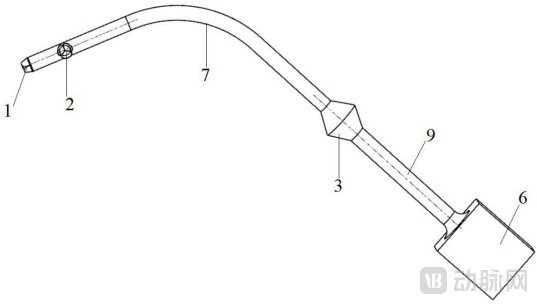
Schematic Diagram of a Pulsatile Interventional Artificial Heart, from the Patent Specification
However, the micro-catheter pumps currently used in clinical practice require very high rotational speeds to meet the flow rate and pressure differential demands of the human body. This high-speed operation mode results in significant non-physiological shear stress, leading to more severe blood damage and complications. Furthermore, the high-velocity blood flow exiting the catheter pump impacts the vessel wall, causing damage to arterial vessels.
The team led by Chen Zengsheng at Beihang University focuses on the research and development of extracorporeal circulation support medical devices, such as artificial heart-lung machines and ventricular assist devices. This time, the team has developed a pulsatile percutaneous artificial heart with the aim of reducing blood damage during operation.
The Era of Artificial Therapy for Heart Failure Has Arrived
Artificial hearts can overcome the shortage of donor organs for transplantation. Based on whether they partially or fully replace the function and role of the natural heart, they are categorized into total artificial hearts (TAH) and ventricular assist devices (VADs), with the latter emerging as the primary focus in the treatment of heart failure. Currently, the artificial heart products used in China are mainly left ventricular assist devices (LVADs). Studies show that the latest LVADs have a 3-year survival rate of 80%, approaching the outcomes of heart transplantation, and they have been widely adopted in developed countries in Europe and America.
In recent years, with technological advancements, various novel artificial heart products have continuously emerged.In August 2019, Yongrenxin Medical’s implantable left ventricular assist system, EVAHEART I, was approved for market launch, becoming China’s first approved artificial heart. In November 2021, Tongxin Medical’s independently developed fully magnetically levitated implantable left ventricular assist system was approved for market launch, marking China’s first domestically produced artificial heart with complete independent intellectual property rights. In July 2022, the HeartCon implantable left ventricular assist system, China’s first artificial heart with fully independent intellectual property rights developed by Aerospace Taixin, successfully received approval for market launch.
Academician Hu Shoushou, Director of the National Center for Cardiovascular Diseases and President of Fuwai Hospital, Chinese Academy of Medical Sciences, publicly stated that third-generation ventricular assist devices hold significant application prospects in the field of heart failure in the future,The Era of Artificial Therapy for Heart Failure in China Has Arrived。
Giants Clash, Domestic Players Catch Up
From the perspective of market landscape,Currently, "artificial heart" technology is relatively mature abroad, with foreign brands Abbott’s Thoratec and Medtronic’s HeartWare occupying 90% of the global market.
According to public data, the total number of HeartMate 2 implants by Abbott was approximately 27,000 between 2005 and 2018, while the total number of HeartMate 3 implants was approximately 4,000 between 2016 and 2018. Medtronic’s HVAD product had a total implant volume of approximately 19,000 between 2009 and 2019.
Furthermore, Johnson & Johnson made a significant investment in the field of artificial hearts in 2022 by acquiring cardiac device manufacturer Abiomed for $16.6 billion. Abiomed currently possesses Impella, the world’s only FDA-approved percutaneous artificial heart.
InAs Industry Giants Accelerate Their Expansion, Domestic Players Are Rapidly Catching UpFor example, in the fields of centrifugal fully magnetically levitated artificial hearts and transcatheter artificial hearts, the registration application for “MoyoAssist®,” an extracorporeal ventricular assist system developed and manufactured by XinQing Medical, was approved in April 2024, marking a breakthrough from zero for domestically produced extracorporeal ventricular assist systems.
In 2022, a research team at Lanzhou University took a major step toward biomechanically compatible hydrogel heart valves by fabricating tough hydrogels via reversible addition-fragmentation chain transfer-compatible three-dimensional (RAFT-3D) printing. From the perspective of technological breakthroughs, future research on artificial hearts will primarily focus on biocompatibility, magnetic levitation technology, fully implantable power systems, wireless charging, and pulsatile blood flow, with the aim of developing novel devices that are more portable, non-invasive, intelligently adjustable, and characterized by high biocompatibility and durability.