

Ji Tianrong, 'Senior Sect Sister' of China's Medical Investment Circle, Files IPO Prospectus for Taiyu Investment
Year after year, hundreds of compassionate, dedicated, and introspective medical students have completed their graduation ceremonies at No. 9 Dongdan Santiao, passing on the torch as they embark on journeys far and wide.
They all graduated from China’s most prestigious medical institution—Peking Union Medical College.
Among them, the vast majority chose to work on the clinical frontline. A small minority, however, entered the industry sector, continuing their journey in medicine as investors.
These investors’ extraordinary experiences, spanning several decades, have coalesced into a multi-dimensional quadrant mapping the cyclical fluctuations of the healthcare industry.
This series of stories will revolve around them.

Image source: Provided by the interviewee
Ji Tianrong is known as the “Peking Union Medical College Hospital Senior Sister” among many industry insiders.
As a teenager, she was a mischievous child running through the fields of a village in Hubei, a staunch defender of the “38th parallel” on her school desk, the cherished ideal in her loving husband’s eyes, and the top-ranked admittee to Peking Union Medical College in the entire province.
In 1986, Ji Tianrong was admitted to Peking Union Medical College and, upon graduation, remained in the Department of Endocrinology at Peking Union Medical College Hospital., and after completing training as a resident physician and chief resident, became an attending physician.
Among her classmates are internationally renowned experts in rheumatology and immunology.Zhang Xuan, also among the six-member national high-level expert team that was the first to be dispatched to WuhanDu Bin。
They all graduated from the eight-year program at Peking Union Medical College.
The five words “Peking Union Medical College’s Eight-Year Program” carry weight for both clinicians and patients, like a heavy scale weight, symbolizing standards and gravitas. These qualities stem from eight years of unyielding, rigorous training and a lifelong commitment to uncompromising meticulousness.
Taking the Clinical Pathological Conference (CPC) as an example, all physicians in the hospital may participate in discussions on the cause of death based on the deceased patient’s medical records and laboratory reports, with the pathological autopsy report serving as the final answer.
Thus, in the historic Peking Union Medical College Hospital building at No. 9 Dongdan Santiao, with its gray bricks and green tiles, a group of MDs and PhDs, clad in crisp white coats, engaged in a fierce remote debate, passionately clashing over viewpoints until they were red-faced and their voices rose out of control.
The moment the report is opened, whether you are a novice just starting your rotation or a personal physician to some VIP, you must equally face the judgment of the facts.
Perhaps it is precisely this faith-like rigor that has given rise to the folk legend“If the King of Hell demands your departure at the third watch, Peking Union Medical College Hospital will keep you alive until the fifth.”high praise.
Even thirty years after graduation, Ji Tianrong still recalls the tension and excitement when the CPC diagnosis was revealed: “These PUMCH doctors have all earned their place through sheer competence.”
In the mid-to-late 1990s, as Ji Tianrong was honing his expertise within the ivory tower of Peking Union Medical College Hospital, China’s healthcare industry was undergoing a transition from a planned economy to a market-oriented system.
“Kill the fungus and cure athlete’s foot—use Daktarin!” “Indigestion? Let Motilium help!” “Fighting a cold? Turn to Tylenol fast!” As one of China’s earliest Sino-foreign joint venture pharmaceutical companies, Xian Janssen not only left a generation with memorable advertising slogans that brought knowing smiles, but also undeniably advanced the modernization of healthcare in China.
In addition to the advanced equipment and processes of that time,Janssen introduced advanced marketing concepts and pharmaceutical representative models to the Chinese market.This has left Johnson & Johnson’s OTC products with virtually no rivals in China, while also supplying the pharmaceutical industry with successive waves of professional managers.Once hailed as the "Whampoa Military Academy" of the pharmaceutical industry。
In 1998, Ji Tianrong left the Department of Endocrinology at Peking Union Medical College Hospital, where he had worked for four years, and joined Janssen.
From the drafting of clinical trial protocols to the design of Case Report Forms (CRFs), comprehensive training has been provided. To strengthen its team, Janssen has even sent employees to its headquarters in Brussels for Good Clinical Practice (GCP) training.
Ji Tianrong, who opened up new horizons, was immersed in these challenges, not yet fully realizing that he was about to embark on the great journey of China’s booming clinical CRO industry.
It was also at Janssen that Ji Tianrong met his future partner, who would serve as both a mentor and a friend. Today,Dr. Ye Xiaoping, Chairman of Tigermed。
Dr. Ye is the boss with whom Ji Tianrong has collaborated for the longest time. The reason for this enduring partnership lies in what Ji Tianrong admires most about Dr. Ye’s interpersonal approach: “He understands me deeply. A graduate of the University of Oxford, Dr. Ye is highly inclusive and magnanimous, granting me considerable autonomy. He never offers misguided interference; instead, he places his trust in me, provides resources, and empowers me to take the initiative.”It seems that no matter where they are, people’s expectations of a good boss are the same.
On the first working day of 2000, Ji Tianrong left Janssen to join Roche alongside Dr. Ye. Twenty-three years later, the parent company Johnson & Johnson discontinued and phased out the Janssen brand.Amidst applause and tears, Janssen delivered its final curtain call in Johnson & Johnson’s century-spanning epic opera.
With Dr. Ye’s trust and authorization, Ji Tianrong is now operating at full speed within Roche.MabThera (Meiluohua, generic name: rituximab injection) and Herceptin (Hesaite, generic name: trastuzumab for injection), these legendary blockbuster drugs whose stories could each fill an entire biography, successfully completed their clinical trials in the Chinese market under Dr. Ye’s leadership and the execution of Ji Tianrong and his team.
Among them, the one that left the deepest impression on her was Duffy.In the past two years, people have become more accustomed to referring to it by its chemical name: oseltamivir.
The clinical trials of Tamiflu in China were overseen by Ji Tianrong, both because they were extremely challenging to conduct and because Dr. Ye had complete confidence in him.As an antiviral drug indicated for influenza, uncertainties in clinical trials are heightened by factors such as whether the trial is conducted during peak influenza season and whether patients initiate treatment within 48 hours of fever onset. Furthermore, the urgency of clinical development is exacerbated by the fact that a competing product has already obtained clinical trial approval one year ahead of Tamiflu.
During the National Day holiday that year, Ji Tianrong remained stationed at the COFCO Plaza on the south side of Chang’an Avenue, completing all paperwork required prior to clinical trial initiation over the seven-day break, and convened the investigator meeting later that month.The principal investigator’s institution is Peking Union Medical College Hospital, located within walking distance of the COFCO Plaza.
The principal investigator (PI) of the clinical trial was Ji Tianrong’s preceptor during his internship.Professor Li Longyun, a renowned expert in respiratory medicine in China。
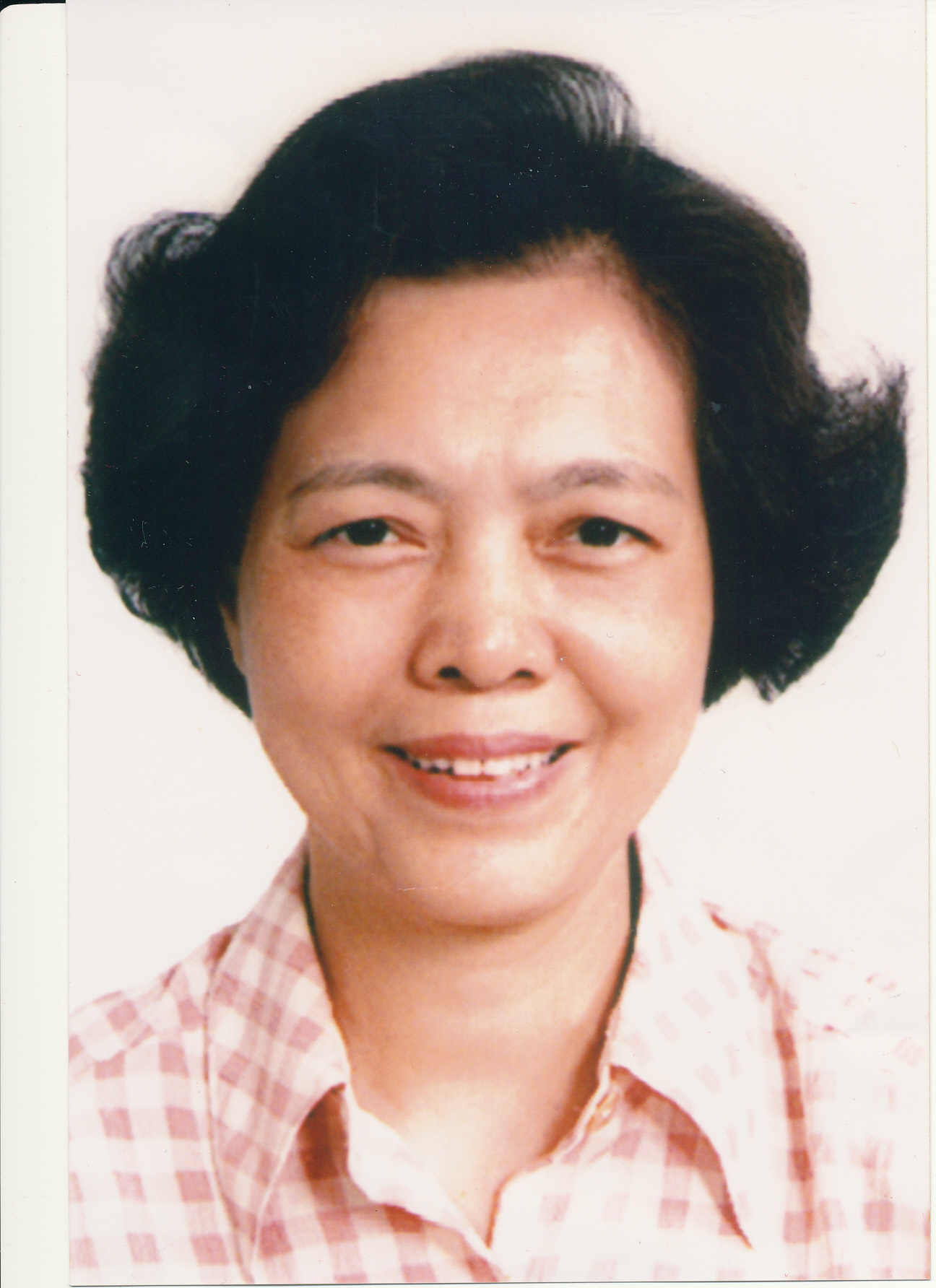
Image source: PUMCH Official Website
With her assistance and guidance, sufficient high-quality data to initiate the trial were rapidly accumulated.In his excitement, Ji Tianrong even miscalculated the time difference and woke up Dr. Ye, who was overseas, in the middle of the night.. Whether it was because he had not yet fully awakened from deep sleep or because he, as always, delegated authority to his subordinates, Dr. Ye’s response was: “I support you; go ahead and move forward.”
In the summer of 2001, Tamiflu successfully obtained approval and certification, launching to market two years ahead of competing products that had initiated clinical trials earlier.
In the following years, Ji Tianrong seamlessly transitioned from clinical practice to regulatory affairs, pioneering a new domain. He made remarkable strides in the field of medical regulatory affairs at multinational corporations, successfully securing key project approvals and waiving unnecessary clinical trials where feasible—notably achieving the approval of Tarceva without additional clinical trials, thereby bringing renewed hope for survival to patients with advanced lung cancer in China.
At this moment, fate presented her with a binary choice.
In 2004, Tigermed was established in Hangzhou. Dr. Ye made his choice and would lead China’s clinical CRO industry onto a brilliant trajectory that had not previously been paved.
When Dr. Ye extended an invitation to Ji Tianrong, she responded with candor and rational reflection: “I still cannot see things clearly.”
Dr. Ye had also made subsequent arrangements for this answer: “If you don’t leave, that’s fine too. You can take my place in Roche China’s management team and report directly to the General Manager—I’ve already cleared it with him.” It would be another ten years before these two trajectories collided again.
In 2007, a thunderous clap shook the ground as China’s pharmaceutical industry hit the hard reset button.
The overnight tightening of drug registration regulations led many to go with the flow and choose to “lie flat,” but Ji Tianrong did not. With the Hippocratic Oath still firmly in mind, she remains committed to bringing greater benefits to more patients.
Ji Tianrong was still eager to work, and her first move after leaving Roche was to join Baxter Healthcare.“In her words, ‘Baxter is a very unique entity.’ It has innovative drugs, generic drugs, biological drugs, and devices. During the nearly two years based in Shanghai, Ji Tianrong, as Baxter’s Medical Registration Director, frequently switched between various tracks, unconsciously accumulating momentum for the next leap.”
Her second stop was the large multinational healthcare company Fresenius Kabi.Perhaps driven by a desire to embrace new challenges, or perhaps out of concern for the father and son staring blankly at each other back home in Beijing, Ji Tianrong returned to the familiar city. In addition to continuing to lead the Medical Registration Department, he also took charge of Fresenius Kabi’s business operations related to product introduction and corporate mergers and acquisitions.
During her tenure at Fresenius Kabi, Ji Tianrong gained extensive project exposure under the guidance of General Manager Yang Weiping and Mr. Luc. She learned how to evaluate products from a professionally trained perspective, while also mastering mergers and acquisitions through hands-on, non-traditional practice.
In the early years when healthcare investment was just gaining momentum, the words “strategic investment” on Ji Tianrong’s résumé carried considerable weight.
Over the past five years, Ji Tianrong has continuously broadened and deepened his understanding of products, approaching the acquisition of new “know-how” with the eagerness of an athlete poised at the starting line.
Meanwhile, China’s healthcare industry—spanning pharmaceuticals and medical devices, internet healthcare, and in vitro diagnostics—has entered the final countdown before an explosive surge.
In 2014, Dr. Ye and Ji Tianrong caught up again in Beijing.
The timing of their meeting was quite serendipitous. At that time, Tigermed had already successfully listed on the A-share market.Meanwhile, Ji Tianrong was deeply disheartened after a project he had been pursuing for over a year was poached by a competitor offering a higher price.
The scene and circumstances bore a striking resemblance to the conversation between the two a decade earlier. Faced with this decision, Ji Tianrong’s response remained candid and rational: “I want to step out and make something happen.”
In the same year, Taiyu Investment, a subsidiary controlled by Tigermed, was established, with Ji Tianrong as its founder.General Manager. Since its establishment, Taiyu Investment has managed six RMB-denominated funds with a total scale exceeding RMB 2 billion, and has invested in more than 100 projects.
Ji Tianrong’s expertise and outstanding achievements in clinical development, regulatory registration, and mergers and acquisitions have also been extended to several funds under Taiyu Investment.
Taiyu Investment’s team is small but highly capable. The team of more than ten professionals led by Ji Tianrong includes members with backgrounds in medicine, pharmacy, biology, and electronics, as well as junior alumni from Peking Union Medical College and MDs from Peking University Health Science Center.
The team’s daily routine consists of reviewing projects, reading papers, and tracking global innovation trends, with a focus on truly innovative projects from leading companies both internationally and domestically. If anyone feels uncertain about the direction of their sector, Ji Tianrong will reiterate:“My sole criterion is clinical benefit—whether it can help doctors and patients.”
Perhaps some projects are regrettably missed, while others do not progress as smoothly as anticipated. Taiyu Investment is experiencing everything that market-oriented funds have gone through. It is at times like these that the team recalls what Ji Tianrong often says:“It's not all about the money, it's about saving lives”—Confidence and direction will become even more resolute.
During the 2024 Spring Festival, Ji Tianrong shared photographer Wang Fuchun’s iconic work, Chinese on the Train, on her WeChat Moments. Her message, “Safe travels to those heading home,” reflects the same compassion she embodies as both a healthcare investor and a medical practitioner.