

SHC Insights | Industry Outlook on Antibody Screening
Editor's Note: This article is fromShanghai Biomedical Fund, AuthorFu Yuanyuan, Chen Yucheng. Republished with permission from VCBeat.
Antibody drugs, characterized by high specificity and low side effects, offer unparalleled advantages over other drug classes in disease diagnosis and treatment, thereby sustaining robust growth in the pharmaceutical sector for an extended period. Among the top 10 best-selling drugs globally in 2023, antibody-based therapeutics continued to dominate, accounting for half of both the number of products and total sales revenue. This article provides a brief analysis of antibody screening pathways within the antibody drug development process and explores the challenges and opportunities associated with antibody screening.
In 1986, the FDA approved Muromonab-CD3, the first monoclonal antibody derived from hybridoma technology. In the subsequent four decades, more than one hundred antibody-based therapeutics have been successively approved for market entry. As the core of the antibody discovery process, antibody screening technology is not only pivotal to the development of monoclonal antibody drugs but also essential for other novel biologic modalities, including bispecific antibodies, antibody-drug conjugates (ADCs), and chimeric antigen receptor T-cell (CAR-T) therapies. Identifying high-quality candidate antibodies early and extensively in the R&D pipeline can significantly enhance the success rate of subsequent drug development; therefore, the demand for improved antibody discovery technologies has remained unceasing. From hybridoma technology to various display technologies, and further to single B cell-based screening platforms, the continuous innovation and iteration of antibody discovery methods have provided foundational support for the advancement of biotherapeutics.
I. Shortcomings and Challenges Coexist in B Cell and Antibody Screening
1、The Diversity of the Natural Immune Library Poses Challenges for B Cell and Antibody Screening
B Cell Differentiation and Development Include Two Stages: Central and PeripheralIn the bone marrow, multipotent hematopoietic stem cells differentiate into common lymphoid progenitor cells, which then becomePro-B cellsPro-B cells first undergo heavy chain rearrangement to generate pre-B cells, which then undergo light chain λ or κ rearrangement to produce immature B cells of the IgM class. The central phase completes gene rearrangement, BCR expression, and negative selection, which are antigen-independent. Subsequently, these cells enter the peripheral compartment, where immature B cells circulate in the blood and secondary lymphoid organs as naive B cells that have not yet encountered antigen. In lymph nodes, B cells that encounter antigens, with the help of Th cells andDC CellsUnder assistance and stimulation, they mature and undergo mutation-based selection and expansion; after completing somatic hypermutation, antibody affinity maturation, and class-switch recombination, they differentiate into plasma cells or memory B cells, thereby providing the source for antibody production.[1]。
Antibodies consist of two heavy chains (H) and two light chains (L). The heavy chain comprises one variable region and three constant regions, while the light chain includes one variable region and one constant region. The diversity of antibodies stems from the extensive variability of their variable regions.The variable region of the heavy chain includes the V segment (variable segment), D segment (diversity segment), and J segment (joining segment). The variable region of the light chain contains only the V and J segments. However, human antibody light chains have two subtypes, λ and κ, which belong to two different genes located on different chromosomes. The two key steps in generating B-cell diversity are: 1. V(D)J recombination, which generates the naive B-cell repertoire (antigen-inexperienced); and 2. somatic hypermutation (SHM), which generates the high-affinity repertoire (antigen-experienced repertoire).[2]。
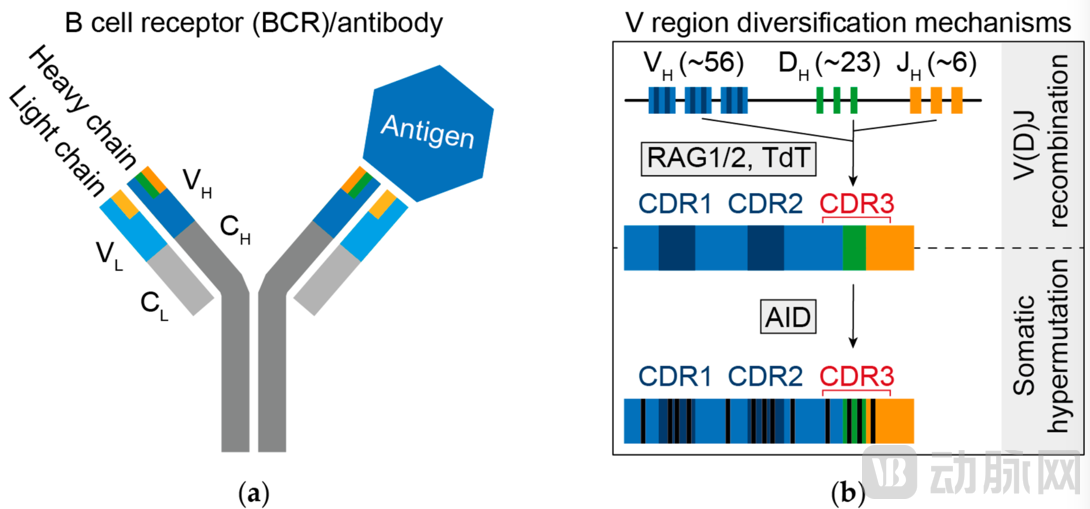
▲ Structure of Antibodies and Key Steps in the Generation of Antibody Diversity[3]
(1) During B-cell development, V(D)J random gene segment rearrangement occurs, mediated by the RAG1/2 recombinases. Different gene segments contribute to the initial combinatorial diversity, with heavy-chain rearrangement preceding light-chain rearrangement. The recombination of V(D)J gene segments, combined with the random pairing between heavy and light chains,The resulting combinatorial diversity exceeds 10^6 (on the order of millions), demonstrating that B cells generate substantial diversity using a relatively small number of genes.。
(2) In addition to the diversity of gene segment combinations, junctional diversity is generated at the segment joining sites; the diversity at the DH-JH and VH-DH junctions arises from random nucleotide deletion and the addition of N/P nucleotides.Random and variable numbers of nucleotide changes can result in a theoretical diversity of antigen-naïve B cells exceeding 10^12 [3]. The antigen-binding region of an antibody contains three variable regions: CDR1, CDR2, and CDR3. Among these, CDR1 and CDR2 are located within the V segment, whereas CDR3 is generated through V(D)J recombination. Due to junctional diversity, CDR3 exhibits significantly greater diversity than the other two and serves as the key region for antigen binding.
(3) In addition to V(D)J recombination, another source of B cell diversity is somatic hypermutation. Upon antigen activation, the genes encoding the variable regions of B cells undergo mutations at a rate far exceeding the genomic background frequency. Catalyzed by the activation-induced cytidine deaminase (AID), somatic hypermutation introduces point mutations into the variable regions, thereby enhancing antibody affinity for antigens; this process is therefore also referred to as antibody affinity maturation. Low-affinity B cells undergo apoptosis and are eliminated, whereas B cells with high antigen affinity are selected and proliferate within germinal centers, differentiating into effector B cells: antibody-secreting cells (ASCs), including plasma cells and plasmablasts, as well as memory B cells.
Diversity >10 in the absence of antigen stimulation^12. Following antigen exposure, this theoretical diversity can rise to 10^Level 18[5], whereas the order of magnitude of B cell counts in the peripheral blood of healthy adults is 5*10^9, representing only a small fraction of the B-cell repertoire[3]. The remaining majority of B cells are constrained by sampling difficulties; therefore, peripheral blood remains the primary sample source for studies based on human B cells and immune repertoires. Nevertheless,Such high throughput still poses significant challenges for the immunoprofiling of B cells and the screening of antibodies against native ligands.
2、Although hybridoma technology leverages the advantages of in vivo antibody discovery, it has limitations in terms of throughput and B-cell diversity.
1In 1975, hybridoma technology was born. As the first developed method for antibody preparation, hybridoma technology enables direct in vivo antibody discovery at a lower cost. More importantly, it preserves the natural heavy- and light-chain pairing information of antibodies and undergoes in vivo affinity maturation.It remains the most widely used foundational technology for antibody preparation and the “gold standard” in the field of antibody discovery.Among antibody drugs currently approved and marketed by the FDA, molecules identified through hybridoma screening remain dominant. Hybridoma cells are generated by fusing B cells from immunized mice with immortal myeloma cells via polyethylene glycol (PEG)-mediated fusion or electrofusion. This fusion of the two cell types simultaneously fulfills the requirements for antibody production and unlimited cellular proliferation.
Undeniably, hybridoma technology also has many limitations.Cell Fusion Steps Can Lead to Loss of B Cell Diversity, resulting in few positive clones; even with electrofusion, which has relatively high fusion efficiency, the success rate remains limited.Moreover, the hybridoma process is relatively tedious and time-consuming., excluding antigen preparation and immunization procedures, the screening cycle starting from cell fusion typically takes 2–3 months. Hybridomas produce murine antibodies, which require subsequent humanization.In addition to the extra time costs, the humanization process can also lead to issues such as decreased antibody affinity and unstable biophysical properties.
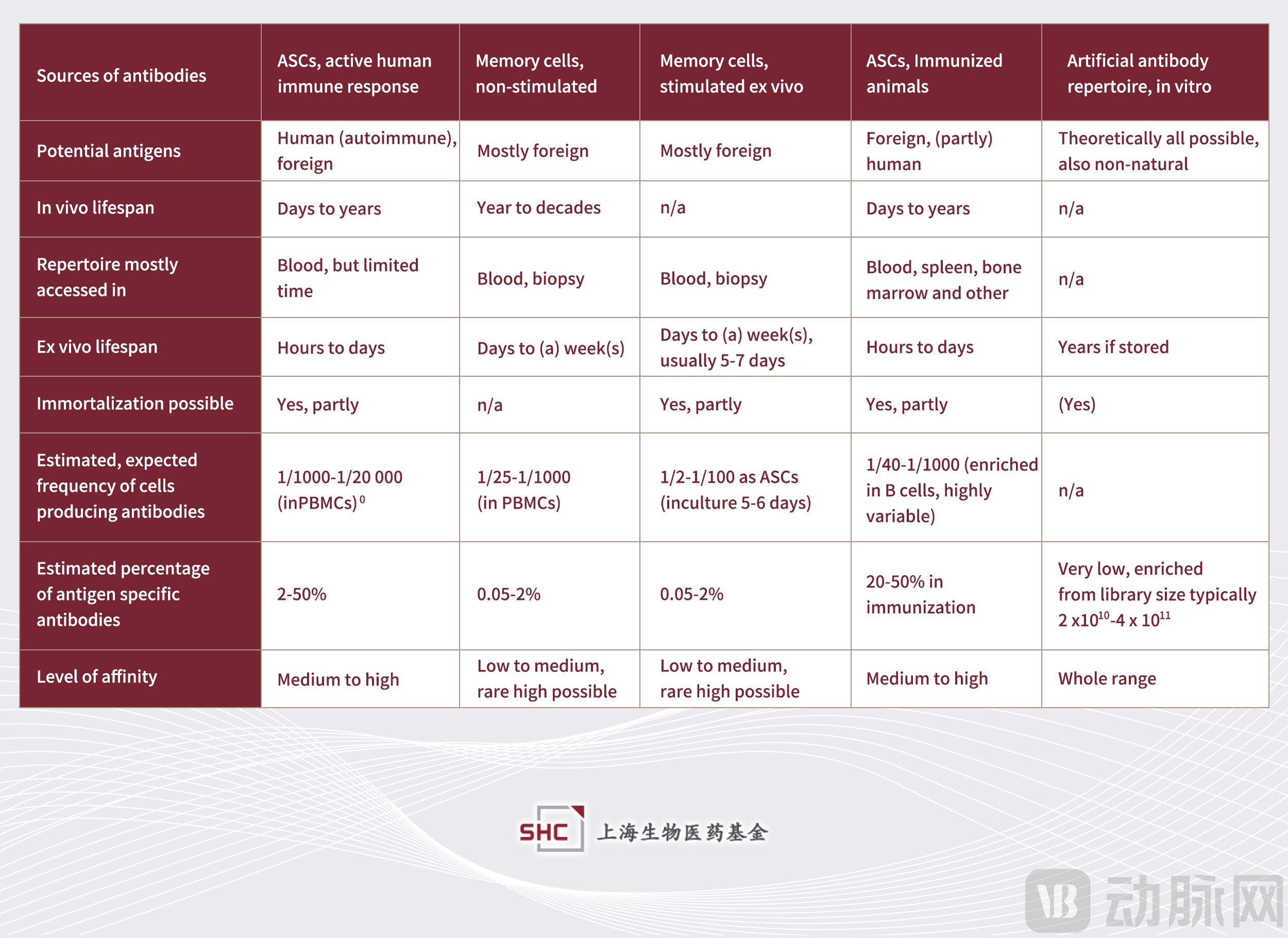
▲ Common Sources of Antibody Sequences. Compared with in vitro antibody libraries used for display technologies, antibodies derived from in vivo effector B cells—antibody-secreting cells (ASCs) and memory B cells—offer more reliable affinity and facilitate the screening of antibodies with high antigen specificity.[4]
3、In vitro display technologies offer a large theoretical library capacity, but the antibodies are not naturally paired and exhibit poor physicochemical properties.
——Phage Display
1In 1985, phage display technology was first reported as another important method for antibody discovery following hybridoma technology.。Phage display involves two steps: library construction and screening. Phage display is essentially an antibody library technology, in which antibody gene fragments cloned in vitro are inserted into phage vectors and transfected into engineered bacteria for expression. Screening is based on the fundamental principle of antigen-antibody binding and constitutes a repetitive biopanning process. By fusing gene-encoded antibody fragments with the phage’s own structural membrane proteins for display on the phage surface, unbound phages are removed, while those capable of binding to the target molecule are eluted and amplified. This enrichment process is repeated for 3–5 rounds to progressively increase the proportion of phages that specifically recognize the target molecule.
Phage display antibody libraries offer broad species coverage and applicability, while the use of fully human antibody libraries eliminates the need for subsequent humanization. Additional advantages include minimal requirements for experimental equipment and the ability to generate large libraries (~10^11 in size), although a significant proportion of VH-VL pairings are non-native.[6])。
The primary limitation of phage display is that the screened antibodies have not undergone in vivo maturation., the affinity of the obtained antibodies is often limited, necessitating in vitro affinity maturation. Their physicochemical properties are frequently suboptimal [7], requiring substantial downstream engineering modifications. Phage library construction can be achieved by extracting RNA from the spleen or lymphocytes of immunized animals, generating cDNA through reverse transcription, amplifying the heavy and light chain genes of the antibodies via PCR, and randomly assembling the VH and VL genes to construct an scFv/Fab gene library.However, the random combination of heavy and light chains in phage display antibody libraries fails to reflect the natural pairing of heavy and light chains found in immune animal antibody libraries, thereby limiting the screening depth of natural immune libraries.
——Yeast Display
Yeast display is another commonly used in vitro display system following phage display. By fusing the gene of an exogenous protein with the yeast vector gene sequence, yeast utilizes specific anchor proteins (a-agglutinin) to express and localize the display of the exogenous gene.Yeast CellsSurface.Yeast Display System Combined with Flow Cytometry Enhances Screening Throughput and Improves Screening Controllability. As a eukaryotic expression system, yeast display technology enables correct post-translational modifications and protein folding compared with phage display, a prokaryotic system; therefore, it achieves higher fidelity in antibody expression, yielding intact antibodies with full biological functionality. In contrast to the molecular weight limitations of phage display (typically restricted to single-chain variable fragments [ScFv], as larger sizes impair phage infection and packaging), yeast display can present full-length IgG antibodies.However, the yeast library is slightly smaller than that of phages.
In addition to the commonly used phage display and yeast display platforms, other display systems such as mammalian cell surface display, RNA display, and ribosome display have also been employed for antibody screening, although they have not yet gained widespread application.
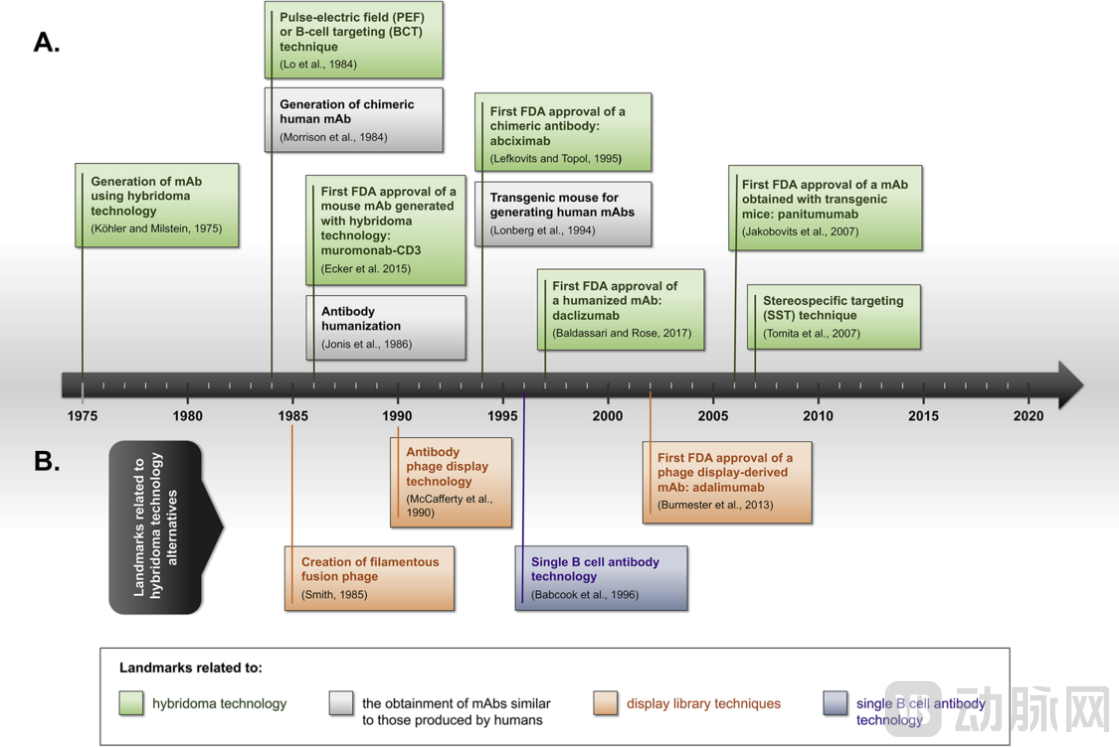
▲ Timeline of Monoclonal Antibody Technology Development[14]
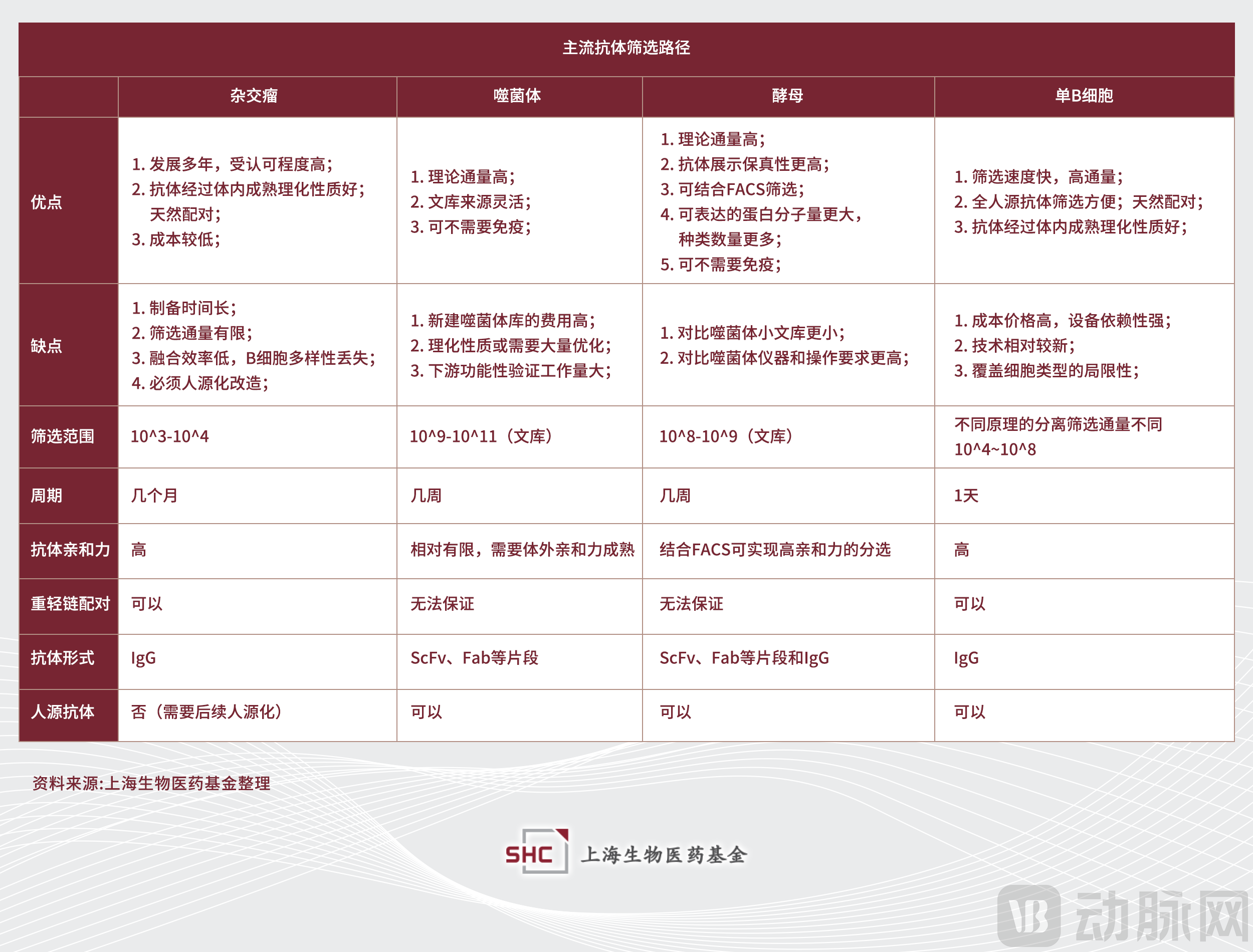
▲ Mainstream Antibody Screening Pathways
II. Application and Promotion of Single B-Cell Technology
Antibodies derived from in vivo immune responses generally exhibit superior developability compared to those obtained through in vitro display screening. Building on hybridoma technology, the current trend in in vivo antibody discovery is to further preserve B-cell diversity while enhancing screening throughput and efficiency. Driven by these needs, single B-cell technologies have been increasingly adopted and promoted in recent years.
Single B-cell antibody development relies on methods such as flow cytometry and microfluidics to isolate and identify B cells, followed by PCR, sequencing, and recombinant expression to pinpoint the target antibodies. Antigen-specific B cells can be derived from samples obtained after conventional animal immunization; common sources also include patients and transgenic mice for fully human antibodies, which help accelerate the development process.
Since each individual B cell produces only one type of specific antibody, thereforeThe single B cell-based antibody development approach ensures the natural pairing of heavy and light chains.Samples of in vivo origin have undergone the process of in vivo affinity maturation, ensuring their physicochemical properties and facilitating the acquisition of high-affinity antibodies. In contrast to hybridoma technology, samples from the single B-cell pathway do not require cell fusion.Antibody diversity is also preserved. Single B-cell platform screening offers additional advantages, including high throughput, short turnaround time, and a high positivity rate, largely meeting the essential requirements for in vivo antibody discovery.
The pathways of single B cells mainly includeFACSand various microfluidic technology platforms. The independent reaction systems enabled by microfluidics (whether in well plates or droplets) can link secreted antibodies to their corresponding cells, and the small reaction volume allows for more rapid accumulation of antibody concentration, facilitating subsequent detection of target antibodies. Below, representative platforms and companies are illustrated based on microfluidic separation principles (such as droplets and chambers).
III. Technical Types of Single B-Cell Technologies and Commercialization Progress of Corresponding Companies
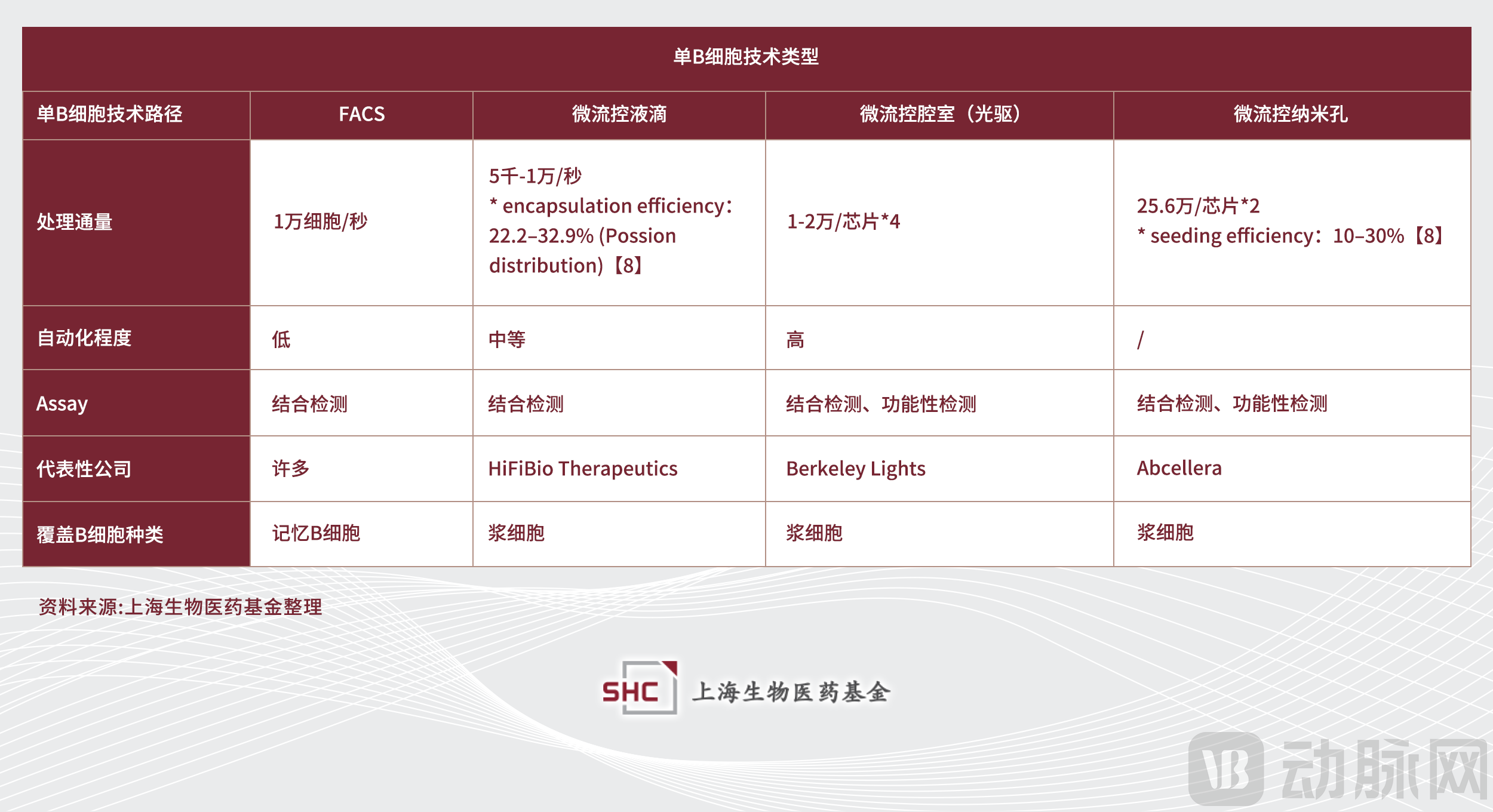
▲Single B-Cell Technology Types
1、Based on Fluorescence-Activated Cell Sorting (FACS)
FACS technology typically involves initial enrichment of antigen-specific B cells using antigen-conjugated magnetic beads, followed by fluorescence-activated cell sorting (FACS) based on antigen-binding fluorescence to isolate target antigen-specific B cells. FACS offers high-speed sorting, capable of processing tens of thousands of cells per second, enabling the analysis of tens of millions of B cells in a single day.
Although flow cytometry isolates antigen-specific B-cell clones based on the binding between antigens and B-cell receptors (BCRs) on the B-cell surface, it does not allow for functional validation. Furthermore, the overall process of obtaining antibody genes from B cells, cloning them into expression vectors, and subsequently expressing them in mammalian cells for functional validation is time-consuming.The overall cost and workload largely limit throughput.. Moreover, FACS exhibits a relatively high false-positive rate, further increasing the workload for downstream expression validation. Additionally, it requires antigens to be soluble recombinant proteins, making it less suitable for targets that are difficult to express and purify.
2、(Microdroplet-based)
HiFiBio:CelliGo
B cells are isolated using a water-in-oil droplet system, where each individual droplet reaction compartment contains a B cell and a carrier bearing the target antigen. Compared toBeaconIn semi-enclosed microfluidic systems, water-in-oil droplets create enclosed compartments where target B cells secrete antibodies. The common advantages of droplet-based microfluidic platforms are ultra-high throughput and rapid processing speed.However, PBMC-derived ASCs are typically low in frequency and have short ex vivo survival times, making high-throughput and rapid processing critically important.In single-droplet systems, cells cannot survive for extended periods. The concentration of secreted antibodies is low under conditions that preclude cell culture, which may compromise the positive rate. Furthermore, antibodies are typically sorted based on binary outcomes (determining binding versus non-binding according to a threshold), making it difficult to account for the complexity of diverse functions and binding modes.
In the microfluidic droplet technology pathway, HiFiBio Therapeutics (Gaocheng Biology) is a representative company.。Its CelliGo platform is based on single-droplet antibody discovery, generating 5,000 to 10,000 droplets per second [9]. Each picoliter-volume droplet contains a B cell and antigen-coated magnetic beads or antigen-presenting cells, ensuring monoclonality and capturing antibody-secreting B cells. The recovered B cells are barcode-labeled and lysed for cDNA library construction and downstream sequencing analysis [10]. Compared with systems such as Berkeley Lights’ nanopen and Abcellera’s nanowell, the droplet-based single-B-cell platform offers advantages in initial cell processing throughput.
HiFiBio engages in both in-house pipeline development and external collaborations. Its COVID-19 neutralizing antibody (HFB3013) was among the earliest and fastest projects to enter clinical trials, demonstrating the advantages of B-cell technology in neutralizing antibody development. Currently, three self-developed candidates have entered Phase I clinical trials, two of which are agonistic antibodies—a class that is particularly challenging to develop using conventional antibody discovery methods outside of B-cell technology.
3、(Microfluidic nanowell-based)
Abcellera
Abcellera’s microfluidic system includes chips with 256,000 nanowells; two chips can be run per screening cycle, achieving a throughput of approximately 500,000. Each well has a volume of no more than one nanoliter and is loaded with cells via gravity. B cells capable of secreting antibodies bind to antigen-coated magnetic beads, and these binding events can be detected by high-throughput fluorescence microscopy.As an antibody discovery company branded with AI, Abcellera is one of the few AI-driven drug development firms that has achieved profitability.
AbCellera has demonstrated significant expertise in the development of neutralizing antibodies. In the early stages of the pandemic, AbCellera collaborated with Eli Lilly to develop bamlanivimab. Leveraging the rapid development advantages of its B-cell platform, this molecule became the first SARS-CoV-2 neutralizing antibody to enter clinical trials. In November 2020, bamlanivimab received Emergency Use Authorization (EUA) from the U.S. Food and Drug Administration (FDA), marking a milestone in the field of B-cell-derived antibodies. However, due to its suboptimal efficacy against variant strains, the FDA subsequently revoked its EUA.However, the fact that bamlanivimab took less than a year from development to approval demonstrates the speed and efficiency of B-cell technology in neutralizing antibody development [11].. In terms of external collaborations, Abcellera has currently established in-depth partnerships with more than 40 pharmaceutical companies, with over 10 collaborative projects having advanced to various stages of clinical development. Revenue from collaborative development, including milestone payments, royalties, and R&D fees, will continue to dominate Abcellera’s income in the foreseeable future.
4. Based on light-driven microfluidic chamber technology (Microfluidic chamber-based)
Berkeley Lights:Beacon
Berkeley Lights’ Beacon system is a single-cell platform based on optofluidics. The entire workflow of the system comprises loading, culture, analytical validation, and export, enabling screening to be completed within one day.The Beacon system offers chips of various specifications, featuring vertically arranged nanoliter-scale semi-enclosed chambers (NanoPens) and horizontally aligned channels. Taking the 14k chip as an example, this specification includes 14,000 chambers and 10 channels. Initially, cells are optically driven into the nanoliter-scale semi-enclosed chambers (NanoPens) for B cell loading and culture, achieving physical separation between individual cells. Culture medium and other components can diffuse freely into the chambers at a low rate. Due to the small volume of each chamber, secreted antibodies reach high concentrations. Antibodies secreted by positive B cells diffuse into the channels, where antigen-coated magnetic beads and fluorescent secondary antibodies capture them and generate fluorescent signals for detection (with various antigens and detection formats available). Positive B cells are then exported and recovered via optical driving.
In addition to basic antigen-binding validation, Beacon can perform cell-binding validation (to preserve the native conformation of antigens and overcome challenges in expressing difficult targets), ligand competition assays, and cross-species binding tests, enabling the detection and evaluation of multiple reactions on a single chip. Upfront functional analysis is essential; on-chip functional testing of antibodies secreted by individual plasma cells allows for the preliminary selection of antibody sequences with the desired functionality, thereby reducing the workload for downstream recombinant expression and validation. The instrument is highly automated, requiring minimal manual intervention only at specific stages: chip pretreatment, sample loading, reagent preparation and loading, clone selection, and export settings.[12]。
Although Beacon boasts prominent technical highlights, its commercialization efforts have lacked sustained momentum. Berkeley Lights’ business model relies primarily on the sale of instruments and consumables, which are priced at a premium.Its market capitalization at the time of its 2020 NASDAQ IPO was $4 billion, but it subsequently faced controversy after short-selling firms published reports on the company. Although the claims in these reports—equating Berkeley Lights’ instruments and chips to conventional flow cytometers and miniaturized plastic well plates—were somewhat biased, it is undeniable that the high cost of its equipment (up to $2 million per unit) and consumable chips (thousands of dollars each) significantly hindered widespread adoption and commercialization. For downstream customers, such as CROs and pharmaceutical companies, comprehensive cost control remains a critical consideration.
IV. What Are the Future Opportunities for B Cell Technology in Antibody Screening?
As the cornerstone of biologics, antibody discovery platforms have long required continuous improvement and iteration. Compared with existing in vivo hybridoma screening and in vitro display technologies, B cell-based approaches offer significant advantages in screening throughput, speed, and hit diversity, thereby enhancing the subsequent developability of antibodies to a certain extent. For B cell technology, future opportunities and development trends are as follows:
1、Technical Level: Higher Actual Screening Throughput, Broader B-Cell Library Coverage
While single-B-cell technology offers high throughput compared to other techniques, its theoretical throughput does not fully align with the actual screening throughput. First, there is a certain loss in efficiency at each step of B-cell isolation. Additionally, the micro-reaction system demands high sensitivity for screening, as the amount of antibody contained within a single Nanopen or droplet is relatively low.Therefore, it is necessary to establish highly sensitive functional assays for antibodies, rather than being limited to pure binding-based screening., the transition from binding assays to functional primary screening can significantly reduce downstream expression validation time, thereby shortening the antibody development cycle. Finally,On the basis of increasing actual screening throughput, broader coverage of B-cell types needs to be considered.. Most current microfluidic platforms are designed for plasma cells, which constitute only a tiny fraction of the B-cell repertoire.
2、Commercialization: Insights from Different Development Paths
Single B-cell technology companies have adopted diverse development paths and business models. For instance, Berkeley Lights initially relied on the sales of instruments and consumables, Abcellera currently depends primarily on external collaborations, while HiFiBio operates as a pipeline-driven company. Single B-cell technologies exhibit strong dependence on specialized instrumentation; given the high price of commercially available instruments, market adoption faces certain challenges. Therefore, despite the numerous advantages of single B-cell technology, hybridoma technology is expected to remain significant in the foreseeable future, largely due to its relatively low cost, simplicity, and widespread familiarity.After all, the accessibility and pricing of any new technology are inextricably linked; reducing equipment and operational costs is the primary consideration for such companies.. Rather than selling equipment, companies that independently developed in-house single-B-cell platforms overcame extremely high R&D barriers in the early stages,However, leveraging the differentiated advantages of B-cell technologies requires focused consideration at the downstream application level.。
3、Application Level: Targeting the right points to leverage greater advantages and capture high-hanging fruit
Pharmaceutical companies typically pursue multiple development pathways simultaneously when resources permit. For targets that can be developed using existing technologies (“low-hanging fruit”),B cell technology is a means of providing more hits, and its relationship with platforms such as hybridoma and phage display is more complementary than substitutive.. However, when confronted with special and complex target types, such as neutralizing antibodies and “difficult targets,” B cell antibody discovery possesses indelible advantages.
First, in the development of neutralizing antibodies against acute viral infectious diseases (including SARS, MERS, Ebola, and COVID-19), R&D requirements are typically extremely urgent.Single B-cell technology not only shortens the R&D cycle but also enables direct screening of fully human antibodies from the human body, eliminating the need for subsequent humanization engineering and accelerating clinical development. It holds significant potential and offers advantages unmatched by hybridoma and phage display technologies.。
Secondly, many antibody targets that are easy to develop have already been translated into drugs, while antibodies targeting complex and difficult targets remain low-hanging fruit. Difficult antigens are characterized by single-point mutations, high structural similarity, high human-monkey homology, and limited epitopes in small extracellular regions. Such challenging targets include GPCRs and ion channels. They typically elicit very weak immune responses in vivo, resulting in an extremely low frequency of corresponding antigen-specific B cells (usually less than 10^-5), and less than 10^Antibodies against -3 are already rare binders,The advantages of single-B technology in high-throughput screening and library coverage can be leveraged for the discovery of such rare clones [13].。
Swipe up or down to view