

Taohuan Scientific Files for IPO: Pioneering High-Throughput Single-Cell and Microbial Screening Platforms Through Strategic U.S. Acquisition

Bioelectronica
Developer of Bio-intelligent Digital Tools
For a long time, China’s laboratory instruments and equipment industry has lagged behind international giants in R&D capabilities, product quality, and scale due to its late start. Leveraging centuries of accumulated expertise, overseas companies have easily monopolized the global life sciences instrumentation market. According to the Blue Book on Technological Research Achievements in Life Sciences, released by the Consortium of Life Science Societies under the China Association for Science and Technology, China remains heavily reliant on imported life sciences instruments and equipment, with annual expenditures exceeding RMB 100 billion.
The “lack” of initiative has, on one hand, led to high monopoly prices and unstable supply; on the other hand, poor service quality and national security strategic risks have severely constrained the development of China’s life sciences sector. In recent years, supported by national policies and an influx of capital, domestic manufacturers of laboratory instruments and equipment are encountering unprecedented development opportunities, with the industry exhibiting a trend of rapid growth.
Domestic substitution is in full swing. A number of companies have keenly realized that while follow-on products can break the import monopoly, they cannot overcome the market’s preference for “imported products.”
“As most of the industry focuses on domestic substitution of scientific instruments, we also need to examine the entire market from a higher-dimensional perspective. Although the domestic scientific instrument market in China has expanded rapidly in recent years, its share accounts for less than 20% of the global market. Meanwhile, new scientific advancements and demands are fostering emerging markets.” — Sun Jianjun, Founder and CEO of Taoxuan Science
Shanghai Taoxuan Scientific Instrument Co., Ltd. (hereinafter referred to as “Taoxuan Scientific”) is a Chinese manufacturer of scientific instruments and equipment that targets original innovation and serves the global market. The company was co-founded by scientists from around the world in fields such as microfluidics, optics, and automation, with a focus on the development of single-cell and single-bacterium tools.
Sun Jianjun, Founder and CEO of Taoxuan Science, is a serial entrepreneur with nearly 15 years of R&D and sales experience in the fields of biology, sequencing services, and microbial culture. “In my previous entrepreneurial venture, I established a high-throughput scientific sequencing service company. Through this process, I deepened my understanding of application scenarios for microbial culturomics. Initially, I aimed to develop drugs related to gut microbiota, but my research revealed that although many gut microbes are highly valuable, the vast majority are unculturable.”“If the microorganisms cannot even be cultured, how can we talk about utilizing them?” said Sun Jianjun.
Although microorganisms are the most diverse life forms on Earth, the majority are difficult to isolate and culture, and data on their genotypes and phenotypes are exceedingly scarce. Consequently, these microorganisms are vividly referred to as the “dark matter” of living matter.Driven by the underlying industry demand for microbial cultivation, Sun Jianjun and his co-founder Li Xiang established Taoxuan Science in 2021 to begin exploring this “uncharted territory” of microbial culture.
Smartculture X High-Throughput Microbial Screening Platform®It is one of the two major platforms currently focused on by Taoxuan Science.
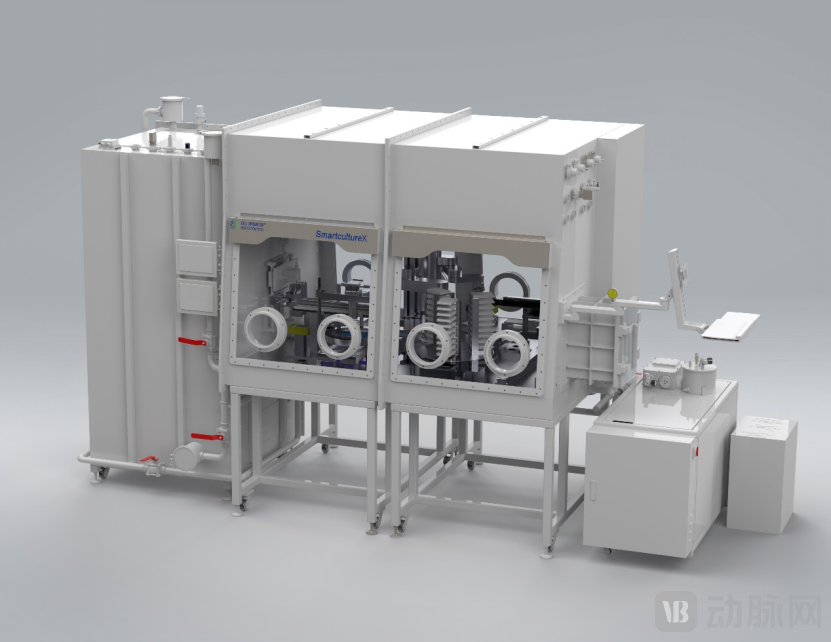
Smartculture X®High-Throughput Microbial Screening Platform
Smartculture X®It is a microbiome culturomics tool based on automation and deep learning, suitable for application scenarios such as microbiome therapy, isolation and identification of pathogenic microorganisms, probiotic screening, agricultural microbial screening, and environmental research. It aims to address current challenges in the microbial screening process, including high labor intensity, slow culture speeds, and low output.
“For 34 years, Professor Zhang Ping’s team at Inner Mongolia Agricultural University has been scouring the globe for microbial strains, ultimately breaking China’s complete reliance on imports of Lactobacillus paracasei PC-01. While their dedication and expertise inspire us, we should also consider how to leverage new technologies and tools to enhance the efficiency and success rate of microbial screening,” said Sun Jianjun.
Specifically, Smartculture X®The technical advantages of the high-throughput microbial screening platform can be mainly categorized into three points.
First, based on Taoxuan Science’s proprietary full-function automated microbial system, Smartculture X®It enables high-throughput cultivation of microorganisms, allowing the screening volume previously achieved over 30 years to be completed within six months.
Furthermore, once the microbial community has been cultured, identifying the desired uncultured or target strains from a vast number of colonies remains another significant challenge.YesHere, Smartculture X®By leveraging a computer vision system tailored for the microbiome, microbial redundancy can be reduced by 80%, increasing the efficiency of screening individual bacteria by tens of times. In the future, this platform will integrate spectral information and chemical markers to further achieve identification and characterization of microbial colonies at the strain level.
As previously mentioned, most microorganisms are difficult to isolate and culture. For instance, although the ocean harbors abundant microbial resources, less than 1% of these microbes have been successfully cultured in laboratories to date. One of the primary reasons for this is the difficulty in replicating their specific growth environments.In response, Smartculture X®Leveraging deep learning-based artificial intelligence prediction models to help users rapidly predict and design optimal culture media, thereby providing stronger support for downstream research in areas such as gut health and environmental remediation.
In 2022, Taoxuan Scientific achieved a critical milestone in its global expansion strategy by completing the acquisition of technology from the U.S. company Bioelectronica, integrating Chinese and American R&D teams, establishing supply chains, and commercializing its products.
Sun Jianjun stated, “When Taoxuan strategically chose to acquire Bioelectronica, its products were still in the proof-of-concept (POC) stage. However, drawing on my accumulated experience in the antibody drug field, I recognized that Bioelectronica’s products would bring new possibilities to antibody discovery. Therefore, we ultimately decided to proceed with the acquisition at the end of 2021.”
In 2022, Sun Jianjun brought the U.S. team to China, completing the integration of the Chinese and American R&D teams, and released the engineering prototype in March 2023. Meanwhile, the company promptly began collaborating with downstream customers both domestically and internationally to conduct technical validation using real-world samples. In January 2024, Hypercell®High-Throughput Single-Cell Screening System Officially Launched, Becoming the Second Major Platform Under Taoxuan Science
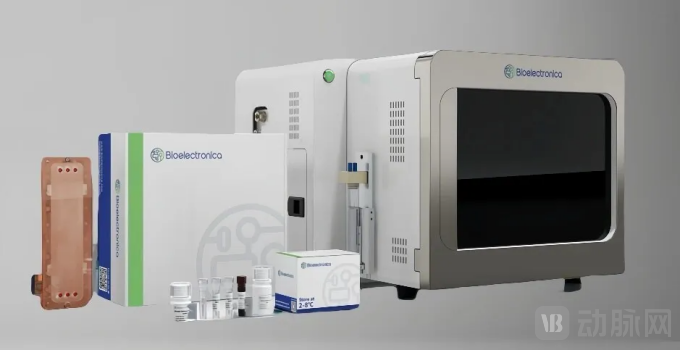
Hypercell®High-Throughput Single-Cell Screening System
Notably, following the completion of this acquisition, Roger, the founder of Bioelectronica, officially joined Taoxuan Science as Chief Technology Officer (CTO). Roger holds a degree in Electrical Engineering from MIT and previously founded Genia, a single-molecule sequencing instrument company that was acquired by Roche for $350 million in 2014.
This “reverse” acquisition of a U.S. company has, on the one hand, helped Taoxuan Science save time and costs in overseas market promotion, enabling rapid expansion into core international markets; on the other hand, the deployment of multiple technology platforms has reduced corporate risk and costs while expanding profit margins.
Returning to the Product Itself: Hypercell®It is the world’s first cell sorting platform based on bright-field imaging and extracellular secretion markers. Leveraging advanced microfluidics and AI-powered visual recognition technologies, it enables researchers to rapidly detect and sort target single cells that secrete specific products in a highly efficient and cost-effective manner. Furthermore, by simplifying experimental procedures and workflows, the platform significantly shortens R&D timelines, making it suitable for diverse applications including antibody discovery, cell therapy, and synthetic biology.
Taking antibody drug development as an example, Hypercell®By leveraging microfluidic chips and computer vision technology, it is possible to complete in a single experiment within one daySingle-Cell Screening Throughput at the 10 to Million Scale。Furthermore, compared with typical single-cell screening instruments such as traditional flow fluorescence, which can only screen memory B cells with membrane-surface-displayed antibodies,Hypercell®The screening is based on antibodies secreted by plasma B cells. Candidate antibodies that pass the screening undergo an affinity maturation process, which facilitates the identification of candidates capable of recognizing a broader range of epitopes and exhibiting diverse affinity levels.
From Hypercell®In comparison with existing single-cell screening technologies, traditional hybridoma technology generally has low throughput and requires a preliminary cell fusion step, resulting in complex preparation, prolonged timelines, and high costs. Although phage display technology offers increased screening capacity, it is prone to mismatching of antibody heavy and light chains.
In contrast, Hypercell®Without the need for single-cell cloning, a large number of candidate antibody sequences can be obtained from positive single cells within one week. Analysis using bioinformatics tools facilitates the earlier selection of more representative and high-probability candidate molecules, thereby accelerating drug development and testing. Furthermore, Hypercell®The screening is not limited by species or source, overcoming the species restrictions of hybridoma technology and the inability of library display technologies to screen for antibodies with naturally paired heavy and light chains.
In addition, Taoxuan Science has developed AbFinder™, a software based on AI model algorithms. AbFinder™ enables accurate prediction of antibody sequence functions, significantly shortening the antibody screening and subsequent functional validation cycles while reducing associated costs.
As an innovative tool manufacturer that has always kept its eyes on the global market, Hypercell®It has achieved commercialization globally, securing equipment and consumables orders from clients such as CRO companies and the global Top 50 pharmaceutical companies; Smartculture X®The first order will also be delivered in July 2024.
Customer recognition also indirectly validates Taoxuan Science’s innovation capabilities and commercialization prowess.
Although overseas markets exhibit higher consumer spending power, greater market maturity, and stronger acceptance of new technologies compared to the domestic market, the Chinese market remains a crucial foothold for Taoxuan Science. This is particularly evident given that endorsement from international clients and real-world applications is expected to bolster its position in the domestic market.SimilarlyJust around the corner.
Sun Jianjun stated, “Amid the winter chill, Chinese innovative pharmaceutical companies are integrating upstream and downstream resources to forge synergies. Taoxuan Science’s two major innovation platforms can significantly shorten drug development cycles and will undoubtedly bolster the R&D of innovative drugs in China, helping to break the monopoly held by international pharmaceutical companies over core technologies.”
In May 2024, Taoxuan Science established a strategic partnership with Duoning Biotech Group, China’s leading one-stop bioprocessing supplier.. This collaboration aims to promote the Hypercell high-throughput single-cell sorting system®and the global commercialization of other related products, the two companies will also leverage advanced target cell screening technologies to provide cost-effective solutions for antibody discovery.
At the conclusion of the interview, Sun Jianjun stated, “As a serial entrepreneur, I believe the first step in entrepreneurship is to clearly define the problem we need to solve, avoiding the pitfall of developing technologically impressive but practically useless solutions. Meanwhile, we must keep a close eye on continuous breakthroughs in global life sciences and identify the essential market opportunities driven by each advancement. Looking ahead, Taoxuan Science will remain dedicated to uncovering new industry opportunities and addressing scientific challenges in specific scenarios. Building on this foundation, we will enrich our product pipeline through in-house R&D and strategic acquisitions, aiming to become a multi-pipeline innovator of scientific tools rooted in the international market and serving global customers across diverse fields.”