

What Are the New Entrants Rushing for in the Crowded Respiratory Multiplex Testing Market?
The surge in demand for multiplex respiratory pathogen testing during the winter-spring transition of 2024 was evident to all.
“The peak period saw distributors scrambling for resources.” Recalling the recent frenzy over respiratory multiplex testing kits, which has just subsided, an industry insider remained quite exhilarated. For the entire sector, the surge in clinical demand and the sudden popularity of respiratory multiplex tests exceeded all expectations. Some companies happened to focus on the three most prevalent pathogens at the time—influenza A, influenza B, and Mycoplasma pneumoniae—ramping up production around the clock, yet still struggling to keep up with the flood of orders pouring in from across China.
In fact, since October 2023, the activity of influenza and Mycoplasma pneumoniae infections in China has gradually intensified. Coupled with the co-circulation of multiple respiratory pathogens, including SARS-CoV-2, rhinovirus, respiratory syncytial virus (RSV), and adenovirus, this has triggered a substantial surge in demand for in-hospital testing over a short period. Data shows that in 2023, InnoTest, a leading domestic enterprise in respiratory antigen testing, achieved an operating revenue of RMB 478 million, representing a year-on-year increase of 7.03%. Notably, its respiratory series (excluding COVID-19 products) generated RMB 405 million in revenue, marking a significant year-on-year growth of 246.17%. During the same period, Sansure Biotech, another leader in molecular diagnostics, reported total operating revenue of RMB 1.007 billion, with respiratory-related products contributing over RMB 400 million, a remarkable year-on-year increase of 680%. Its multiplex testing products were particularly popular.
Of course, amid this wave of fervor, many companies can only sigh in disappointment.Consequently, there has been a marked surge in the development and promotion of multiplex respiratory pathogen testing products.New developers have continuously entered the field from other sectors, instantly crowding the once relatively quiet track of respiratory pathogen testing. Since 2024, nine new multiplex respiratory pathogen test products have been approved for market launch. Meanwhile, multiplex test products themselves are rapidly iterating, with an increasing number of respiratory pathogens being incorporated into testing panels—evolving from triple-plex to sextuple-plex assays, while products under development generally start at fifteen-plex. During this period, news related to the registration of multiplex respiratory pathogen test products has frequently emerged, becoming a hot topic in the industry. These developments have included challenges such as questioned clinical data or rejected product applications.Every update from competitor teams keeps the developers of multi-pathogen respiratory diagnostic products on edge.
This spring-summer transition, everyone is striving to secure a ticket to join the new fierce battle against respiratory infections that will arrive in a few months.
The Visible Blue Ocean
“Objectively speaking, competition in the respiratory multiplex testing market is already quite fierce, but what we are optimistic about is the certainty of respiratory multiplex testing,” said Li Hang, founder of Fanglue Biology. As the tiered diagnosis and treatment system for respiratory infectious diseases is gradually established in China, the screening function undertaken by respiratory multiplex tests is unleashing significant clinical demand.
Meanwhile, compared with higher-dimensional molecular diagnostic technologies, respiratory multiplex testing can be completed based on PCR or colloidal gold technology. Whether in terms of product compliance, channel resources, or clinical practice, it is highly mature, significantly shortening the commercialization cycle. More importantly, as precision diagnosis and treatment of infectious diseases are being advanced into a deeper phase with greater practical applicability, and while the overall competitive landscape remains unsettled, this respiratory pathogen diagnostic segment, which holds considerable growth potential, offers ample room for imagination to every market entrant.
"As the clinical practice with the highest patient volume and frequency in China, the diagnosis and treatment process for respiratory infections has become increasingly marginalized."
On the one hand, traditional diagnostic and therapeutic approaches for respiratory diseases are fraught with shortcomings and have become unsustainable.Historically, the logic of empirical therapy has dominated the diagnosis and treatment of respiratory infections. In China, the clinical application of pathogen diagnostics for respiratory diseases has not been widely adopted. Consequently, some patients receive medication without undergoing etiological testing or confirming the specific respiratory pathogen. This is particularly prevalent in primary healthcare settings when managing simple infections. The resulting antibiotic misuse, and even delays in appropriate treatment, pose significant clinical risks and have frequently drawn criticism.
People need to adopt a more scientific approach to managing the annual inevitability of respiratory infections.
Respiratory diseases, commonly referred to as such, can be further classified into upper respiratory tract infections (URTIs) and lower respiratory tract infections (LRTIs). URTIs primarily affect the nasal cavity and pharynx, often leading to conditions such as rhinitis, sinusitis, and pharyngitis. The majority of URTIs are caused by viral infections; data indicate that 70%–80% of URTI pathogens are viruses, while the remaining 20%–30% are bacteria. LRTIs mostly involve infections of the trachea, bronchi, and lungs below the larynx, encompassing diseases such as bronchitis, pneumonia, and pulmonary tuberculosis. The pathogenic profile of LRTIs is more complex, primarily including bacteria, Mycoplasma, Chlamydia, viruses, and fungi.
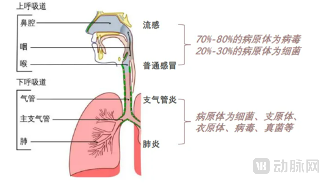
Major Categories and Pathogens of Respiratory Tract Infections Image source: Innotest Biotechnology's prospectus
Most respiratory tract infections may present with similar clinical symptoms, such as fever, cough, and nasal congestion. In other words, behind these similar cold-like symptoms may lie infections caused by different types of respiratory pathogens. Taking influenza-like illness (ILI) cases as an example, common respiratory pathogens based on past experience include viruses such as influenza virus, respiratory syncytial virus (RSV), adenovirus, human rhinovirus, and SARS-CoV-2. Additionally, pathogens such as Mycoplasma pneumoniae and Chlamydia pneumoniae can also cause ILI, and the proportion of mixed infections, predominantly viral, is not insignificant. The treatment regimens for infections caused by different pathogens vary significantly.
However, in clinical practice, when confronted with influenza-like symptoms, the immediate inclination is often to prescribe antibiotics. Clinicians also tend to rely on empirical diagnosis and treatment, sometimes even adopting a broad-spectrum "blanket" strategy combining antivirals and antibiotics. A survey on quality control indicators for influenza management revealed that among 296 children’s hospitals and maternal and child health care institutions across 30 provinces and municipalities in seven regions, the prevalence of testing for respiratory syncytial virus (RSV), adenovirus, and Mycoplasma pneumoniae was less than 45%, significantly lower than the 90% testing rate for SARS-CoV-2 and influenza A and B viruses. Nevertheless, conducting pathogen diagnostics does not equate to submitting specimens for laboratory testing. Previous research data indicate that the current rate of etiological specimen submission for influenza-like cases in China remains below 15%, whereas the proportion of such cases receiving antiviral treatment stands at 33.8%. In this context, the use of antiviral medications does not necessarily imply that etiological testing has been performed, as some patients receive medication without prior pathogen testing. Meanwhile, the rate of etiological specimen submission before the administration of antibacterial drugs is also low.
In fact, antibiotics are effective only against bacterial and Mycoplasma infections, not against infections caused solely by viruses. For Mycoplasma infections, only specific “macrolide” antibiotics are efficacious. According to Research Progress on Antibiotic Health Literacy and Antibiotic Misuse in China, antibiotic use can have significant, long-term impacts on the gut microbiota, which is closely linked to our immune system. However, there are currently no approved specific antiviral treatments for respiratory syncytial virus (RSV).
On the other hand, in recent years, regulatory authorities have been vigorously promoting precision treatment for respiratory tract infections. The practice of completing pathogen diagnosis before prescribing medication is becoming a new clinical trend.
In 2021, the National Health Commission issued the "Letter on Printing and Distributing the Guiding Opinions for the Special Campaign to 'Increase the Rate of Pathogen Testing Prior to Antibiotic Therapy in Inpatients'," which stipulated that the rate of pathogen testing prior to antibiotic therapy should be no less than 50% for patients receiving antimicrobial treatment, no less than 90% for patients with hospital-acquired infections, and should reach 100% for patients receiving combination therapy with two or more key drugs.
In November 2023, the National Health Commission issued the Notice on the Four Professional Medical Quality Control Indicators (2023 Edition), Including Those for Infectious Diseases. The first indicator stipulated quality control requirements for the positive rate of etiological diagnosis of influenza prior to the use of anti-influenza viral drugs. In February 2024, the General Office of the National Health Commission released the Notice on the 2024 National Goals for Improving Medical Quality and Safety. Among the improvement goals for quality control work in various specialties in 2024, it explicitly proposed increasing the positive rate of etiological diagnosis of influenza before the administration of anti-influenza viral drugs, as well as raising the rate of pathogen testing submission prior to antimicrobial therapy among hospitalized patients.
Against this backdrop, a growing number of medical device manufacturers have recognized the potential of the respiratory pathogen testing market and are entering the field. According to estimates by LeadLeo Research Institute, the market size of the respiratory disease testing industry grew from RMB 7.821 billion in 2019 to RMB 12.096 billion in 2023. It is projected to expand from RMB 14.869 billion in 2024 to RMB 40.481 billion in 2028, representing a compound annual growth rate (CAGR) of 28.45%.
In conclusion, multiplex respiratory pathogen testing holds great promise.
Products That Keep Growing in Scale
In China, multiplex testing for respiratory pathogens is not a new concept.
As early as 2019, Cepheid’s Xpert® Xpress Flu/RSV Assay (a combined nucleic acid test kit for Influenza A, Influenza B, and Respiratory Syncytial Virus using real-time fluorescent PCR) entered the Chinese market. Even earlier, domestic IVD companies such as Chengdu Biochip, Wuhan Zhongzhi, and Ningbo Helishi had developed diagnostic kits covering a broader range of respiratory pathogens based on other technology platforms.
However, these diagnostic reagents failed to gain traction in the Chinese market. In 2019, when Cepheid’s product entered China, the penetration rate of respiratory testing in China was only 1.81%, calculated as the proportion of the respiratory testing market size to the overall IVD market size, whereas the global average reached 14.77%.
Looking back, the more significant value of Cepheid’s respiratory triple-panel test lies not in cultivating market awareness, but in validating its technological pathway. However, domestically produced multiplex respiratory diagnostic products have taken a markedly different route. “At present, many multiplex respiratory tests are designed by building upon Cepheid’s triple-panel assay, typically including influenza A and B viruses, with additional targets selected from common pathogens such as respiratory syncytial virus (RSV), rhinovirus, and parainfluenza virus,” Li Hang explained to VCBeat. This approach can lower development costs for multiplex respiratory tests and reduce the number of positive samples required for enrollment in registration clinical trials. “Although the added pathogens often become key competitive differentiators, it is difficult to predict in advance which pathogen will cause an epidemic, introducing an element of chance.”
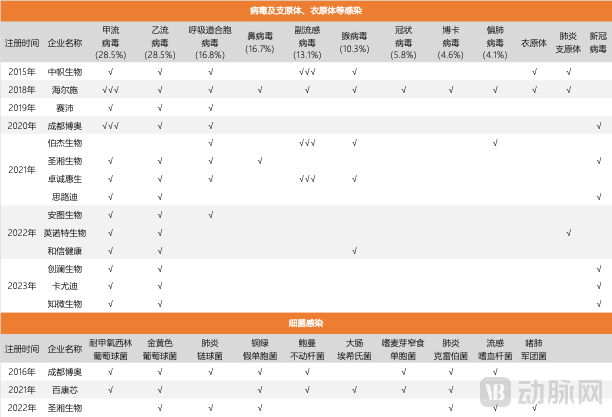
Some Common Multiplex Respiratory Pathogen Panel Products Data Source: Compiled by VCBeat from public data
In a sense, the development of multiplex respiratory diagnostic products is trapped in the inertial thinking of the IVD industry, namely, building large and comprehensive product portfolios to compete for market share. Under this strategic consensus, the panel of pathogens included in new multiplex respiratory diagnostic products has been continuously expanding. In 2021, based on its triple respiratory assay, Sansure Biotech launched a quintuple assay kit that enables simultaneous detection of influenza A virus, influenza B virus, respiratory syncytial virus, rhinovirus, and SARS-CoV-2 from a single sample. In the same year, Zhuocheng Huisheng’s quintuple respiratory assay actually covered the detection of seven pathogen subtypes. Refining pathogen detection to the level of specific subtypes has since become the mainstream approach in the development of multiplex respiratory diagnostic products.
It appears that the more pathogen types included, the stronger the market competitiveness of the test kit. In May 2024, Aikeruite Biotechnology’s ten-pathogen respiratory panel (fluorescent PCR method) received marketing approval, pushing the scale of pathogen panels to new heights and achieving a coverage rate of up to 95.4% for common non-bacterial pathogens. However, the following month, news that the National Medical Products Administration (NMPA) had rejected the registration of Jinuo Bio’s sixteen-pathogen respiratory nucleic acid detection kit (fluorescent PCR method) put the brakes on this rapid expansion. In fact, ultra-multiplex respiratory pathogen detection products face significant regulatory hurdles; earlier, a 15-plex respiratory product was denied registration, while another 11-plex respiratory product voluntarily terminated its registration application.
In essence, the regulatory hurdles faced by ultra-multiplex respiratory pathogen panel products are not a negative development. This is because the core advantage of such products lies not in their breadth, but in their precision.
On the one hand, the marginal utility of adding more pathogen targets is diminishing.In terms of respiratory viruses and bacteria, even a 15-plex respiratory panel cannot achieve 99% coverage of the pathogen spectrum. Meanwhile, the marginal benefit becomes more pronounced as the number of targets increases. For instance, expanding from a triple-panel to a quintuple-panel may increase pathogen coverage from 70% to 90%, whereas further increasing to a decaplex panel adds only an additional 5.4% in coverage.
On the other hand, the inclusion of ultra-multiplex pathogen panels leads to an exponential increase in the time and cost required for product registration.Generally, ultra-multiplex respiratory diagnostic panels covering ten or more targets require longer durations for clinical sample collection, clinical trials, and inclusivity testing compared to smaller multiplex assays. This is because meeting the total sample size requirement alone is insufficient; if the pathogen panel includes rare or uncommon pathogens, specific minimum numbers of positive cases for those pathogens are required, which significantly extends the timeline for sample collection and clinical studies.
Returning to the point made at the beginning of this article, the purpose for enterprises to develop multiplex respiratory pathogen testing is to secure a ticket to share in the upcoming wave of market opportunities. The underlying logic must revert to the core needs of clinical diagnosis and treatment of infectious diseases, namely, increasing the positive rate of etiological diagnosis for influenza prior to the use of anti-influenza antiviral drugs, and improving the rate of etiological specimen submission before initiating antimicrobial therapy in hospitalized patients.
The relentless pursuit of technological excellence is a means of competition, not the fundamental nature of such tools.
How Much Longer Will Respiratory Multiplex Panels Remain in High Demand?
At the beginning of the article, when analyzing the sudden surge in the market for multiplex respiratory pathogen testing, an important background context was omitted: from the winter of 2023 to early spring of 2024, respiratory infections in China exhibited new characteristics. Influenza A, Influenza B, and Respiratory Syncytial Virus (RSV) circulated simultaneously, causing individuals to experience recurrent flu-like symptoms, often due to different viral pathogens in each infection episode. Consequently, multiplex respiratory pathogen testing has become increasingly necessary.
Prior to this, single-pathogen tests targeting specific pathogens were more commonly used in adult populations, as adults with relatively robust immune barriers can resist most pathogenic invasions; typically, only a particularly virulent pathogen is capable of causing widespread infection among a large number of people within a short period.
“Sustained multiple co-infections are unlikely; conditions may return to normal as early as next year.” Regarding future trends in respiratory infectious diseases, some industry practitioners hold pessimistic views. However, many others maintain a rationally optimistic outlook and are actively developing high-performance multiplex diagnostic tests for respiratory pathogens.
First, international experience shows that respiratory infections remain highly prevalent in the second year following the optimization of containment policies. In the United States, the total number of outpatient visits for influenza-like illness (ILI) rose year by year from 2015 to 2019. This figure decreased relatively during 2020 and 2021, when varying degrees of centralized containment measures were implemented. In the second half of 2021, most areas across the U.S. resumed work and school operations. The following year, the reported total number of outpatient ILI cases reached twice the level of 2019. Although data from 2023 showed a slight decline compared with the previous year, it remained significantly higher than pre-pandemic levels.
Secondly, under the pressure of medical insurance cost containment, hospitals are motivated to deliver more effective treatments through more precise diagnostics. Li Hang revealed to VCBeat that although ultra-multiplex respiratory pathogen detection kits have faced obstacles in product registration, they remain highly popular in clinical practice. Many respiratory molecular diagnostics companies have launched testing services covering 20 or even 40 pathogens, building upon their smaller multiplex panels. In an industry group focused on respiratory multiplex testing, practitioners also reported that clinicians are now proactively requesting improvements in the supply and iteration of multiplex testing products.
Finally, public data indicate that the number of PCR laboratories in China surged from approximately 2,000 before the pandemic to a peak of 14,000, with these facilities effectively transformed into resources for sustainable development. The competition to capture the incremental clinical testing demand handled by these more than 10,000 molecular diagnostics laboratories has become a key driver for companies specializing in multiplex respiratory panels to proactively compress their profit margins in order to deliver higher-quality services. According to industry practitioners, in addition to respiratory multiplex assays, their teams have begun developing multiplex testing products for other major disease categories to strategically position themselves in advance for the clinical needs of China’s PCR laboratory network.
So, will the market for multiplex respiratory panel testing once again heat up as expected in the coming months? We shall wait and see.
Writing Reference:
Xiao Liao: Reasons for the Difficulty in Obtaining Certification for Ultra-Multiplex Respiratory Tests
Policies, News, Data: New Analysis of Pathogens/Infectious Diseases
Respiratory Pathogens: Prescribing Does Not Equal Testing; Medication Use Does Not Imply Detection