

Fosun Pharma to Privatize Fosun Henlius in HK$5.4 Billion Deal
Fosun Pharmaceutical
Healthcare Industry Group

Henlius
Innovative Biopharmaceutical Company
On the evening of June 24, Fosun Pharmaceutical Group (stock code: 600196; stock abbreviation: Fosun Pharmaceutical) issued an announcement stating that its controlling subsidiary, Fosun New Drug (as the offeror and merging party), intends to absorb and merge with and privatize Henlius (as the merged party; stock code: 02696).
According to the announcement, Fosun Pharma plans to acquire and cancel all shares of Shanghai Henlius Biotech, Inc. (including H-shares and unlisted shares, hereinafter referred to as the same) held by other existing shareholders through a cash payment of approximately HK$5.4 billion or its equivalent in RMB and/or share swap, thereby privatizing Shanghai Henlius Biotech, Inc.
"Let the bullets fly for a while,"
“Rumors Come True” from a Month Ago
On May 23, Shanghai Henlius Biotech, Inc. was suspended from trading, with a market capitalization of HK$10.2 billion and a closing price of HK$18.84 per share.
“Rumors” also began to circulate a month ago, with multiple reports indicating that Fosun Pharmaceutical is considering privatizing its subsidiary, Shanghai Henlius Biotech, Inc. Sources cited in the reports stated that Fosun Pharmaceutical is working with an advisory firm on a potential privatization offer, and other investors may also join the transaction. Specific details await the release of official announcements.
On June 24, one month after widespread rumors circulated, Fosun Pharmaceutical issued an announcement providing a definitive answer, stating its intention to privatize Shanghai Henlius Biotech, Inc. According to the announcement, the consideration for this absorption and merger includes both cash and share components:
① The total cash consideration amounts to approximately HK$5.4 billion or its equivalent in RMB, of which Fosun Pharma plans to pay the cash consideration involved in this absorption and merger through acquisition loans (expected not to exceed the equivalent of HK$3.7 billion) and its own funds.
② For the share consideration portion, Fosun New Drug proposes to issue additional registered capital to acquire and cancel a total of 57,724,918 shares of Henlius held by two other controlling subsidiaries of the Company (namely, Fosun Pharma Industry and Fosun Industrial) (i.e., at a ratio of acquiring and canceling approximately 4.289864016 shares of Henlius for every RMB 1 of newly issued registered capital).
Meanwhile, Fosun New Drug reserves the right to provide a share election option to all shareholders of Henlius (excluding Fosun Pharma Industry and Fosun Industrial). If Fosun New Drug exercises such rights and the conditions precedent to the implementation of the potential share election offer are satisfied, such shareholders shall have the right to elect to waive the cash consideration and exchange their shares in Henlius for shares in the holding platform at a ratio designated by the offeror; provided that the aggregate number of Henlius shares settled pursuant to the potential share election offer shall not exceed 8% of the total number of issued shares of Henlius as of the date of this announcement (i.e., 43,479,588 Henlius shares).
Prior to this transaction (i.e., as of June 24, 2024), Fosun Pharmaceutical (through its controlled subsidiaries Fosun New Drugs, Fosun Pharmaceutical Industry, and Fosun Industrial) held an aggregate of 59.56% of the total shares of Shanghai Henlius Biotech, Inc.
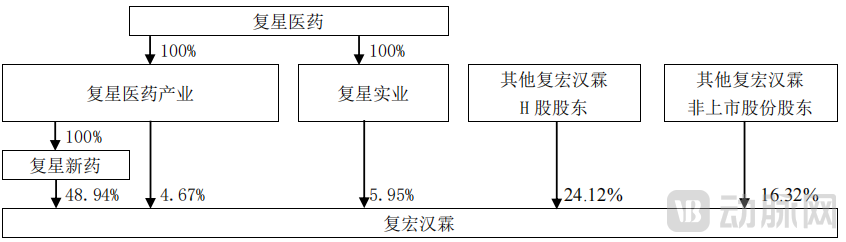
Simplified Equity Structure of Henlius Prior to the Transaction (Source: Announcement)
Excluding the impact of specific shareholder share-swap transactions and potential share option offers implemented by Fosun New Drug, it is expected that immediately upon completion of this transaction, Fosun Group will hold 100% equity interest in Fosun New Drug.
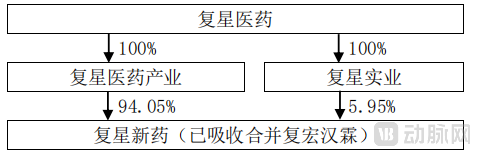
Simplified Shareholding Structure of Henlius Following the Transaction, Source: Announcement
Shanghai Henlius Biotech, Inc., the company being taken private in this transaction, is likely familiar to most. Established in 2010 and headquartered in Shanghai, this leading Chinese innovative pharmaceutical enterprise focuses on the healthcare sector, spanning pharmaceuticals, medical devices, and healthcare services. Henlius primarily engages in the research and development, manufacturing, and sales of innovative drugs, committed to addressing medical needs in various therapeutic areas, including oncology, cardiovascular diseases, metabolic disorders, and central nervous system diseases.
In September 2019, Shanghai Henlius Biotech, Inc. listed on the Hong Kong Stock Exchange, raising HK$3.096 billion through its initial public offering (IPO). Based on the closing price at that time, Henlius’s market capitalization stood at HK$26.7 billion. As of now, the company’s shares are suspended from trading, with a stock price of HK$18.84 and a market capitalization of HK$10.2 billion. Compared to its listing debut, the company has lost more than 60% of its market value.
Amid a sluggish capital environment, Henlius achieved a remarkable transformation last year.
On March 21, 2024, Shanghai Henlius Biotech, Inc. released its 2023 annual results, with revenue of approximately RMB 5.3949 billion., representing an increase of approximately 67.8% compared to the same period last year,Net profit reached RMB 546 million, marking the Company’s first full-year profit since achieving semi-annual profitability for the first time in the first half of 2023. This profitability was primarily driven by the continuous expansion in sales volume following the commercial launch of Henlius’s core products. In 2023, total product sales revenue amounted to approximately RMB 4.5535 billion, representing a year-on-year increase of 70.2%.
Among them, Henlius's self-operated product, Hanquyou®(Trastuzumab, European brand name: Zercepac®), Henlius®(Serplulimab) and Hanbeitai®(bevacizumab) achieved annual sales revenues of RMB 2.737 billion, RMB 1.1198 billion, and RMB 119.4 million, respectively. In addition, in accordance with the agreement with its partner, Henlius Biotech, regarding Hanlikang®(Rituximab), Hanbayuan®(Adalimumab) achieved sales revenues of approximately RMB 540.5 million and RMB 58.6 million, respectively.
Notably, its domestically produced biologic “Hanquyou” serves as a representative of Chinese biologics going global.®, it has been approved for marketing in over 40 countries and regions, including the United Kingdom, Germany, Spain, France, Italy, Sweden, Australia, Singapore, Argentina, and Brazil, making it the Chinese-made biosimilar with the largest number of approvals globally. Meanwhile, the product has been included in the national reimbursement lists of China, the United Kingdom, France, and Germany, further enhancing its accessibility. In 2023, Hanquyou®The company has successfully expanded its global commercial footprint to include Thailand, the Philippines, and Brazil. Its marketing authorization applications in the United States and Canada have also been accepted, with approval expected in 2024, thereby extending benefits to a broader global patient population.
Currently, Henlius’s product pipeline encompasses more than 50 molecules, covering various therapeutic modalities such as antibodies, antibody-drug conjugates (ADCs), fusion proteins, and small-molecule drugs. Meanwhile, the company is conducting over 30 clinical trials globally for 16 of its products. Hanlikang®, Hanquyou®, eight products including Drug H, have established partnerships with international pharmaceutical companies such as Accord, Abbott, Eurofarma, Elea, and KGbio, covering mainstream biopharmaceutical markets in Europe and the United States as well as numerous emerging markets.
This privatization will not only inject high-quality assets with strong profitability into Fosun Pharmaceutical, bringing stable revenue and profits, but also introduce blockbuster products poised for rapid growth. Indeed, Fosun Pharmaceutical has acquired a rare domestic “cash cow” of innovative drugs—a scarce asset in China that continuously generates value.
As disclosed in the announcement, upon completion of this transaction, it will help strengthen the synergy between Fosun Pharmaceutical Group (excluding the Target Group) and the Target Group. Furthermore, with business resource support provided by our Group, it will facilitate the sustainable growth of the Target Group and contribute to the achievement of the overall strategic objectives of Fosun Pharmaceutical Group.
Beyond these more “official” statements, another reason for Fosun Pharmaceutical’s privatization of Henlius Biotech may lie in the structural changes and market downturn affecting H-shares in recent years. In this broader context, a number of biotech companies have chosen to go private or have already delisted, including China Traditional Chinese Medicine Holdings Co., Limited, ScienCare Holdings Ltd., and Lansen Pharmaceutical Holdings Limited.
Many companies find that their stock prices fail to accurately reflect the true value of their assets. Coupled with prolonged low trading volumes and insufficient financing capabilities, this makes it difficult for them to leverage equity financing as a viable source of capital for business development, thereby constraining their growth to some extent. For such companies, the benefits of maintaining a public listing are limited, while the costs remain significant; consequently, they often opt for privatization.
Meanwhile, by privatizing Henlius, Fosun Pharmaceutical can further expand its presence in the promising field of innovative drugs, broaden its footprint across the pharmaceutical industry value chain, and enhance its overall market competitiveness. On the other hand, the privatization of Henlius will enable Fosun Pharmaceutical to improve the Group’s financial and strategic flexibility. This move would reduce exposure to volatility and pressure from public markets, while investors need to assess whether the privatization proposal aligns with their investment interests.
Overall, this privatization will not only help Fosun Pharmaceutical identify a new growth curve for its performance but also enable the high-quality Henlius to regain its innovation value in the capital market. We look forward to the combination of the two achieving complementary advantages and value fission.
Reference: “Fosun Pharmaceutical Plans to Take Henlius Private: What’s the Strategic Rationale?”