

In-Nanjing Universities Alumni Association Holds 'Discover SEU Unicorn' Symposium Showcasing High-Potential Biotech Startups
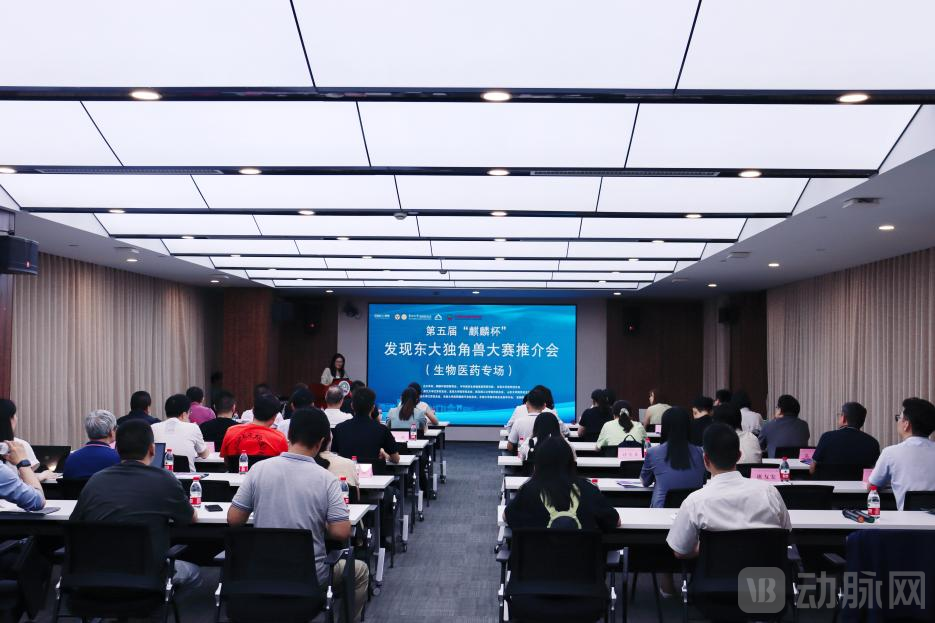
On June 21, the biomedical sector promotional event for the 5th “Qilin Cup” Nanjing University Unicorn Discovery Competition was successfully held at the Nanjing Institute of Advanced Life and Health, Chinese Academy of Sciences. Some 50 attendees, including representatives from alumni organizations such as the Nanjing Institute of Advanced Life and Health (Chinese Academy of Sciences), Jiangsu Alumni Association of Zhejiang University, Nanjing Alumni Association of Fudan University, Nanjing Alumni Association of Shandong University, Nanjing Alumni Association of Wuhan University of Technology, and Nanjing Alumni Association of Southeast University, as well as representatives from listed companies (including Medlander [688273]) and entrepreneurial teams, participated in the event.
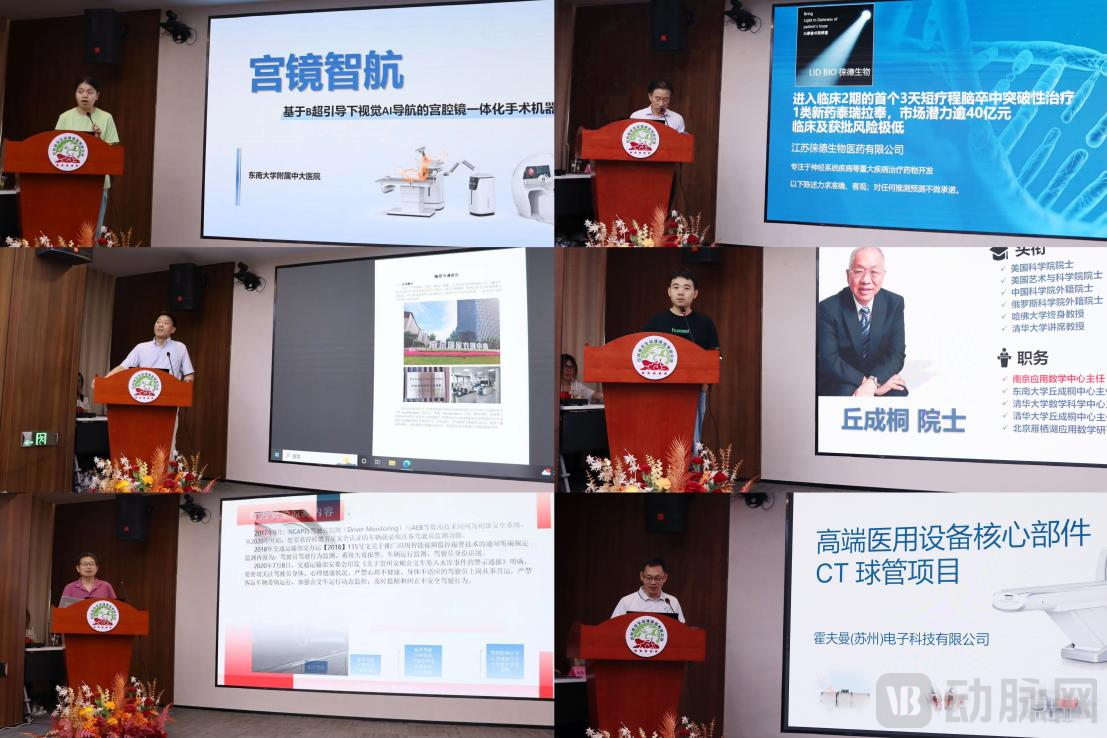
Representatives from six high-quality startups—including a project on CT X-ray tubes, a core component of high-end medical equipment; an integrated hysteroscopic surgical robot; and ventures focused on developing therapeutics for major diseases such as neurological disorders—conducted project roadshows. They engaged in in-depth exchanges with guests from investment institutions such as Huitong Capital and Zhongke Yunfu, as well as representatives from the Chinese Academy of Sciences and the Industrial and Commercial Bank of China, who offered numerous constructive comments and suggestions on the future development directions of these projects.
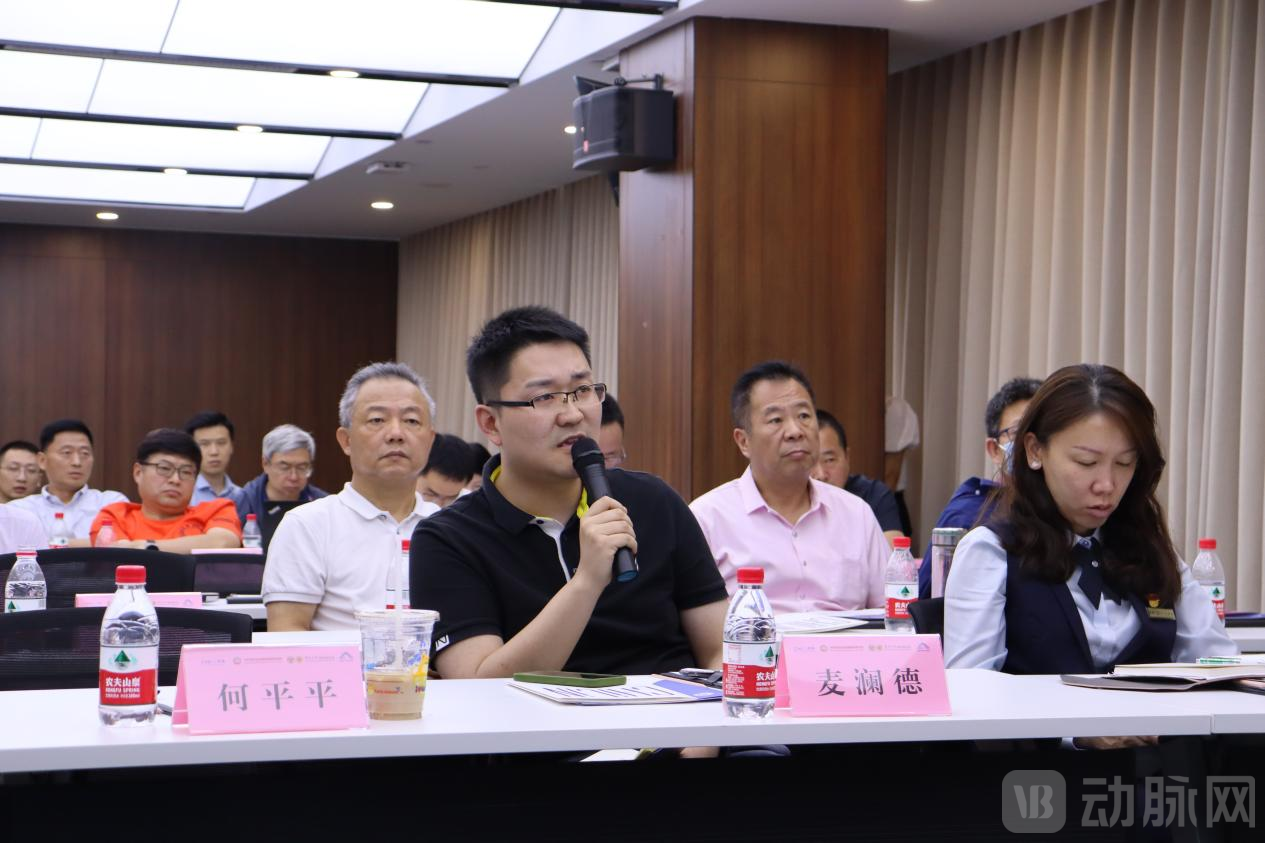
During the roadshow, representatives of the hysteroscopic surgical robot project noted that the market potential for robotic systems in gynecology is currently substantial. Compared with common surgical robots used in lung or liver procedures, gynecological applications entail more differentiated usage requirements, and R&D efforts in this field are gaining increasing attention.
The Driver Health and Safety Monitoring Project notes in its overview of the development of driver health monitoring that EU countries mandated the standard installation of Driver Monitoring Systems (DMS) in 2024. This indicates that the integration of Advanced Driver Assistance Systems (ADAS) and high-level autonomous driving features into vehicles has been prioritized. The core technology of this project lies in the application of “edge-cloud” visual technology to monitor basic human vital signs, such as heartbeat and heart rate.
The Smart Chinese Herbal Medicine Cultivation Project aims to address issues such as excessive heavy metal content, pesticide residues, and low yields in domestic Chinese herbal medicine cultivation. In collaboration with a German team, the project has achieved high-efficiency, high-quality cultivation of herbaceous plants, with active ingredient levels exceeding international standards. The project is currently receiving incubation services from securities firms such as Huatai Securities and is further advancing the development of the Chinese herbal medicine market through scientific methods.
Sun Ting, Deputy Director of the Nanjing Institute of Advanced Life and Health, Chinese Academy of Sciences, stated that since its establishment, the Institute has been committed to building a national-level base for original innovation and achievement transformation in life and health, providing strong scientific and technological support for technological innovation and industrial structural transformation and upgrading in China’s life and health sector. She expressed the hope that this promotion event would uncover more high-quality innovation and entrepreneurship projects, showcase higher-level innovative capabilities, promote deeper integration of innovation resources and factors, actively facilitate project implementation, and further advance the innovation and translation of biopharmaceutical technologies.
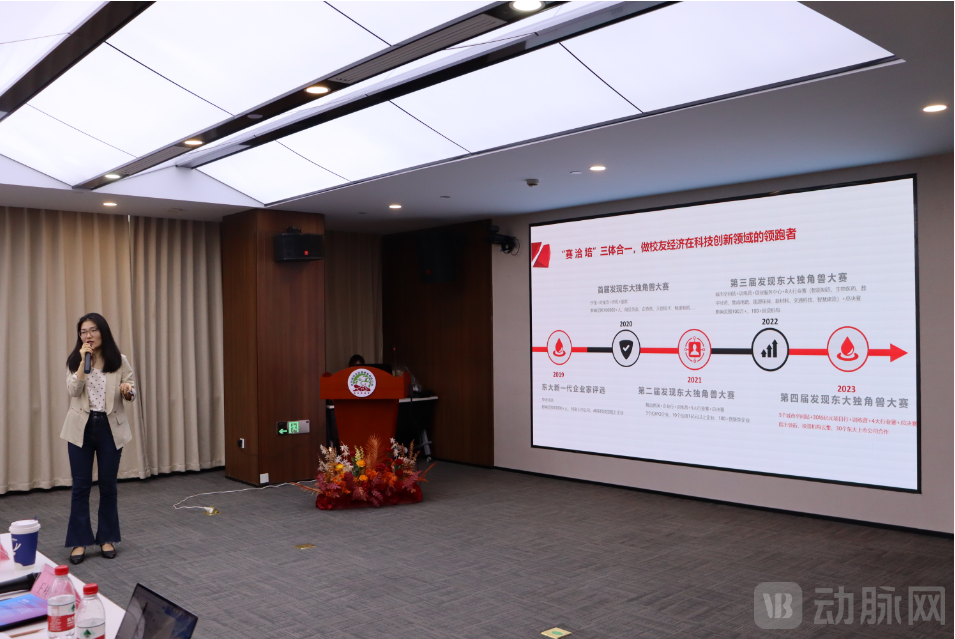
Zhong Guanhu, Secretary-General of the Zhejiang University Jiangsu Alumni Association, stated that Southeast University’s alumni economy has achieved a scale of development that leads not only in Jiangsu Province but across China, serving as a model for alumni associations at other universities. The Discovery Dongda Unicorn Competition has evolved from an entrepreneurship contest for Southeast University alumni into a broader platform engaging alumni from multiple universities. His presence at the event aimed to gain a deeper understanding of how the competition empowers and supports startup projects. In the future, alumni industry resources from various universities in Nanjing can be integrated into Southeast University’s ecosystem, leveraging its professional services to achieve mutual benefits for all parties involved.
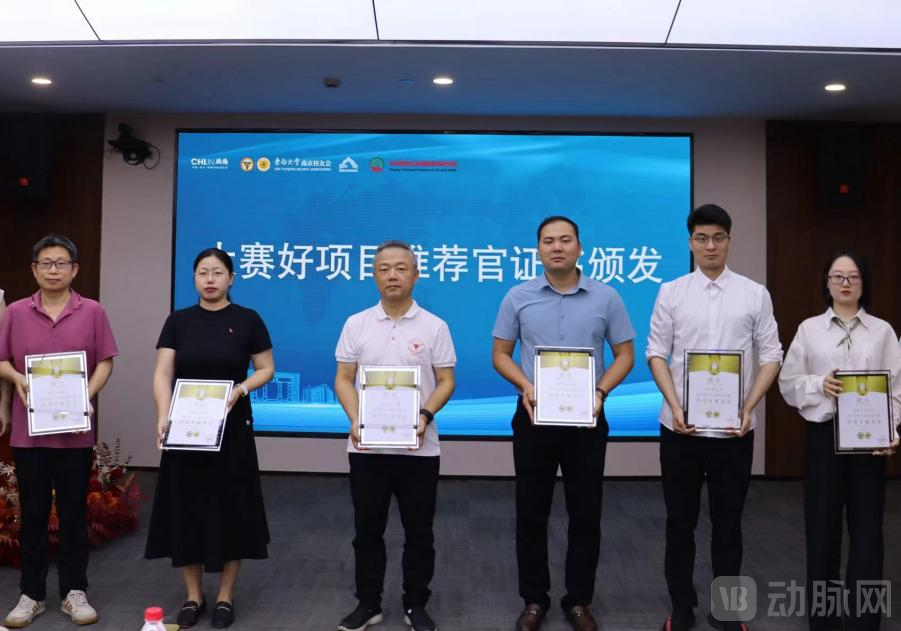 Certificate Awarding for "Good Project Recommendation Officer"
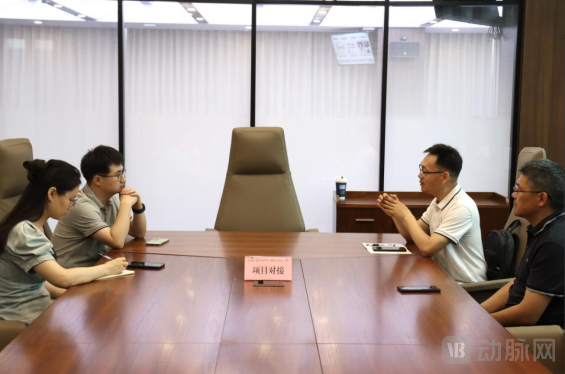
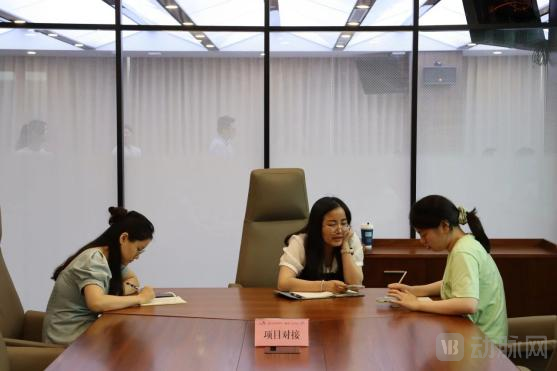
During the event, a dedicated one-on-one exchange session was organized, focusing on specific needs such as project funding, technical collaboration, and implementation matchmaking. Numerous project representatives engaged in in-depth discussions with staff from the Research Institute and competition project brokers. Many projects expressed significant demand for product R&D technologies and indicated that they would further explore cooperation models with the Research Institute in the future.
This event was hosted by the Administrative Committee of Qilin Science and Technology Innovation Park, the Nanjing Advanced Institute for Life and Health of the Chinese Academy of Sciences, and the Nanjing Alumni Association of Southeast University. It received strong support from the Jiangsu Alumni Association of Zhejiang University, the Nanjing Alumni Association of Fudan University, the Nanjing Alumni Association of Wuhan University of Technology, the Nanjing Alumni Association of Shandong University, the Pharmaceutical and Healthcare Industry Alumni Association of Southeast University, the Medical Branch of the Nanjing Alumni Association of Southeast University, the Jiangsu Alumni of Beijing University of Chinese Medicine, Industrial and Commercial Bank of China, and Medlander.
Project Overview
CT X-ray tubes are critical components of medical imaging equipment, representing a key technological bottleneck targeted by national strategic initiatives. As core components of CT systems, they are also high-value consumables. The company specializes in the development and manufacturing of CT X-ray tubes and other types of X-ray tubes, providing high-quality supporting products for medical imaging equipment. The company owns all technology patents and product brands of Naidu Germany, as well as independent intellectual property rights, contributing to breaking through foreign technological blockades.
Leveraging algorithmic, integration, and application innovations, the project’s product is a hysteroscopic surgical robot system for female gynecological diseases, accompanied by an integrated diagnostic and therapeutic system featuring “scanning, decision-making, and operation.” This product is poised to overcome a series of clinical pain points associated with existing hysteroscopic surgeries, such as heavy reliance on physician decision-making, narrow field of view, diagnostic difficulties, and cumbersome operational procedures. By focusing on preoperative 3D reconstruction, intraoperative precise identification and manipulation, and postoperative risk management, this project intelligently empowers the entire hysteroscopic surgical process, offering new approaches to reduce lesion miss rates, decrease postoperative infection rates, and improve surgical success rates.
The “Mathematics + AI” Full-Stack Medical Imaging Diagnosis and Treatment Platform project is an implementation initiative incubated by the Nanjing Center for Applied Mathematics, based on cutting-edge mathematical theoretical achievements. With mathematics and artificial intelligence as its dual cores, the project innovatively proposes a full-stack solution encompassing image processing, intelligent diagnosis, and precision treatment. Leveraging independently developed core technologies, the company’s products effectively address critical bottlenecks in medical imaging diagnosis and treatment, thereby advancing precision medicine and improving public health standards.
Driver Real-Time Safety Monitoring System (ODBS) utilizes cameras to non-invasively capture driver video data, which is then processed through proprietary image processing algorithms for multi-dimensional analysis. This system not only identifies unsafe driving behaviors, such as smoking and phone use, but also monitors real-time physiological metrics and parameter variations. By employing machine learning algorithms, it correlates these data with states of fatigue and distraction, as well as emotional and health fluctuations. Thus, it transforms single-image recognition-based safety technology into a comprehensive analytical framework that links observable external behaviors with involuntary physiological indicators and autonomic nervous system changes. This approach provides credible, quantifiable biometric results to enhance driving safety and empowers automotive manufacturers to achieve true human-machine integration.
Tirilazad, a Class 1 novel drug under development for stroke treatment, is the first globally patented molecule in 40 years to comprehensively surpass edaravone. It features a completely new structural framework and is not a modified derivative of edaravone. Preclinical studies demonstrate that its efficacy is more than twice that of edaravone. Phase I clinical trial results indicate a four-fold improvement in safety compared to edaravone. This exceptional safety profile allows for high-dose administration over just three days, significantly shortening the treatment course while markedly enhancing efficacy. Tirilazad has the potential to become a breakthrough therapy offering "the highest efficacy and the shortest treatment duration," holding substantial clinical value (significantly reducing patient disability), social value (reducing national healthcare insurance expenditures), and market value, with an estimated market potential of no less than RMB 4 billion. The drug is currently entering Phase II clinical trials, with anticipated low clinical risk.
During the initial three-year phase, research and development (R&D) and investment were primarily conducted at Humboldt University in Germany. Expenditures on R&D and the recruitment of researchers and scientists have already reached 20 million. This effort has yielded a unique, universally applicable "Jin Han Fang" smart cultivation method: a high-density, short-cycle, high-quality smart farming approach implemented within fully enclosed, light-proof workshops constructed from advanced new materials offering superior thermal insulation, moisture resistance, and flame retardancy. This system employs highly space-efficient, fully automated elevated planting racks and leverages low-cost new energy sources. It not only conserves significant amounts of land but also reduces labor requirements substantially, thereby drastically lowering cultivation costs. The project encompasses 21 innovative technologies, reflected in over 50 patents, which are currently being filed sequentially. These efforts lay a solid technological foundation for scaling up and commercializing the project. This disruptive cultivation technology can meet the growth requirements for high quality and high yield of the vast majority of plant species.
VCBeat Unicorn Competition
The Southeast University Unicorn Competition is a startup selection event for technology-driven growth enterprises, wielding extensive influence among Southeast University alumni worldwide. The competition aims to provide an integrated platform for entrepreneurial alumni to showcase their ventures, engage in exchanges, secure financing, and achieve growth. Since its launch in 2019, the competition has been held annually, with five successful editions to date, making it one of the largest and longest-running alumni entrepreneurship competitions among Chinese universities. It has also become a vital bridge connecting Southeast University, the General Alumni Association, regional alumni chapters, and broader social resources.