

Breaking Through Patent and Delivery Barriers: How WeGene Innovates with Indigenous Gene-Editing Platforms

Lumiere Therapeutics
Pharmaceutical and Gene Editing Technology Developer
In late 2023, the world’s first CRISPR/Cas9 gene-editing therapy received FDA approval for market launch. In the same month, Vertex Pharmaceuticals, one of its parent companies, announced that it would pay Editas Medicine, a gene-editing therapy developer founded by Feng Zhang, $100 million plus potential licensing fees to secure a non-exclusive license for its CRISPR-Cas9 gene-editing technology. Additionally, Editas has the opportunity to receive annual patent licensing fees ranging from $10 million to $40 million until the patent expires in 2034.
Given that Vertex paid CRISPR Therapeutics a $200 million milestone payment when it licensed Casgevy in 2023, this autologous cell therapy product with an annual production capacity in the hundreds has incurred substantial patent fees to the two patent holders for using CRISPR-Cas9 gene-editing technology.
Behind the Hefty Patent Licensing Fees Lie the Numerous Patent Challenges Facing CRISPR/Cas9 Gene-Editing Therapies.
On one hand, the scope of Cas9 patent protection is extremely broad, making it impossible to circumvent through mutations, reducing sequence similarity, or discovering new Cas9 proteins. Furthermore, as cross-licensing agreements for foundational patents have not yet been reached, there is an issue of multiple royalty charges. Meanwhile, these patent barriers cover the globe, with institutions such as the University of California, the Broad Institute, and Toolgen holding foundational patents in China as well. On the other hand, since its emergence in 2012, the Cas9 system has accumulated nearly 30,000 patents across more than 8,000 patent families. These patents cover various improved mutants, novel tools, disease treatment targets, different species, delivery vectors, and application methods. Moreover, structural patents for subsequent new-generation editors are often directly related to the Cas9 system.
Cross-licensing patents, multiple royalty payments, and patent thickets have all erected high barriers to the commercialization of CRISPR/Cas9 technology and its derivative tools. So, where do the future possibilities lie for in vivo gene editing and gene therapy?One solution is to independently build an autonomous technology platform that circumvents underlying patents by leveraging AI technology and protein evolution.
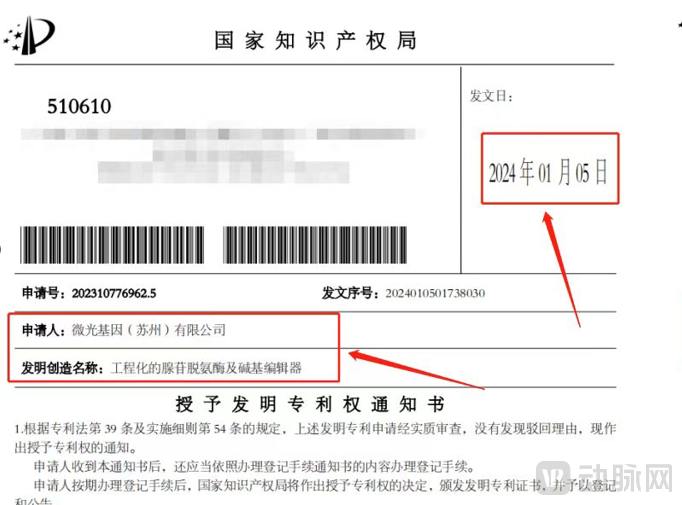
Glimmer Gene (Suzhou) Co., Ltd. (hereinafter referred to as “Glimmer Gene”) was established in 2021. Leveraging the development of novel gene editing tools and cell and gene therapy (CGT) approaches, the company is dedicated to the research, development, and industrialization of next-generation gene editing technologies. Since its inception, the Glimmer Gene team has filed more than ten invention patents related to novel gene editing tools and delivery systems.On January 5, 2024, the “Engineered Adenosine Deaminase and Base Editor” independently developed by the Weiguang Gene Science team was officially granted a patent by the China National Intellectual Property Administration (CNIPA), making it one of the first companies in China to secure independent intellectual property rights for base editor patents.
(Photo provided by the interviewee)
Recently, Weiguang Gene has signed agreements with two species improvement companies and multiple cell therapy companies, with several collaborations already implemented.As one of the few companies in China holding foundational intellectual property rights for Cas proteins, base editors, epigenetic editors, and VLP delivery systems, how has Weiguang Gene built multiple proprietary platforms for novel editor technologies? Furthermore, how will it explore the clinical application and commercialization pathways of CRISPR gene-editing technology? In response to these questions, VCBeat interviewed Dr. Hu Yang, CEO of Weiguang Gene.
 Dr. Hu Yang previously studied in Professor Song Yangzhou’s laboratory at Sun Yat-sen University, specializing in gene editing and aging research. He formerly served as Senior Vice President in the Investment Banking Division of CITIC Securities and as Co-General Manager of the Healthcare Sector in the Investment Banking Division of GF Securities.
VCBeat:What research, observations, and opportunities led to the founding of Weiguang Gene?
Hu Yang:Our founder and chief scientist, Professor Song Yangzhou, has long been dedicated to research on protein function, cellular senescence, and the regulatory mechanisms of cell regeneration. In 2009, Professor Song returned to China to serve as the Dean of the School of Life Sciences at Sun Yat-sen University. Upon his return, he prioritized the development of platforms for discovering protein–protein interactions and protein functions. Since then, his laboratory has been exploring gene editing technologies and methods, establishing an animal-based platform for protein function discovery using gene knockout techniques.
In 2013, the laboratory had already applied CRISPR gene-editing technology in research and was among the first teams globally to explore its application in the treatment of rare diseases. In 2015, Professor Songyang Zhou’s team achieved the world’s first use of CRISPR/Cas9 technology to edit the HBB mutation gene associated with thalassemia in human embryos. As the laboratory placed greater emphasis on common refractory diseases, the team began focusing on the development of epigenetic tools starting in 2016.In 2020, Professor Song Yangzhou’s research group published a paper in Nature Communications, developing a highly efficient mammalian transcriptional activation tool based on the type I-F CRISPR-Cas system, thereby providing a new tool for regulating gene expression in mammalian cells.
In 2021, as the global R&D landscape and commercialization opportunities for gene-editing therapies became increasingly clear, we establishedWeiguang Gene, which focuses on the development of proprietary gene-editing tools and in vivo gene therapies, completed a near-RMB 100 million angel financing round in 2022, led by Xingze Capital.
VCBeat:How Did WeLight Gene Determine In Vivo Gene Editing Therapies and Its Proprietary Tool Platform as Its Core R&D Focus?
Hu Yang:Around 2022, Glowing Gene made a significant strategic adjustment by halting the follow-on development of its ex vivo gene editing technology pipeline. The company shifted its focus to breaking through and building foundational technology platforms with independent intellectual property rights, targeting the development of in vivo gene therapy pipelines and the licensing of ex vivo cell editing technologies.
In vivo gene editing is more akin to conventional drugs than cell-based therapies. For autologous, customized products, manufacturing and operational costs are prohibitively high, while production capacity and market demand remain limited, posing significant commercialization challenges for biotech companies. In contrast, in vivo gene editing faces critical bottlenecks in both the editing tools themselves and their delivery systems, requiring continuous technological breakthroughs. Given that our team’s core strengths lie in technological innovation and improvement rather than fast-follow clinical development of targets, we have ultimately chosen to pursue the path of in vivo gene editing and proprietary technology platform development, which offers greater technical complexity and larger future growth potential.
To date, gene-editing therapies remain in a very early stage. The confirmatory value of the first wave of targets outweighs their commercial potential, with indications primarily focused on severe rare diseases. However, the patient population eligible for treatment under a single-target, single-rare-disease indication is extremely small, making it difficult to reduce marginal costs. Meanwhile, in the pursuit of speed, many biotech companies directly apply gene-editing tools that are still under patent protection and target rare-disease indications already validated by overseas companies, deferring considerations of tool replacement or commercialization to later stages. Nevertheless, both patent licensing fees and the need to switch tools entail potential time and financial costs. Coupled with the complex underlying patent disputes surrounding Cas9 technology and prohibitively high licensing thresholds, these burdens are unsustainable for most biotech firms. Furthermore, this strategy conflicts with key principles in “Fast Follow” drug development, which require careful attention to patent expiration timelines and prioritization of large indications.
Furthermore, single-base editors and epigenetic editors do not induce double-strand breaks in vivo, thereby posing lower risks. Virus-like particle (VLP) delivery systems, which offer superior safety and delivery efficiency, are designed to overcome the indication bottlenecks of existing delivery tools.The multiple tool platforms we have developed are designed to support the future layout of our in vivo pipeline, making them better suited for addressing major disease indications that are not rare diseases, have relatively lower severity, and require long-term or even lifelong treatment.For instance, degenerative diseases share certain similarities with rare diseases in that they onset at specific ages or under particular triggering factors. Treatment varies depending on the affected site and genetic profile, and once the disease manifests, lifelong medication is typically required.
The long-lasting efficacy and precision of gene editing therapies are well-suited to address these challenges. Base editing and epigenetic editing technologies are more appropriate for non-rare diseases, as they entail minimal alterations to the DNA sequence.The hallmark of this approach is its ability to regulate genes with low risk, ultra-long duration, and high precision. In the realm of multi-gene regulation and more precise editing, novel editing technologies such as base editing and epigenetic editing also hold relative advantages.
Globally, we have also observed that biotech companies developing proprietary gene-editing tools and virus-like particle (VLP) delivery systems have gradually gained recognition over the past three years. A notable example is Nvelop Therapeutics, which secured $100 million in what was last year’s largest seed financing round worldwide.
VCBeat:What Are the Core Advantages of Gene Editing Technology? And What Pain Points Are Hindering Its Development?
Hu Yang:Gene editing is, in fact, the new technology that has advanced most rapidly from discovery to drug approval and market launch. This is a positive development, underscoring its status as a truly differentiated technology platform—It currently offers the best precision and durability in gene regulation, with the potential to become an ultimate therapeutic tool for rare diseases and a long-acting drug for non-rare conditions.
For domestic gene-editing companies, restrictions on foundational patents represent one of the core pain points. The most broadly applicable foundational patent technologies in the field of gene editing were discovered relatively recently, meaning they still have a considerable time before expiration, are costly to license, and lack cross-licensing agreements. In addition to several foundational patents set to expire in December 2033, there are numerous derivative patents whose expiration timelines will continue to be extended.
In practical terms, obstacles related to foundational patents will significantly impact the licensing and commercialization of downstream clinical pipelines.It is difficult for multinational corporations (MNCs) and large pharmaceutical companies to establish licensing or in-licensing partnerships with biotech firms that have not yet secured rights and face clear intellectual property risks. Significant sunk costs associated with patents can impact subsequent commercial returns, exposing companies to the risk of total loss. These patent-related costs ultimately translate into upfront drug development costs; if these costs cannot be controlled, drug prices will remain high, thereby hindering successful industrialization.Only by resolving patent issues can one compete with the incubator companies of the original developers (of gene-editing tools) in the global market, thereby unlocking broader commercialization opportunities.
Another core challenge in the field of in vivo gene editing is delivery. No matter how precise or efficient gene-editing tools are, effective gene-editing therapeutics cannot be developed if they cannot be accurately delivered to target tissues or cells. Existing common delivery vectors, such as adeno-associated viruses (AAVs) and lipid nanoparticles (LNPs), have significant limitations in delivering gene-editing tools. Their tropism is largely restricted to the eyes and liver, and they face constraints related to cargo capacity and toxic dosage limits. This represents the most significant bottleneck currently hindering in vivo gene-editing therapies.
In light of these challenges, Glowing Gene has opted to first establish innovative technology platforms featuring proprietary gene-editing tools and delivery vectors optimized for compatibility with them.
VCBeat: What is the current status of Glimmer Gene’s team structure and platform R&D progress?
Hu Yang:Our team currently comprises approximately 30 members, including over 20 R&D personnel and nine PhD holders. The majority of our team members possess extensive R&D experience in fields such as cell and gene editing, protein science, and aging research. To ensure the team can rapidly adapt to subsequent industrialization, all department directors have prior experience at large pharmaceutical companies and bring substantial expertise in commercial scale-up and manufacturing.
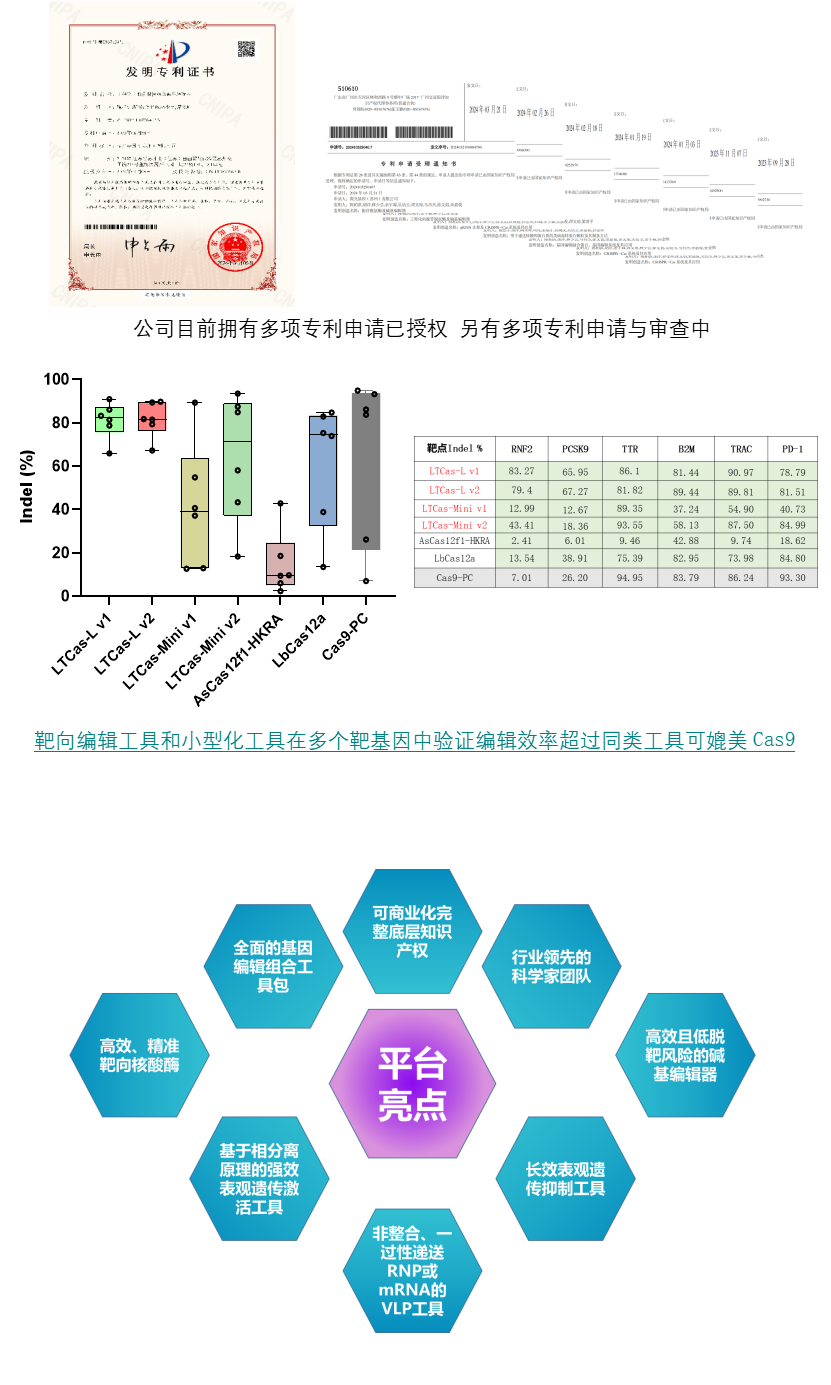
Currently, Weiguang Gene has independently developed a gene editing/epigenetic toolkit, possessing foundational independent intellectual property rights and enabling unrestricted global implementation.In the field of single-base editors, Weiguang Gene was among the first in China to secure independent R&D patents, with editing efficiency comparable to top international standards. In epigenetic editing, we are one of the few domestic teams with clean underlying patent rights and efficiency on par with original developers. Furthermore, we have deployed a VLP delivery system featuring unique structural design and proprietary underlying patents, whose safety and delivery efficiency rival Nvelop’s eVLP.
At a more fundamental level, the gene editing toolkit is also built upon Weiguang Gene’s proprietary, comprehensive platform for protein structure analysis, rational design, and directed evolution.We leverage various AI tools for the rational design and functional engineering of proteins, progressively enhancing their application efficiency and tolerance to reach globally leading standards. Enzymes utilized in gene-editing tools are also being developed along this trajectory.
Overall, since our establishment in the first half of 2022, we have built an integrated tool platform, identified pathways to circumvent patent barriers and delivery limitations, and are further developing differentiated indications with stronger commercialization logic.
VCBeat: What are the key milestones and challenges in developing proprietary gene-editing tools?
Hu Yang:The key to developing self-developed tools is that their efficiency must not be compromised, nor should risks increase. We cannot lower the quality of the drug itself in pursuit of breakthroughs in intellectual property rights, which places high demands on tool development.
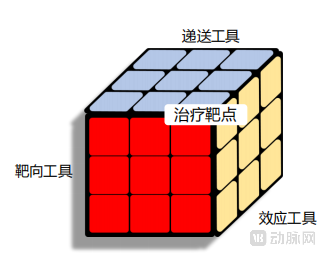
In vivo gene-editing therapeutics are akin to a Rubik’s Cube, representing a highly complex drug system that requires the precise compatibility of delivery vectors, targeting moieties, and effector components. Only by aligning these three elements with an appropriate therapeutic target can a high-quality, high-success-rate therapy be developed. Achieving an optimal balance in design during early-stage pipeline development is essential to significantly mitigate risks in later-stage clinical development.
Regarding targeted tools, the autonomous Cas protein locates DNA sequences and achieves double-strand cleavage. The standard-sized tool, LTCas-L, demonstrates high cleavage efficiency, outperforming Cas9 at many tested sites and reaching industry-leading levels. The miniaturized tool, LTCas-Mini, exhibits stronger cleavage efficiency than comparable small Cas12f tools, with top-tier international performance at multiple sites. FTO reports and patent applications have been completed for both.
In terms of effector tools, we have successfully optimized novel long-acting epigenetic repressors and multiple long-acting repressor combinations with inhibition rates exceeding 90%, which have been tested on several non-rare disease targets. The base editor demonstrates editing efficiency comparable to ABE8e, with significantly superior off-target profiles, and has been granted a national invention patent in China; the FTO report has also been completed.
In terms of delivery tools, Weiguang Gene has developed a VLP delivery system with a unique structure, proprietary foundational patents, and no global patent restrictions. Data show that compared with eVLPs from the prominent company Nvelop, Weiguang Gene’s LT-VLP ensures safety while improving packaging titer and editing efficiency; it exhibits strong active targeting capability, achieving higher delivery and editing efficiencies, with an overall editing efficiency exceeding 90%; furthermore, its capsid and envelope are derived from virus species that have co-evolved with humans, resulting in lower immunogenicity.
VCBeat: As the underlying tool platform is gradually built and refined, what are the ongoing and potential commercialization opportunities for Weiguang Gene?
Hu Yang:The primary focus is the international licensing of Cas protein technology.Intellectual property rights for cost-controllable gene-editing tools are essential products for ex vivo cell therapy companies and species improvement enterprises.Based on experimental data and customer usage, Weiguang Gene’s Cas proteins have achieved efficiency levels comparable to international best-in-class standards. We are actively advancing external collaborations for our company’s tools and are committed to providing enterprises requiring gene editing with freely usable, cost-effective solutions. This initiative aims to significantly lower the barriers to commercializing gene editing and resolve intellectual property bottlenecks.
In addition, our novel gene-editing tools, such as base editors and epigenetic editors, hold significant potential for applications including the simultaneous suppression of multiple genes. The VLP delivery system demonstrates clear advantages in enabling safe and efficient editing in primary cells. We are also actively advancing external collaborations for these innovative tools.
As the technology platform matures, we have initiated preclinical pharmacology, efficacy, and safety evaluation testing across multiple pipelines.. Given the well-defined targets and high precision of our platform, we anticipate rapid advancement of our pipeline in human clinical data over the next two years.In line with pipeline progress, we will also actively seek external collaborations and licensing opportunities with companies possessing clinical development and drug commercialization experience.
On a broader scale, we have observed that novel gene-editing tools worldwide are also accelerating in development and have already secured technology licensing agreements with multinational corporations (MNCs). For instance, in 2024, Regeneron and Mammoth Biosciences announced a collaboration agreement with an upfront payment of $100 million; in 2023, Eli Lilly entered into a $1.5 billion licensing deal with Scribe Therapeutics for its Cas12e protein technology. The fact that individual novel gene-editing tools can command valuations in the hundreds of millions of dollars indicates that gene editing has entered a new phase characterized by diverse and flourishing innovation.
In the past, gene editing was widely regarded as sufficiently revolutionary. It is now recognized that, at least in medical applications, compatible delivery tools are of critical importance. These tools enable gene editing to fully realize its potential and expand beyond rare diseases into the treatment of major, prevalent conditions. Consequently, leading industry teams are actively seeking novel delivery vectors and developing more efficient and precise editing tools, ensuring that every facet of this platform is better aligned with the future of gene-editing therapeutics.