

Synaptic Medical's Nordica Cryoablation System Demonstrates Safety and Efficacy in U.S.-Published Animal Study
Recently, Synaptic Medical disclosed the animal study results of its innovative cryoablation system, Nordica. The findings demonstrated the safety and efficacy of Nordica in the treatment of atrial fibrillation. It is reported that the product has initiated clinical trials in the United States, with full enrollment expected to be completed by September 2024. Nordica is scheduled for launch in multiple global markets, including China, the United States, Japan, and Europe, during 2024–2025.
Atrial Fibrillation (AF), commonly referred to as “AF,” is the most prevalent form of tachyarrhythmia. According to the latest national epidemiological survey on atrial fibrillation in China, the number of patients with AF currently approaches 20 million. In addition to impairing patients’ quality of life, the primary hazard of this condition lies in its propensity to cause thromboembolism, leading to severe complications such as stroke and posing a threat to patients’ lives.
Typically, patients with atrial fibrillation can take oral anticoagulants to prevent thromboembolic complications; however, these medications do not cure atrial fibrillation. Furthermore, in clinical practice, some patients still experience complications due to intolerance to anticoagulant therapy or poor adherence.
Currently, cryoablation for pulmonary vein isolation (PVI) has become one of the mainstream approaches for treating drug-refractory atrial fibrillation. The technique works by apposing a cryoballoon to the ostia of the pulmonary veins and using extreme cold to inactivate tissue, thereby electrically isolating the veins and restoring normal cardiac rhythm. Thanks to its “Single-Shot” ablation approach, cryoablation significantly reduces procedural time and flattens the learning curve, leading to its widespread adoption in atrial fibrillation ablation procedures worldwide.
Currently, mainstream cryoablation products adopt a construction featuring a double-balloon and high-pressure design. Under this design, factors such as balloon compliance and internal pressure changes will affect the safety and efficacy of the procedure.
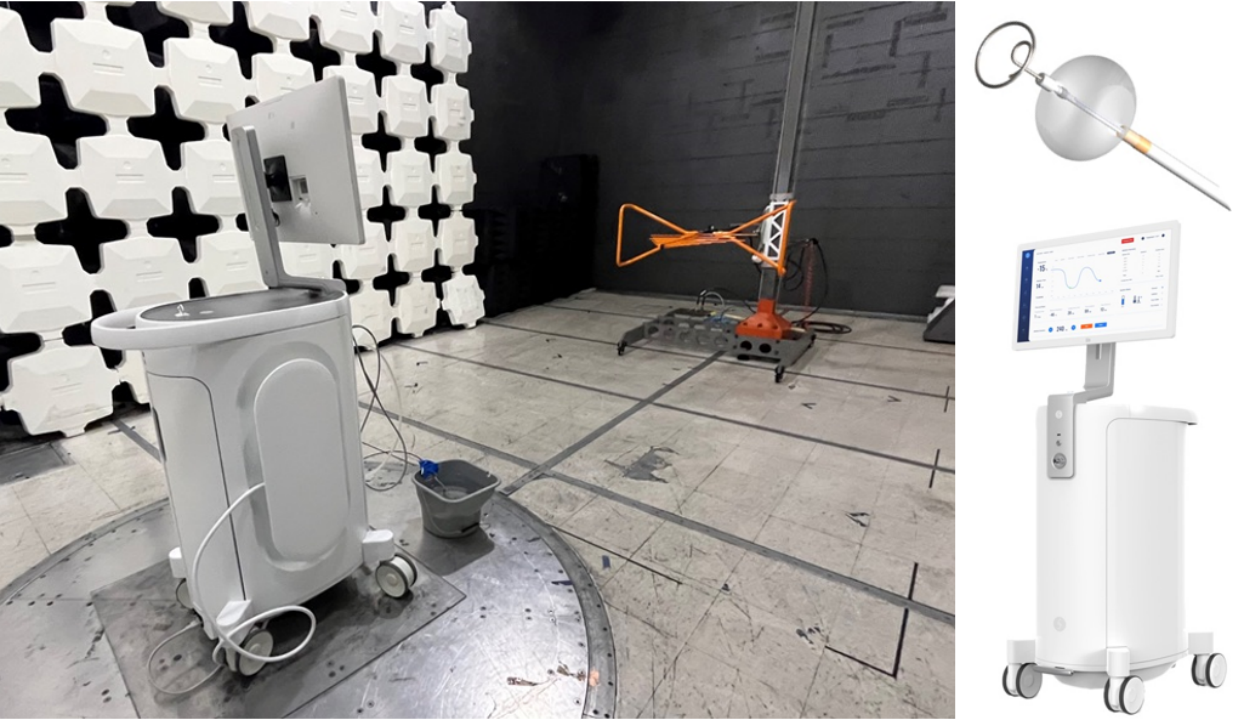
Xinnuopu Innovation’s Nordica Cryoablation System features improved designs for the cryoballoon and circular mapping catheter. The balloon utilizes a single-layer polyurethane design, is adjustable in size, and maintains low, constant pressure internally during the freezing process. The objective of this animal study was to validate the safety and efficacy of the Nordica Cryoablation System.
The results of this study were published online as a paper in the Journal of Interventional Cardiac Electrophysiology.
This study involved performing pulmonary vein isolation (PVI) on experimental dogs using the Nordica system under fluoroscopic or intracardiac echocardiography (ICE) guidance, following standard surgical protocols. Intraoperative and postoperative assessments were conducted to evaluate procedural efficacy and the incidence of complications, thereby determining the effectiveness and safety profile of the Nordica system.
The completeness of pulmonary vein isolation (PVI) and the durability of electrical conduction block are critical indicators of efficacy. In this study, a total of 37 cryoablation procedures were performed. Complete pulmonary vein isolation (score of 4) was achieved in 56.7% of the ablations, and 86.4% of the ablations received an isolation score greater than 3. "Single-shot" isolation was achieved in 50% (6/12) of the pulmonary veins, with a mean time to isolation (TTI) of 26.2 ± 10.0 seconds. (TTI refers to the time required to achieve electrical isolation of pulmonary vein potentials; a TTI of less than 60 seconds is a strong predictor of durable PVI in cryoablation. The TTI observed in this study was only half that of current mainstream products.) Immediate bidirectional conduction block was successfully achieved in all pulmonary veins. At the four-week follow-up electrophysiological study, all pulmonary veins maintained bidirectional conduction block.
Regarding product safety, all dogs in this study survived until Week 4 and successfully underwent the second electrophysiological examination. No major adverse events or complications, such as phrenic nerve paralysis, cardiac tamponade, or atrio-esophageal fistula, occurred during the postoperative period or follow-up. The mean diameter change of the pulmonary veins (n=12) after cryoablation was 1.09±1.28 mm (7.45%) immediately post-ablation and 2.00±1.90 mm (13.00%) at the second electrophysiological examination, with no significant pulmonary vein stenosis observed.
Summary: This animal study successfully demonstrated the safety and efficacy of the Nordica cryoablation system in the treatment of atrial fibrillation:
1) 50% of pulmonary veins can achieve acute and durable isolation via a "Single Shot" approach;
2) The width of the cryoablation lesion is >10 mm, and all are transmural injuries;
3) No major perioperative complications or device failure;
4) No injury to adjacent tissues or downstream organs.
1. The First Single-Layer Cryoablation Balloon
The Nordica balloon features a single-layer design, offering superior compliance compared to double-layer balloons. This facilitates transmural pulmonary vein isolation (PVI) and reduces the likelihood of segmental ablation and adjacent tissue injury. The balloon maintains an internal pressure of 3–5 psig with high leak resistance, a design that prevents displacement caused by sudden pressure spikes during ablation and minimizes failures in pulmonary vein isolation due to inadequate contact. Furthermore, the compliant design of the Nordica balloon conforms better to pulmonary vein anatomy, enabling easy occlusion of the pulmonary veins without the need for additional pushing force.
2. Paired Bipolar Ring Mapping Catheter
Clear pulmonary vein potentials recorded by the circular mapping catheter are a critical factor affecting the accuracy of TTI measurement. The Nordica 20-mm circular mapping catheter features 10 electrodes with an inter-electrode spacing of 2 mm.—7—2 mm, which can significantly reduce far-field signal interference, enhance the ability to monitor and record pulmonary vein potentials during ablation, achieve precise TTI recording, minimize potential additional ablations, and lower the risk of complications and tissue damage.
Synaptic Medical, established in 2005, is dedicated to becoming a comprehensive provider of cardiac electrophysiology solutions. With nearly two decades of focus in this field, the company continues to lead technological innovation within the industry. Synaptic Medical’s current product portfolio encompasses dozens of items across three major categories: transseptal puncture devices, diagnostic devices, and therapeutic devices, forming a complete business system that integrates R&D, manufacturing, and sales. Leveraging superior performance, its transseptal puncture devices have been adopted by nearly 2,000 hospitals in China, the United States, Japan, Europe, and other regions, establishing Synaptic Medical as the market leader for transseptal puncture in China. Driven by its U.S.-based innovation R&D center, Synaptic Medical is actively advancing revolutionary projects such as the Nordica Cryoablation System, the Meridian 3D Mapping System, and the enVision Intracardiac Echocardiography (ICE) Diagnostic Catheter and Equipment. These innovations aim to comprehensively improve procedural outcomes, continuously enhance the safety and efficacy of atrial fibrillation treatments, optimize clinicians’ operational experience, and ultimately benefit a broad population of patients with cardiovascular diseases.

For more detailed information about this animal experiment, please click here.