

AltruBio Files for IPO After Raising $400M and Pivoting from Oncology to Autoimmune Disease Focus

AbGenomics
New Drug Developer
On April 10, 2024, according to a press release issued by Vertex Pharmaceuticals (hereinafter referred to as “Vertex”), Vertex and Alpine Immune Sciences (hereinafter referred to as “Alpine”) have entered into an acquisition agreement under which Vertex will acquire the biotechnology company Alpine for approximately $4.9 billion (RMB 35.4 billion) to obtain Alpine’s drug candidate for the treatment of autoimmune kidney diseases. The transaction values Alpine at $65 per share.
On May 22, 2024, Biogen and immunotherapy company Human Immunology Biosciences (hereinafter referred to as “HI-Bio”) announced that they had reached an acquisition agreement. Under the terms of the agreement, Biogen will pay HI-Bio an upfront payment of $1.15 billion (approximately RMB 8.3 billion) and milestone payments of $650 million, bringing the total potential value of the transaction to $1.8 billion (approximately RMB 13 billion). The transaction is expected to be completed in the third quarter of 2024.
In just over a month, the two largest acquisitions in the autoimmune disease sector in 2024 have already taken center stage, sparking industry anticipation for the market’s performance in the second half of the year.
Autoimmune diseases are conditions caused by immune responses against self-antigens, leading to damage of the body’s own tissues. The global number of individuals affected by autoimmune diseases is estimated to exceed 500 million, with nearly 40 million patients suffering from major autoimmune diseases in China. According to statistics on common autoimmune diseases, the global prevalence rate is approximately 5%–8%, making it the third largest category of chronic diseases after cancer and cardiovascular diseases. Based on existing literature data, certain conditions exhibit higher incidence rates, including atopic dermatitis (approximately 2%–5%), psoriasis (approximately 2%–3%), and rheumatoid arthritis (approximately 0.5%–1%).
According to Frost & Sullivan’s projections, the global market size for autoimmune disease drugs is expected to reach $176 billion by 2030, with a compound annual growth rate (CAGR) of 3.6% from 2022 to 2030. Among this, China’s market size is projected to approach $25 billion by 2030, representing a tenfold increase compared to 2020, making it a significant source of incremental growth in the global autoimmune drug market.
This may explain why a startup focused on oncology has decisively pivoted to enter the field of autoimmune diseases.
New Leadership, New Name, New Track: Successfully Secures 400 Million in Financing
In 2019, AbGenomics Holding Inc. (hereinafter referred to as “AbGenomics”) officially announced its renaming to AltruBio Inc. (hereinafter referred to as “AltruBio”). Originally a developer of oncology antibody therapeutics based in San Francisco, the United States, AbGenomics not only appointed internationally recognized senior biotechnology industry leaders to its new board of directors but also partnered with Chairman Dr. Yu-Min Yang, former President of Technical Operations at Roche. Following the rebranding to AltruBio, the company invited Dr. Judy Chou (Hui-Chuan Chou, hereinafter referred to as “Dr. Chou”), former Global Head of Biologics at Bayer Pharmaceuticals, to serve as President and Chief Executive Officer in 2020. Dr. Chou took the helm to actively drive the company’s transformation, marking both a name change and a leadership transition.
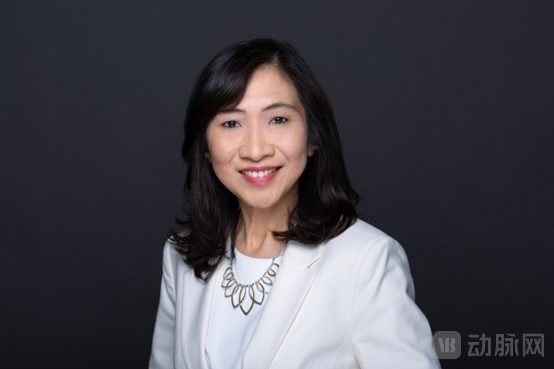
Judy Chou
AltruBio’s predecessor, AbGenomics, is developing two existing antibody-targeted therapies across six disease areas. Among them, Neihulizumab is an immune checkpoint agonist antibody designed to modulate T-cell homeostasis by targeting PSGL-1. It is currently undergoing two Phase II clinical trials for psoriatic arthritis and ulcerative colitis. The molecule previously received FDA Fast Track designation for the treatment of steroid-refractory acute graft-versus-host disease (aGVHD). A trial for ulcerative colitis was terminated in 2020 due to the pandemic; however, a study for acute graft-versus-host disease is ongoing upon restart (the company’s website indicates that research on UC will still proceed).
Following a rebranding and change in leadership, AltruBio, under the leadership of Dr. Zhou, decisively underwent restructuring and implemented significant strategic shifts, exiting oncology to prioritize immunology. This included terminating the development of AbGn-107, an antibody-drug conjugate (ADC) candidate targeting gastric cancer. Commenting on Neihulizumab, Dr. Zhou stated, “We have set aside our oncology products to enable us to focus 100% on this first-in-class novel molecule.”
Dr. Zhou was formerly a Most Valuable Professional (MVP) at a major pharmaceutical company. He earned his Ph.D. from Yale University, completed his postdoctoral training at the Max Planck Institute in Germany, and served as a research fellow at Harvard Medical School, with a focus on cell biology and neuroscience.
After officially entering the market, Dr. Zhou has accumulated more than 20 years of experience in drug development and biomanufacturing. Prior to joining AltruBio, she led Bayer’s global biotechnology organization. At Bayer, she was responsible for the development, manufacturing, and distribution of the company’s product portfolio valued at over $3 billion. She also managed more than 3,000 employees and led the development and commercialization activities of its biologics pipeline. In addition, she served as the site head of Bayer’s facility in Berkeley, California, which is reportedly Bayer’s largest manufacturing base in the United States.
In addition, Dr. Zhou has held leadership positions at Pfizer, AbbVie, Medivation, Genentech, and Wyeth Pharmaceuticals. She has received numerous awards and was named one of the “Most Influential Women in Business” by the San Francisco Business Times in 2018. She currently serves as an advisor to the College of Engineering at the University of California, Berkeley, and is committed to promoting diversity and inclusion in the industry through her role on the advisory board of Women Engineers in Silicon Valley.
It is reported that in January 2020, when Dr. Zhou assumed the role of CEO at AltruBio, she declined an offer from Bayer, as she was more optimistic about the data for the new drug Neihulizumab. Furthermore, she had anticipated at that time that the company would undergo transformative changes at the strategic level; however, the onset of the COVID-19 pandemic forced these changes to be postponed until 2021.
Under Dr. Zhou’s leadership, AltruBio has undergone a comprehensive transformation, shifting its focus from oncology to autoimmune diseases.
Such bold decisions have paid off for AltruBio. In April 2021, AltruBio announced the completion of a $63 million (approximately RMB 400 million) Series A financing round. The round was led by aMoon, with participation from new investors including BVF Partners L.P. (BVF) and CAM Capital, as well as other new and existing investors. Dr. Zhou stated that the proceeds from the Series A financing would be used to launch the second-generation subcutaneous formulation of Neihulizumab, namely AbGn-168H, with the aim of expanding its indications to include organ transplantation. The company will also focus on researching steroid-refractory acute graft-versus-host disease (SR-aGVHD) in the next phase.
On May 21, 2024, AltruBio announced that it had secured an oversubscribed Series B financing round of up to $225 million. The round was led by BVF Partners LP, with new investors including RA Capital Management, Cormorant Asset Management, and Soleus Capital, while existing investors aMoon Fund and Blackstone Multi-Asset Investing also participated. The proceeds will be used to advance the Phase II clinical trial of ALTB-268, the company’s first-in-class novel immune checkpoint enhancer, for the treatment of ulcerative colitis (UC).
The key to AltruBio’s financial appeal lies not only in its bold pivot from oncology to the autoimmune disease sector, but also in its lead inherited pipeline candidate, Neihulizumab (also known as AbGn-168H).
Autoimmune Rising Star: PSGL-1
When AltruBio had just completed its Series A financing, its focused antibody-targeted therapy—an immune checkpoint agonist antibody targeting PSGL-1 (P-Selectin Glycoprotein Ligand 1)/CD162, namely Neihulizumab (AbGn-168H, now ALTB-168)—was also the preferred candidate immunotherapeutic agent.
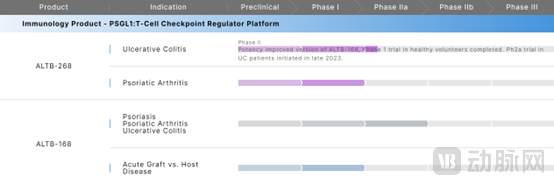
AltruBio Pipeline, image from the AltruBio official website
Neihulizumab is an immune checkpoint agonist antibody designed to modulate T-cell homeostasis by targeting PSGL-1. It is currently undergoing two Phase II clinical trials for psoriatic arthritis and ulcerative colitis. In March 2024, the molecule also received FDA Fast Track designation for the treatment of steroid-refractory acute graft-versus-host disease (SR-aGVHD). Neihulizumab had a trial in ulcerative colitis terminated in 2020 due to the pandemic; however, it has since resumed research on acute graft-versus-host disease, and according to AltruBio’s official website, studies on ulcerative colitis will still be conducted.
Currently, AltruBio has slightly shifted its focus, moving its key pipeline from Neihulizumab to ALTB-268, as the latter has demonstrated superior efficacy in clinical trials.
ALTB-268 is a second-generation, tetravalent PSGL-1 agonistic antibody developed based on the unique mechanism of action of ALTB-168. As previously mentioned, PSGL-1 is an immune checkpoint protein whose activation downregulates T cell activity. ALTB-268 preferentially reduces the ICE (Immune Cell Exhaustion) of chronically activated T cells. By inhibiting T cell effector functions, it restores immune homeostasis, thereby treating immune diseases at their source. Furthermore, it does not suppress the activity of naïve T cells or acutely activated T cells, thus avoiding systemic immunosuppression. Phase I clinical trials have demonstrated its safety and tolerability in healthy volunteers, with no serious adverse events reported across all cohorts.
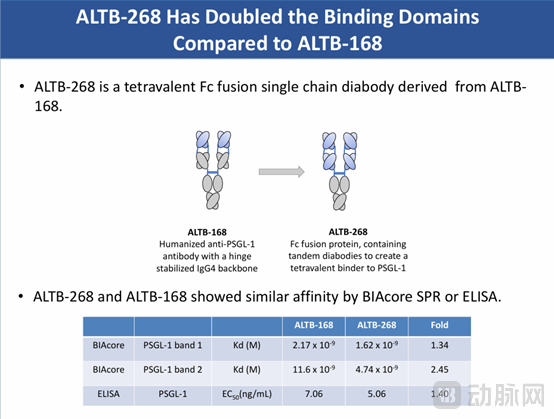
Image source: AltruBio official website
Currently, the Phase 2a exploratory biomarker study of ALTB-268 in patients with refractory ulcerative colitis (UC) is actively enrolling participants. AltruBio expects to report data on the primary endpoint of clinical remission in the first half of 2025 and plans to initiate a Phase 2b trial in the second half of 2026. Meanwhile, ALTB-268 is also undergoing clinical trials for psoriatic arthritis and has already yielded promising Phase 2a results.
The shift from Neihulizumab to ALTB-268 reflects AltruBio’s strategic repositioning from oncology to a focused commitment to immunology, leveraging its expertise in modulating immune responses via the PSGL-1 pathway.
Based on the characteristics of autoimmune diseases, the immune system normally responds only to foreign or harmful substances and does not react to antigens from the body’s own tissues. However, immune dysfunction can sometimes occur, causing the body to mistake its own tissues as foreign and produce antibodies (known as autoantibodies) or activate immune cells that attack the body’s own cells or tissues. This response is termed an autoimmune reaction and can lead to inflammation and tissue damage.
The drug development strategy in the field of autoimmune diseases is to suppress immune responses and the activity of immune cells within the body.
Under normal circumstances, antigen-presenting cells (APCs) can present captured antigens (including exogenous and endogenous antigens) to T cells via MHC-II molecules, while simultaneously expressing B7 molecules. The interaction between B7 molecules on APCs and CD28 on T cells provides the necessary co-stimulatory signals. Under the combined influence of these factors, T cells become activated. Subsequently, activated T cells produce cytokines and upregulate receptors. Researchers have found that PSGL-1 expression is significantly enhanced on the surface of activated T cells.
PSGL-1 is a type I transmembrane glycoprotein located on the cell surface, expressed on nearly all leukocytes in the body, including T cells, B cells, neutrophils, and eosinophils. Previous studies have shown that PSGL-1 participates in the interaction between leukocytes and vascular endothelial cells, facilitating leukocyte migration to sites of inflammation.
The Curtain Falls on a Generation’s “Drug King”: A New Race Emerges in the Autoimmune Disease Arena
AltruBio’s years of rapid development have coincided with a period of turbulence in the autoimmune disease drug sector and the global innovative drug market. In the field of autoimmune diseases, as patents expire in key markets, Humira (adalimumab) will officially relinquish its title as the world’s best-selling drug, which it held for 11 consecutive years, marking the formal curtain call for this former “blockbuster king.”
Humira, a fully human monoclonal antibody targeting TNF-α developed by AbbVie, was approved by the FDA in 2002 for the treatment of rheumatoid arthritis. Due to its exceptional efficacy and safety profile in treating autoimmune diseases, Humira’s indications have continuously expanded since its launch, gradually becoming the best-selling autoimmune drug and topping the global pharmaceutical sales rankings in 2012. Subsequently, to maximize Humira’s product lifecycle, AbbVie employed a series of market and patent strategies, enabling the drug to remain the world’s top-selling medication for ten consecutive years, with cumulative sales exceeding $200 billion since its market debut.
According to the 2023 forecast for global sales of innovative drugs published by Nature Reviews Drug Discovery, following Humira, the autoimmune biologics Dupixent and Stelara, targeting IL-4/IL-13 and IL-12/IL-23 respectively, have experienced rapid sales growth and are projected to enter the Top 10 with sales exceeding $10.6 billion.
Given the prevailing view in the industry that “macrophage reprogramming may be the solution to immunotherapy resistance,” PSGL-1, as a representative emerging target, has naturally garnered high expectations.
However, whether PSGL-1 can secure a place in the highly competitive autoimmune market following the decline of blockbuster drugs remains to be seen, pending more compelling clinical results. Currently, AltruBio has advanced to Phase II clinical trials, while another domestic company, 3SBio, has progressed its first domestically developed PSGL-1-targeting antagonist antibody, VTX-0811 (SSGJ-617), to Phase I clinical trials. Previously, 3SBio entered into a licensing agreement with Verseau Therapeutics to collaborate on advancing VTX-0811, which received approval from the U.S. FDA to conduct clinical trials for the treatment of solid tumors.