

CardioACC Announces China's First 4D Intracardiac Echocardiography Animal Trial and Completion of Clinical Enrollment for World’s Thinnest 2D ICE Catheter

CARDIOACC
Developer of Cardiovascular Interventional Imaging Medical Devices
Cardiovascular disease is one of the leading causes of morbidity and mortality worldwide, with the volume of minimally invasive cardiac catheter interventions steadily increasing year by year. As cardiac interventional procedures become increasingly complex and precise, the use of four-dimensional ultrasound imaging for real-time intraoperative guidance under direct three-dimensional visualization can significantly reduce the technical difficulty of various cardiac interventions and enhance procedural safety, thereby holding substantial clinical value.
4D (real-time 3D) intracardiac echocardiography (ICE) is a disruptive innovative device in the field of cardiovascular intervention. In recent years, Siemens, Philips, and Johnson & Johnson have successively launched 4D ICE products in the U.S. market to guide electrophysiology procedures and structural heart interventions, such as valve replacement and repair, left atrial appendage closure, patent foramen ovale (PFO) closure, and atrial fibrillation ablation. The clinical value of these systems has been widely recognized and praised. Due to the rapid motion of myocardial structures during procedures, 4D ICE overcomes the limited field of view associated with existing two-dimensional imaging by providing operators with dynamic, three-dimensional visualization of cardiac anatomy and interventional catheters. This capability further reduces procedural risk and complexity while shortening operation time.
However, 4D ICE presents significant technical challenges, posing substantial demands on cutting-edge technologies such as high-precision multi-element transducer integration, chip development, hardware system architecture, and high-performance imaging algorithms. Taking Johnson & Johnson and Philips as examples, their ultrasound transducers feature 840 micro-elements integrated with ASIC analog chips, generating data rates as high as tens of GB/s. This necessitates mastery of key technologies, including micro-nano sensor development and low-power chip R&D.
Shenzhen CARDIOACC Technology Co., Ltd. (hereinafter referred to as “CARDIOACC”) was established in October 2021, dedicated to developing innovative medical devices for cardiovascular intervention, such as 2D ICE and 4D ICE, with the aspiration of becoming a world-class enterprise specializing in interventional ultrasound platforms.
Core team members hail from Imperial College London, Johns Hopkins University, Tongji University, South China University of Technology, and other prestigious institutions, with expertise spanning R&D, manufacturing, clinical applications, and sales. The team remains steadfastly focused on addressing unmet critical needs in clinical practice. By integrating these efforts with the realities of China’s healthcare environment, which emphasizes cost reduction and efficiency improvement, and leveraging its robust foundational R&D capabilities, the team continuously achieves breakthroughs to provide the industry with safe, effective, and cost-controllable solutions for interventional ultrasound devices and consumables.
Leveraging its solid R&D foundation and extensive industry experience, CARDIOACC has become the first company in China, and the fourth globally after Siemens, Philips, and Johnson & Johnson, to complete the development of 4D intracardiac echocardiography (ICE). Recently, it successfully conducted its first in vivo animal experiment on Bama pigs.
This 4D intracardiac echocardiography (ICE) system integrates advanced ultrasound imaging technologies, including soft beamforming and arbitrary waveform transmission. It supports dynamic 3D visualization of cardiac structures and 2D imaging in any plane, offering flexible and convenient operation (deflection radius ≥120°), a wide field of view (≥90° x 90°), and high 4D frame rates, thereby ensuring efficiency and precision during interventional procedures.
In animal experiments, the three-dimensional structures of the four-chamber heart, including the atria, ventricles, and valves, were clearly visible in real time, yielding high-quality imaging results. Meanwhile, the system’s reliability, effectiveness, and safety were further validated. This marks a milestone where outstanding domestic interventional ultrasound manufacturers, represented by CARDIOACC, have officially broken the monopoly held by overseas giants and ushered in the era of 4D cardiac interventional ultrasound in China.
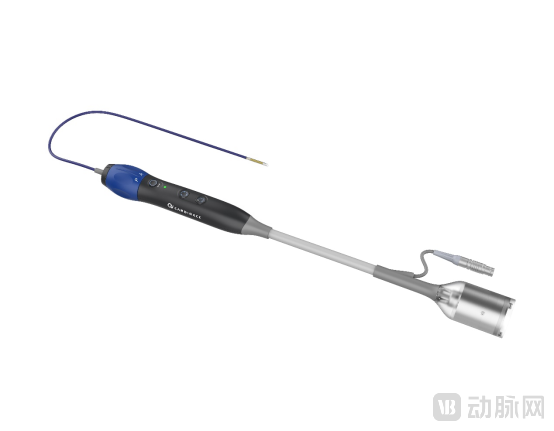
CARDIOACC 4D Intracardiac Echocardiography Catheter
Meanwhile, CARDIOACC’s independently developed world’s thinnest 2D ICE has successfully completed a multicenter, randomized controlled, non-inferiority registration clinical trial and has officially entered the regulatory review phase.
With its excellent clinical performance, this product has gained consistent recognition from interventionalists. Compared to the currently mainstream 10F catheters on the market, this catheter has a smaller diameter of only 7.5F (with a cross-sectional area approximately 56% that of a 10F catheter) while delivering comparable image quality. It features handle self-locking and flexible one-handed operation. This small-bore catheter can further reduce the risk of potential puncture injuries and vascular complications, thereby holding promise for expanding indications to pediatric patients and those with small hearts. Meanwhile, the catheter is compatible with existing 8.5F transseptal sheaths, facilitating easier access to the left atrium to guide procedures such as left atrial appendage closure.
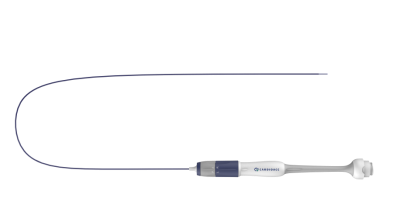
CARDIOACC 2D Intracardiac Echocardiography Catheter
Dr. Xue Yumei, Director of the Department of Cardiology at Guangdong Provincial People's Hospital and Principal Investigator of the clinical trial, spoke highly of CARDIOACC’s ICE product. She stated, “Following rigorous clinical validation, CARDIOACC’s ICE catheter is currently the thinnest intracardiac echocardiography (ICE) catheter available globally. It causes less trauma to patients and can easily and flexibly access the left atrium, providing clinicians with additional observational perspectives. The CARDIOACC ICE product has demonstrated excellent performance in procedures such as atrial fibrillation ablation and left atrial appendage occlusion, offering clear intraoperative imaging and ease of operation, thereby enhancing both surgical efficiency and safety. Its imaging performance is nearly comparable to that of current imported products.”
Related Reading: