

Phagenesis Submits IPO Prospectus Following $42M Series D Funding for Its Pioneering Pharyngeal Electrical Stimulation Therapy for Dysphagia

Phagenesis
Dysphagia Device Manufacturer
Dysphagia Affects the Quality of Life of Millions of Patients Worldwide.
Particularly in the aftermath of the COVID-19 pandemic, a substantial number of patients have faced the threat of neurogenic dysphagia due to prolonged mechanical ventilation, with an alarmingly high incidence rate observed during this global health crisis. This is partly attributable to the presence of endotracheal tubes, which reduces pharyngeal afferent sensitivity and disrupts neural swallowing control mechanisms. Meanwhile, other neurological deficits induced by COVID-19 may also contribute to the development of neurogenic dysphagia.
Patients with dysphagia may be unable to manage their own saliva or consume food and fluids safely and effectively, placing them at high risk for complications.
Phagenesis, a UK-based Manchester company and leader in the field of dysphagia treatment, was founded in 2007. It is dedicated to developing novel therapies for neurogenic dysphagia. The company offers a safe, non-surgical treatment option that not only reduces the risk of dysphagia-related complications but also shortens hospital stays for stroke patients, thereby restoring neural functions related to swallowing coordination and control that have been disrupted by brain injury or prolonged mechanical ventilation.
Phagenesis’s core solution is Phagenyx.®Neural Stimulation System, Designed to Address the Root Cause of Dysphagia.According to the company, this is the first therapy to use pharyngeal electrical stimulation (PES) to restore swallowing control, promote airway protection, and accelerate recovery.
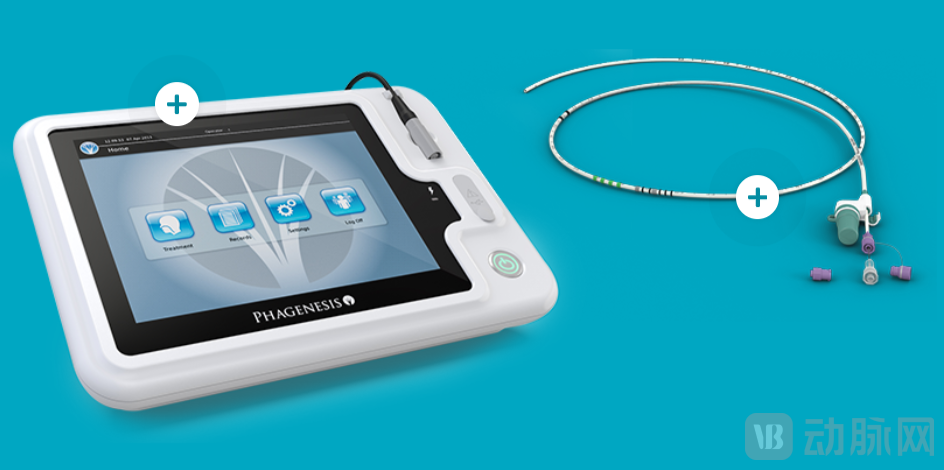
Phagenyx® Neural Stimulation System
The device consists of a touchscreen base station and disposable treatment catheters. The former is responsible for stimulating the patient and recording the optimal stimulation intensity, while the latter delivers stimulation to specific areas of the patient’s pharynx and features dual functions for feeding and stimulation delivery. The touchscreen base station can be used by multiple patients; its intelligent chip retains all patient treatment data, including the number of completed stimulations, treatment time, duration of therapy, and simulated test data. Patient data can be selectively downloaded via the USB port.
Prior to the initiation of treatment, the touchscreen base station assesses the patient’s tolerance to specific stimuli through threshold adjustment and tolerance testing, automatically calculating parameters and conducting repeated tests. The threshold level is defined as the minimum stimulus intensity perceivable by the patient, while the tolerance level represents the maximum stimulus intensity the patient can withstand. Both tests are performed three times, andDerive the optimal stimulation level from threshold and tolerance test results to ensure patient comfort and therapeutic efficacy during treatment.
Phagenyx®The sterile, single-use catheter consists of two components. The core is a nasogastric tube designed to provide enteral feeding when needed. The outer sheath of the catheter contains embedded electrodes for delivering pharyngeal electrical stimulation. Printed guides on the catheter ensure proper electrode positioning; for example, the nasal guidance mark should be visible at the nostril entrance. Before initiating treatment, the healthcare professional should ask the patient to open their mouth. If the green oral guidance mark inside the patient’s mouth is visible, it indicates that the electrodes are correctly positioned and no adjustment is required.
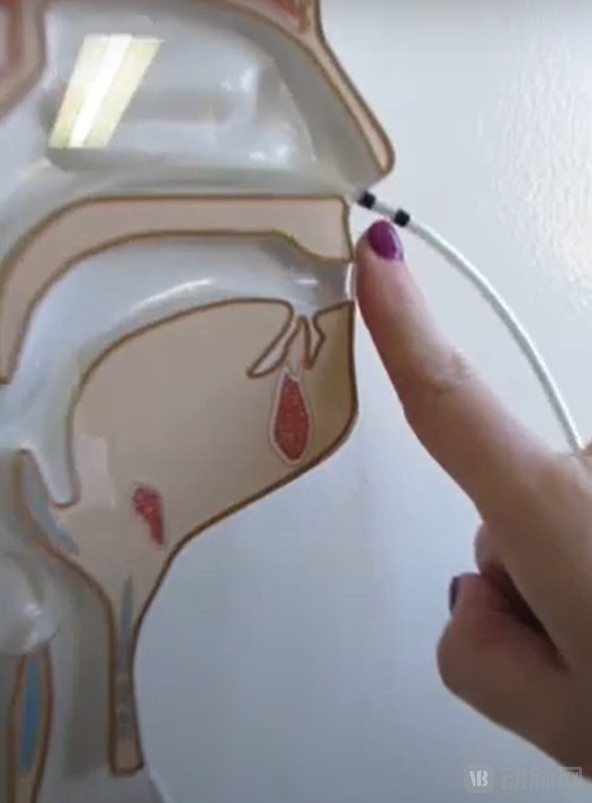
Phagenyx®Nasal Guidance Landmarks
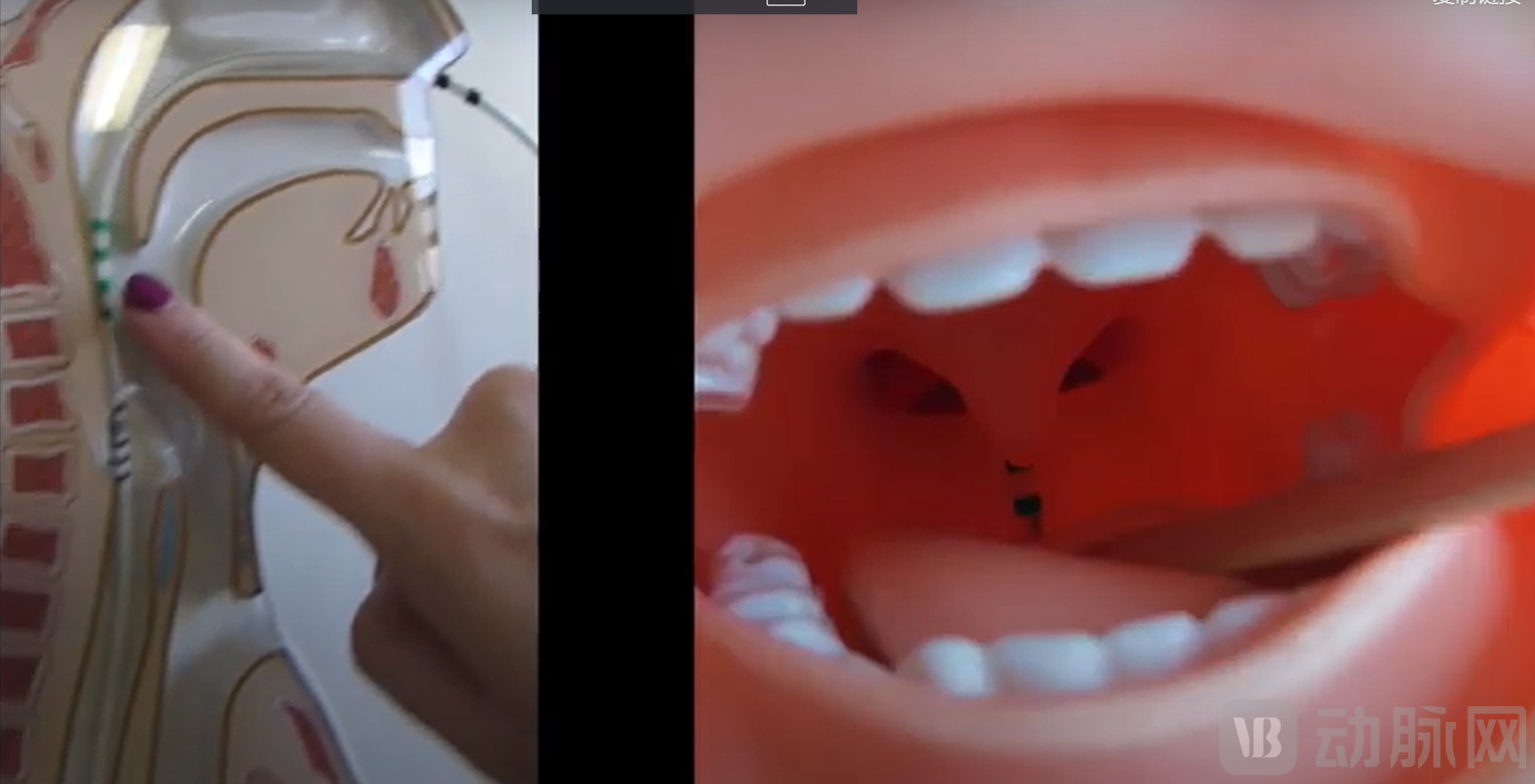
Phagenyx®Oral Guidance Markers
From the perspective of its specific working principle, Phagenyx®Utilizing the pioneering Pharyngeal Electrical Stimulation (PES) technology,Delivers small electrical current pulses to specific regions of the pharynx via electrodes embedded within a catheter, precisely targeting and stimulating sensory nerves within the pharyngeal mucosa.These nerves are essential for safe and effective swallowing function. These stimuli are transmitted via neural pathways from the pharynx to the brain’s swallowing control center, thereby restoring swallowing function.
Patients require only a single 10-minute treatment session per day. The entire procedure is performed by trained healthcare professionals and does not involve surgery. Receive Phagenyx®Patients undergoing systemic therapy reported experiencing only a sensation of a foreign body in the throat during treatment, without any pain.
For patients with tracheostomy and mechanical ventilation, severe dysphagia and associated inadequate airway protection are the primary reasons preventing decannulation. The PHAST-TRAC1 randomized controlled trial published in *The Lancet Neurology* in 2018 showed thatCompared with patients in the untreated control group, tracheostomy patients treated with the Phagenyx® system were five times more likely to achieve safe decannulation.
Specifically, Phagenyx®The system's workflow can be divided into four major steps:
First, healthcare professionals adjust the length and shape of the catheter based on the specific anatomy of the patient’s pharynx to ensure proper placement within the pharynx. After adjustment, the catheter is inserted into the patient’s pharynx and connected to the base station of the therapeutic device.
Second, assess the patient's perception of electrical stimulation according to the instructions on the base station screen, and adjust the intensity of the electrical stimulation accordingly to optimize the stimulation level.
Third, apply the optimized stimulation to the patient. After the treatment is completed, the base station device needs to be disconnected from the catheter.
Fourth, repeat the aforementioned treatment for 3–6 days as clinically indicated. Upon completion of the treatment, decide whether to remove the catheter based on the patient’s needs. If the patient still requires enteral feeding via the catheter, it may be left in place, but for no longer than 30 days.

The patient is receiving Phagenyx.®Systemic Therapy
Providing customized PES therapy in the early stages of injury can more effectively promote neurological recovery and the restoration of swallowing control. A significant advantage of this treatment approach is thatIt does not require active patient participation and remains effective even when patient engagement is low. This makes Phagenyx®Systematic therapy is easier to administer than other swallowing rehabilitation programs., it is a highly valuable treatment option for patients who may have difficulty actively participating in rehabilitation training due to severe injuries or other reasons.
Phagenyx®The neurostimulation system is the result of years of rigorous scientific research by Professor Shaheen Hamdy at the University of Manchester. The basic science and clinical evidence supporting its use of pharyngeal electrical stimulation have been peer-reviewed and published in top-tier journals, demonstrating significant efficacy in treating dysphagia associated with prolonged intubation and stroke.
On April 20, 2021, Phagenesis announced the successful treatment of a COVID-19 patient with severe neurogenic post-extubation dysphagia caused by intubation, using pharyngeal electrical stimulation (PES). The case involved a 71-year-old female patient diagnosed with SARS-CoV-2 infection, who developed severe neurogenic dysphagia after prolonged intubation in the intensive care unit. Following PES treatment with the Phagenyx® system, the patient experienced rapid improvement in saliva management, enhanced voluntary swallowing ability, and improved dietary intake. Five days after the final PES treatment, the patient was discharged from the intensive care unit and transferred to a non-intensive care ward.
A 62-year-old male patient with COVID-19 pneumonia, who suffered from severe neurogenic dysphagia due to prolonged intubation and stroke-related complications, underwent a 5-day course of pharyngeal electrical stimulation (PES) therapy using Phagenyx®. This treatment was administered following confirmation through instrumental assessment and conventional swallowing therapy. Eight days after completing the PES therapy, the patient showed significant improvement in dysphagia severity scores, with a reduction in the Penetration-Aspiration Scale (PAS) score and increases in both the Functional Independence Measure plus Functional Assessment Measure (FIM+FAM) and the Functional Oral Intake Scale (FOIS) scores. Further significant improvements were observed over the subsequent two weeks. By day 43 post-stimulation, the patient’s diet had returned to normal liquids and solids. Responses to the Self-Administered Swallowing Quality of Life Questionnaire (SWAL-QoL) indicated a substantially reduced risk of choking while eating or drinking, as well as a decreased risk of developing pneumonia.
Phagenyx®The system has been clinically proven to successfully treat neurogenic dysphagia and has been studied in numerous randomized controlled trials and larger-scale real-world registries. Randomized controlled trials indicate that Phagenyx®The system utilizes a series of dysphagia outcome measures to demonstrate clinically significant improvements. Treatment can be initiated earlier than other dysphagia interventions and has been shown to facilitate faster recovery and reduce hospital length of stay. Furthermore, this therapy is easily integrated into existing multidisciplinary care.
January 14, 2020,Phagenyx®System Receives FDA Breakthrough Device Designation. As a unique accelerated antispasmodic solution, Phagenyx®Addressed the substantial unmet medical needs arising from COVID-19 during the pandemic.
The device has received regulatory approval in multiple countries, is used in leading hospitals and rehabilitation centers worldwide, and has been commercialized in Europe.
On October 10, 2022, Phagenesis announced thatFDA Approves Phagenyx®De Novo Application for a Neural Stimulation System, the company is currently preparing for targeted market expansion in the United States.
Currently, Phagenesis has partnered with the Stroke Center at Augusta University Health. A decade ago, this stroke center became the first institution in Georgia to be designated as an Advanced Comprehensive Stroke Center. Now, thanks to Phagenyx®Innovative Therapies Enabled by Neuromodulation Systems: Making History Again as the First Acute Care Medical Center in the United States to Provide Innovative Treatment for Patients with Dysphagia
On March 4, 2024, Phagenesis announced the completion of a $42 million (approximately RMB 305 million) Series D financing round. The round was led by Sectoral Asset Management and EQT Life Sciences, with participation from Northern Gritstone, British Patient Capital, and Aphelion Capital. The funds will be used to advance Phagenyx®The commercialization of the neuromodulation system in the United States, along with deepened market penetration in Europe, will also support clinical trials, regulatory activities, and product line expansion.