

Pusilive and Gates Foundation Sign Landmark Collaboration Agreement on STI Diagnostics

Pluslife
Molecular Diagnostics Product Developer
Recently, Guangzhou Pluslife Technology Co., Ltd. (hereinafter referred to as “Pluslife”) and the Bill & Melinda Gates Foundation (hereinafter referred to as the “Gates Foundation”) signed a cooperation agreement on the “Sexually Transmitted Infections (STI) Program” to jointly work towards reducing the burden of sexually transmitted infections in low- and middle-income countries.
Professor Song Yangzhou, founder of Pluslife, stated, “We are deeply grateful for the trust and support of the Bill & Melinda Gates Foundation. Together with Pluslife, we are iteratively upgrading our point-of-care testing (POCT) products for sexually transmitted infections (STIs), to provide low- and middle-income countries with STI diagnostic tools that offer higher performance, lower cost, and greater ease of use. We firmly believe that next-generation molecular POCT products hold the promise of bringing transformative change to infectious disease diagnosis in low- and middle-income countries with relatively scarce medical resources.”
According to 2020 data from the World Health Organization, there were as many as 374 million cases of four curable sexually transmitted infections (syphilis, gonorrhea, chlamydia, and trichomoniasis) among individuals aged 15–49 years worldwide, with Southeast Asia and Africa—two regions with a high concentration of low- and middle-income countries—accounting for 41.7% of these cases.① 。
Sexually transmitted infections (STIs) often have a prolonged asymptomatic period. Although high-quality diagnostic tools such as PCR testing can achieve precise diagnosis during the viral latent phase, their high cost, operational complexity, and stringent requirements for personnel and infrastructure hinder widespread adoption in resource-limited low- and middle-income countries. Meanwhile, more affordable alternatives, such as colloidal gold antigen tests, often lack sufficient sensitivity, resulting in low detection rates of STIs in these regions. For example, in the case of Chlamydia trachomatis (CT), some real-world studies have reported that the sensitivity of antigen testing is only 56% compared to nucleic acid amplification tests.②, indicating a high likelihood of missed diagnoses.
Due to the lack of cost-effective and precise diagnostic tools, low- and middle-income countries have yet to provide timely and effective treatment and management for patients with sexually transmitted infections (STIs), which undoubtedly increases the risk of STI transmission. Globally, there are approximately 1 million new cases of curable STIs each day, with 90% of these cases occurring in low- and middle-income countries.③, which has become a major challenge in the field of global public health and poses a serious threat to population health. Therefore, the accessibility of rapid and precise diagnostic tools has become a key factor in the prevention and control of sexually transmitted infections (STIs). Improving access to accurate diagnostic tools plays a crucial role in timely interrupting the chain of disease transmission and safeguarding public health.
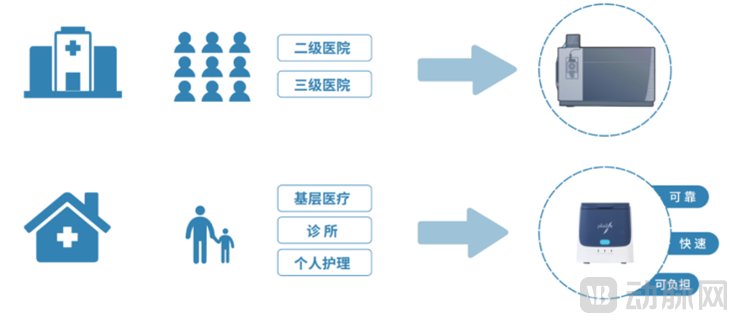
International non-profit organizations such as the Bill & Melinda Gates Foundation continue to focus on rapid, multiplex testing platforms that are low-cost, easy to operate, suitable for resource-limited settings, and capable of simultaneously diagnosing multiple pathogens. Pluslife’s product platform balances high performance, low cost, and operational convenience, making it suitable for widespread application in low- and middle-income countries (LMICs) with limited resources, thereby significantly improving access to sexually transmitted infection (STI) testing. Currently, the company’s independently developed molecular point-of-care testing (POCT) products have completed multi-party validations and market launches in numerous countries and regions. For example, in a molecular diagnostic technology and platform evaluation project conducted by PATH (Program for Appropriate Technology in Health), the performance and ease of use of the company’s products were highly acclaimed, fully demonstrating the significant potential of Pluslife’s products in resource-limited areas and their suitability for large-scale deployment in LMICs. Building on this collaborative project, the performance and usability of the Pluslife molecular POCT platform will be further enhanced in next-generation products through multifaceted improvements, aiming to meet the substantial demand in LMICs with a high burden of infectious diseases for high-performance, low-cost, and user-friendly diagnostic tools.
This collaboration marks a significant step for Pluslife in advancing technological innovation in healthcare and promoting global health, representing a key milestone in improving access to sexually transmitted infection (STI) diagnostics in low- and middle-income countries. Moving forward, the company will continue to invest in the global promotion and application of its products, providing more accurate, affordable, and user-friendly diagnostic tools to low- and middle-income countries. By maintaining ongoing collaborations with multiple partners, including the Bill & Melinda Gates Foundation, Pluslife aims to jointly reduce the burden of infectious diseases in these regions and make greater contributions to global public health.
Data Source:
① Key data on STIs:https://www.who.int/teams/global-hiv-hepatitis-and-stis-programmes/stis/overview
② Zhou Y, Jiang TT, Li J, Yin YP, Chen XS. Performance of point-of-care tests for the detection of chlamydia trachomatis infections: A systematic review and meta-analysis. EClinicalMedicine. 2021 Jun 18;37:100961. doi: 10.1016/j.eclinm.2021.100961. PMID: 34195578; PMCID: PMC8225697.
③ Accelerating the global Sexually Transmitted Infections response: report on the first informal Think-Tank meeting:https://www.who.int/publications/i/item/97892