

CorTec Submits IPO Prospectus: Pioneering Implantable Brain-Computer Interface for Stroke Rehabilitation Receives FDA Breakthrough Designation

CorTec
Implantable Neurotechnology Developer
Shortly after Neuralink announced that its first implanted volunteer had experienced a slight displacement of the fine intracranial threads, the FDA once again gave the “green light” to Neuralink’s second human clinical trial in May 2024.
Since its inception, Neuralink’s founder, Elon Musk, has ambitiously predicted that the company would initiate clinical studies on human brain-computer interface implants by the end of 2020. Three years later, the highly publicized and protracted regulatory tug-of-war between Musk and the U.S. FDA has gradually cooled as clinical research into the implantable device steadily advances.
Behind the spotlight on Neuralink’s “standout” performance,CorTec, a German company specializing in implantable brain-computer interfaces, also received approval for its Investigational Device Exemption (IDE) application from the U.S. FDA in May 2024 and is scheduled to perform its first human implantation surgery in Q3 2024.
While Neuralink enables humans to control smartphones or computers “merely through thought,” CorTec’s clinical research focuses on “disease treatment,” investigating innovative therapies for neurological disorders.This human study was led by the team of Professor Jeffrey G. Ojemann, Department of Neurological Surgery, University of Washington School of Medicine (UWSOM), in collaboration with the team of Professor Steven C. Cramer, Stroke Neurologist at the University of California, Los Angeles (UCLA). The study was funded by the National Institutes of Health (NIH).
Elon Musk has repeatedly stated publicly that Neuralink’s goal is to “restore sight to the blind and enable the paralyzed to walk.” However, judging by current progress, although the company’s technology has crossed the milestone of human implantation, it remains far from being able to treat patients and save lives in terms of channel count, technological maturity, and safety.
In contrast, the implantable brain-computer interface system developed by CorTec, named the Brain Interchange System (BIS), offers an innovative solution for stroke rehabilitation by leveraging cortical stimulation to enhance neuroplasticity. In terms of its composition, the BIS consists of the AirRay implanted electrodes, an external wireless communication device, and an external computer equipped with a software interface.
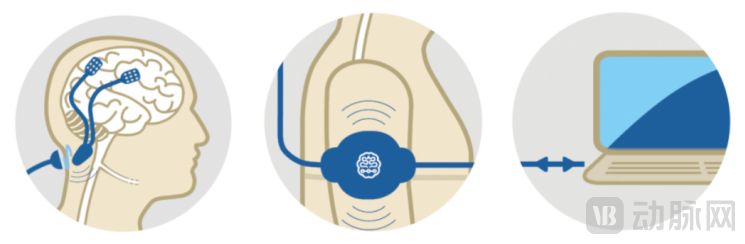
Brain Interchange System
Image source: cortec-neuro.com
Implantable microelectrodes that acquire brain electrical signals and deliver stimulation constitute a key foundation for brain–computer interaction. Electrode design, material selection, and their interactions with brain tissue significantly influence the performance of brain–computer interfaces.
Although CorTec’s implanted AirRay electrode lags behind Neuralink’s flexible microelectrodes in certain parameters such as size and channel count, the company has still secured Investigational Device Exemption (IDE) clearance from the U.S. FDA by leveraging its unique advantages. These advantages can be summarized in the following three points:
Ultra-precision laser processing technology enables the production of electrode wires as small as 25 µm.
CorTec employs its proprietary ultra-short pulse laser micromachining technology to ensure precision in electrode manufacturing and production reproducibility, capable of fabricating electrode wires as thin as 25 µm—approximately half the diameter of a human hair.
On one hand, the smaller the size of individual electrode wires, the less mechanical damage they cause to surrounding neural tissue, thereby reducing long-term immune responses and scar tissue formation; on the other hand, this also allows for denser deployment of electrodes within a limited area, thus improving the recording precision and throughput of neuronal activity.
Neuralink has publicly disclosed that the outer diameter of its electrode wires is approximately 4–6 µm. Although a size discrepancy remains between the two, dimensions ultimately serve specific application objectives; for instance, electrodes that are too small may fail to meet particular stimulation requirements. Furthermore, from the perspectives of commercial manufacturing precision and cost-effectiveness, smaller electrode wire dimensions are not necessarily superior.
Customizable shape and function to meet the needs of more clinical scenarios
CorTec can produce softer or stiffer electrodes by varying the thickness of the silicone, Parylene-C coating, or metal layers in AirRay. In addition, the standard electrode materials for AirRay are platinum-iridium alloy and MP35N (a nickel-cobalt-chromium-molybdenum alloy), and the company can also provide other materials based on special requirements.
Leveraging the flexibility of its performance and materials, CorTec can custom-design and manufacture implantable electrodes in any shape to meet downstream requirements, thereby addressing the needs of the brain science sector that are often constrained by technological product limitations. Examples include nerve cuff electrodes designed for the peripheral nervous system; grid and strip electrodes designed for the central nervous system; percutaneous electrodes for subcutaneous, intraspinal, or deep brain applications; and paddle electrodes designed for the central nervous system.
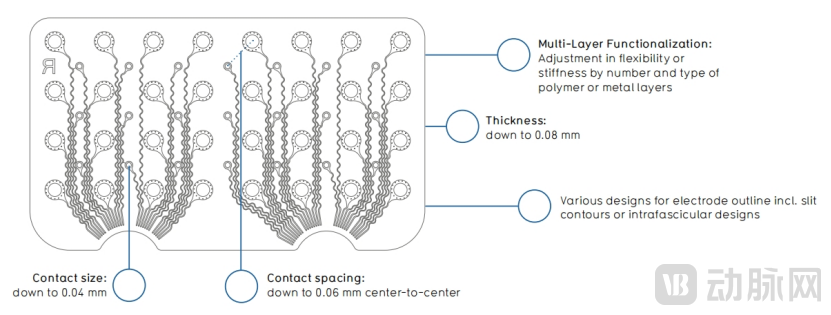
AirRay Grid and Strip Electrodes
Image source: cortec-neuro.com
Mechanical Locking Design: Enhancing the Safety of Implanted Electrodes and Surgical Operability
According to the interim results of Neuralink’s first-in-human trial published by the company, 85% of the electrode threads in the N1 device that receive signals have shifted or become dislodged, with only approximately 15% remaining functional. This implies a reduction in the amount of neural information the N1 can acquire, resulting in control capabilities that are less responsive than those observed immediately after implantation.
Although Neuralink ultimately restored the N1 to its previous state by modifying the algorithm for decoding neuronal signals and improving the bits-per-second (BPS) rate, it is equally critical to determine how to prevent similar issues from recurring.
To ensure patient safety and the long-term efficacy of the implant, CorTec employs a mechanical locking design that prevents electrode displacement and ensures stable contact with neural tissue. Furthermore, AirRay exhibits excellent mechanical adaptability, allowing it to adjust its mechanical properties according to varying implantation conditions. This not only simplifies surgical procedures but also ensures the functional integrity of the electrodes, even under conditions of repeated use.
Over the past three decades, the global number of stroke patients and those dying or becoming disabled from stroke has nearly doubled. The Lancet Neurology, in collaboration with the World Stroke Organization, released “Practical Solutions to Reduce the Global Burden of Stroke,” pointing out that without urgent action, the number of deaths from stroke worldwide is projected to increase by 50% by 2050, reaching 9.7 million annually.
All stroke patients, after undergoing acute-phase treatment, will more or less be left with some functional disabilities, known as post-stroke sequelae. Given that current medical technology cannot effectively cure these conditions, rehabilitation therapy is particularly crucial. More importantly, while the primary expectation of stroke patients 30 years ago was simply to “survive,” today’s patients aspire not only to survive but also to live with quality and dignity. Unfortunately, despite receiving standard care and rehabilitation treatment, approximately 50% of patients still suffer from sequelae that significantly impair their quality of life.
In the face of the large and rapidly growing population of stroke patients, coupled with the current lack of effective treatment options for stroke rehabilitation, brain-computer interfaces (BCIs) based on neuroplasticity offer a promising solution to fill this gap and enhance the efficacy of rehabilitative therapy.
In their previous studies, the two professors confirmed that although stroke inevitably destroys many neurons, the brain also possesses remarkable plasticity,Precise electrical stimulation, particularly through synchronization with brain neural oscillations—especially the beta rhythm (13–30 Hz)—can effectively trigger the restructuring of brain plasticity.
The innovative rehabilitation therapy based on Brain Interchange One utilizes specific electrical stimulation to activate neural “plasticity”—the underlying mechanism of lifelong brain growth—thereby compensating for and restoring lost functions by rewiring the cortical neural networks, such as recovering hand function in stroke patients.
Specifically, Brain Interchange One is divided into an internal unit and an external unit. The internal unit consists of implanted electrodes and supporting electronic devices, which are used to amplify, filter, and digitize electroencephalographic (EEG) signals and provide electrical stimulation. The external unit comprises a wireless magnetic charging device, a wireless communication device, and a computer. The communication unit is typically strapped to the patient’s upper arm or wheelchair; the external computer is used to analyze and process data, determine stimulation patterns, and send commands to the implant.
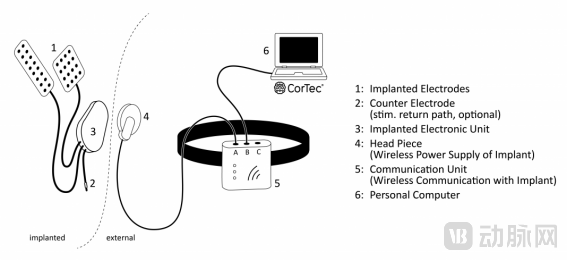
Brain Interchange One
Image source: cortec-neuro.com
The first-generation “brain pacemaker,” developed decades ago, treats brain disorders by continuously stimulating specific regions of the brain. However, regardless of changes in the patient’s condition, the device operates in a fixed pattern. This “unidirectional” therapeutic approach cannot flexibly and promptly respond to daily fluctuations in the patient’s condition, resulting in suboptimal treatment outcomes and frequent side effects.
The closed-loop system developed by Brain Interchange One is designed to continuously monitor patients’ physiological feedback, independently analyze the collected data and brain activity, and, based on precise calculations, deliver personalized electrical stimulation therapy. This enables the stimulation patterns to intelligently and dynamically adapt to patients’ immediate needs. Such closed-loop therapy provides patients with more precise and individualized treatment plans, while avoiding side effects caused by unnecessary stimulation.
This is also why Dr. Jörn Rickert, CEO and founder of CorTec, stated in a public interview: “Compared to Neuralink, CorTec’s technological products are more advanced, as CorTec’s technology has undergone extensive testing and is already in mass production.”
CorTec originated from research achievements at the University of Freiburg in Germany. The company currently employs approximately 60 people and completed its Series B financing round in 2016. Prior to launching its implantable electrode products on the market, the team had accumulated nearly a decade of research experience. In 2019, CorTec officially received approval from the U.S. FDA, established cleanroom facilities in compliance with ISO 14644-1 standards, and obtained ISO 13485 certification for its products.
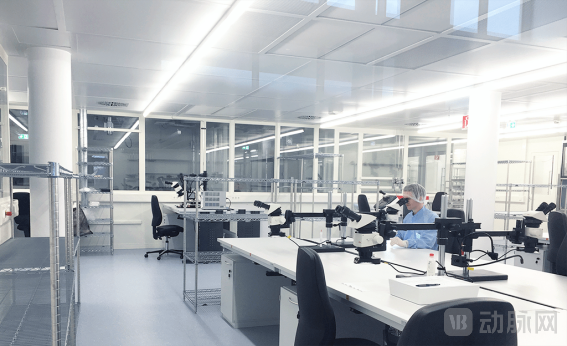
CorTec Cleanroom
Image source: cortec-neuro.com
As a comprehensive supplier of implantable brain-computer interfaces, CorTec’s various implantable electrodes and associated devices are publicly available through the Chamfr Shop, with unit prices ranging from hundreds to thousands of U.S. dollars.
CorTec’s closed-loop solution is also being utilized in numerous projects aimed at developing novel neuromodulation therapies for neurological disorders of the brain, such as epilepsy, Alzheimer’s disease, schizophrenia, and depression, as well as for conditions like diabetes.
In diabetes management, the role of the carotid body is particularly critical. Studies have shown that when the sinus nerve—the neural pathway for these receptors—is severed, the body’s ability to regulate hypoglycemia is impaired, leading to an increased risk of hypoglycemia.
Galvani Bioelectronics, a joint venture between GlaxoSmithKline and Google, collaborated with the University of Lisbon to conduct refined electrophysiological monitoring of signals in the carotid sinus nerve using CorTec’s AirRay flexible cuff electrodes. The findings revealed that insulin and the resulting hypoglycemic state can activate the carotid sinus nerve, thereby stimulating the sympathetic nervous system and triggering a series of physiological responses, including increased respiratory rate and significant changes in heart rate and blood pressure.
With the support of CorTec, the carotid artery is poised to become a “new target” for treating diabetes, cardiovascular disease, and many other conditions, benefiting more patients.
Numerous similar collaborative cases are featured on CorTec’s official website, aligning with the company’s mission statement: “To enable communication with the nervous system – for the cure of diseases.” The future market potential of brain-computer interfaces (BCIs) needs no further elaboration. Supported by foundational tools, neuroscience research is accelerating, and an increasing number of diseases will be cured or more effectively treated in the future. However, we must not forget that the ultimate goal of scientific research—both at its inception and in its culmination—is to benefit a broader patient population. This requires making BCIs and their associated therapies widely accessible and affordable, thereby fostering shared industry prosperity rather than remaining a niche pursuit with limited appeal.