

Tongxin Zhiyi Launches Zhao Jizong-Wang Shuo Institute of Neuroscience and Initiates the 'Xueshi Assist-Med' Program to Advance Neurological Healthcare

Sophmind
Internet Medical Examination Platform
The importance of neuroscience is self-evident.
On one hand, the human brain, as a vital organ, is extremely complex. It contains 86 billion neurons, trillions of synapses, and 180,000 kilometers of nerve fibers that regulate various bodily functions. Notably, cerebral blood flow accounts for 15% of the body’s total blood supply. On the other hand, there is a large population of patients with brain disorders, posing severe challenges to diagnosis and treatment. Currently, there are approximately 1 billion people worldwide suffering from brain disorders, accounting for 28% of the global disease burden. With medical expenditures reaching approximately $15.67 trillion, it ranks first among all disease categories. In China, deaths attributable to brain disorders account for more than 25% of total deaths, and the future economic burden of brain diseases in China may even reach trillions of yuan annually.
In late 2023, AbbVie announced its acquisition of Cerevel at $45 per share, for a total transaction value of $8.7 billion, to expand its product portfolio in neuroscience. This major announcement stirred significant market excitement, drawing considerable attention from industry stakeholders to the development of the neuroscience field, while neuroscience symposiums were successively held both domestically and internationally.
The unveiling ceremony of the Zhao Jizong-Wang Shuo Institute for Neurosciences, a project by Sophmind, held in Lishui, Zhejiang, at the end of June this year, has undoubtedly further propelled the development of the neuroscience field to new heights. In addition to the inauguration of the Institute for Neurosciences, which aims to support basic scientific research, the “Study-to-Assist Medicine Project,” jointly initiated by the Institute for Neurosciences and Sophmind to facilitate hospital discipline construction, was also launched at the conference. Furthermore, Lishui Central Hospital signed cooperation agreements with Sophmind, the Institute for Neurosciences, and other parties during the event to jointly promote discipline development.
Concurrently, the 1st Lishui “Medical AI Innovation and Development Forum” was held during the conference. Clinical experts and professors from Beijing Tiantan Hospital, Lishui Central Hospital, the Department of Computer Science and Technology at Tsinghua University, and the Chinese Academy of Sciences attended the event to deliver lectures and share insights. In-depth discussions on innovative investments in medical fields such as brain science were conducted by representatives from Liandu State-owned Investment Group, CAS Yangtze River Delta Capital, Bojia Capital, CICC Capital, and Legend Star.
There is undoubtedly growing emphasis, both domestically and internationally, on the development of neuroscience and related fields, including brain science.
From China’s perspective, the country launched its “Brain Project” as early as 2014. In 2020, the state invested RMB 54 billion to advance research under the China Brain Initiative. In 2021, the Ministry of Science and Technology released the 2021 Application Guidelines for the Major Project on “Brain Science and Brain-Inspired Intelligence,” further elevating the level of research in brain science and brain-inspired fields. In 2022, frontier technological areas such as artificial intelligence, life and health, and brain science were incorporated into China’s 14th Five-Year Plan.
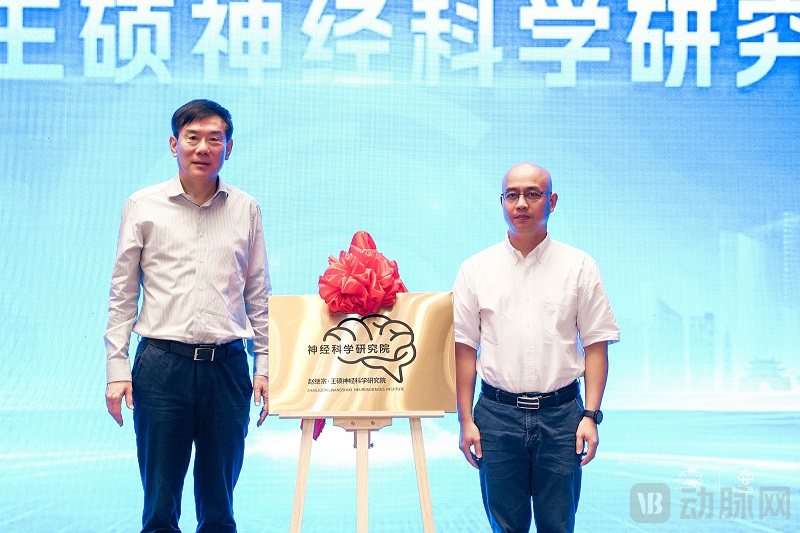
Today, the unveiling of the Zhao Jizong-Wang Shuo Institute for Neuroscience further demonstrates the attention paid by industry, academia, and research sectors to the field of neuroscience. The Zhao Jizong-Wang Shuo Institute for Neuroscience is a new type of neuroscience research institution jointly established by experts from Tiantan Hospital and Sophmind, and co-initiated by Academician Zhao Jizong of the Chinese Academy of Sciences and Director Wang Shuo, Chairman of the Neurosurgery Branch of the Chinese Medical Association.
On the one hand, from the perspective of basic research, the establishment of the Institute of Neuroscience will further deepen fundamental studies in the field of neuroscience and promote the integrated development of technological innovation by combining brain science with emerging technologies such as artificial intelligence and brain-computer interfaces.
On the other hand, from a clinical perspective, following its establishment, the Institute of Neuroscience will collaborate with numerous hospitals and industry enterprises, such as Sophmind, to research and promote intelligent, novel diagnostic and therapeutic technologies, thereby further enhancing the overall level of brain disease prevention and control in China.
Looking ahead, the Zhao Jizong-Wang Shuo Institute of Neurosciences will undoubtedly leverage its research to further drive industry-wide development through medical-engineering integration and cross-disciplinary innovation.
A significant number of patients with brain disorders face numerous challenges, including difficulty accessing medical care and high treatment costs. Underlying these issues is the core pain point of uneven distribution of medical resources. One critical challenge that must be addressed is how to effectively enhance the clinical proficiency and technical skills of physicians and allied health professionals, particularly those in primary care hospitals.
Currently, multiple factors are driving primary-care hospitals to enhance their capabilities in medical practice, education, and research.
On one hand, favorable policies continue to drive progress. The Report to the 20th National Congress of the Communist Party of China emphasizes promoting the expansion of high-quality medical resources and their balanced regional distribution, while enhancing primary care capabilities in disease prevention, treatment, and health management. The Implementation Plan for Cardiovascular and Cerebrovascular Disease Prevention and Control under the Healthy China Initiative (2023–2030) requires that “by 2030, a comprehensive national system for the prevention, control, early diagnosis, and early treatment of cardiovascular and cerebrovascular diseases be established… reducing the mortality rate from these diseases to below 190.7 per 100,000 population.” In addition to these guiding documents, policies aimed at promoting high-quality development of public hospitals and strengthening clinical specialty capabilities are further enhancing the diagnostic and therapeutic capacities of primary healthcare institutions.
On the other hand, there are practical necessities. During their development, healthcare institutions are influenced by a variety of factors and must take into account brand enhancement, performance assessments for public hospitals, the impact of medical insurance cost containment, and the professional development of medical personnel. These factors have led hospitals to place greater emphasis on their comprehensive strengths in clinical care, education, and research.
It is against this backdrop that the “Study Hours Aid Medicine” project was launched.

Xueshi Zhuyi Project, jointly initiated by the Neurosurgery Branch of the Chinese Medical Association, the China National Clinical Research Center for Neurological Diseases, the Research Center for Chinese Enterprise Globalization at Tsinghua University School of Economics and Management, the Zhao Jizong-Wang Shuo Institute for Neurosciences, and Sophmind, is dedicated to promoting hospital discipline construction, including but not limited to cerebrovascular diseases. By integrating AI with clinical diagnosis and treatment technologies, the project comprehensively enhances the capabilities of medical institutions in medical care, education, and research. Through its support for hospital discipline development, the Xueshi Zhuyi Project aims to fundamentally transform the current imbalance in the distribution of medical resources, achieving a balanced allocation of healthcare resources across China and globally.
At this conference, Sophmind and the Institute of Neuroscience also signed agreements with Lishui Central Hospital. Lishui Central Hospital will serve as a platform to further promote the interdisciplinary integration and innovation between medicine and engineering at the Institute of Neuroscience. Leveraging Sophmind’s AI-driven brain science innovation platform, the hospital aims to enhance its clinical diagnosis and treatment technologies, thereby elevating the diagnostic and therapeutic capabilities of hospitals in the surrounding regions.
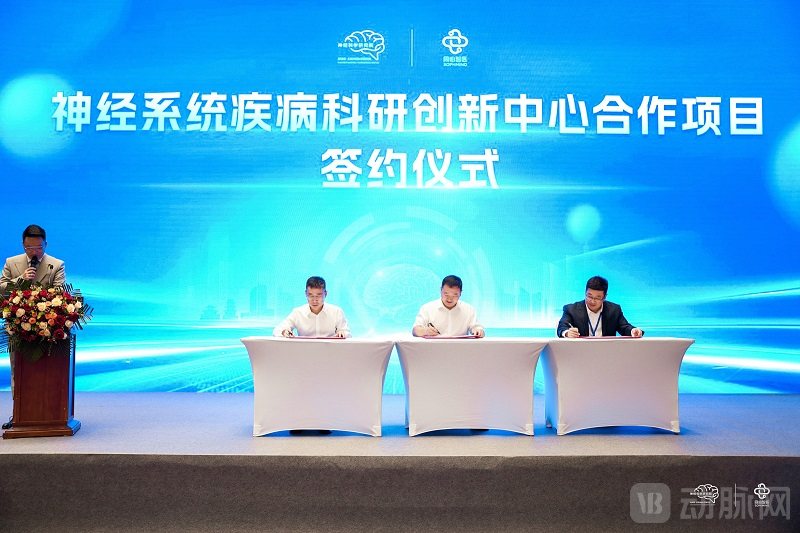
This inevitably brings us to Lishui Central Hospital. As early as 2023, the hospital had begun preparatory discussions on establishing a Brain Center. In January of this year, the outpatient clinic and inpatient wards of the Lishui Central Hospital Brain Center were officially launched.
From a clinical perspective, the Brain Center of Lishui Central Hospital encompasses the Department of Neurology, Department of Neurosurgery, Neurological Intensive Care Unit (NICU), Department of Psychiatry, Neuroimaging Center, Neurorehabilitation Department, Electroencephalography (EEG) Laboratory, Electromyography (EMG) Laboratory, and the Clinical Research Center for Nervous System Diseases. The Department of Neurology operates three inpatient wards with 150 open beds, handling nearly 60,000 outpatient visits and admitting approximately 4,000 patients annually. Its strengths lie in endovascular treatment for cerebrovascular diseases, management of neurological critical care, diagnosis and treatment of sleep and movement disorders, diagnosis and treatment of neuroimmune and complex refractory diseases, neuroimaging diagnostics, and management of cognitive impairment disorders. The Department of Neurosurgery has been included in the Key Clinical Specialty Construction Project of Zhejiang Province, performing over 600 surgeries annually. Currently, Lishui Central Hospital is establishing a Comprehensive Treatment Center for Nervous System Diseases by implementing a standardized, precise, minimally invasive, and multidisciplinary integrated diagnosis and treatment model.
From a research perspective, Lishui Central Hospital currently hosts the Zhejiang Provincial Key Laboratory of Imaging Diagnosis and Interventional Minimally Invasive Research, among others, and is also a core member unit of the National Clinical Research Center for Neurological Diseases. Its basic research platforms include a molecular biology detection platform, a small animal experimental platform, and a biobank storage platform, among others. Over the past three years, the hospital has undertaken as many as 88 newly applied or ongoing research projects.
The other partner, Sophmind, is dedicated to providing intelligent medical device solutions for the clinical diagnosis and treatment of major brain diseases. Guided by the clinical needs associated with these conditions, it has built an AI-driven brain science diagnosis and treatment platform by integrating artificial intelligence, brain-computer interface technology, and intelligent wearable devices into clinical applications. Currently, Sophmind is one of the largest enterprises in this field in terms of business scale.
Based on the collaboration between both parties, it is undeniable that, on one hand, experts in specialized disease fields will further enhance their influence and gain access to clinical resources for major research projects; on the other hand, the academic capabilities of primary care physicians will be further improved. In addition, patient disease risks will be further reduced, and the challenges of difficult access to medical care and the high costs associated with seeking treatment across different regions are expected to be resolved. More importantly, through the “Learning-Time-Assisting-Medical-Care Project,” the collaborating parties are poised to promote the coordinated development of medical practice, education, and research across the entire industry, ushering in a new chapter for industry advancement.
It is evident that Sophmind plays a role in both the Zhao Jizong and Wang Shuo Institute of Neurosciences and the Study-Assisted Medical Care Project. This presence is attributable to the trust and recognition Sophmind has earned from experts in the field of neuroscience, as well as to its own inherent strengths.
For instance, experts from Beijing Tiantan Hospital mentioned at the conference that deep learning models capable of automatically identifying irregular intracranial aneurysms could assist physicians in making rapid diagnoses, narrow the diagnostic gap among clinicians with varying levels of experience, and help formulate diagnosis and treatment plans for intracranial aneurysms. This aligns precisely with one of Sophmind’s key strategic focuses. Currently, Sophmind is integrating multiple algorithms to provide integrated diagnosis and treatment solutions for complex brain diseases, while leveraging multimodal large language models combined with causal inference technology to achieve comprehensive AI-driven digital intelligence applications across various clinical scenarios for brain disorders. With product layouts covering cerebrovascular diseases, neurodegenerative diseases, brain tumors, and cranial nerve disorders, Sophmind has established a closed-loop product ecosystem spanning diagnosis, treatment, and rehabilitation.
Sophmind, a company deeply rooted in the industry, pointed out in its industry analysis that the current main application areas of AI include four directions: AI medical imaging, AI-assisted decision-making, medical robots, and AI drug research and development. Large medical models are on the rise. At the same time, we also face some difficulties and challenges, including issues such as medical data/patient privacy and commercialization dilemmas.
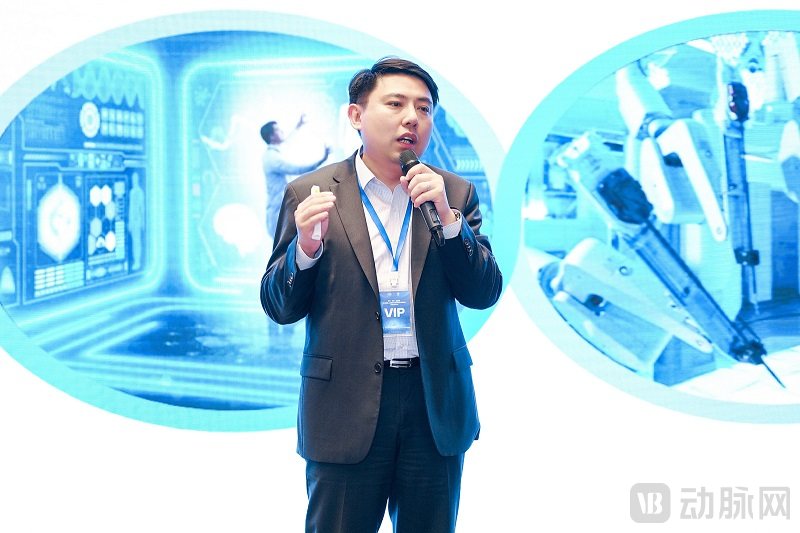
Addressing the challenges currently facing the industry, Liu Weiqi, founder of Sophmind, emphasized—
On one hand, we should reevaluate the value of AI development in healthcare. Historically, innovative drugs and medical devices have expanded the boundaries of diagnosis and treatment, thereby extending human life expectancy, but this has also led to a continuous rise in healthcare costs. In contrast, the core value of artificial intelligence lies in empowering young physicians and those working in county-level hospitals with the experience and capabilities equivalent to specialists at top-tier tertiary hospitals, thus addressing the shortages in existing medical resources and gaps in medical education. The integration of AI and healthcare should not simply replicate the developmental trajectory of traditional medical devices. Regulatory bodies are urged to consider the unique characteristics of “AI + Healthcare” and introduce more targeted policies in areas such as market access.On the other hand, beyond the efforts of large AI models to address generalization issues using comprehensive datasets, it has become increasingly important to seamlessly integrate AI-based causal inference techniques with evidence-based medicine. The convergence of AI and healthcare holds great promise, but as it remains in its early stages, close collaboration across the entire industry is essential for shared growth. With the establishment of the Zhao Jizong-Wang Shuo Institute of Neurosciences, the launch of the “Study Hours Aid Medical Care” initiative, and further impetus from industry players such as Sophmind, there is hope that these efforts will drive the industry to explore new directions and better serve patients.