

InnoMedBio Files IPO Prospectus: Pioneering Multi-Omics and AI-Driven Precision Medicine Platform with Best-in-Class ADC Pipeline
Akeso
Innovative Antibody Drug Developer
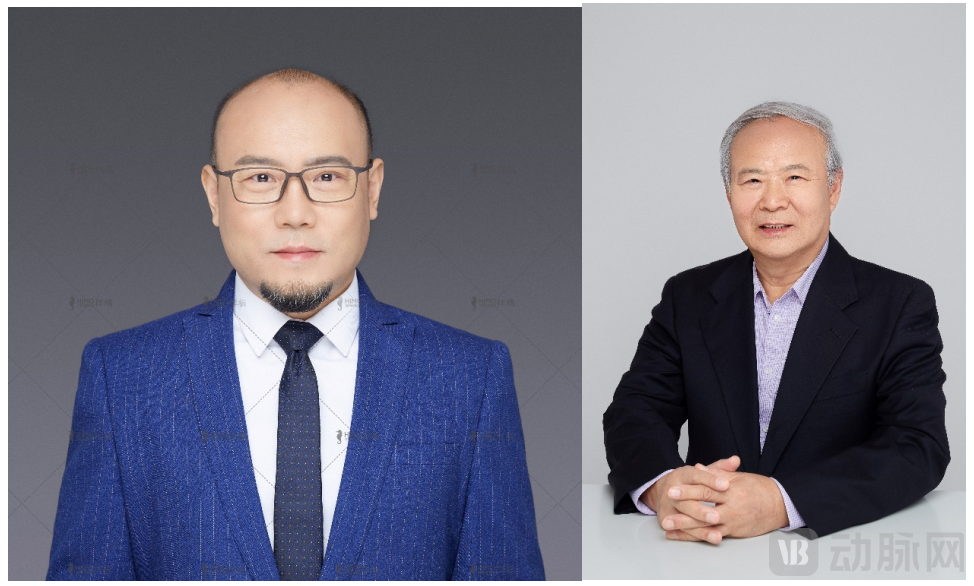
Xiang Chao,With a decade of experience in venture capital and private equity, he previously served as a Partner at Shenzhen Qianhai Xinnuo Investment Management Co., Ltd. and Wuhan Ruijiang Investment Management Co., Ltd., Vice President of the Wuhan Angel Investment Association, and was recognized as Hubei Province’s Best Angel Investor. His angel and Pre-A round investments in Akeso yielded a 2,800-fold return. He has managed two government-backed funds, one industrial fund, and tens of billions of RMB in platform proprietary capital. This includes managing the Ruijiang-Kangsheng Medical Industry Fund, which focused on Kangsheng Global, a leader in specialized clinical testing. He has incubated over ten medical projects and led the investment and exit strategies for more than twenty projects. Key case studies include Akeso, EHang Biotech, Jiamei Biotech, VitaLink, Haili Lithium Battery, Manfu Technology, Liandi Technology, FlexElectronics Technology, Suowei Technology, Huayinxin, Arctic Core Microelectronics, Xuanwushi Semiconductor, and Kangnuoxin Semiconductor. He has served as a judge for major competitions such as the China Innovation and Entrepreneurship Competition, Maker China, Shenzhen Innovation and Entrepreneurship Competition, Huachuang Cup, LinkedIn Cup, Bochuang Competition, Global High-Level Youth Talent Entrepreneurship Competition, and the “3551” Program. Additionally, he has participated as a brand ambassador, guest, or host in events including the World Overseas Chinese New Generation Innovation and Entrepreneurship Competition, the Life Sciences and Big Health Summit, the International Young Talent Summit, and the National Science and Technology Plan Achievements Action.

Dr. Yong Zheng, Founder and CEO of InnoMab, is a Beijing Overseas High-Level Talent and Distinguished Expert. His educational background includes a bachelor’s degree from Lanzhou University, a master’s degree from Peking Union Medical College, and a Ph.D. from the University of Alberta, Canada, followed by postdoctoral training at the University of Toronto under the supervision of the world-renowned Canadian cancer researcher and Academician Tony Pawson. He previously served as an Assistant Researcher at the Lunenfeld-Tanenbaum Research Institute (LTRI) of Mount Sinai Hospital and as a Professor and Doctoral Supervisor at the National Center for Protein Sciences (Beijing). He has published landmark articles on proteomics in Nature and has received support from multiple research funds, including the National Key R&D Program and the National Natural Science Foundation of China.Co-founder and Chief Scientific Officer Dr. Dexian Zheng is a Professor at the School of Basic Medical Sciences, Peking Union Medical College, and a recipient of the State Council Special Allowance. His educational and professional experience includes a bachelor’s degree from Peking University, a joint Ph.D. program between the U.S. National Institutes of Health (NIH) and the Chinese Academy of Medical Sciences (CAMS), postdoctoral work at the U.S. Food and Drug Administration (FDA), a visiting professorship at Harvard Medical School, and former roles as Director of the School of Basic Medical Sciences at Peking Union Medical College, Director of the State Key Laboratory of Experimental Hematology, and Chair of its Academic Committee. He also serves as Vice Chairman of the Chinese Society for Immunology and Executive Council Member of the International Union of Immunological Societies. He has led multiple projects funded by the “863” Program, the “973” Program, and the National Major Project for New Drug Innovation. Previously, he served as Chief Scientific Officer and President of R&D at Obio Technology. He has successfully led the R&D of three new drug Investigational New Drug (IND) applications and holds 15 patents approved domestically and internationally.The company boasts a multidisciplinary core team whose members not only have backgrounds from top-tier research institutions such as Harvard University, the University of Toronto, the Wharton School, Tsinghua University, Peking University, Peking Union Medical College, the National Center for Protein Sciences, and the Shanghai Institute of Materia Medica of the Chinese Academy of Sciences, but also possess executive experience at leading pharmaceutical companies like Pfizer, Takeda, and Fosun Pharma, as well as at prominent technology firms including Apple, Tencent Healthcare, and Alibaba Health. The company possesses world-class capabilities in the fields of proteomics, antibody drugs, and AI computing.
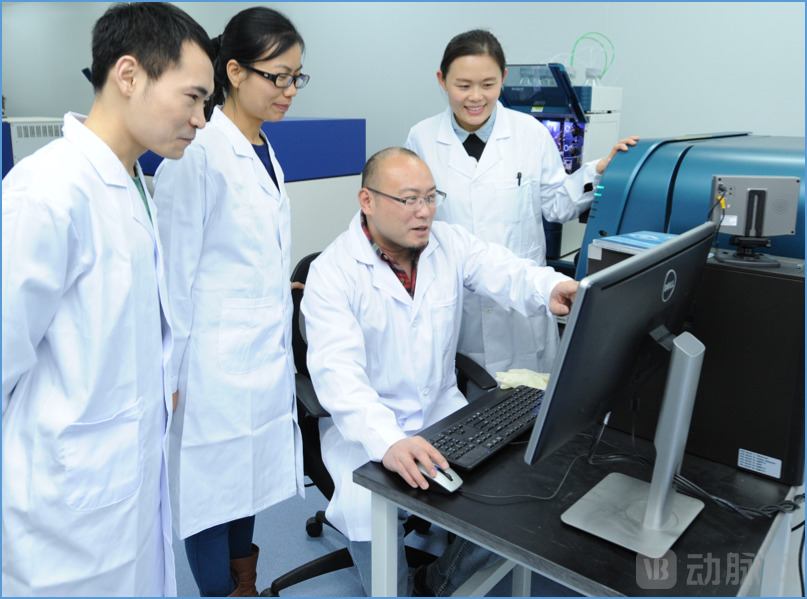
The company’s core business focuses on multi-omics-driven medical decision-making tools and the precision development of targeted therapies. Its organoid-based proteomic multi-omics technology platform is built upon specialized omics technologies, such as targeted proteomics, and diverse disease model libraries including PDX, PDO, PDXO, and PDOX models. By leveraging deep biological insights derived from high-clinical-relevance big data and AI computing, the platform guides the rational design and efficient, high-success-rate development of new drugs and in vitro diagnostic (IVD) products. This technology platform can be applied across multiple stages of new drug development, including target discovery, elucidation of drug mechanisms of action, patient stratification, clinical trial protocol design, determination of interim or surrogate endpoints in clinical studies, combination therapy development, support for clinical treatment decisions, and expansion of drug indications.
Complex diseases such as cancer are often driven by abnormalities in multiple genes and exhibit high heterogeneity; therefore, biomarkers play a critical role in medical decision-making. However, there is still a severe shortage of precise biomarkers available for clinical use. The main challenges hindering the development of effective biomarkers include the lack of clinical models correlated with drug efficacy, insufficient systematic data on therapeutic outcomes, and the absence of standardized, high-quality data, which results in low comparability of findings. To address this significant unmet clinical need, InnoMab offers a unique multi-omics solution based on organoids. It has established a sample bank centered on tumor organoids and comprehensively captures multidimensional molecular characteristic data, including proteomic and transcriptomic profiles. By integrating clinical efficacy data with AI algorithms, the platform can screen for more precise combinations of pharmacodynamic biomarkers, providing clinicians with more accurate basis for decision-making. Its core LDT product under development can simultaneously detect the activity of eight key factors in the HER pathway, guiding the use of various targeted therapies related to the HER signaling pathway. This test covers multiple indications, including breast cancer, non-small cell lung cancer, colorectal cancer, gastric cancer, pancreatic cancer, ovarian cancer, and melanoma. This product has the potential to evolve into an IVD kit for multi-target detection in tumor pathology sections, representing a novel concept.
In the field of new drug development, the company currently maintains a robust preclinical pipeline of innovative antibody-drug conjugate (ADC) candidates. This includes products targeting unique antigens derived from over a decade of academic expertise, with the potential to become first-in-class therapies, thereby establishing a differentiated competitive advantage for the company. InnoMab further leverages its organoid multi-omics platform to provide data-driven insights for rational decision-making at critical junctures of drug development, such as patient stratification strategies, determination of surrogate or intermediate endpoints in clinical trials, and combination therapy development. This approach aims to shorten development cycles and enhance the success rate of R&D. The company has already demonstrated the high efficiency of this platform in developing ADC-based combination therapies, which represent one of the most significant developmental directions for this class of drugs. Through combination regimens, the effective dose of ADCs can be substantially reduced, adverse effects minimized, and the therapeutic window broadened.
In terms of technology output and collaboration, the Company can leverage its organoid omics technology platform to provide a series of high-value R&D empowerment services for medical testing institutions, pharmaceutical companies, and biotechnology enterprises, including screening for clinical diagnostic biomarkers, joint development of novel Laboratory Developed Tests (LDTs) and In Vitro Diagnostic (IVD) products, optimal indication assessment, and drug repurposing. The Company has already provided technical services to numerous domestic and international enterprises and research institutions using its proteomics technology, including collaborative research with Novartis (US) on two HER pathway-targeted drugs. Related findings will be published in core international journals.
The company has been invited to join Feibiao International Innovation Platform, a top-tier incubator in the pharmaceutical industry, in Beijing. It is about to establish an R&D center at the Dandelion Incubator in Shenzhen and has formed strategic partnerships with several well-known domestic companies in the proteomics industry chain. The company’s next round of financing agreement has been signed and is currently in the closing stage.

Xiang Chao stated: "First and foremost, I am deeply honored to invest in and join such an outstanding enterprise! Proteomics has been a sector closely monitored by the Ruijiang Kangsheng Industrial Fund for nearly two years. We have tracked all leading companies in the industry and have been actively seeking suitable investment targets. Furthermore, drawing on my experience in investing in and providing post-investment support to Akeso, I believe that antibody-drug conjugates (ADCs) with unique target advantages, broad indication potential, strong druggability, and demonstrated clinical efficacy will hold immense application value and market space. Capital is most inclined to focus on pipelines that can benchmark against and have the potential to become best-in-class, yet these endeavors also require continuous capital infusion. This is precisely where my expertise can maximize value for such enterprises. I am confident that InnoMap’s proteomics technology will play a significant role in synergizing medical diagnostics with biopharmaceuticals, empowering scientific services, clinical testing, medication guidance, and new drug development, thereby truly achieving a closed loop of diagnosis and treatment, and becoming the next 'Kangsheng + Akeso'!"
Mr. Zheng, Founder and CEO of InnoMab, stated that leveraging proteomics technology to innovate the R&D models for medical treatments and pharmaceutical products is an emerging global trend. Internationally, several innovative companies have already attracted significant capital attention and support, demonstrating development momentum that exceeds expectations. Although we started slightly later than our benchmark competitors, we possess unique technological advantages, including next-generation ADC pipeline technology, world-class proteomics capabilities, and a proprietary organoid model library. I firmly believe that our integrated approach—combining novel drug pipelines, clinical diagnostic tools, clinical omics big data, and AI-driven computational models—represents the optimal pathway for AI-enabled drug discovery. However, this pathway requires substantial capital investment to drive forward. This is why I am thrilled that Ms. Chao has joined our team. The combination of her expertise in capital markets with our team’s R&D capabilities will create a powerful synergistic effect, giving us greater confidence to become a leading enterprise in this field.
Professor Tian Ruijun of Southern University of Science and Technology pointed out that there is still significant untapped potential for the application of proteomics in healthcare and pharmaceutical R&D. The pioneering work of companies such as InnoBo deserves attention and anticipation.