

Asimov Files IPO Prospectus to Revolutionize Mammalian Genetic Programming with Next-Gen Full-Stack Bio-Design Platform
Asimov
Gene Technology Developer
Synthetic biology is arguably one of the most rapidly emerging interdisciplinary frontiers in recent years.
As a novel biotechnology integrating science and engineering, synthetic biology leverages the efficient metabolic systems of living organisms and employs gene-editing techniques to engineer and design them, thereby making it increasingly possible to achieve targeted and efficient assembly of substances and materials within biological systems. This technology is applied across multiple fields, including biomaterials, biofuels, and biopharmaceuticals.
Biosynthetic methods typically generate novel metabolic pathways by engineering existing biological systems or by synthesizing genomes de novo to reconstruct living organisms, thereby enabling the production of new metabolites. Theoretically, biosynthetic technologies can synthesize the vast majority of organic compounds and even produce new materials that are unattainable through traditional chemical synthesis. In the medical field, this technology is employed to obtain pharmaceutical raw materials, catalysts, intermediates, and other essential components.
By redesigning and constructing biological systems, synthetic biology not only expands the theoretical understanding of the nature of life but also demonstrates significant potential and value in practical applications.
Currently, the core of synthetic biology lies in the precise control and optimization of biological components, which demands a high degree of technological innovation and interdisciplinary collaboration. Competition within the industry is intensifying, with companies making substantial investments in research and development to secure a foothold in this emerging field. Global demand for synthetic biology products continues to grow, and the industry is projected to experience explosive growth in the coming years.
Against this backdrop, some companies have emerged as industry leaders by leveraging their forward-looking technological vision and innovative capabilities. Asimov, Inc. stands out as a prime example. This pioneer in synthetic biology is redefining the programming of living cells through its unique gene circuit design platform.
Asimov, Inc.’s technology not only enhances the precision of biologic design and the controllability of manufacturing processes, but also significantly accelerates the translation from concept to product through the application of computer-aided design and machine learning.
Revolutionizing Full-Stack Biological Design Tools, Securing Over $200 Million in Three Rounds of Financing
In Boston, the cradle of technological innovation, Asimov, Inc. stands like a seed brimming with infinite possibilities. The emergence of Asimov was not an overnight achievement; rather, it stemmed from the shared vision of a multidisciplinary team of scientists, engineers, and designers.
In 2017, Chris Voigt, Doug Densmore, Alec Nielsen, and Raja Srinivas co-founded Asimov, with Alec Nielsen serving as the company’s Chief Executive Officer.
Previously, Chris Voigt (Massachusetts Institute of Technology) and Doug Densmore (Boston University) had collaborated for many years, dedicating themselves to establishing the foundations of genetic logic circuit design for programming living cells.
Later, Alec Nielsen joined the Voigt laboratory as a Ph.D. student. Alec Nielsen is the co-founder and CEO of Asimov, as well as a distinguished scientist in the field of synthetic biology. With his profound background in electrical engineering, bioengineering, and synthetic biology, Dr. Nielsen has been leading the company to achieve continuous breakthroughs in scalable biochemistry, cellular function design, and the application of machine learning in gene design and biosafety.
In 2016, the three researchers and their collaborators at NIST (National Institute of Standards and Technology) released Cello, an automated platform for genetic circuit design. The related study was published in Science under the title “Genetic circuit design automation.”
The Cello platform analogizes the design of biological circuits to that of integrated circuits in electronic products, applying the principles of Electronic Design Automation (EDA) to increase circuit complexity, thereby accelerating genetic circuit design.
Asimov’s platform is built on the same design philosophy as Cello. Alec Nielsen noted that while the field of engineered medicines is advancing rapidly, the technologies for designing and manufacturing these therapies have not kept pace. He cited former U.S. FDA Commissioner Scott Gottlieb to underscore this point: “For conventional drugs, 80% of the complexity lies in clinical testing; for cell and gene therapies, the reverse is true, with 80% of the complexity residing in manufacturing.”
Asimov aims to break the bottlenecks in drug discovery by developing superior biological design tools. Guided by this philosophy, Asimov has developed a full-stack genetic circuit design platform for programming living cells. By integrating mammalian synthetic biology, computer-aided design (CAD), and machine learning, the platform provides comprehensive and precise tools for cellular programming, thereby advancing the design and manufacturing of biologics and gene therapies.
In other words, Asimov’s technology enables the in silico prediction of genetic systems, uses the Kernel platform to tune gene circuits, and then experimentally tests the optimal combinations.
This platform integrates synthetic biology, biophysical simulation, and machine learning-based design. The engineered genetic circuits can be applied across various fields of biotechnology, enabling customers to optimize the design and construction of genetic logic gates and develop advanced manufacturing and medical applications.
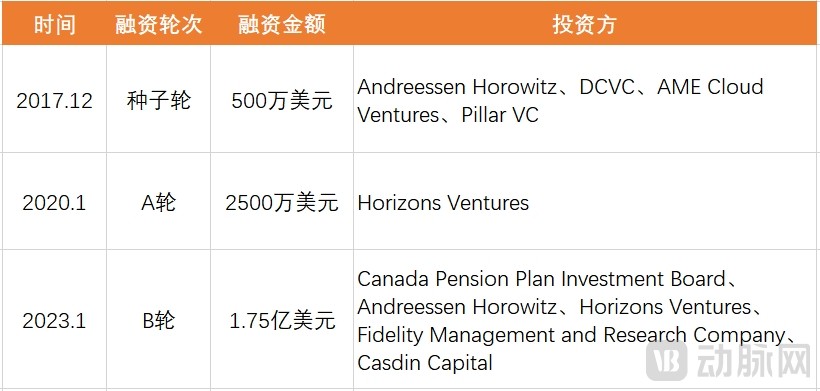
As Asimov’s technology continued to advance and mature, it attracted the attention of the capital markets. In December 2017, a $5 million seed funding round led by Andreessen Horowitz injected the company with its initial momentum. Subsequently, in January 2020, Horizons Ventures led a $25 million Series A financing round, fueling the company’s rapid growth.
By January 2023, the company had completed a $175 million Series B financing round, with plans to leverage these funds to expand its tools and services portfolio in biologics, cell and gene therapies, and RNA. This financing not only signifies industry recognition of Asimov’s technological prowess but also reflects strong confidence in its future development.
Designable, Simulatable, and Analyzable: A Comprehensive Solution for Programming Living Cells
Asimov’s product, the Asimov Platform, is a system that integrates cells, genes, and software, providing a comprehensive solution for programming living cells.
First, the platform provides a solid foundation for the production of therapeutic drugs through its engineered, well-characterized GMP host cell lines, accompanied by supporting regulatory documentation.
Meanwhile, its vast library of gene fragments, comprising thousands of validated genetic components that regulate cellular biology—including transposase integration systems, expression vectors, inducible systems, and tissue-specific promoters—provides a rich toolkit for designing novel systems.
Asimov Platform’s design software, built on cloud technology, enables users to design, simulate, and optimize genetic systems for different cell types tailored to specific applications. Its multi-omics analysis facilitates advanced quality control (QC) of cell lines, deepens biological understanding, and yields actionable insights for genetic design.
Finally, the platform’s technical guidelines were developed by the company’s scientists and synthetic biology team, with optimization and validation performed across all aspects of the platform to ensure experimental reproducibility and efficiency.
In terms of workflow, the Asimov platform consists of four stages. The first is Design: Throughout the tree of life, nature has evolved billions of useful molecular devices in the form of genes and genetic elements. Asimov procures, catalogs, characterizes, optimizes, and recombines these components, providing its partners with an extensive toolkit for designing new systems.
Second, Simulate: Biology is extremely complex, and genetic engineering has opened up an infinite design space. Asimov provides data-driven computational models to predict the behavior of genetic systems. Asimov’s goal is to move biotechnology beyond trial and error.
3. Optimize: Artificial intelligence tools are increasingly becoming central to cellular system engineering. Asimov uses machine learning to link large-scale datasets with models of biological mechanisms, thereby enabling algorithmic optimization of genetic systems.
Finally, Analyze: Genome-scale multi-omics measurement technologies provide in-depth insights into cells. These technologies enable pathway analysis at the whole-cell level and examination at single-nucleotide resolution.
In summary, the use of data-driven computational models to predict the behavior of genetic systems has reduced the need for trial and error. The application of artificial intelligence and machine learning technologies has enabled algorithmic optimization of genetic systems, while genome-scale multi-omics measurement techniques provide robust support for in-depth cellular observation and analysis.
Asimov’s technological advantage lies in its AI-assisted molecular design, which leverages big data and artificial intelligence to achieve precise protein design. The engineering mindset of synthetic biology allows protein molecular machines to be decomposed into modular components, enabling rapid assembly. Cell factory technology facilitates complete synthesis within living cells, thereby enhancing efficiency and reducing costs. Directed evolution utilizes data-driven insights to guide the targeted evolution of proteins, advancing the field of protein engineering.
Leveraging this technology platform, Asimov’s applications encompass the 7-ADCA project and the development of phage-like particle proteins. The 7-ADCA project targets intermediates for synthetic cephalosporin antibiotics by deploying proprietary cell factory technology, while the development of phage-like particle proteins aims to replace antibiotics and combat antimicrobial resistance, bringing new hope to the healthcare sector.
Asimov’s unique advantages have rapidly propelled its products and technologies to demonstrate tangible results in practical applications such as the 7-ADCA project and bacteriophage-like particle proteins, underscoring the market potential and practical value of its technology. This success has also garnered favor from investment institutions, enabling Asimov to complete multiple funding rounds with support from prominent investors including Andreessen Horowitz and Horizons Ventures, thereby securing the capital necessary for the company’s R&D and commercialization efforts.
Collaborated with over 25 companies, planning to expand into the Guangdong-Hong Kong-Macao Greater Bay Area in China
Leveraging its advanced technological capabilities, Asimov has partnered with more than 25 companies, including top-10 pharmaceutical and biotechnology firms as well as contract development and manufacturing organizations (CDMOs).
In the partnership, Asimov will provide a comprehensive suite of technologies, including proprietary cell lines, gene design software, and an expanding catalog of engineered genetic systems for diverse applications. Currently, Asimov focuses on two primary commercial applications: one leverages CRISPR-engineered Chinese hamster cells along with accompanying genetic templates to enhance the production of proteins such as antibodies; the other pertains to nucleic acid therapies, including messenger RNA (mRNA).
On January 18, 2023, synthetic biology company Asimov announced a strategic partnership with the contract development and manufacturing organization (CDMO) Center for Breakthrough Medicines (CBM). As part of this collaboration, Asimov has licensed its GMP-compliant HEK293 suspension cell line to CBM for the preclinical and clinical production of viral vectors for its clients. The HEK293 cell line is the industry standard for producing therapeutic viral vectors. Under this agreement, CBM will provide its customers with access to this platform as part of its end-to-end integrated capabilities for vector manufacturing.
On February 8, 2023, synthetic biology company Asimov announced a 2023 partnership with the International Genetically Engineered Machine (iGEM) student competition, aiming to advance the field of synthetic biology. This partnership represents Asimov’s commitment to supporting the iGEM community and helping to build the future of the field.
In summary, Asimov’s significant advantages in the field of synthetic biology can be distilled into three key points. First is its advanced AI-driven design capability: the company leverages artificial intelligence to achieve efficient and precise biomolecular design, substantially accelerating the speed and accuracy of its R&D processes. Meanwhile, through data-guided directed protein evolution and multi-omics analysis, Asimov gains deep insights into biological mechanisms and optimizes genetic systems, thereby enhancing product performance and production efficiency.
Next is the integrated synthetic biology platform. The Asimov Platform, as a fully integrated system, provides a comprehensive suite of solutions from design to analysis, including host cells, gene fragment libraries, design software, analytical tools, and technical guidelines, offering users a one-stop solution.
Finally, a robust partner network provides Asimov with extensive market touchpoints and application scenarios, enhancing the commercial potential and industry influence of its products. Through these collaborations, Asimov not only delivers advanced technology platforms but also leverages its partner network to accelerate the delivery of innovative therapies to patients in need.
Alec Nielsen stated, “In the future, we hope to expand into other fields, but for now, we aim to first become a leader in the field of mammalian synthetic biology therapeutics.”
Looking ahead, Asimov, Inc. is planning to strengthen its production bases and product R&D through financing, attract top-tier talent, and enhance its R&D capabilities. In the Chinese market, the company also plans to expand into the Guangdong-Hong Kong-Macao Greater Bay Area, leveraging local technological infrastructure to accelerate product development.
With continuous technological advancements and expanding market reach, Asimov, Inc. is poised to play an increasingly pivotal role in the future of biomedicine, emerging as a pioneer leading the development of life sciences.
From “Trial and Error” to “Design”: Synthetic Biology Advances into the “Quantitative” Phase
With the rapid development of biotechnology, synthetic biology has become one of the hotspots in today’s scientific frontier.
Bolstered by breakthroughs in key technologies and decades of research, synthetic biology has achieved remarkable success in both technological translation and industrialization. The advent of gene-editing technology has turned long-held visions about DNA molecules into reality, revolutionizing our understanding of disease treatment and diagnosis, reshaping approaches to animal model construction, and even transforming the way humans “create” life.
Throughout, the ability to be designed, manipulated, and predicted has been a critical prerequisite for the approval of cell-based therapeutics for human use, and it also represents a core objective of synthetic biology.
However, China’s gene editing industry currently faces significant shortcomings, namely a lack of gene editing technologies with independent intellectual property rights. Although China has made substantial progress in gene editing in recent years, with the number of academic papers and patents ranking second globally, it still lags behind developed countries and regions such as the United States and Europe. Notably, China suffers from a lack of original innovation. Most research focuses on applied studies of gene editing, while companies and researchers dedicated to both the underlying gene editing technologies and their applications remain exceedingly rare.
Industry experts have stated that the development of synthetic biology has made it possible to construct controllable, complex artificial biological systems. However, numerous challenges remain: while continuous innovations in DNA sequencing, DNA synthesis, and gene editing technologies have rapidly enhanced synthetic capabilities, design capabilities remain severely limited.
Limited design capabilities have led to the current situation in which synthetic biology relies heavily on massive amounts of “trial-and-error” experimentation. The construction and optimization of most artificial biological systems still depend on iterative trial and error, lacking rational design capabilities and making it difficult to achieve quantitative control. As the complexity of biological systems increases, the capacity for rational design becomes even more limited.
It is evident that during the massive “trial-and-error” phase, not only is it difficult to ensure both quality and quantity in a “quantitatively controllable” manner, but this approach also limits systems capable of synthesizing complex objectives. In other words, this stage remains far from achieving the goal of synthesizing a “life computer.”
To achieve predictability and designability, synthesis must be integrated with quantification; synthetic biology should advance toward the stage of quantitative synthetic biology.
The ability to perform quantification has benefited from advances in disciplines such as molecular biology, big data, and artificial intelligence. The emergence of companies like Asimov, Inc. has offered a glimpse of hope for quantitative synthetic biology and will support the realization of its ultimate goal: the transition from “creation for knowledge” to “creation for application.”