Severely Underrated Healthcare Export Hotspot: Korea Emerges as Prime Gateway for Chinese Medtech Globalization
“Go global or get out!”
At multiple industry forums held this year, many executives from healthcare companies voiced such laments. This sentiment stems from the significant challenges currently facing the medical industry: on one hand, there is severe homogenization in the pipelines of domestic pharmaceutical companies, leading to intensified competition; on the other hand, after pharmaceutical and medical device products are included in the centralized volume-based procurement under the national medical insurance scheme, their prices have dropped substantially, putting pressure on corporate profits.
In the face of adversity, seeking incremental market growth overseas has become increasingly urgent.
According to VCBeat, over the past year or so, Chinese medical innovation enterprises have expanded their presence across North America, Europe, Australia, as well as the Middle East, Southeast Asia, and South America, whether through project research and study tours, or by seeking distributors and establishing local offices or factories.
Yet there is a market right on our doorstep—large in size, highly profitable, and easy to penetrate. As one of the few developed mainstream markets among neighboring countries, it has received surprisingly little attention amid the current wave of Chinese medical companies expanding overseas.
This market is South Korea, China's close neighbor.
VCBeat’s research and interviews have revealed that this market is not only a “treasure trove” with high development potential for Chinese healthcare companies expanding overseas, but also the “most misunderstood” destination for such global expansion.
“There are many misconceptions and misunderstandings about China’s healthcare industry in the South Korean market. However, this very gap signifies substantial opportunities. Now is the ideal time to expand into South Korea.“Chris Lee (Li Xilie), Founder and CEO of VentureBlick, told VCBeat, ‘Medical products differ from other consumer or tech products; the selection of the initial overseas market must be approached with caution, as it has a profound impact on the subsequent global expansion strategy of medical innovation enterprises.’”
Li Xilie previously served as President of Medtronic Asia Pacific and President of Bayer Asia Pacific. Of Korean ancestry, he has worked in ten countries worldwide and brings over 30 years of experience in the healthcare industry, offering profound insights into the global expansion strategies of healthcare innovation enterprises. In his view,South Korea, a developed nation in close proximity to China with a high degree of compatibility, serves as an ideal initial launchpad for Chinese enterprises seeking global expansion, thereby facilitating their subsequent entry into mainstream markets such as Japan, Europe, and the United States.
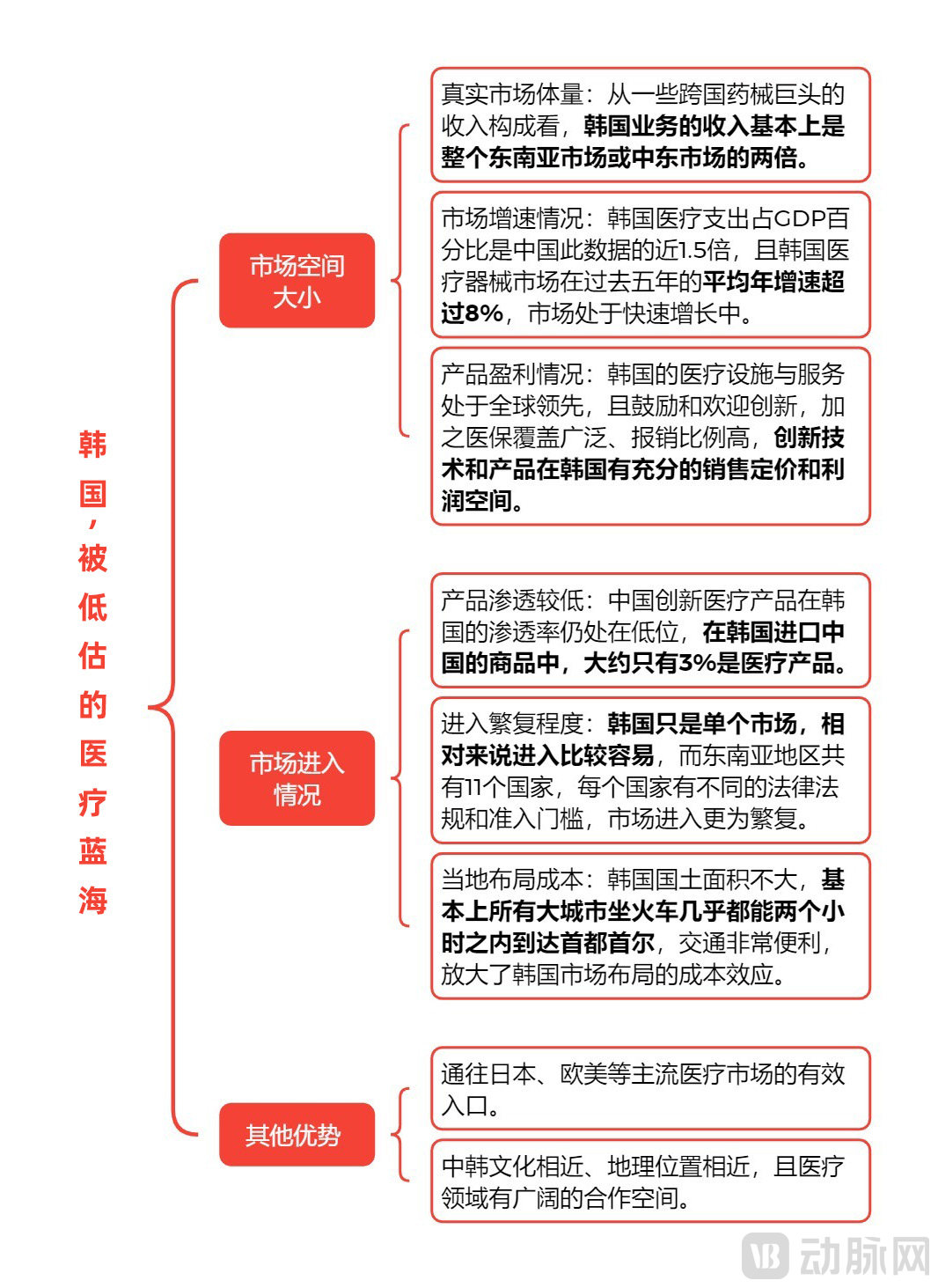
Meanwhile, few people realize that South Korea is China’s third-largest trading partner, with total imports from China reaching $142.849 billion in 2023. Amid such a massive volume of imports,Only about 3% are medical products.This means that, for Chinese medical enterprises, South Korea represents a vast blue ocean market waiting to be tapped.
What Misconceptions Do Chinese Companies Have About Entering the South Korean Market? What Significant Opportunities Lie Beneath, and What Challenges Do They Face? To address these questions, VCBeat conducted an in-depth interview with Li Xilie and, combined with relevant industry data, lifts the veil on entering the South Korean market for our readers.
Misconception 1: South Korea’s healthcare market is too small.
In VCBeat’s discussions with dozens of healthcare innovators seeking to expand overseas, a common concern emerged: “Is the South Korean healthcare market too small?” At first glance, South Korea, with a land area of 103,290 square kilometers and a population of approximately 51 million, does not appear to be a large market when compared to Southeast Asia, which covers roughly 4.57 million square kilometers and has a total population exceeding 600 million.
“This is the biggest misconception many people have about South Korea,” Li Xilie told VCBeat.Market size cannot be assessed solely by area, population, or local demand.“Medical products, in particular, have high entry barriers. A country’s economic strength, government health insurance coverage, level of medical technology, and public health awareness all exert a significant impact on market size. Many Chinese enterprises readily draw conclusions about market size based solely on their simplistic understanding or superficial assessments, which often leads to biased results.”
According to his sharing,To gauge the true market size, the simplest and most direct approach is to examine the annual revenues generated by multinational giants with established global footprints in these markets., as these giants hold the top one or two market shares in nearly all markets, their data are highly representative.
Taking the South Korean market as an example, anyone with experience managing multiple overseas markets knows that South Korea is not a small market, but rather a large one.The annual revenue of many multinational medical device giants in the South Korean market is essentially double that of their entire Southeast Asian or Middle Eastern markets.Apart from the United States, China, Japan, and Germany, South Korea is virtually the top-performing “star student” in the minds of nearly all multinational corporations. Not only does its annual revenue rank just behind these four major markets, but it also boasts high profitability and rapid growth, with some companies achieving double-digit growth in South Korea for several consecutive years. South Korea can be described as a typical market that combines the scale and profit margins of developed economies with growth rates comparable to those of emerging markets.
Misconception 2: The South Korean market is highly exclusive, making market entry and penetration difficult.
"In the actual process of product implementation, some medical companies have also expressed to VCBeat that obtaining product certification in South Korea is becoming increasingly difficult, and that the South Korean market exhibits exclusivity."
Regarding the issue of increased difficulty in certification, Li Xilie believes that it should be viewed dialectically.
First,Many Chinese companies still lack the necessary confidence in their products and the determination to align with international standards., always thinking of first targeting those less developed countries with relatively easier market access, or seeking shortcuts to overseas certification.
In fact, many Chinese medical products have now reached a level where they can fully compete in mainstream markets. Therefore, companies must be mentally prepared and develop detailed plans to address compliance and certification. To capitalize on the high profit margins and vast market opportunities in developed economies, it is essential to adhere to the regulatory processes of these well-regulated markets.
Secondly, the difficulty of obtaining certification serves to validate a product’s value. While some markets offer easier pathways to regulatory approval, such certifications often lack international recognition and trust. Moreover, relying on them may introduce compliance risks and reputational liabilities when seeking entry into mainstream markets in the future.As South Korea’s medical device certification system increasingly aligns with the U.S. FDA, regulatory authorities in Europe and the United States place greater trust in well-regulated markets such as South Korea. This alignment provides a significant advantage when applying for FDA or European Union certifications for related medical products.
As for the perception of exclusivity, Li Xilie believes this is also a bias resulting from a lack of global perspective. Anyone with experience in actually operating in international markets knows that the vast majority of countries have policies to protect their domestic products, especially when the market is more attractive; this is a common phenomenon.
“However, South Korea is one of the very few countries globally that treats domestic and imported products equally, both in terms of pricing and registration.” He recently learned from conversations with certain South Korean government officials that the South Korean government is puzzled by the minimal share of Chinese medical products in its total imports. In their view, given that other Chinese products and brands are currently highly popular in South Korea, it is unclear why Chinese medical enterprises have not considered entering the Korean market. ThereforeIf Chinese healthcare companies are currently considering entering the South Korean market, local authorities will undoubtedly extend a warm welcome and offer robust support to these pioneering enterprises that take the bold first step.
Regarding the issue of poor permeability, the reality is in fact quite the opposite. It should be noted that, South Korea is merely a single market; once entered, market penetration and implementation are relatively straightforward.For instance, compared to Southeast Asia, which comprises 11 countries with distinct laws, regulations, and market entry thresholds, market penetration is more complex, and the entire regional market is only half the size of South Korea’s. Similarly, the Middle East, encompassing approximately 23 countries and regions, faces similar challenges in international expansion.
From a geographical perspective, South Korea’s relatively small land area has proven advantageous: Seoul, the capital, serves as the primary hub, with nearly 50% of the country’s industries concentrated in the city. If medical innovation enterprises can establish a foothold in Seoul first, they will naturally expand to regions beyond the capital. It is important to note that,In South Korea, virtually all major cities are within a two-hour train ride from Seoul, offering exceptional transportation convenience that amplifies the cost-effectiveness of market layout in the country.
Misconception 3: Going global means either targeting Southeast Asia and the Middle East, or, for well-resourced companies, heading directly to Europe and the United States; entering the South Korean market is a waste of time and resources.
According to VCBeat’s extensive industry inquiries, some companies are already exploring markets in Southeast Asia and the Middle East, as these regions are widely recognized as popular destinations for overseas expansion. Others are still deliberating their global strategies, undecided whether to test their luck directly in European and American markets or follow the trend by entering Southeast Asia. However, South Korea does not appear to be under consideration, as companies have limited time and resources and cannot afford to allocate them to a single, small market.
From Li Xilie’s perspective, this mindset is a classic example of “blind overseas expansion,” lacking strategic direction and long-term planning, which often results in greater waste of money and time. Many companies readily conclude from such experiences that certain markets are unviable—too small, too chaotic, or too difficult—and therefore should be avoided. What they fail to recognize is that the root cause lies in their own cognitive biases and operational misalignments.
Determining where to take a product global requires consideration of many factors, including product positioning, market fit, regulatory access and implementation, and even timing.
“If Chinese medical innovation enterprises are confident in their products and technologies, and aspire to establish a global footprint, but believe that they are not yet ready to engage in head-to-head competition with European and American products in Western markets,”South Korea is the mainstream market most closely aligned with Europe and the United States, making it well-suited for initial market entry and operational experience.“Li Xilie told VCBeat that if Chinese products can obtain regulatory approval in the South Korean market, gain recognition from local physicians, and accumulate a certain amount of clinical data and commercial experience, it will be entirely beneficial with no drawbacks for their subsequent entry into European and American markets.”
This is because South Korea’s clinical medical data and regulatory mechanisms have gained high international recognition, for example:
·In 2022, Seoul ranked first globally among cities for clinical trials for three consecutive years;
· South Korea ranks fifth in the industry-led clinical trial market
In 2022, South Korea’s regulatory level for domestically produced and imported drugs and vaccines reached ML4 (Maturity Level 4), the highest medical product regulatory maturity level designated by the WHO.
“If certain medical products enter Southeast Asia or the Middle East first, whether their clinical data and market potential across various dimensions will be accepted by mainstream markets in Europe and the United States becomes a concern. Therefore, for companies aiming to position their products along an innovative, mid-to-high-end trajectory, it is highly meaningful to validate product and corporate value in a developed market of moderate size like South Korea,” said Li Xilie.
In conclusion,Establishing a solid foothold in South Korea will facilitate future expansion into larger markets such as Japan, Europe, and the United States.If not, one can still gain valuable experience by identifying the gaps between their product and mainstream market expectations, as well as learning how to make adjustments. This is particularly advantageous when testing the waters in mid-sized markets, where costs are significantly lower than those in European and American markets.
: Compared with internet companies, Chinese medical innovation enterprises have been slower in their overseas expansion. Many Chinese internet brands have already reaped the benefits of overseas markets in South Korea; for instance, AliExpress, under Alibaba, has 5.45 million users in South Korea, making it one of the “Big Four” e-commerce players in the country. In contrast, medical innovation enterprises lag behind in this regard. As mentioned earlier, only about 3% of goods imported from China into South Korea are medical products.
“Among these 3% of medical products, many are not the most advanced or highly innovative technologies/products currently available in China.“Li Xilie also found it puzzling. As China’s neighbor, South Korea maintains robust bilateral trade with China; yet, in terms of exporting medical products to the South Korean market, China has never been a major exporter. The vast majority of high-quality medical products, which should have been able to command high profit margins and strong brand reputation, have not yet entered the South Korean market.”
Globally, South Korea’s healthcare facilities and services are at the forefront, with strong encouragement and welcome for innovation, coupled with extensive health insurance coverage and high reimbursement rates.Innovative technologies and products have ample room for sales pricing and profit margins in South Korea.
Specifically:
·Three South Korean (Seoul) hospitals ranked among the top 40 of the 2024 World’s Best Hospitals, marking the highest number in the Asian market;
· The South Korean government’s national health insurance covers nearly all residents, with an average reimbursement rate of 80% for medical products and a 20% out-of-pocket share for residents.
Meanwhile, based on 2020 data, South Korea’s healthcare expenditure as a percentage of GDP was nearly 1.5 times that of China, and the South Korean medical device market has been experiencing rapid growth, with an average annual growth rate exceeding 8% over the past five years.
Therefore, considering the proportion of medical products in South Korea’s total exports, the total volume of innovative technology and product outputs, as well as the size and growth rate of South Korea’s domestic medical market, the South Korean medical market remains largely untapped for Chinese enterprises, representing a vast blue ocean.
 (Chart by VCBeat)
What Types of Medical Products Are Most Suitable for Export to South Korea?
“There is no specific type of enterprise that is definitively more suitable; I believe most Chinese healthcare companies should consider exploring the South Korean market.“Li Xilie cited an example to VCBeat—traditional Chinese medicine (TCM). ‘Even the expansion of TCM into South Korea presents significant opportunities. In South Korea, there is a major medical discipline known as ‘Korean Medicine,’ which originated from TCM. Practitioners of Korean Medicine enjoy the same social status as Western medicine physicians in the country, indicating substantial potential for China’s TCM industry in the South Korean market.’”
Furthermore, in specific niche sectors,There are significant opportunities in China's diagnostic and medical device markets.There are two reasons. First, the regulatory process is relatively straightforward, and the entire market access timeline is shorter. Second, China boasts significant strengths in R&D, manufacturing, and supply chain capabilities; many Chinese products are nearly comparable to their European and American counterparts while offering more competitive pricing, thereby establishing a clear competitive advantage.
Taking United Imaging Healthcare as an example, it is a leading enterprise in China’s high-end medical equipment industry, primarily engaged in the research, development, and production of high-performance medical imaging systems, radiotherapy products, and life science instruments, while actively expanding into overseas markets. “In the field of large-scale medical imaging equipment, the market was previously dominated by European and American companies. Therefore, Korean doctors were greatly surprised when they first saw Chinese-made large-scale imaging systems. In the past, most medical products exported from China to South Korea were low-value consumables, so they did not expect that China had already become so advanced in the field of large-scale medical imaging equipment, offering significant price advantages,” said Li Xilie.
Meanwhile, South Korea is a developed market characterized by high personal income and a highly aged society, soMedical products related to the treatment of chronic diseases such as diabetes and hypertension, as well as those associated with lifestyle management including weight loss, are highly popular in the local market.For example, the health and wellness sector targeting the elderly has seen rapid growth in South Korea, with related products selling very well.
It is worth noting that, as the South Korean healthcare system covers the majority (80%) of costs through government reimbursement, coupled with an aging population, the South Korean government has faced increasing pressure on its medical reimbursement expenditures in recent years. ThereforeThe South Korean government places significant emphasis on cost control and has been continuously seeking ways to reduce healthcare expenditures.
“Chinese medical products have a natural advantage in cost control, with high quality, high efficacy, and relatively low costs—something many Korean products cannot match,” mentioned Li Xilie.
However, caution is warranted: no medical product should be expanded into overseas markets blindly. VCBeat has learned from the industry that some companies, in their global expansion efforts, merely made a superficial assessment of the market potential for their products in the target destinations, without conducting a detailed analysis of the local competitive landscape for such products or the stringency of government regulations. They proceeded directly with business operations, ultimately resulting in failed overseas expansions.
“Upon market entry, each product requires thorough market validation, which is crucial. This includes assessing the product’s competitive advantages in South Korea, estimating the time required for regulatory approval and market access, identifying any similar competing products, and, most importantly, gathering authentic feedback from physicians in relevant specialties,” said Li Xilie. “Market education is also vital; it is essential to engage professionals with genuine local experience to provide expert advice.”
The success of strategic decisions often hinges on the critical importance of timing.
“Timing is crucial for going global, whether it concerns the timing for Chinese medical innovation enterprises to expand overseas or the timing for competing with other companies,” Li Xilie told VCBeat. “Entering the South Korean market now still represents a blue ocean opportunity. As more companies subsequently visit South Korea for study tours and benchmarking, an increasing number will inevitably establish operations there, potentially including their prospective competitors. Therefore”If companies continue to adopt a wait-and-see approach, they risk losing this first-mover advantage. Chinese medical products currently hold a competitive edge; however, if swift action is not taken, products from many other countries will rapidly catch up and seize market share.”
How to Initiate a Study Tour in South Korea?
“In both Korea and China, there is a saying: ‘Seeing is believing.’” Li Xilie stated that enterprises interested in the Korean market should ideally visit locally to conduct an in-depth, systematic assessment. This includes gaining a thorough understanding of the local economy, market conditions, infrastructure development, and progress in hospital construction, as well as collecting feedback from physicians on Chinese products, insights from regulatory agencies regarding recommendations and market access rules for Chinese products. Only in this way can companies obtain first-hand information and develop detailed international expansion strategies. He emphasized that superficial or cursory visits should be avoided, as product positioning and expectations vary; it is essential to secure direct feedback and tailored advice specific to one’s own products.
In terms of global expansion strategies, companies are not limited to trade-based exports, i.e., selling products through distributors. Other viable options include collaborating with local South Korean firms, such as establishing joint ventures, pursuing acquisitions, or engaging in technology transfers.
Of course, when facing the unknown overseas markets, Chinese medical innovation products will inevitably encounter various challenges during actual implementation. Therefore, bridging the information gap is particularly crucial.
Thus, targeting the specific market of South Korea, Li Xilie offered two recommendations to Chinese medical innovators seeking to expand overseas:
· First, due to the limited export of Chinese medical products to South Korea over the past many years, South Korean doctors’ overall perception of Chinese medical products remains stuck at the stage of “good quality and low price,” with a lack of high-end, leading-edge offerings. Reversing this perception will require considerable effort.Strengthening Communication and Education;
· Second, Chinese medical productsFurther enhancements are needed in terms of aesthetic design and interactive design., aligning it more closely with high-end products.
In addition, during the process of global expansion, factors such as safety compliance, risk assessment, and local customs and culture inevitably become challenges for enterprises, particularly when expanding into the South Korean market.
Therefore, healthcare innovation enterprises should conduct thorough market research, select appropriate partners and investors, adapt to local laws, regulations, and consumer habits, and build their competitive advantages through differentiation.
“China’s innovative medical products have made tremendous progress in recent years, and now is the optimal time to accelerate their global expansion. Meanwhile, among the many overseas markets, South Korea represents a blue-ocean market for Chinese enterprises,”The time window is precious.“At the end of the interview, Li Xilie reiterated.”
“Generally speaking, the deeper the misunderstanding, the greater the opportunities. But opportunities wait for no one; companies looking to expand overseas must act swiftly!”
Currently, a wave of global expansion is sweeping through the medical innovation industry, with numerous companies establishing internationalization as a strategic objective. To bridge the information gap associated with going global, VCBeat will roll out a series of articles researching various overseas destinations. If you have questions or plans related to international expansion, please contact Kayla at VCBeat. We are committed to providing answers and connecting you with international resources.