

Precigen, Inc. Files IPO Prospectus: A Synthetic Biology Pioneer with 14 Technology Platforms and a Strategic Transformation
Precigen
Gene and Cell Therapy Developer
Synthetic biology is leading the future of the healthcare industry with its revolutionary concepts and methodologies. By redesigning the genetic material and regulatory mechanisms of organisms to endow them with new functions, this field demonstrates immense potential in drug development, precision medicine, and biomanufacturing. Against this backdrop, Precigen, Inc., a clinical-stage biopharmaceutical company at the forefront of the industry, is pioneering new pathways for treating some of the most urgent and challenging diseases through its innovative gene and cell therapies.
Precigen’s development trajectory not only represents a breakthrough in the practical application of synthetic biology, but also constitutes a bold exploration of future healthcare models. Currently, Precigen is dedicated to leveraging its precision technology platform to develop next-generation gene and cell therapies for core therapeutic areas, including immuno-oncology, autoimmune diseases, and infectious diseases. Its technology enables precise targeting of disease sites, providing patients with more personalized and effective treatment regimens.
The company’s R&D pipeline encompasses a range of innovative therapies, including UltraCAR-T, AdenoVerse immunotherapy, and ActoBiotics. These platforms not only demonstrate Precigen’s depth in synthetic biology applications but also highlight its breadth in addressing complex medical challenges.
As synthetic biology continues to advance, Precigen stands at the forefront of this technological revolution. Its innovative achievements in gene and cell therapies have not only brought new hope to patients but also set a new benchmark for the entire industry.
After Two Name Changes, a Synthetic Biology Veteran Founded in 1998 Embarks on a Transformation Journey
In 1998, Precigen was founded by Dr. Thomas D. Reed. Over its 26-year history, Precigen has undergone two name changes as its business refined and expanded.Upon its establishment, Precigen was originally named Genomatix. In 2005, the company was renamed Intrexon, and in 2020, it was officially renamed Precigen.
Precigen, headquartered in Germantown, Maryland, is a pioneer in the field of synthetic biology, specializing in the design, construction, and modulation of genetic programs—DNA sequences composed of key genetic elements. After being renamed Intrexon in 2005, the company significantly expanded its business scope.
At that time,Intrexon is involved in multiple sectors, including healthcare, food, energy, and the environment.The company’s services include: reproductive technologies and other genetic processes for cattle breeders and producers; biological insect control solutions; non-browning apple technology without artificial additives; genetically modified pigs for medical and genetic research; commercial aquaculture products; and preservation and cloning technologies.
In terms of technology platforms, Intrexon has developed multiple platforms: the UltraVector platform, which enables the design and assembly of genetic programs to facilitate control over the quality, function, and performance of living cells; the RheoSwitch inducible gene switch platform, which provides quantitative, dose-proportional regulation of the level and timing of target protein expression; AttSite recombinase, which enables stable and targeted gene integration and expression; the LEAP automation platform, used for the identification and purification of specific cell types, such as antibody-expressing cells and stem cells; the ActoBiotics platform, used for targeted in situ expression of proteins and peptides from engineered microorganisms; and the AdenoVerse technology platform, designed for tissue specificity and target selection.
Driven by its broad business scope and secure revenue streams, Intrexon embarked on an acquisition strategy to expand the company.
In October 2012, Intrexon announced that it had entered into a definitive purchase agreement to acquire AquaBounty Technologies, Inc.AquaBounty is a biotechnology company focused on enhancing aquaculture productivity, renowned for its pioneering work in genetically engineered fish. This acquisition strengthens Intrexon’s operations in the field of sustainable food production, demonstrating its commitment to the continued expansion of its applications in synthetic biology and biotechnology.
Intrexon also acquired Oxitec for $160 million in 2015.Oxitec is a spin-off from the University of Oxford, dedicated to developing novel methods for controlling disease-vector insects and agricultural pests. Oxitec employs a genetic modification technique to engineer insect strains that die before reaching effective reproductive maturity. By mass-rearing and releasing these insects into the wild, this approach can lead to the collapse of specific insect populations. This technology holds significant promise for controlling disease-carrying mosquitoes and can also be applied to manage agricultural pests that damage crops. Through this acquisition, Intrexon has integrated its synthetic biology platform with Oxitec’s technology, strengthening its capabilities in the field of biological control and providing innovative solutions to global health and agricultural challenges.
Although Intrexon had extensive operations across the medical, agricultural, and industrial sectors, 2020 marked a pivotal turning point for the company with the divestiture of its non-healthcare businesses.
In January 2020, Intrexon announced its renaming to Precigen, Inc., completed the divestiture of certain non-healthcare assets, and stated that it would focus on advancing its human health programs while continuing to innovate in the field of gene and cell therapies.This renaming reflects Precigen’s vision—to leverage precision technologies to advance next-generation gene and cell therapies, focusing on the most urgent and difficult-to-treat diseases within core therapeutic areas such as immuno-oncology, autoimmune disorders, and infectious diseases.
New Name and New CEO: Precigen Adjusts Team to Refine Operations and Increase Investment
The name change and business integration have also led to adjustments in Precigen’s management team.
Dr. Helen Sabzevari became the first CEO of Precigen following its renaming.She is a scientist with deep expertise in the field of immunotherapy and possesses the ability to successfully advance innovative therapies from the preclinical research stage to the clinical stage.

Precigen CEO: Helen Sabzevari
From 2015 to 2017, Dr. Sabzevari co-founded Compass Therapeutics and served as its Chief Scientific Officer, focusing on harnessing the power of the immune system to treat human diseases. Her career also includes a decade at Merck KGaA/EMD Serono in Darmstadt, Germany. From 2008 to 2014, Dr. Sabzevari served as Senior Vice President of Immuno-Oncology and concurrently held the role of Global Head of Immunotherapy, Oncology, Global Research, and Early Development. Under her leadership, a translational innovation platform for immuno-oncology discovery and early development was successfully established, driving the development of multiple preclinical and clinical assets, including the approved anti-PD-L1 checkpoint inhibitor avelumab.
Prior to joining the industry, Dr. Sabzevari worked at the Laboratory of Tumor Immunology and Biology of the U.S. National Cancer Institute from 1998 to 2008, serving as the head of the Molecular Immunology Group.
Dr. Sabzevari’s addition to Precigen brings her extensive experience and exceptional leadership in the biotechnology and pharmaceutical industries, with her expertise and forward-looking vision providing crucial support for Precigen’s future development in the field of gene and cell therapies.
Dr. Douglas E. Brough serves as Senior Vice President and Head of Research at Precigen, he has over 25 years of extensive experience in the biopharmaceutical industry, with his expertise focused on the research and development of gene and cell therapies, dedicated to driving innovation and progress in this field.

Precigen SVP,Head of Research: Douglas E. Brough
Prior to joining Precigen, Dr. Brough served as Chief Scientific Officer at GenVec, where he was fully responsible for the company’s scientific operations and strategic development. Under his leadership, GenVec achieved significant scientific breakthroughs in the biotechnology sector. Dr. Brough’s arrival has injected new vitality into Precigen’s R&D team.
Dr. Bryan T. Butman serves as Senior Vice President and Head of CMC at Precigen, he possesses profound expertise and practical experience in the field of biopharmaceuticals. Prior to joining Precigen, Dr. Butman worked at GenVec for 18 years, during which he held multiple senior leadership positions and accumulated valuable industry insights and leadership capabilities. At GenVec, Dr. Butman was responsible for designing, constructing, and validating two pilot manufacturing facilities in Maryland, which were dedicated to the clinical production of gene therapy products. His responsibilities extended beyond facility construction to include leading CMC projects for successful gene and cell therapy products, ensuring a smooth transition from research and development to commercial manufacturing.

Precigen SVP,Head of CMC: Bryan T. Butman
One of the highlights of Dr. Butman’s career was serving as the project lead for the first vaccine approved and licensed by the U.S. Department of Agriculture (USDA) to prevent foot-and-mouth disease in cattle. Additionally, he successfully guided immunodiagnostic products for human health through U.S. FDA approval, demonstrating his expertise in biomedical product development and regulatory submissions.
Precigen’s seasoned executive team brings extensive biopharmaceutical experience, innovative drug development strategies, and exceptional expertise in drug development. Their professional knowledge and leadership have significantly influenced Precigen’s product development and commercialization efforts.
4 Major Therapeutic Platforms + 10 Major Technology Platforms: Developing New Drugs with Gene Engineering and Drug Delivery as Entry Points
Over its 26-year development history, Precigen has integrated and refined its therapeutic and technology platforms. Leveraging these platforms, Precigen continues to advance its preclinical and clinical-stage product pipeline, committed to driving unique therapies toward proof-of-concept in clinical settings and commercialization.
In terms of treatment platforms, Precigen possesses UltraCAR-T.®、AdenoVerse®, ActoBiotics™, a multifunctional therapeutic platform.

UltraCAR-T®Platform
Precigen’s UltraCAR-T® platform represents a significant innovation in CAR-T cell therapy, enabling efficient multi-gene delivery via a non-viral Sleeping Beauty System. Leveraging Precigen’s UltraVector® DNA construct platform for optimization, this platform allows CAR-T cells to simultaneously express tumor-specific antigen receptors, membrane-bound interleukin-15 (mbIL-15) to enhance in vivo expansion and persistence, and a kill switch to improve safety.
The rapid manufacturing process of the UltraCAR-T platform is a significant advantage. Compared with traditional CAR-T therapies, UltraCAR-T cells can be manufactured overnight, substantially reducing treatment preparation time. This rapid, decentralized manufacturing process not only lowers costs but also reduces reliance on large centralized facilities, making therapy more accessible and cost-effective.
Furthermore, the in vivo persistence of the UltraCAR-T platform is attributed to proprietary mbIL15 gene expression, which promotes T cell activation and expansion while enhancing memory T cell survival. This localized mechanism of action obviates the need for systemic IL-15 delivery, augments in vivo expansion in the presence of tumor antigens, prevents cellular exhaustion, and thereby prolongs the duration of the anti-tumor response.
Precigen’s UltraCAR-T platform, with its rapid manufacturing capabilities, cost-effectiveness, and therapeutic potential, not only provides new treatment options for patients with B-cell hematologic malignancies but also brings hope for the treatment of solid tumors.
AdenoVerse®Platform
Precigen’s AdenoVerse platform is an advanced gene therapy technology that modulates the immune system by efficiently delivering vaccine antigens and cytokines through a proprietary library of adenoviral vectors. These gorilla adenoviral vectors not only feature high payload capacity, capable of delivering genetic payloads of up to 12 kb, but are also well-suited for repeated administration in patients due to the low seroprevalence in humans. This characteristic is crucial for enhancing patients’ immune responses and improving therapeutic efficacy.
Another significant advantage of the AdenoVerse therapy is that its adenoviruses are engineered to be replication-incompetent in vivo, thereby avoiding cytopathic or cytotoxic effects in normal cells. This feature, combined with a high-yield manufacturing process, helps mitigate risks during regulatory review and commercialization. Furthermore, these adenoviral vectors can induce high levels of durable, antigen-specific neutralizing antibodies and effector T-cell immune responses, which can be further enhanced through repeated dosing in animal models.
Precigen is actively developing a range of therapies based on its AdenoVerse platform, primarily targeting applications in immuno-oncology and infectious diseases. Leveraging the high-yield manufacturing capabilities of UltraVector technology, the AdenoVerse platform is designed to deliver cutting-edge gene therapies for complex diseases.
ActoBiotics™ Platform
Precigen’s ActoBiotics® platform is an innovative therapeutic approach specifically designed to treat specific diseases via mucosal routes. By utilizing oral or topical administration, the platform delivers therapeutic agents directly to diseased mucosal sites, offering a non-viral delivery method with superior efficacy and safety.
The core of the ActoBiotics platform lies in its use of Lactococcus lactis (L. lactis), a food-grade bacterium with a long-established safety record. Through genetic engineering, this bacterium is capable of secreting various therapeutic agents, including proteins, peptides, and antibodies, enabling ActoBiotics to target multiple biological pathways involved in disease.
The platform’s manufacturing process is cost-effective and scalable, employing an efficient cGMP process that ensures the feasibility of commercial supply. The manufacturing process includes fermentation, concentration, and freeze-drying of genetically modified lactic acid bacteria, omitting costly purification steps.
Another advantage of the ActoBiotics platform is its convenience and targeted delivery method. Therapeutic agents can act directly on the oral cavity via mouthwash or be delivered to the intestines through dosage forms such as capsules, thereby reducing the side effects associated with systemic administration. In preclinical and clinical studies, ActoBiotics product candidates have demonstrated good tolerability. Compared with traditional biologics, ActoBiotics is expected to offer enhanced safety and efficacy by providing sustained release of appropriate doses of therapeutic agents.
The ActoBiotics platform offers a novel therapeutic strategy for treating specific diseases through its unique non-viral delivery method, the safety of food-grade bacteria, cost-effective manufacturing processes, and convenient administration.
Multifunctional Therapeutic Platform
Checkpoint inhibitors have had a significant impact in the field of oncology, but their efficacy remains limited for most patients. Although PD-1/PD-L1 inhibitors have demonstrated therapeutic benefits in certain patients with advanced-stage cancer, many patients do not respond to treatment, and approximately one-third of those who initially respond experience disease recurrence. This highlights a substantial unmet need among a large patient population.
To address this issue, Precigen has developed a versatile therapeutic platform specifically targeting checkpoints and immunosuppressive pathways within the tumor microenvironment. The platform is designed to enhance T-cell activation and trafficking to tumors, thereby overcoming the primary drivers of PD-1 therapy resistance: an immunosuppressive tumor microenvironment and insufficient infiltration of cytotoxic T cells.
In addition to its therapeutic platforms, Precigen integrates technology platforms to create synergies with its therapeutic platforms and product portfolio. Currently, it has developed UltraVector by focusing on three dimensions: gene construct design, drug delivery, and gene expression and regulation.®、Sleeping Beauty system、AdenoVerse®, AttSite™ Recombinase, UltraPorator®、RheoSwitch®and others, totaling 10 technology platforms.

In terms of genetic construct, Precigen's UltraVector®Leveraging advanced DNA construction technologies and computational models, the platform meticulously designs and assembles genetic elements to create complex gene expression programs. Its efficient matrix rapidly identifies key genetic elements and constructs optimized gene programs to precisely regulate the expression of effector genes. Through this precise gene engineering approach, Precigen enhances the efficiency and efficacy of gene therapy product development, supporting personalized medicine.
In the realm of drug delivery, Precigen’s Sleeping Beauty system is a highly efficient non-viral gene transposition technology that enables stable reprogramming of immune cells without complex manufacturing processes, while offering cost-effectiveness and low immunogenicity. Precigen has optimized this system to enhance gene delivery efficiency, making it possible to develop novel UltraCAR-T autologous therapies. This approach achieves multi-gene expression without the need for viral vectors, marking a breakthrough in cancer treatment.
In the realm of gene expression and regulation, Precigen has also developed the UltraPorator system, which enables the genetic modification of approximately 4 billion T cells within 12 minutes. This innovation is disrupting the CAR-T field by providing overnight manufacturing capabilities for personalized, autologous CAR-T therapies for cancer patients.
Seven pipeline combinations have been established, with multiple candidates advancing into the mid-to-late stages of clinical development.
Leveraging its four therapeutic platforms and ten technological platforms, Precigen has currently developed seven product pipelines.
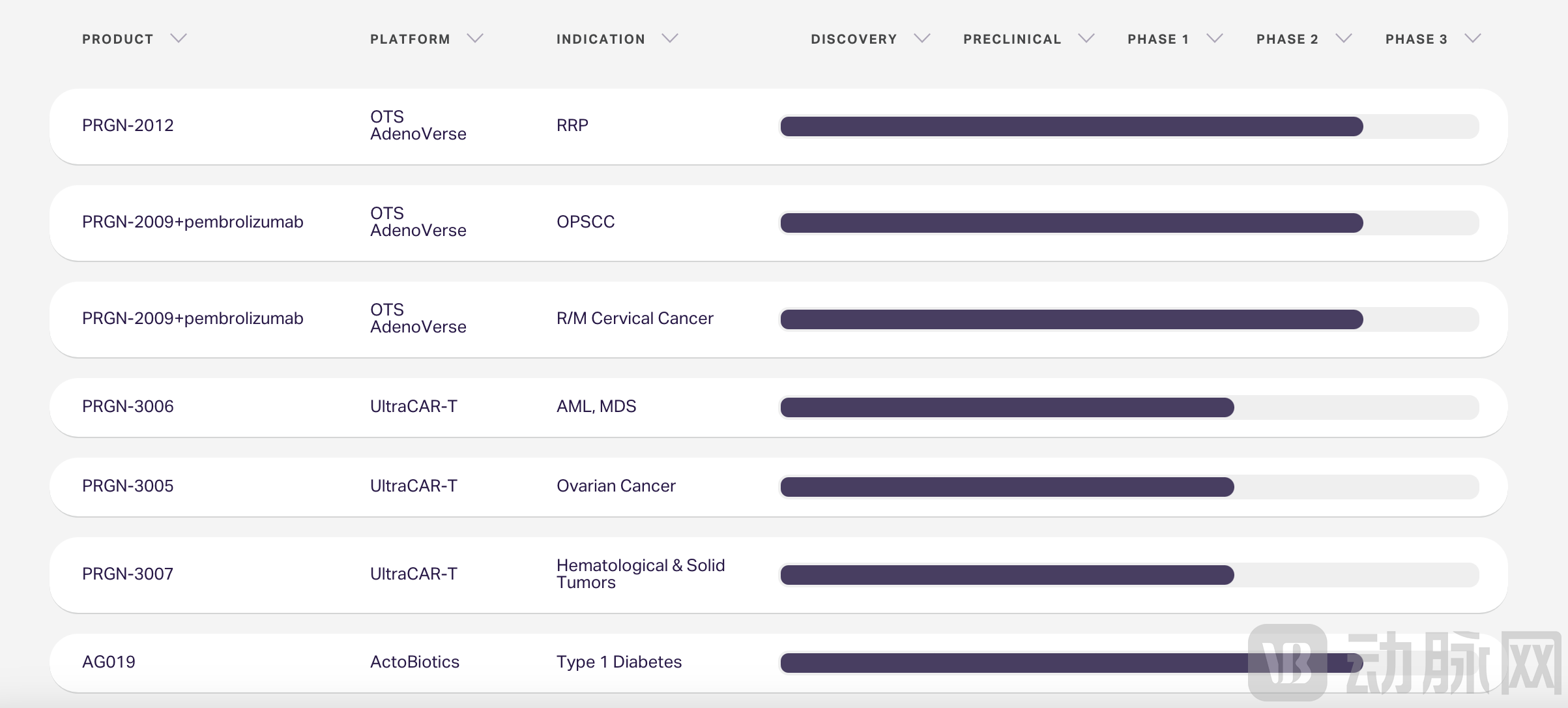
Among them,PRGN-2012 is advancing the fastest. This drug is a gene therapy developed by Precigen based on its AdenoVerse® technology platform, specifically designed for the treatment of recurrent respiratory papillomatosis (RRP).Recurrent Respiratory Papillomatosis (RRP) is a rare and difficult-to-treat respiratory tumor disease caused by human papillomavirus (HPV) types 6 or 11, imposing a significant burden on patients’ quality of life and financial status. PRGN-2012 leverages Precigen’s proprietary gorilla adenovirus vector technology to elicit immune responses against HPV 6- or HPV 11-infected cells through optimized antigen design.
PRGN-2012 has received Breakthrough Therapy Designation from the U.S. FDA and Orphan Drug Designation from the European Commission, underscoring its potential and significance in the treatment of RRP. In August 2023, Precigen announced that the FDA had agreed to accept data from its ongoing single-arm Phase 1/2 study as pivotal evidence for a Biologics License Application (BLA) seeking accelerated approval.
Furthermore,Precigen has developed an innovative gene therapy, PRGN-2009, for use in combination with PD-1 inhibitors, specifically designed to treat human papillomavirus (HPV)-associated cancers.PRGN-2009, this first-in-class therapy, leverages the company’s UltraVector®and AdenoVerse®Leveraging gorilla adenoviral vector technology, the platform has optimized the design and delivery of HPV 16/18 antigens. This vector features a high payload capacity and supports repeated dosing. PRGN-2009 is currently in Phase 1 clinical trials for HPV-associated cancers and in Phase 2 clinical trials for the treatment of recurrent or metastatic cervical cancer.
Utilizing UltraCAR-T®Technology,Precigen has also developed three UltraCAR-T therapies.PRGN-3005 is a cell therapy targeting advanced ovarian cancer; PRGN-3006 is indicated for the treatment of relapsed or refractory AML and high-risk MDS; PRGN-3007 is an investigational therapy based on next-generation UltraCAR-T technology for the treatment of ROR+ hematologic malignancies and solid tumors. Not content with these achievements, Precigen is developing an UltraCAR-T library targeting various tumor antigens, with the aim of providing personalized autologous CAR-T therapies to cancer patients in a rapid and cost-effective manner.
Leveraging its extensive synthetic biology technology platform, Precigen continues to advance in new drug development. According to its 2023 annual report, Precigen currently holds a total of $62.9 million in cash, cash equivalents, and short- and long-term investments. The company’s loss from continuing operations in 2023 was $95.904 million, compared with $79.78 million in 2022. These financial results highlight the challenges Precigen faces on its transformation path; however, the company believes that 2024 will be a pivotal year for this transition, with plans to submit a Biologics License Application (BLA) for PRGN-2012 in the second half of 2024 to prepare for commercialization in 2025.
As Precigen’s product pipeline continues to mature and commercialization advances, the company will maintain its leadership in synthetic biology and biopharmaceuticals, continuously expanding into new therapeutic areas to realize its vision of “Advancing Medicine with Precision™.”