

MOINEYE Ophthalmic Chain Files IPO Prospectus: Building an Integrated Eye Health Management Ecosystem in China's Booming Optometric Market
For Chinese people today, protecting eyesight is an urgent priority!
According to a report by the World Health Organization, China currently has as many as 600 million people with myopia. Among them, the prevalence of myopia among primary school students is approaching 40%, while the rates among high school and university students have both exceeded 70%, showing a year-on-year increasing trend.
Faced with a large and continuously growing patient population, the supply-side ecosystem of optometry is becoming increasingly diverse. Currently, in addition to traditional optometric service institutions that primarily address refractive errors, strabismus, amblyopia, and low vision by providing services such as prescription eyeglasses and contact lens fitting, new optometry business models represented by optometry clinics and vision care centers are gradually emerging.
According to the "2023 White Paper on the Optometry Industry" released by VCBeat, optometry clinics and vision care centers serve as the primary units of the eye health system. They bear the critical responsibilities of eye health monitoring, basic diagnosis, patient referral, preventive correction, and rehabilitation, thereby forming a strong complementary relationship with ophthalmic hospitals—which focus on complex cases and surgical interventions—and traditional optical stores.
VCBeat recently contactedShanghai Owl Biotechnology Co., Ltd. (Brand Name: Mengying Eye Care)is an innovator in the field of optometry. ItEstablished in January 2023, it opened its first optometry clinic in July of the same year. Just 15 months later, this number grew to 50 (including those under preparation).
What are the secrets behind Mengying Eye Hospital’s rapid growth? What lessons can the industry draw from its experience? And how does it envision the future of optometry and vision care? To address these questions, we held an in-depth conversation with Ma Gang, Co-Founder and CEO of Mengying Eye Hospital, in early summer.

Ma Gang, Co-founder and CEO of Mengying Eye Hospital
Prior to launching his venture in the field of optometry and vision care, Ma Gang had two distinct career experiences: eight years working in law, followed by 13 years dedicated to the education and training industry.
“After the ‘Double Reduction’ policy was implemented in the education sector in 2021, our company began to explore transformation and seek new opportunities. At that time, we found that the vast majority of parents purchasing learning tablets were particularly concerned about whether the device screens would harm students’ eyes,” Ma Gang told VCBeat. “Following this lead, we conducted extensive research into the eye health industry.”
Based on the survey results,On the supply side of eye health, market participants can be broadly categorized into four groups. The first comprises large private ophthalmic hospital chains, led by industry giants such as Aier Eye Hospital, Huaxia Eye Hospital, and He’s Eye Hospital. The second includes ophthalmology departments within public ophthalmic hospitals or general hospitals, such as the Zhongshan Ophthalmic Center at Sun Yat-sen University and the Eye Hospital of Wenzhou Medical University. The third consists of traditional vision care institutions. The fourth encompasses emerging optometry-focused entities, including ophthalmology clinics and optometric centers.
Within the eye health service ecosystem, medical resources are scarce in both public ophthalmic hospitals and large private ophthalmic hospitals. These institutions are primarily positioned to provide diagnosis and treatment for comprehensive ophthalmic conditions, particularly complex and refractory eye diseases. Consequently, such hospitals are predominantly concentrated in economically developed regions and provincial capitals, leading to an imbalance in regional resource allocation. In contrast, traditional vision care institutions lack sufficient medical professionalism.
In other words,The optometry industry still faces significant challenges in terms of the abundance of high-quality resources and service efficiency.
“Optometry institutions have effectively bridged the current gaps on the supply side.” In Ma Gang’s view, these institutions not only address essential needs but also possess substantial market potential.“In the United States, there are eight single brands with more than 500 optometry institutions each, reflecting a very high chain store penetration rate.”
How Large Is the Optometry Market? According to data calculated by VCBeat Institute, the size of China’s optometry market grew from RMB 71 billion in 2015 to RMB 121.28 billion in 2022, representing a compound annual growth rate (CAGR) of approximately 8.5%. Driven by the rising number of patients with refractive errors and the increasing average price per vision correction service, the market is projected to reach RMB 140.9 billion by 2025.
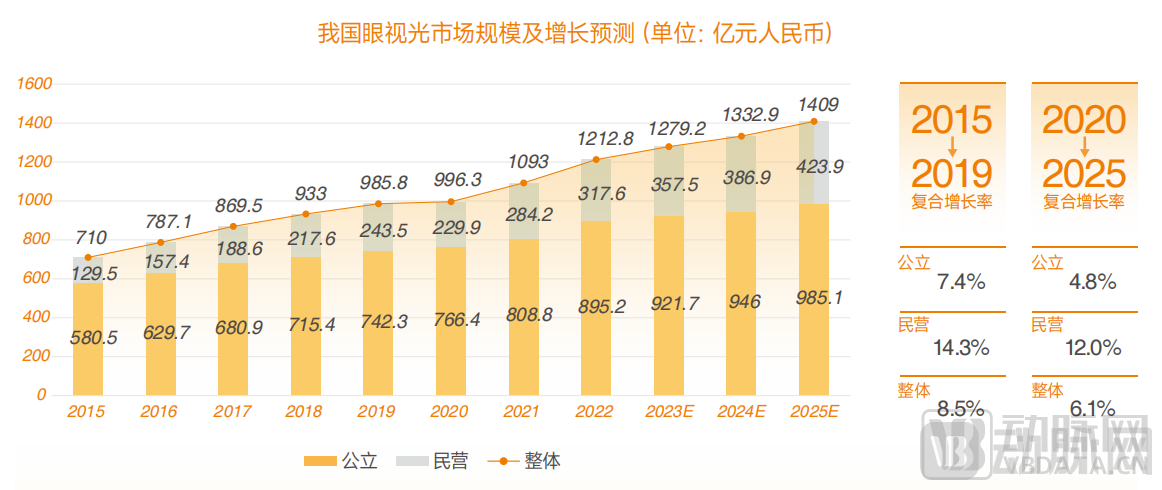
(Image source: VCBeat · VBInsight)
Meanwhile, a series of policies on eye health have been introduced, encouraging the further development of a high-quality and efficient eye health service system. These policies aim to provide eye health services covering the entire lifespan, with particular attention to the “elderly and children” groups, who are at higher risk for ophthalmic diseases. This has further expanded the growth potential of the optometry and vision care market.
Facing the Blue Ocean of the Eye Care Market Worth Hundreds of Billions, How Does Mengying Ophthalmology Strategize?
For startups, once a sound strategic direction is established, the key lies in the implementation pathway and execution.
“In our view, it is essential to establish a sufficient number of medical institutions so that patients can access high-quality ophthalmic care close to home, thereby better safeguarding children’s visual health,” said Ma Gang.
Based on this approach,Mengying Eye Care has positioned itself as “the eye clinic at your doorstep” since its inception, emphasizing community-based, specialized, and convenient services to provide adolescents with integrated solutions combining medical-grade diagnosis and treatment with standardized preventive care.
Thus, in July 2023, Mengying Ophthalmology established its first directly operated clinic in Wuhan, witnessing rapid expansion in the number of outlets over the following year. The clinics have gradually expanded their presence to more than 20 cities across ten provinces, including Anhui, Hubei, Sichuan, Zhejiang, Jiangsu, Heilongjiang, Guangdong, Hebei, Henan, and Fujian. By May this year, the total number of clinics (including those under preparation) reached 50.
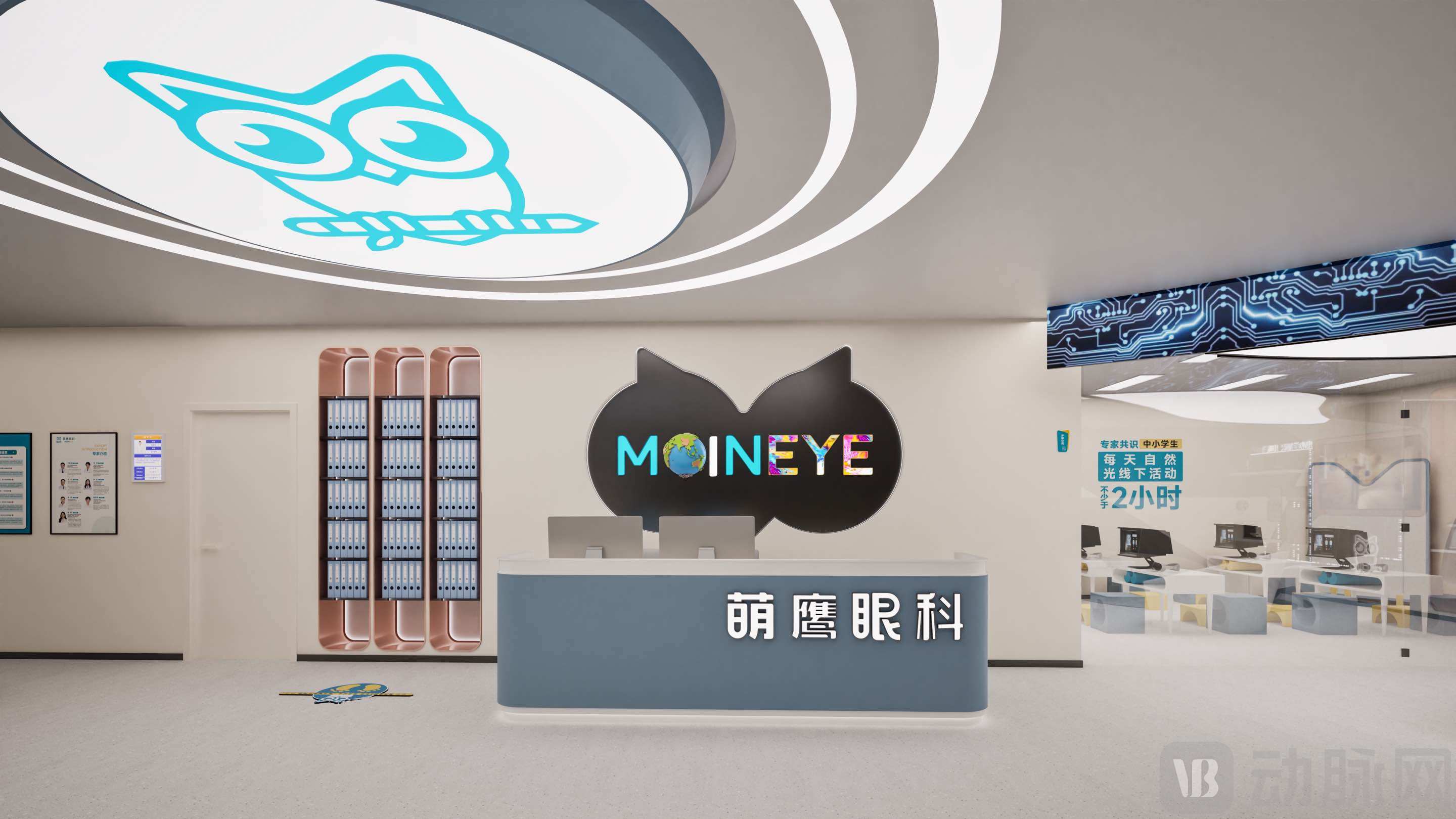
Mengying Eye Care Direct-Operated Store (Photo provided by the interviewed company)
The rapid growth achieved in the short term is attributable not only to the substantial demand in the optometry and ophthalmology market, but more importantly to the business model built by Mengying Eye Hospital with chain expansion as its core objective.
Ma Gang told VCBeat,Whether in the education and training industry or the optometry services sector, both are fundamentally part of the service industry. “We have leveraged the two major service systems accumulated in the former education and training sector to develop two productized services: Eye Care Space and Visual Dynamics Camp, aimed at cultivating healthy eye-use habits among adolescents.”
From a service perspective, Eye Care Space creates a professional environment focused on light and nutritional eye care, establishing a comprehensive, multi-dimensional learning space designed to counteract poor visual habits prevalent in modern life. By guiding adolescents to adopt scientific and rational eye-use practices, it enables them to “use” their eyes effectively and “well,” thereby achieving the goal of “practicing sound eye-use habits and employing proper eye-care methods.”
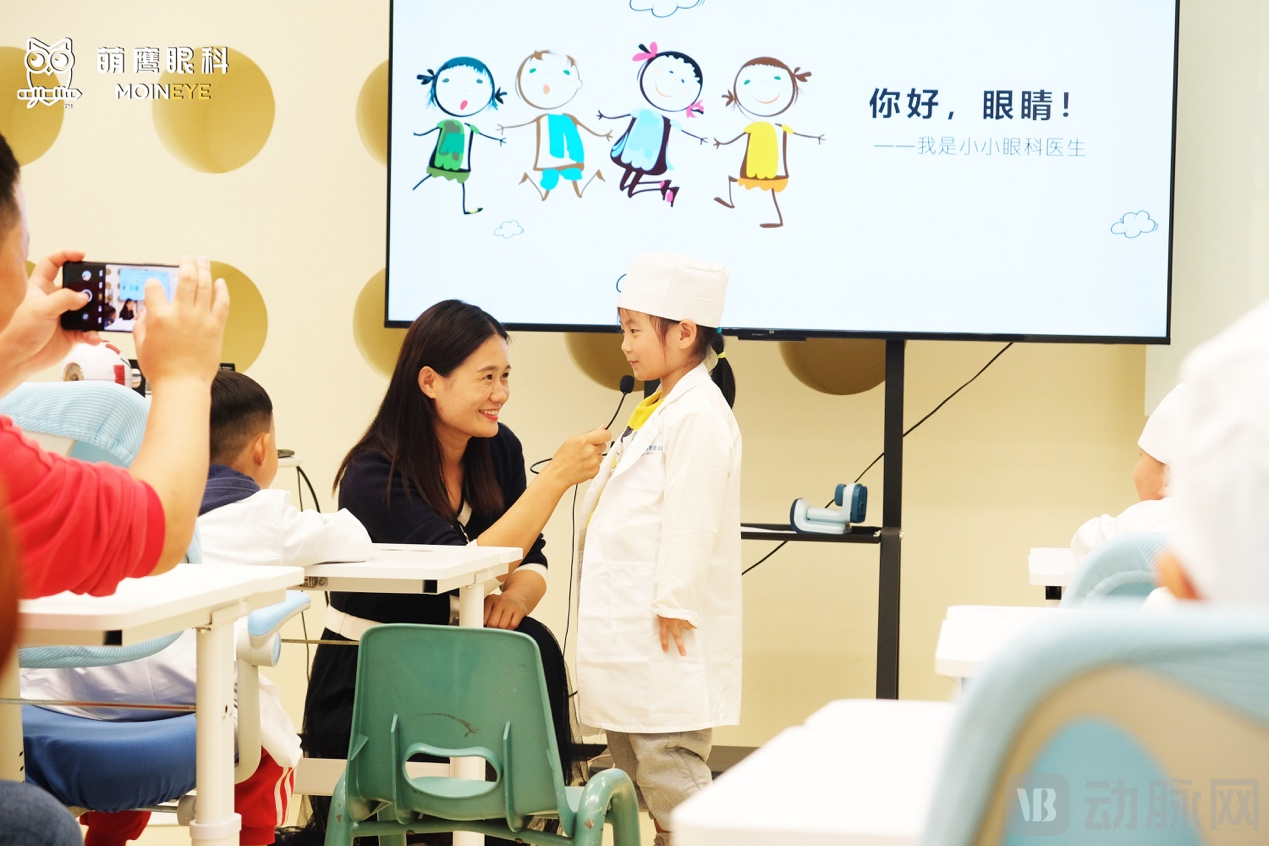
Photo from the Mengying Eye Care Eye Protection Event (Image provided by the interviewed company)
The Vision Dynamics Camp leads children in valuable and meaningful outdoor activities, such as cycling, tennis, or rock climbing. These activities not only allow children to benefit from natural light exposure, thereby supporting visual health, but also help them broaden their horizons.

Mengying Eye Care Vision Power Camp (Image provided by the interviewee’s company)
Currently,Mengying Eye Care has integrated its Eye Protection Space and Visual Dynamics Camp into the GODS Smart Eye System, a comprehensive myopia prevention and control strategy for adolescents developed by the company.
Specifically:
·G stands for Genetic testing, which refers to "genetic testing." It provides myopia-related genetic screening for adolescents at risk of myopia or experiencing rapid myopia progression, enabling future risk预警 and serving as a reference for treatment options.
·O stands for Optical Correction, which refers to “optical correction.” It provides myopic adolescents with optical correction products such as orthokeratology lenses, defocus spectacle lenses, and multifocal soft contact lenses to halt myopia progression;
· D stands for Drug & Digital Therapy, referring to the combination of pharmaceuticals and digital therapeutics. It strengthens myopia intervention and control through medications such as low-concentration atropine eye drops, distance-viewing screens, and digital visual function training.
· S stands for Service & Study, meaning “Service & Learning Education,” which includes the two major educational products mentioned above: the Eye Care Space and the Vision Dynamics Camp.
It can be observed that the GODS Huiyan system integrates medical products, educational products, and service products to achieve comprehensive coverage of myopia, from prevention to control.
andWhile ensuring high-quality services, Mengying Eye Hospital has developed a “single-store operational profitability model” to achieve chain expansion.
“The rollout of standardized services can be divided into several stages. The first stage must involve creating a prototype to solidify the entire service delivery model; the second stage is to replicate this solidified model externally. The larger the sample size, the relatively easier the replication becomes,” said Ma Gang.
In the first phase, Mengying Eye Care established the aforementioned service system and refined a proprietary full-process model comprising 13 exclusive experience touchpoints tailored for adolescents. This model covers 13 touchpoints spanning from customer appointment scheduling to the conclusion of the final service session, with each touchpoint featuring detailed service protocols to enhance the overall customer experience.
Thanks to the establishment of a profitable single-store operational model, Mengying Ophthalmology’s first directly operated store achieved positive cash flow by October, just three months after its July opening.On this basis, Mengying Ophthalmology has entered a new phase of rapid chain expansion.
“With a proven profitability model for individual stores, standardized replication gains solid support. However, as scale continues to expand, management complexity rises sharply—first, organizational structures become more bloated; second, human-induced variables are amplified,” Ma Gang told VCBeat. “Therefore, we aim to address these challenges through digitalization.”
In response to this, Mengying Ophthalmology has developed an integrated intelligent management platform—the Mengying Smart Cloud Intelligent System.Tailored to the unique needs of optometry and vision care clients, this platform not only optimizes operational management processes but also provides advanced diagnostic support and enables personalized treatment planning for patients. By leveraging in-depth big data analytics for precise market positioning and customer analysis, it robustly supports clinics’ marketing strategies and business decisions, demonstrating a high level of refined service philosophy.
Similarly, on the business-to-business (B2B) front, Mengying Eye Care has also launched the GODS Efficiency Enhancement System. Leveraging cutting-edge artificial intelligence technologies, this system optimizes cost structures and improves operational efficiency, thereby better empowering its partners.
In detail:
·G stands for AI-Guest Service, referring to "AI Customer Service." It leverages AI-driven natural language interaction to enable customers to access remote, on-demand consultations and answers, ensuring seamless integration of professional services before and after diagnosis.
·O stands for AI-Optical prescription, referring to “AI-powered eyewear prescriptions.” It leverages AI to precisely assess fitting parameters for orthokeratology lenses and defocus spectacles, thereby revolutionizing the traditional eyewear dispensing process;
·D stands for AI-Diagnosis Assistant, meaning “AI-Assisted Diagnosis,” providing AI-driven diagnostic support to enhance the efficiency and professionalism of healthcare services.
·S stands for AI-Sales & Consultant, meaning “AI Sales Consultant.” It leverages AI-driven data analysis and summarization to help patients gain a clearer understanding of diagnostic and treatment processes and outcomes, thereby reducing the information asymmetry between doctors and patients.
In Ma Gang’s view, the ideal goal is for future ophthalmology clinics to focus solely on delivering standardized services, with all other operations handled by the platform. Through branded platform operations, this model can address the inability of optical stores to manage medical products, resolve trust issues between end users and partners, and solve 50% of the patient acquisition and referral challenges in ophthalmology.
While actively embracing new technologies, Mengying Eye Hospital places special emphasis on public welfare initiatives. For instance, the hospital regularly organizes outreach activities in community nursing homes, patiently and meticulously explaining eye conditions and precautions to residents, promoting scientific knowledge about eye health, and enhancing public awareness of eye care and protection.
Regarding future development, Mengying Eye Hospital is also actively seeking franchise partners across China. Mengying Eye HospitalThere are four primary criteria for selecting partners: first, alignment with Mengying Ophthalmology’s values; second, sufficient financial resources to ensure project launch and stable operations; third, adequate time commitment to support the institution’s growth and participate in management; and fourth, the person in charge must possess team management experience.
“During this process, we will first cover third- and fourth-tier cities, and then expand into first- and second-tier cities, aiming to establish 3,000 ophthalmology clinics across China within five years.”At the conclusion of the interview, Ma Gang stated, “We believe that, through our collective efforts, a new era in the optometry and vision care ecosystem is sure to emerge.”