

Ambrx Biopharma: A Synthetic Biology Pioneer Acquired by Johnson & Johnson, Collaborating with BeiGene and Zhejiang Medicine to Advance Next-Generation ADC Therapies

Ambrx Biopharma
Biologics Developer
Synthetic biology is leading a new wave in the field of biotechnology with its unique appeal and immense potential. This interdisciplinary field provides new perspectives and tools for addressing global challenges by redesigning and constructing biological systems.
The core of synthetic biology lies in the precise control and programming of biological components, thereby creating biological entities capable of performing specific tasks. Its development has been driven by advances in gene-editing technologies, deepening insights from bioinformatics, and the maturation of synthetic DNA technologies. The integration of these technologies enables scientists to design biological systems with specific functions with unprecedented precision and efficiency.
Against this backdrop, Ambrx Biopharma has become a global focal point with its innovative synthetic biology technology. Founded on the foundation of synthetic biology, Ambrx’s development journey serves as a paradigm of technological innovation and corporate growth. Since its spin-off from The Scripps Research Institute in 2003,Ambrx has been committed to harnessing the power of synthetic biology to develop a portfolio of breakthrough biopharmaceutical products through its expanded genetic code technology platform.Leveraging its proprietary technologies in precision protein engineering, the company has successfully designed and advanced multiple innovative drug candidates into clinical stages, achieving significant milestones particularly in the field of antibody-drug conjugates (ADCs).After years of development, Ambrx Biopharma has navigated numerous challenges and controversies. Ultimately, it not only gained recognition in the capital markets but also reached a pivotal milestone in 2024—its acquisition by global healthcare giant Johnson & Johnson for $2 billion. This move undoubtedly underscores Ambrx’s leadership in synthetic biology and biopharmaceuticals, as well as the significant commercial potential of its technology.
21 Years of Development: A Pioneer in Synthetic Biology Innovation
In 2003, Ambrx was spun off from The Scripps Research Institute (TSRI). TSRI is a private, non-profit biomedical research institution founded in 1924, with fields encompassing immunology, molecular and cellular biology, chemistry, neuroscience, autoimmune diseases, cardiology, and more. It is particularly renowned for its research on the fundamental structures and design principles of biomolecules.
Initially, Ambrx had three co-founders: Professor Peter G. Schultz, a renowned pioneer in chemical biology; Richard DiMarchi, former Vice President of Eli Lilly and inventor of rapid-acting insulin; and serial entrepreneur Troy Wilson.
In the early stages of its entrepreneurial journey, Ambrx was backed by U.S. venture capital, completing five rounds of financing and raising a total of $103 million. In 2014, Ambrx attempted to go public through an initial public offering (IPO) valued at $86 million, but ultimately withdrew the IPO due to undervaluation by the market.
Also in 2014, Chinese pharmaceutical companies and investment institutions, including Fosun Pharma and Hopu Investment Management, extended olive branches to Ambrx. At that time, China’s biopharmaceutical sector had become a key development priority for both the government and domestic companies, but it was still in its infancy. Chinese companies were actively pursuing the development of biosimilars, yet most lacked the R&D capabilities for first-in-class and best-in-class biopharmaceuticals. Meanwhile, the Chinese government introduced a series of policies to encourage outbound investment by Chinese capital.
From Ambrx’s perspective, its technology platform will play a highly positive role in China’s next phase of biopharmaceutical innovation. Compared to operating as a U.S. company, Ambrx will have a greater impact and create more value as a Chinese company.
Meanwhile, Ambrx’s IPO plans did not meet expectations. However, as the company still had $70–80 million in cash on hand at the time, there was no urgent need for financing. On the other hand, early investors, faced with such low market valuations, were also in no hurry to exit. Ultimately, in July 2014, Ambrx withdrew its IPO application from NASDAQ.
Subsequently, in September 2014, China Everbright Limited, together with Hopu Investment Management, initiated the acquisition of Ambrx Biopharma. In October 2014, Fosun Pharma and WuXi AppTec joined the acquisition, forming the China Consortium. On June 17, 2015, the Chinese consortium completed the acquisition of Ambrx Biopharma, making it the first U.S. high-tech biopharmaceutical company to be wholly acquired by Chinese capital.
Following this, Ambrx completed two additional funding rounds, gained recognition from the capital markets, and embarked on the path to an initial public offering.
In 2016, Ambrx raised $45 million in financing, with investors including Xingze Capital, Northeast Securities, Sinopharm Capital, Humanwell Healthcare, and existing shareholders Fosun Pharma, HOPU Investment Management, and China Everbright Limited.
In 2020, Ambrx completed a $200 million crossover financing round, with new investors including Fidelity, BlackRock, Cormorant Asset Management, HBM Healthcare Investments, Invus, and Adage Capital Partners. Foreign capital began to flow into Ambrx.
In June 2021, Ambrx Biopharma listed on the New York Stock Exchange, issuing 7 million American Depositary Shares (ADS) at $18 per ADS and raising $126 million.
Following its acquisition by a Chinese consortium, Ambrx began transforming and reforming its future development trajectory and management team.
Prior to the acquisition, Ambrx had a wide range of applications, with involvement in many areas.Following the acquisition, Ambrx realigned its strategic direction to focus exclusively on oncology, abandoning all other therapeutic areas. Additionally, Ambrx rebuilt its technical team to strengthen the development of its technology platform.
Following its largest financing round in 2020, Ambrx underwent another transformation. As Dr. Feng Tian, then CEO and Chairman, stated: “Since mid-2018, our newly formed management team has been committed to strengthening the company’s foundational infrastructure based on a renewed long-term vision, transforming Ambrx from a technology development enterprise into a mature biopharmaceutical company.”
In line with its new strategic direction, Ambrx also restructured its management and R&D teams, with senior leadership roles predominantly filled by Chinese executives, including Li Bing, Chairman of Ambrx appointed by Fosun Pharma, and Dr. Tian Feng, Chief Scientist of Ambrx. Subsequently, in 2022, Ambrx underwent another round of adjustments to its senior management team.
Dr. Zhang Shaohui has served as Chief Scientific Officer and General Manager of China at Ambrx since October 2022. Dr. Zhang possesses extensive experience in drug research and development, business development (BD), and project management, along with a solid foundation in practical and managerial aspects of drug target selection and validation, assay development, lead compound discovery, and preclinical and clinical development. Prior to his current role, he held senior R&D positions at multiple companies, including HUYA Biosciences International and Mitsubishi-Tanabe, where he established and led numerous drug programs in oncology, immunology, and metabolic diseases.

Dr. Zhang Shaohui, Chief Scientific Officer and General Manager of China at Ambrx Biopharma
In addition, Dr. Ying Buechler has served as Chief Technology Officer of Ambrx since October 2022. As a seasoned leader in the field of Chemistry, Manufacturing, and Controls (CMC), she is responsible for the strategy and execution of Ambrx’s biopharmaceutical development and manufacturing, as well as for building and leading the CMC team. Dr. Buechler has worked on the development and manufacturing of protein therapeutics at multiple biotechnology companies in San Diego, bringing over 25 years of experience in the biotechnology industry. Through this experience, she has accumulated extensive practical expertise in process development and drug manufacturing.

Dr. Ying Buechler, Chief Technology Officer of Ambrx
Building a Proprietary Expanded Genetic Code Technology Platform to Develop Novel ADC Drugs
Ambrx Biopharma’s current strong momentum cannot be separated from the foundational support provided by its technology platform, which is based on synthetic biology.Ambrx leverages its proprietary expanded genetic code technology platform to achieve the precise conjugation of synthetic amino acids (SAAs) with pharmacological activity to specific sites on proteins by expanding gene sequences. This process utilizes living cells, including bacterial or mammalian cells, to produce highly engineered proteins. This technology breaks through the limitations of traditional bioconjugation techniques, laying the foundation for the production of safer and more efficient Engineered Precision Biologics (EPBs).
Leveraging its proprietary expanded genetic code technology platform, Ambrx aims to develop novel ADC drugs to overcome the inherent limitations of traditional ADCs and create optimized molecules that enhance ADC safety and efficacy. Compared with conventional bioconjugation technologies,Ambrx’s proprietary technology platform enables more precise conjugation of drug-active molecules to specific sites on protein macromolecules.
Ambrx’s technological advantage lies in its ability to produce antibody-drug conjugates (ADCs) with site-specificity, homogeneity, and stability. These attributes enable ADCs to maintain high potency while reducing chemotherapy-related side effects. Furthermore, Ambrx’s technology addresses two major challenges in ADC development: unstable linker-payload connections and uncontrollable conjugation sites.Through years of research and development, Ambrx has developed its proprietary site-specific conjugation technology using non-natural amino acids, enabling the creation of antibody-drug conjugates (ADCs) with low toxicity, high stability, and a homogeneous drug-to-antibody ratio (DAR).
Furthermore, Ambrx’s technology can be applied to two production systems: ReCODE and EuCODE. ReCODE is an Escherichia coli-based expression system suitable for producing smaller proteins with simple structures that do not require complex post-translational modifications. In contrast, the EuCODE production system utilizes CHO and yeast cells, making it appropriate for producing large proteins that require complex post-translational modifications, such as monoclonal antibodies (mAbs). The development of antibody-drug conjugates (ADCs) primarily employs the EuCODE system, which allows for precise selection of the number of amino acids and conjugation sites within the antibody, design of the chemical composition of the conjugate, and expansion of the types of payloads that can be conjugated. The application of Ambrx’s technology means that the resulting therapeutic candidates can be manufactured in both bacterial and mammalian systems.
Ambrx executives have also elaborated on the advantages and competitiveness of its technology platform: Ambrx’s technology is fundamentally distinct from that of other biopharmaceutical companies, representing a revolutionary approach that not only transforms methods of protein synthesis but also demonstrates unique development prospects. With strong innovation capabilities, Ambrx excels both in creating cutting-edge technologies and in developing drugs that meet market demands, which constitutes its greatest advantage and competitive edge.
Leveraging its proprietary R&D and manufacturing technology platforms, Ambrx has developed an innovative product portfolio that includes antibody-drug conjugates (ADCs), bispecific and multispecific drug conjugates, and long-acting therapeutic proteins.
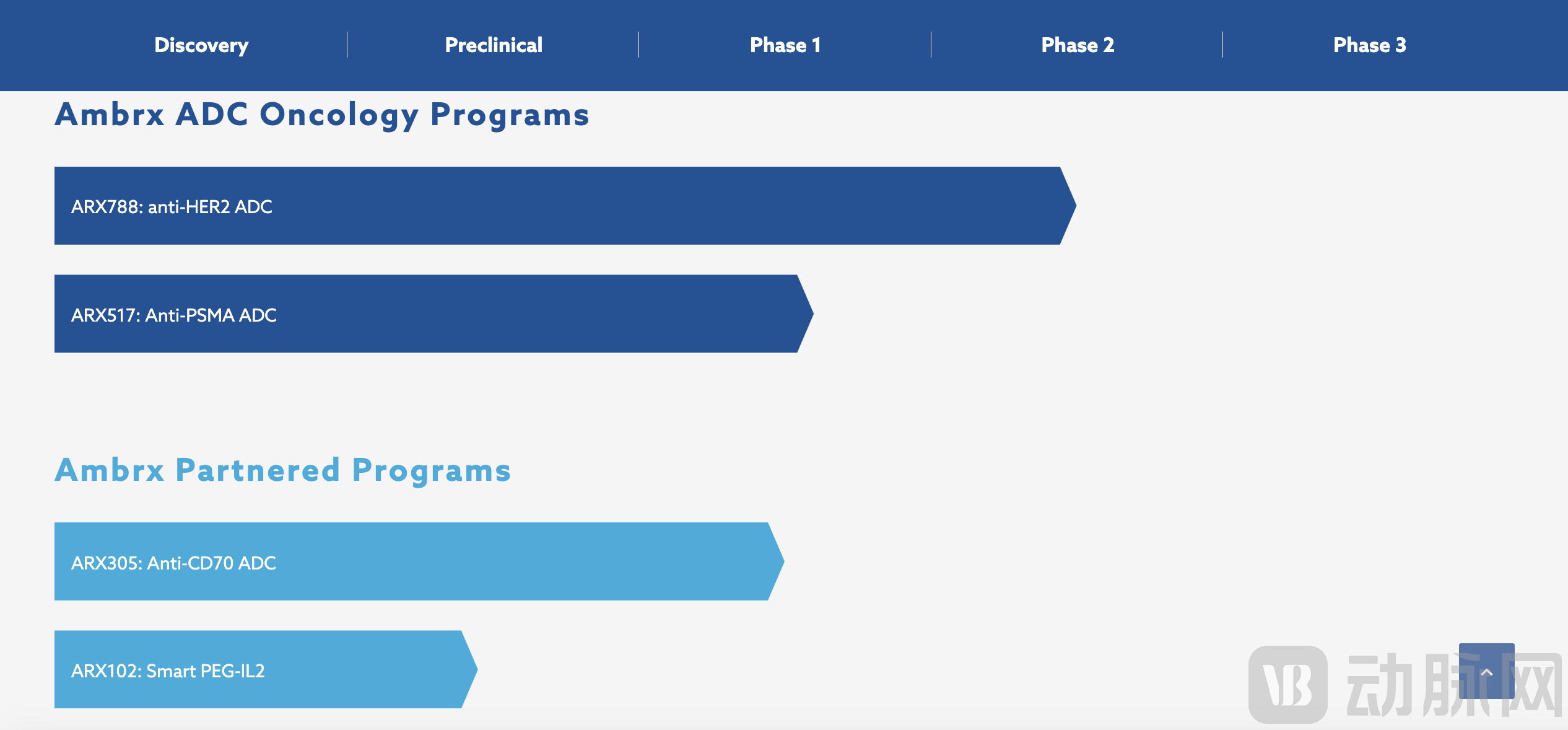
Currently, Ambrx has three most advanced pipelines: ARX788, ARX517, and ARX305.
ARX788
ARX788 is Ambrx’s core novel antibody-drug conjugate (ADC) that specifically targets human epidermal growth factor receptor 2 (HER2). The drug consists of a fully humanized HER2 monoclonal antibody conjugated to the microtubule inhibitor AS269, featuring a drug-to-antibody ratio (DAR) of 2. ARX788 is designed by incorporating synthetic amino acids at optimal sites (pAF 1221 and pAF 114) on the two heavy chains of the HER2 monoclonal antibody. These synthetic amino acids specifically bind to the hydroxylamine group of AS269 via their ketone functional groups, forming extremely stable oxime bonds. This conjugation strategy ensures that free toxin AS269 is not present in vivo metabolites; only the pAF-AS269 metabolite is generated, which can be efficiently internalized and released by HER2-positive cells, thereby enhancing the drug’s efficacy and safety.
AS269, as Ambrx’s proprietary payload, forms highly stable covalent bonds with synthetic amino acids. This design ensures that AS269 kills tumor cells only after binding to the targeting antibody and being internalized by the tumor cells, thereby effectively limiting off-target effects on healthy tissues.
As Ambrx’s most advanced internal candidate, ARX788 is being extensively investigated in clinical trials for breast cancer, gastric/gastroesophageal junction (GEJ) cancer, and other solid tumors. The U.S. FDA has granted Fast Track designation to ARX788 for the treatment of HER2-positive metastatic breast cancer, as well as Orphan Drug designation for the treatment of gastric cancer, underscoring the potential and significance of ARX788 in treating these conditions.
In the ACE-Breast-02 study presented at the ASCO 2024 Annual Meeting, ARX788 as a second-line treatment significantly prolonged progression-free survival in patients compared with the standard regimen of lapatinib plus capecitabine.
ARX517
ARX517 is a PSMA-targeting antibody-drug conjugate (ADC) formed by the covalent linkage of two microtubule inhibitor AS269 molecules to a humanized anti-PSMA monoclonal antibody. Its primary indication is PSMA-positive solid tumors, such as prostate cancer, particularly metastatic castration-resistant prostate cancer (mCRPC). PSMA is an important clinical biomarker for prostate cancer and is highly overexpressed in mCRPC as well as in solid tumors such as pancreatic cancer, non-small cell lung cancer (NSCLC), and ovarian cancer.
Currently, the ongoing Phase I trial (APEX-01) of ARX517 has shown encouraging preliminary data. In this trial, ARX517 achieved a more than 50% reduction in prostate-specific antigen (PSA) levels in three patients at the 2.0 mg/kg dose level, demonstrating good tolerability and safety.
ARX305
ARX305 is a CD70-targeting antibody-drug conjugate (ADC) composed of a humanized anti-CD70 monoclonal antibody covalently linked to two microtubule inhibitor AS269 payloads. It features highly stable mAb-payload linkage, an expanded therapeutic window, and reduced toxicity, and is primarily indicated for the treatment of renal cell carcinoma and other cancers.
CD70 is overexpressed in a variety of solid tumors and hematologic malignancies, such as renal cell carcinoma (RCC), nasopharyngeal carcinoma, multiple myeloma, non-Hodgkin lymphoma, and acute myeloid leukemia (AML). ARX305 is currently undergoing Phase I clinical trials in both China and the United States to evaluate its safety and efficacy in patients with CD70-positive tumors.
A Bumpy Ride: Withstanding Pressure, Finally Acquired by Johnson & Johnson
As a pioneer in integrating synthetic biology into ADC drug development, Ambrx’s journey has been far from smooth, marked instead by significant ups and downs.
From the pipeline perspective, Ambrx’s most core product is ARX788, a HER2-targeting agent. In 2021, when Ambrx successfully went public, antibody-drug conjugates (ADCs) had already become a hotspot in the pharmaceutical industry, with HER2 being the most prominent target among them. Globally, there are over 600 clinically active and marketed ADC drugs, with HER2-targeting ADCs accounting for the largest proportion. ARX788 is positioned as a “T-DM1-better” drug, and both the company and investors have high expectations for it.
Just as the market was going wild for HER2 ADCs, trastuzumab deruxtecan (DS-8201) emerged, reshaping the competitive landscape of HER2 ADCs. Trastuzumab deruxtecan has continued to achieve breakthroughs in breast cancer, particularly by demonstrating superior clinical outcomes to Kadcyla in head-to-head studies, thereby directly dampening the market prospects for other HER2 ADCs.In stark contrast to the rapid advancement of DS-8201, ARX788 has yet to release clinical data, causing Ambrx’s stock price to remain persistently sluggish, with its market capitalization long standing at less than half of the cash on hand.
To make matters worse, in August 2022, Dr. Feng Tian resigned from his position as Chief Scientific Officer (CSO), a role he had held for 17 years at Ambrx Biopharma. The company conducted a review of its pipeline in development to maximize commercial opportunities, preserve cash, and ensure operational continuity. In October of the same year, Ambrx announced the suspension of internal development of ARX788 to seek partners for continued development, and declared a 15% reduction in workforce. Investor confidence in Ambrx has plummeted to rock bottom.
Things tend to rebound when they are close to their lowest point. As the company was on the verge of survival, the Phase II clinical data of ARX788 was finally released. On December 9, 2022, Ambrx announced the latest results from the Phase II ACE-Breast-03 study of ARX788 at the SABCS conference. The study showed that,ARX788 achieved an objective response rate (ORR) of 57.1% and a disease control rate (DCR) of 100% in the treatment of metastatic breast cancer that had progressed after prior Kadcyla (T-DM1) therapy, with no adverse events reported. Upon disclosure of these data, Ambrx’s stock price surged, rising 1,007.56% in a single day.
Ambrx’s turnaround did not end there. On February 16, 2023, Ambrx announced preliminary Phase I clinical data for its PSMA-targeting antibody-drug conjugate (ADC), ARX517. The results showed that 100% of patients achieved a greater than 50% reduction in prostate-specific antigen (PSA) levels. In previous clinical trials, the magnitude of PSA reduction has been demonstrated to be positively correlated with progression-free survival (PFS) and overall survival (OS). Furthermore, the company indicated that the trial had not yet reached the maximum tolerated dose. Buoyed by these positive clinical findings, Ambrx’s stock price surged by 54% in a single day.
On March 1, 2023, Ambrx’s partner, Xinma Bio, announced the success of the Phase II/III clinical trials for ARX788 and its intention to submit a marketing application in China. Subsequently, on March 6, Ambrx announced its transfer from the New York Stock Exchange (NYSE) to the Nasdaq Stock Market, resulting in a single-day stock price surge of 95.02%. Since December 2022, the company’s stock price has risen from a low of $0.38 to a high of $13.07, representing a maximum increase of 3,087.81%.
Since then, Ambrx’s stock price had been fluctuating around the $11 mark until 2024, when Johnson & Johnson announced its acquisition of Ambrx, sending the share price soaring once again.
On March 7, 2024, Johnson & Johnson announced the completion of its all-cash acquisition of Ambrx Biopharma, with a total equity value of $2 billion and a net value of $1.9 billion after deducting estimated acquired cash. When Johnson & Johnson announced the acquisition in January 2024, it emphasized that it would acquire all outstanding shares for $28.00 per share in cash, representing a premium of approximately 105% over Ambrx’s closing price at the time the acquisition was completed.
For Ambrx, with its 21-year corporate history, Johnson & Johnson’s acquisition has provided strong momentum for its next phase of growth.
Strengthen BD Collaborations and Empower Partners with Proprietary Technology Platforms
Although Ambrx Biopharma is primarily focused on the commercialization of its novel antibody-drug conjugate (ADC), its synthetic biology-related business has continued to expand, accumulating a substantial number of partners, including many Chinese pharmaceutical companies.
As stated on Ambrx’s official website, Ambrx has long collaborated with leading pharmaceutical companies to apply its technology platform in developing engineered precision biologics for a wide range of therapeutic applications.
In 2013 and 2019, Ambrx and Zhejiang Medicine entered into two collaborations regarding the development and commercialization of ARX788. Under the agreements, Ambrx retained commercial rights outside China and received royalties from product sales in China. Currently, the development and commercialization of ARX788 are under the responsibility of Xinma Bio, a subsidiary of Zhejiang Medicine.
In March 2019, Ambrx and BeiGene entered into a global R&D collaboration. Under the agreement, Ambrx is eligible to receive up to $446 million in potential research, development, regulatory, and sales-based milestone payments across all projects, plus tiered royalties on future global sales. BeiGene will obtain global development and commercialization rights for all drugs arising from this partnership.
In January 2020, Ambrx Biopharma entered into a collaboration and license agreement with Sino Biopharmaceutical Limited for the joint development of two product candidates utilizing Ambrx’s proprietary technology platform. Under the terms of the agreement, Ambrx received an upfront payment to support the creation of two innovative drug candidates, with Sino Biopharm leading clinical trial activities for these new drugs in both China and the United States. Sino Biopharm holds the rights to develop and commercialize the products in the Greater China region, while Ambrx retains rights for all territories outside of China.
Ambrx’s journey continues, and its synthetic biology-based new drug development strategy will serve as a model for many pharmaceutical companies.
References:
1.https://ambrx.com/
2.https://www.jiemian.com/article/926721.html
3.https://xueqiu.com/4779222867/275711025