

China's Dental Implant Industry Undergoes Major Restructuring Amid Price and Product Wars
Since the implementation of centralized volume-based procurement for dental implants, competition in the oral care industry has intensified dramatically, with price wars erupting one after another.
According to VCBeat, whether in offline scenarios such as elevators, bus stop signs, bus exteriors, and shopping mall billboards, or through online channels like internet videos and web pages,Recently, there has been an overwhelming flood of advertisements promoting “low-priced dental implants” as a customer acquisition strategy.Some dental clinic owners even posted on their WeChat Moments about competitors’ marketing tactic of “Get a full set of dental implants, get a car free,” sparking intense debate within the industry.
Clues to competitive pressures can be found in the financial reports of listed companies. The annual report released by Topchoice Medical shows that in 2023, the company launched low-cost dental implant services for patients and adjusted its pricing structure for dental implants. These measures drove an increase in implant volume, with over 53,000 implants performed throughout the year, representing a 47% year-on-year growth. However, based on the composition of main business revenue, Topchoice Medical’s implant-related revenue during the reporting period amounted to RMB 479 million,While the number of implantations increased significantly, revenue grew by only 6.95% year-on-year.
“Following the decline in dental implant prices, it has become a consensus that the oral healthcare industry is operating on ‘slim margins,’ and intensified competition has, in turn, driven prices down further,” Liu Qin, an investor in the consumer healthcare sector, told VCBeat. How significant was the price reduction? Citing data released by the Tianjin Municipal Healthcare Security Administration, he noted that in 2023, the total cost for a single conventional dental implant at public medical institutions in Tianjin was controlled at approximately RMB 6,000–7,000, representing a decrease of more than 50% compared to pre-special governance campaign levels.
Following the Price War, the Product War in the Dental Implant Industry Has Also Begun: As the volume of dental implants under centralized procurement increases, domestically developed products from Chinese brands are being launched successively, and mergers and acquisitions are becoming more active as companies vie for share in the implant market. For instance, Weigao has launched its new-generation “Xteady” implant system; in April, Allgens Medical acquired 100% equity of Germany’s HumanTech Dental GmbH for EUR 3.246 million using its own funds, marking the first case of a Chinese enterprise acquiring a high-end European or American dental implant company.
Where Is the Dental Implant Industry Headed Amid Fierce Price and Product Wars?
For dental institutions, especially private ones, the rapid release of demand for dental implants presents an unmissable opportunity to capture patients.
From a market perspective, many institutions prominently highlight keywords such as “centralized procurement prices for dental implants,” “approved to participate in centralized procurement for implants,” and “centralized procurement prices benefiting the public” in their promotional materials to project an image of high quality at affordable prices.
Behind the frequent price wars, many dental clinics are struggling to cover high labor costs and operational expenses, making business operations increasingly difficult and often resulting in services that fail to keep pace.
Worse still, price wars and low-value services are fostering the perception among consumers that dental implants are only worth a minimal price, which is highly detrimental to the healthy development of the industry.
Addressing this phenomenon, Lu Jianming, founder of Topchoice Medical, stated bluntly at the annual general meeting of shareholders held in late June this year: “Some institutions have adopted an assembly-line model for dental implants, drastically deviating from the medical essence of implantology to absorb the vast majority of new consumers who are highly price-sensitive and lack medical knowledge. In the long run, the ‘Pinduoduo model’ emerging in the dental implant market will have a greater impact than the volume-based procurement policy.”
In addition to the evolution of oral care service providers, the upstream consumables sector is also undergoing dramatic changes.
First, following the price reduction, the penetration rate of dental implants rose rapidly. According to calculations by LeadLeo Research Institute, after the volume-based procurement led to a surge in sales, China’s dental implant penetration rate increased from 45.4 per 10,000 people in 2022 to 59.1 per 10,000 people in 2023, marking the highest year-on-year growth rate on record at 30.17%.
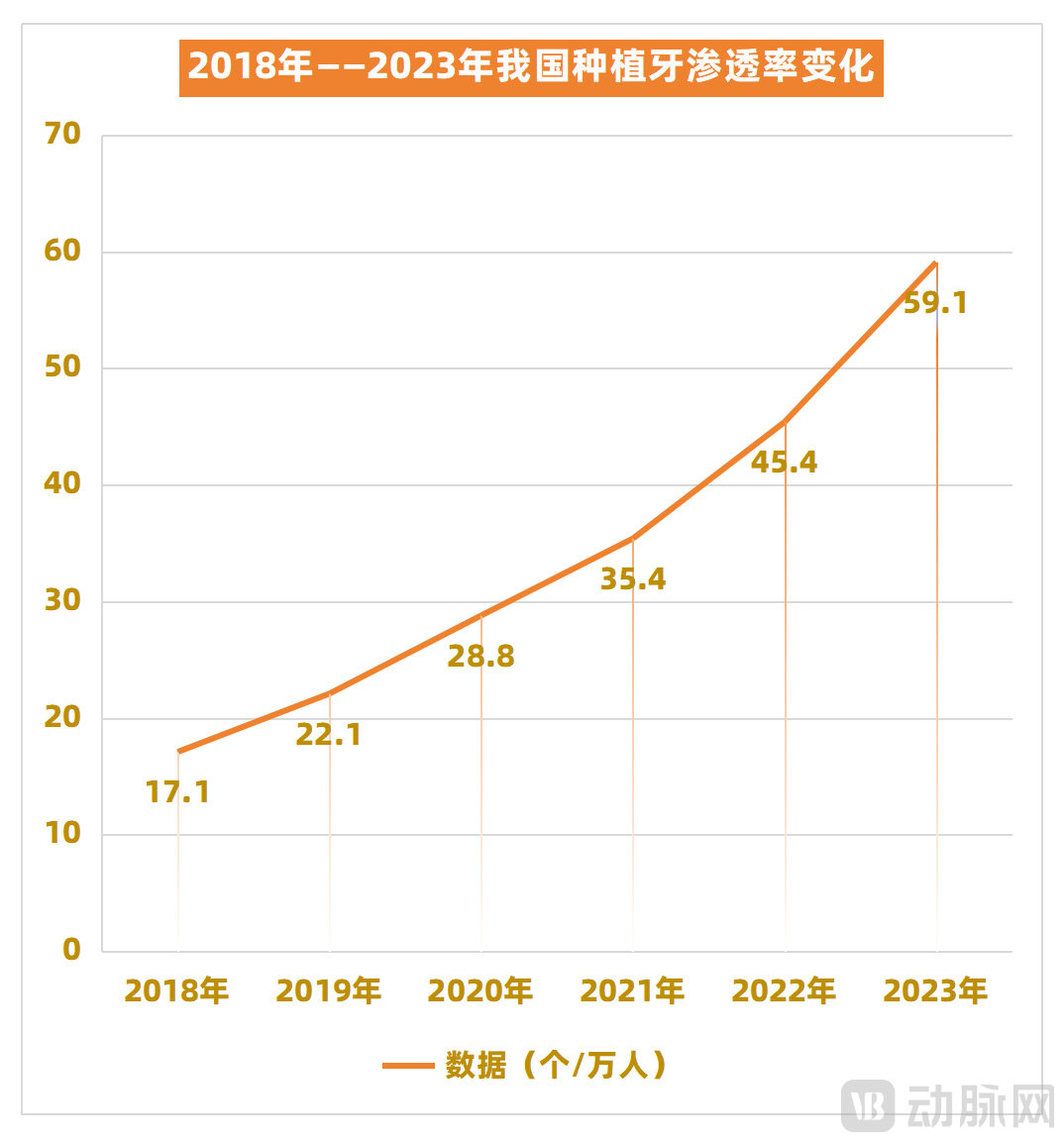
(Data source: LeadLeo Research Institute; graphic by VCBeat)
Penetration rates will not stagnate at current levels; as prices decrease and patient education improves, the adoption of dental implants will continue to expand. According to the "2023 Insight Report on Oral Healthcare Services," the penetration rate of dental implants in developed countries generally ranges from 150 to 200 per 10,000 people, whereas China’s current rate stands at 59.1 per 10,000 people, indicating room for two- to threefold growth.
Which upstream companies have absorbed this growth in volume?Due to the lack of market distribution data, a complete comparison among brands is currently unavailable. However, according to the "Announcement on Releasing Information Such as the 'List of Medical Institutions Committed to Participating in Price Governance for Dental Implants'" issued by the National Healthcare Security Administration in January this year, the top three medical institutions in China by agreed procurement volume were Osstem (572,523 sets), Dentium (476,040 sets), and Straumann (291,934 sets). Procurement volumes for other brands, such as Nobel Biocare, B&B Dental, Neobiotech, Snucon, Alpha, Dentsply Sirona, and Ankylos, ranged from tens of thousands to hundreds of thousands of sets.
On the domestic corporate front, companies including Beijing Leiden Biotechnology, Changzhou Baikangte, and Wego Jielikang each achieved procurement volumes exceeding 50,000 units.
“From the perspective of actual consumption, since the implementation of centralized procurement,Korean-brand dental implants have seen the largest price reductions, while domestically produced dental implants were already priced relatively low., so the price reduction is not significant, and the two are in direct competition.“European dental implant brands mainly target the mid-to-high-end market, with relatively stable prices and limited competition,” said the head of a dental chain who wished to remain anonymous, speaking to VCBeat. “From the perspective of market share, domestic brands are still struggling to challenge the dominance of Korean brands. However,The rapid increase in absolute sales volume is highly significant for the accumulation of clinical data on domestically produced dental implants, which will accelerate the trend of import substitution by Chinese-made products in the coming years.”
Liu Qin, an investor in the consumer healthcare sector, also noted that as prices have decreased, the public perception of dental implants is gradually shifting from high-end consumer goods to mass-market products. As precision-manufactured products, domestically produced dental implants are generally no inferior to Korean brands. However, the long-standing perception that imported products are superior to domestic ones has led to intense competition between Chinese and Korean implants, despite their minimal price difference. At this juncture,Domestic brands must deliver superior products to capture consumer mindshare, thereby swiftly reversing the current situation.
“Otherwise, we risk missing the significant growth opportunities driven by volume expansion. Competing in the ‘red ocean’ thereafter will be a protracted battle.”
Before exploring the opportunities for domestic brands, it is essential to first determine whether the dental implant market possesses irreplaceability. If the market can be substituted by other product categories, there is a risk of market contraction, which would render the R&D investments of late entrants futile.
“This is akin to smartphones accelerating their R&D and moving toward mass production in a few years, while you are still pursuing domestic substitution for feature phones; the timing and trends are both against you,” Liu Qin told VCBeat.
He stated,Dental implants primarily address the problem of tooth loss.Currently, the main clinical methods for dental restoration include removable dentures, fixed dentures, and implant-supported dentures.
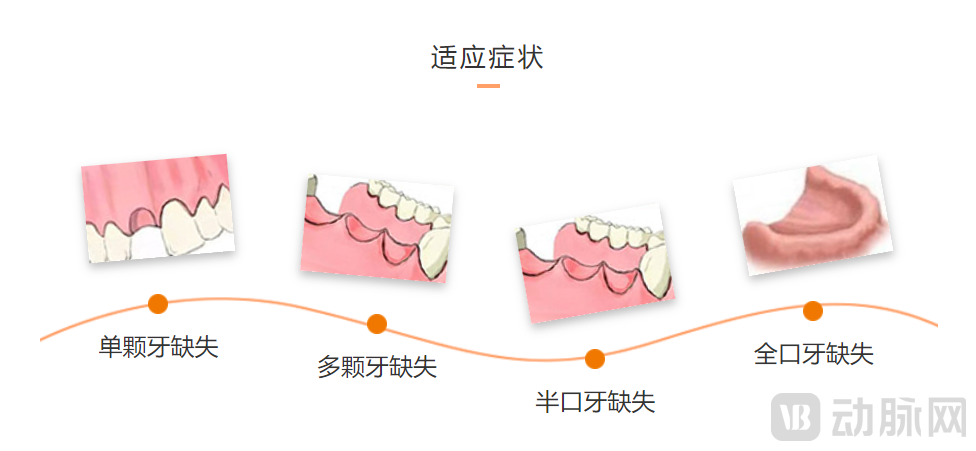
(Dental implants address the issue of missing teeth. Image source: Official website of Taikang Bybo Dental Hospital)
“Dental implants, commonly referred to as implant-supported dentures, entail three primary cost components for end consumers: (1) the cost of the implant fixture materials, (2) the cost of the crown materials, and (3) the fee for the implant placement surgical services provided by the dentist.” According to Liu Qin, dental implants consist of two parts: the tooth root (dental implant fixture) and the crown. The tooth root is fabricated from commercially pure titanium with excellent biocompatibility and achieves a tight connection with the alveolar bone through osseointegration.Compared with removable and fixed dentures, dental implants offer superior stability and retention, making them increasingly popular among patients.
However, the previously prohibitive treatment costs, often reaching tens of thousands of yuan, barred many patients from accessing care. Centralized volume-based procurement and intense price competition within the industry are now changing this landscape: as dental implant prices decline, a segment of patients who might have previously opted for removable or fixed dentures is shifting toward implant-supported prostheses.
“It is not the case that missing teeth must always be replaced with dental implants. Dental implantation generally requires adequate bone volume and quality, so specific treatment plans should primarily follow the dentist’s professional advice. However, most patients who previously forgone necessary implants due to high costs are now able to proceed with the treatment,” said Liu Qin. “We have also observed several new restorative techniques; however, no products with revolutionary breakthroughs have been identified to date. Therefore, the dental implant market is expected to remain viable for at least the next 20 years.”
The market is irreplaceable; the next step is to continue deepening our expertise in the field of dental implants.
What, then, are the technological barriers in the dental implant industry?
Regarding this issue, Liu Qin stated, “Imagine a dental implant being placed into a patient’s oral cavity. First, safety must be ensured, requiring excellent biocompatibility. Second, as the oral cavity is an open environment where the implant must remain functional for decades, it is essential to prevent infection and loosening. Both criteria are indispensable.”
These requirements demand excellence in dental implants regarding material selection and surface treatment processes. The technological proficiency achieved across these aspects constitutes the key differentiators and competitive barriers among various dental implant brands.
In terms of materials,Dental implants can be broadly categorized into two major types: non-metallic materials, and metals and alloys.
· Non-metallic materials include zirconia ceramics, carbon-based materials, and graphite oxide materials. These materials offer advantages such as low thermal conductivity, low electrical conductivity, and high strength, but suffer from poor ductility and relatively high brittleness.
· Metals and alloys include pure titanium and titanium alloys, both of which offer excellent strength and hardness, as well as superior corrosion resistance, enabling them to withstand erosion from acids, bases, oxides, and other chemicals in the oral cavity.
The purpose of surface treatment processes is to enhance the osseointegration rate and speed of implants with bone tissue.Theoretically, a rough implant surface can enhance the migration and proliferation of osteoblasts, thereby facilitating osseointegration. Among these, a surface microporosity ranging from 1 to 100 micrometers is considered an ideal surface roughness.
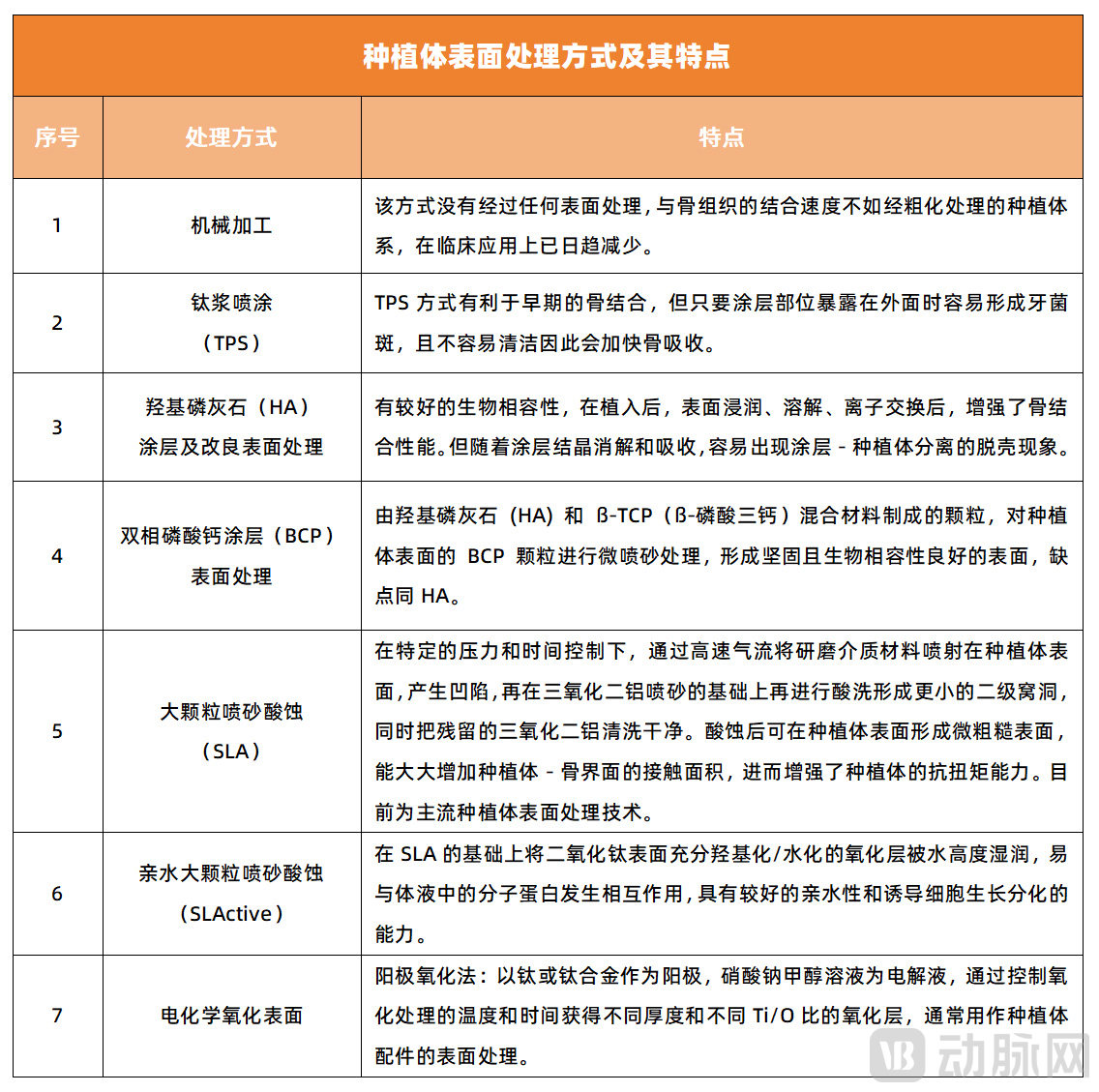
(Source: Tianjin Institute of Pharmaceutical Sciences; graphic by VCBeat)
Reviewing the technological advancements in the dental implant industry, surface treatment processes have evolved from initial mechanical machining to a series of techniques including titanium plasma spraying, hydroxyapatite (HA) coating and modified surface treatments, biphasic calcium phosphate (BCP) coating, sandblasted large-grit acid-etched (SLA) surfaces, hydrophilic sandblasted large-grit acid-etched (SLActive) surfaces, and electrochemical oxidation surfaces.
Taking the currently mainstream implant surface treatment technology—sandblasted with large grit and acid-etched (SLA)—as an example, this process involves blasting abrasive media onto the implant surface using a high-velocity air stream under controlled pressure and duration to create depressions. Subsequently, acid etching is performed on the alumina-sandblasted surface to form smaller secondary micropits while thoroughly removing residual aluminum oxide. The resulting acid-etched implants exhibit a micro-rough surface, which increases the contact area at the implant-bone interface, thereby enhancing the implant's resistance to torsional forces.
“In actual practice, companies do not rely on a single surface treatment process but rather employ a combination of multiple methods. Furthermore, after addressing the osseointegration rate and speed of integration between the implant and bone tissue, product aesthetics also become a critical consideration,” stated Liu Qin. “Similarly,Material selection does not adhere to the notion that any single material is inherently superior; rather, the core lies in how effectively a company engineers the overall implant system and whether it can deliver optimal clinical outcomes for patients.”
He cited Straumann’s best-selling BLX implant as an example. This implant is made of a high-strength alloy composed of approximately 85% titanium and 15% zirconium, and features a large-grit sandblasted surface. Due to its excellent performance and positive clinical feedback, the BLX implant has gained widespread popularity among dentists in China. Subsequently, Straumann launched the hydrophilic version of the BLX implant, enabling patients with poor bone quality to also benefit from dental implants. “This is the opportunity brought about by product innovation.”
Meanwhile, Liu Qin particularly emphasized,Academic achievements and case accumulation, as well as the synergy between implant manufacturers and clinical dentists, are also extremely important to ensure they understand and recognize the strengths and weaknesses of their own brand’s implants.
This is because dentists are one of the primary drivers of growth in the dental implant industry. Providing clinical training to dentists not only indirectly expands the market but also strengthens brand loyalty among dentists and increases market penetration.
It has been observed that domestic brands have continued to exert efforts across the aforementioned areas, achieving significant breakthroughs.
For instance, the “Xteady” dental implant system, the third implant product line launched by Weigao Jielikang last year, employs sandblasted large-grit acid-etched (SLA) surface treatment technology, making it adaptable to a variety of patients’ bone conditions. Meanwhile, Weigao Jielikang is conducting clinical trials on its ultra-short and ultra-narrow implant system, and new implant systems featuring next-generation dry-process hydrophilic SPA surface treatment technology as well as novel materials may soon be introduced to the market.
Another example is Chuangying Medical, founded in 2010, which currently employs SLA technology and has launched four implant models: TL tissue-level, BL bone-level, TLE tissue-level self-tapping, and BLE bone-level tapered self-tapping. Among these, the bone-level implants are suitable for anterior region restorations where high aesthetic demands are required.
“In recent years, the progress of China’s planting industry has been evident. Given time, domestic innovative forces are bound to reverse the monopoly held by imports and even make their mark on the international stage,” said Liu Qin.
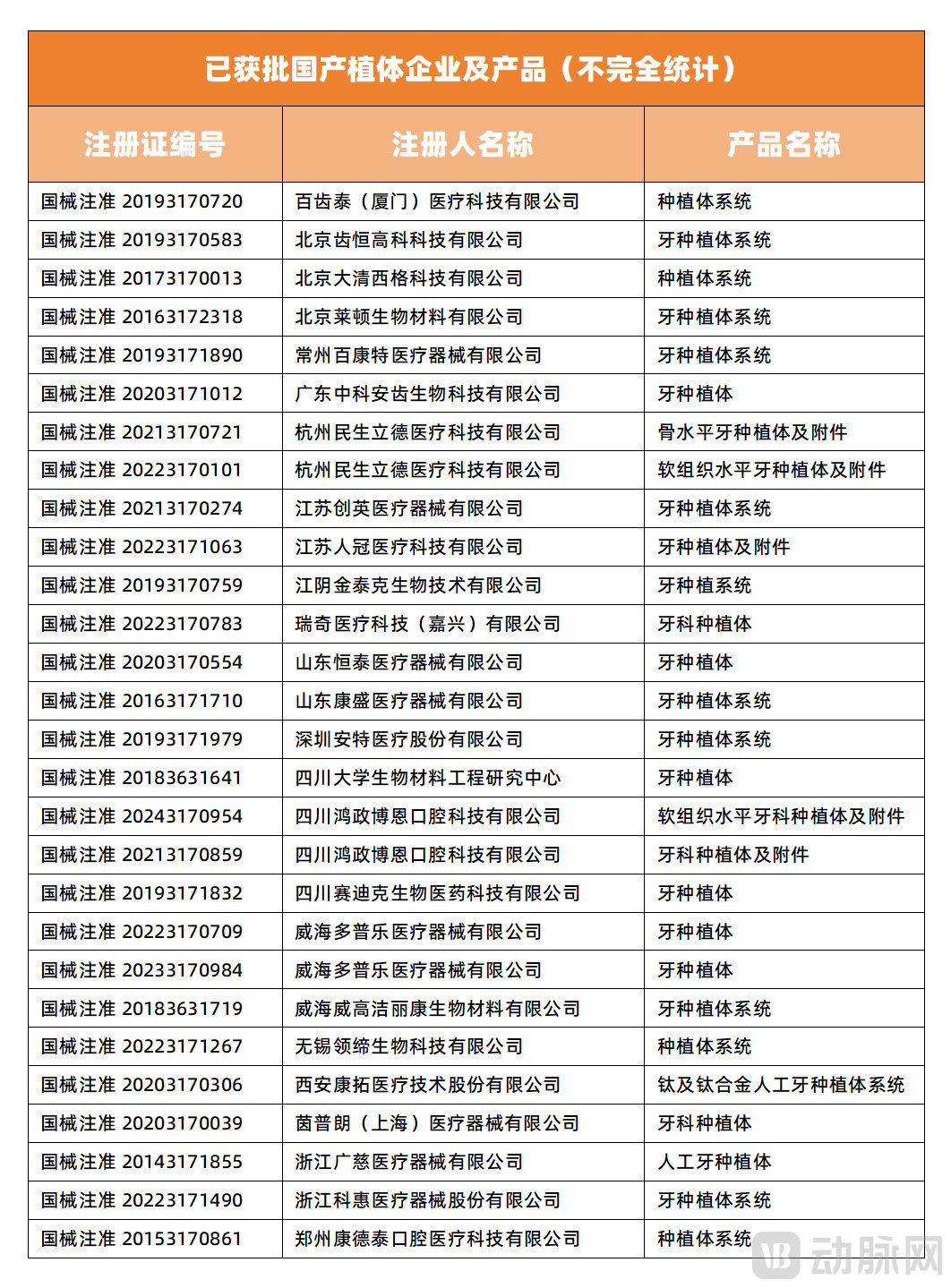
(Graphic by VCBeat)
Amid the product wars, in what directions will the dental implant industry evolve next?
VCBeat, combining guest interviews with industry data,Three trends are anticipated: first, convenience; second, personalization; and third, specialization.
Convenience refers to enhancing the user experience at the clinical level, such as reducing the waiting time for dental implant procedures. Taking the currently popular “immediate implantation” surgery as an example, this approach shortens treatment duration (allowing completion on the same day), reduces the number of surgical interventions and associated trauma, and, due to its minimally invasive and efficient nature, has a minimal impact on patients’ daily lives and work.
It is important to note that traditional implant therapy requires waiting for the extraction socket to heal fully before placing the dental implant, a process that can take anywhere from several months to a year. This, in turn, hasMajor brands are launching innovative implants designed for “immediate placement.”
Personalization, as the name suggests, refers to meeting users’ more unique and individualized needs. Take abutments, which connect the crown above to the dental implant below, as an example. According to VCBeat, domestically produced abutments in China were previously dominated by original equipment manufacturer (OEM) stock abutments, which limited their adaptability to varying gingival conditions. Therefore,How to customize “personalized abutments” according to each patient’s individual condition has become a key focus of industry deliberation.
Among domestic brands, Gaofeng Medical has continued to invest in R&D for personalized abutments, resolving technical challenges associated with multi-unit personalized implant frameworks. The company reduced the manufacturing time for a single personalized abutment from 3 hours to 20 minutes, and for frameworks from 12 hours to under 3 hours, thereby obtaining China’s first Class III medical device registration certificate for personalized abutments.
In terms of specialization, this can be reflected in addressing the scarcity of dental resources and improving clinical efficiency, such as with implant surgery robots that are making new progress. Multiple industry experts pointed out to VCBeat that the oral healthcare industry faces challenges including a shortage of qualified dentists and an excessively long training period for new practitioners. Therefore,The development of surgical robots for dental implant procedures will help assist more novice dentists in performing implant surgeries and reduce risks during the procedure.
At the end of last year, the “Dental Implant Surgery Navigation and Positioning System” developed by Fengzhun Robotics Technology Co., Ltd., a subsidiary of Meiya Medical Group, received approval for a Class III medical device registration certificate. Reportedly, this surgical robot represents an application-level development and is capable of performing approximately 80% of dental implant procedures, including complex cases such as half-mouth or full-mouth edentulism and severe alveolar bone deficiency.
It is evident that as the dental implant industry continues to advance, the product competition centered on implants extends beyond widely watched implant fixtures to include customized abutments and robotic-assisted implant surgery systems. Encouragingly, amidst this surge in product innovation, a steady stream of domestic innovative players has emerged.
It is believed that as domestic brands continue to deepen their R&D efforts, they will inevitably produce more impressive implant-related products for the industry and deliver superior, more comprehensive Chinese solutions to dental patients worldwide.