

Zhang Suhua of Shanghai University of Medicine & Health Sciences Advocates Industry-Clinical Integration to Build New Quality Medical Productive Forces
In May 2024, the “8th Future Healthcare Ecosystem Expo” officially concluded. As one of the sub-forums of the conference, the Forum on Translation of Scientific Research Achievements focused on the development trajectory, innovation, and collaboration in translating scientific research into practical applications. It invited experts and scholars from domestic and international communities, as well as from the corporate, academic, and investment sectors, to jointly explore innovative pathways, ecosystem development, and industrial symbiosis for bridging the “last mile” in the translation of scientific research achievements.
At the meeting,Zhang Suhua, Director of the Office of Industry-University Cooperation at Shanghai University of Medicine and Health Sciences, and Vice Chairperson and Secretary-General of the Special Committee on Medical-Engineering Translation and Integration with the Health Industry under the Chinese Research Hospital AssociationUnder the theme “Integration of Industry and Medicine to Build New Quality Productive Forces in Healthcare,” panelists and the audience jointly explored methodologies for developing new quality productive forces in the healthcare sector. VCBeat has compiled and edited the highlights from their insightful presentations.
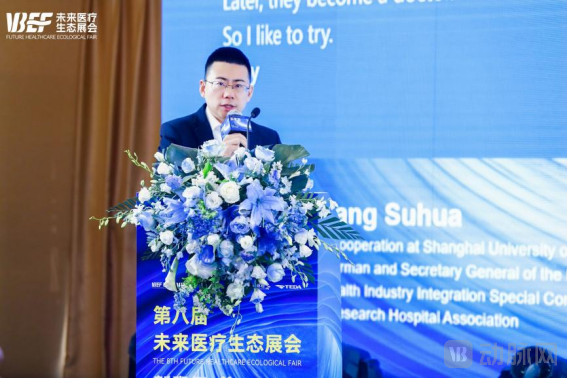
Zhang Suhua, Director of the Industry-University Cooperation Office at Shanghai University of Medicine & Health Sciences, and Vice Chairman and Secretary-General of the Special Committee on Medical-Engineering Translation and Integration with the Health Industry of the Chinese Research Hospital Association
Since “new-quality productive forces” became a focal point of intense discussion at the Two Sessions, their underlying concept has sparked profound transformations across various industries. As a strategic sector vital to national welfare, economic development, and national security, healthcare is a typical innovation-driven field and a key arena for cultivating new-quality productive forces.Especially in today’s era of continuous technological advancement, the healthcare sector is undergoing a revolutionary transformation. As the core of this transformation, new quality productive forces in healthcare are gradually becoming key to enhancing the quality and efficiency of medical services.
In discussing the high-quality development of the healthcare industry, Zhang Suhua emphasized the core role of industry-medical integration and the translation of hospital-based scientific and technological achievements in fostering new quality productive forces and promoting the high-quality development of the biopharmaceutical industry, while clarifying the key roles played by industries and medical institutions in this process.
He pointed out, “The integration of industry and medicine, particularly the deep convergence of the healthcare sector with technology, constitutes the core driving force behind the development of new quality productive forces in healthcare. To achieve high-quality development of the biopharmaceutical industry, it is essential to propose and develop new technologies, new demands, and new forms of integration. This involves not only technological innovation itself but also how to rapidly and efficiently translate scientific achievements into practical clinical applications, thereby advancing the entire healthcare industry.”
This is particularly true for high-end medical equipment in China that faces critical technological bottlenecks, as its development involves the integrated application of numerous disciplines and technologies. Meanwhile, post-development processes—including clinical trials, product registration, and market access—require close collaboration between clinical institutions and enterprises.Addressing these complex, interdisciplinary and cross-sectoral challenges must rely on the integration of industry and medicine.
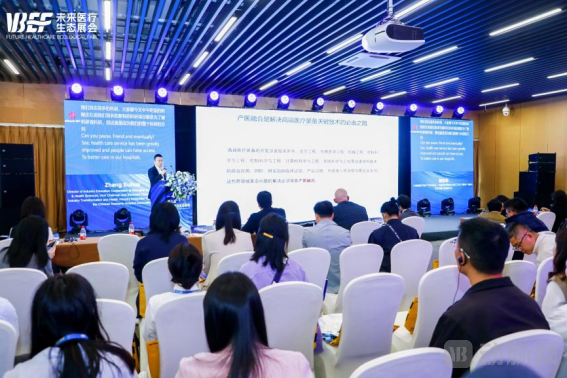
The Integration of Industry and Medicine Is the Inevitable Path to Addressing Key Technologies in High-End Medical Equipment
Whether it is the cultivation of high-caliber talent, the generation of scientific research achievements, or the provision of higher-quality medical services to the public, all depend on the continuous advancement of science and technology. This includes the development and application of new drugs, new medical devices, new diagnostic techniques, and new treatment methods, which constitute significant contributions of biomedical engineering to the advancement of medicine.Therefore, hospitals and universities must serve industrial development by establishing an industry demand-oriented service system.
When further exploring the relationship between scientific research and industrial development, Zhang Suhua put forward a clear viewpoint: the actual clinical needs must be closely integrated with industrial demands to ensure that scientific research has practical benefits and outputs, truly implementing the transformation of scientific and technological achievements.He pointed out that many current research projects suffer from a disconnect between their research directions and industrial needs. This has led to the goal of scientific research becoming the research itself, rather than solving practical problems or meeting market demands.
This disconnect not only results in a waste of resources but also consumes the valuable time and energy of scientists and physicians, while simultaneously squandering national research funding.Zhang Suhua stated, “This phenomenon must be changed in the process of building new quality productive forces in the future. We should rely on models such as industry-medical integration and industry-pharmaceutical integration to enable deep industry participation in scientific research, ensuring that research outcomes truly address clinical needs. Only in this way can we vigorously promote the high-quality development of the biopharmaceutical industry and ultimately achieve a win-win situation for both scientific research and industrial development.”
The Chinese government has injected vitality into the medical device industry by introducing a series of supportive policies aimed at promoting corporate innovation and the domestic production of high-end medical devices, thereby providing solid support for the robust development of the domestic industry.。For example, "Made in China"2025It proposes prioritizing the development of high-performance diagnostic and therapeutic equipment such as imaging devices and medical robots, high-value medical consumables like fully biodegradable vascular stents, and mobile health products including wearables and remote diagnosis and treatment solutions. The Special Review Procedures for Innovative Medical Devices establish a “fast-track” channel for innovative devices to accelerate their market launch.
Despite the broad prospects for the integration of industry and medicine, multiple challenges have been encountered in practice: funding shortages, incomplete policy implementation, inadequate intellectual property protection, and a relative lack of engineering knowledge among medical professionals.. These challenges constrain the further development of industry-medical integration.
Zhang Suhua commented on this,“To overcome these challenges, concerted efforts from the government, enterprises, healthcare institutions, and academia are required. The government needs to refine policies to provide greater support, unleash innovation momentum, and incentivize development in the healthcare sector; enterprises should increase R&D investment to accelerate the pace of medical technology innovation; healthcare institutions ought to establish close collaborations with industry and academia to jointly promote clinical research and technology development; and academia should focus on interdisciplinary research to cultivate talent equipped with an innovative spirit and practical capabilities.”
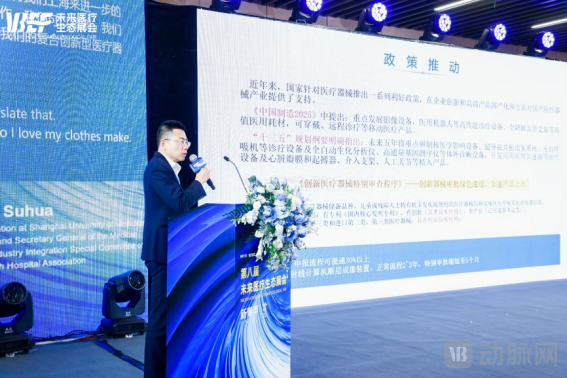
Policy-Driven Growth of the Medical Device Industry
Meanwhile, national and local governments are promoting policies to deepen the integration of industry, academia, and research, encouraging universities, hospitals, and enterprises to jointly apply for scientific research projects—particularly those involving major special initiatives with funding scales reaching millions or even tens of millions.This joint application mechanism is designed to promote the integration of industry, academia, and research, foster innovative consortia, and accelerate the translation and application of scientific research achievements.
Regarding the core value of physicians in the medical innovation system, Zhang Suhua pointed out that“Physicians are not only the primary source of clinical needs and ideas, but also collaborators in the development process, as well as designers and executors of clinical trials. Physicians’ clinical discoveries and innovations are a vital source of medical advancement.”
However, Chinese doctors are currently also facingSomeDilemma: First, physicians are overburdened with excessive workloads, perDayOutpatientNumerous,Compressiontime for scientific research and innovation; secondly, Chinese physicians generally lack an engineering background, which contrasts with the medical education model in Western countries, where doctors often receive training in engineering or biomedical engineering before entering clinical medicine.
Furthermore, Zhang Suhua pointed out that China's efforts in intellectual property protection need to be strengthened.“Inadequate protection of physicians’ intellectual property rights will dampen their incentive to engage in innovation and increase the difficulty of effective collaboration with other parties.”
A product may take from concept to market launch8to10years. This process is not only protracted but also carries significant risks. “Although hospitals represented by those in Beijing and Shanghai have invested substantial resources in scientific research, such investment is unsustainable without the translation of achievements into tangible outcomes and revenue. Hospitals expect their research investments to yield outputs that drive the translation of scientific and technological achievements and foster innovation. In contrast,”Revenue from the commercialization of scientific and technological achievements at top U.S. hospitals can reach30%, but there is still a significant gap in conversion revenue between top-tier hospitals in Shanghai and their counterparts in the United States.“Zhang Suhua said.”
Nevertheless, the commercialization of scientific and technological achievements is a development direction strongly supported by the state. Hospitals attach great importance to this, even incorporating it into the performance evaluations of hospital directors. Notably, Shanghai Ninth People’s Hospital has effectively incentivized researchers by implementing a mixed-ownership model and a reward mechanism for scientific and technological achievements, integrating these achievements into systems for professional title assessment, awards, and excellence evaluations. Driven by concerted efforts from both top-level design and grassroots implementation, China’s medical-industrial integration sector has fostered numerous outstanding practical cases.
Artificial Heart"Rocket Heart":As a renowned expert in the field of cardiac surgery,President, Tianjin TEDA International Cardiovascular HospitalLiu XiaochengNot only has he accumulated extensive experience in clinical practice, but he has also achieved remarkable success in the field of medical-engineering translation. Through close collaboration with the China Academy of Launch Vehicle Technology, Dean Liu Xiaocheng’s team has integrated expertise and technologies from diverse fields, successfully applying aerospace technology to the medical sector and pioneering innovations in industry-medical integration and medical-engineering convergence.
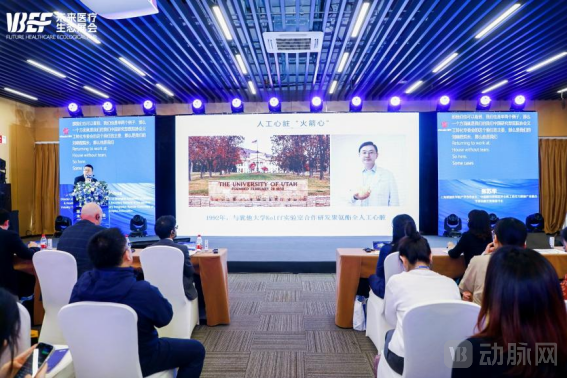
Artificial Heart “Rocket Heart”
The team he led developed the third-generation artificial assist heart by leveraging core technologies such as dual magnetic-hydrodynamic suspension, integrated pump-motor design, and dual-redundancy electronic control, marking a major breakthrough in artificial heart technology. Notably, the passive fully magnetically levitated blood pump they developed weighs only79grams, representing a monumental technological leap compared to the bulky equipment of the past that required hand trucks for transportation. This compact, innovative device can now be conveniently implanted into the human body, offering new therapeutic options for patients with heart disease.
High-Performance Dental Implants:Shanghai Stomatological Hospital, in response to dental issues arising from population aging, utilizes micro-arc oxidation (MAO) has developed a new type of dental implant. This technology originated from90the Russian military-industrial sector in the [era/decade], China in2000Around that year, it was introduced and applied in aerospace manufacturing. Currently, micro-arc oxidation technology has been ingeniously applied in the medical field, particularly to improve surface treatment techniques for titanium alloys.
Compared with existing dental implants, high-performance dental implants based on micro-arc oxidation technology offer three major advantages: first, enhanced corrosion resistance, which reduces the incidence of titanium allergy; second, improved bioactivity, which promotes osseointegration and minimizes loosening; and third, superior bonding strength and wear resistance, which prevent coating delamination during use.
This innovation not only demonstrates the power of closely integrating engineering research foundations with medical needs, but also reflects the speed and efficiency of translating scientific and technological achievements into practical applications. According to reports, it took the team only about one year to transform their research outcomes into real-world applications, from technical adjustments to product development.This work has received support and incubation from the Shanghai Innovation Center for High-End Medical Equipment, further demonstrating the immense potential of industry–medicine integration in advancing medical technology.
“In the process of promoting medical innovation, we have witnessed some inspiring typical cases.。However, the substantial demands of the clinical field still urgently require in-depth integration of engineering technologies to realize their full potential.The integration of industry and medicine is a key direction for the future development of the healthcare sector. This requires us toNeedEffectively promote the in-depth development of industry-medical integration through measures such as deepening cooperation, optimizing the policy environment, increasing financial investment, and strengthening talent cultivation, thereby laying a solid foundation for building new quality productive forces in healthcare., thereby providing patients with higher-quality medical services and creating greater health value for society.。"Zhang Suhua concluded in his closing remarks."