

China Telecom Launches Smart Infectious Disease Surveillance, Early Warning, and Emergency Command Platform to Reconstruct CDC Operations with a Data+Knowledge Capability Foundation
On July 5, at the CHITEC–China Telecom Special Satellite Forum, China Telecom’s wholly-owned subsidiary, Zhongdianxin Yikang, officially launched the Smart Infectious Disease Surveillance, Early Warning, and Emergency Command Platform.

This marks a significant new development by China Telecom, following its release of full-stack capabilities for healthcare informatization in May. At that time, China Telecom unveiled Zhongdianxin Yikang, a platform-based subsidiary under its umbrella dedicated to the centralized operation of digital health initiatives. The company announced that it would leverage its integrated cloud-network advantages to fully unlock the value of medical data, building full-stack capabilities with a focus on data ecosystems and operations, thereby demonstrating to the industry its strong commitment and confidence in expanding its presence in the healthcare informatization sector.
Soon, the resolve to rely on innovative products achieved tangible implementation. The Smart Infectious Disease Monitoring, Early Warning, and Emergency Command Platform released this time is a practical outcome of full-stack capabilities in healthcare informatization, as well as a proactive response by China Telecom to unlock the value of public health data elements.
From a broader perspective, under the national policy direction of strengthening public health system construction, regions across China are accelerating the implementation of projects to enhance infectious disease surveillance, early warning, and emergency command capabilities. As a key industry participant, China Telecom is promoting the high-quality development of China’s disease prevention and control initiatives by providing ecosystem-integrated, scenario-based public health applications.
Making public health a key business sector is a strategic decision made by China Telecom after comprehensive consideration of policy trends, corporate mission, and its own big data governance capabilities.
Surveillance and early warning are key to the source control and management of public health emergencies. After the SARS outbreak in 2003, China rapidly established a nationwide web-based direct reporting system for infectious disease outbreaks and public health emergencies, with comprehensive horizontal coverage across sectors and vertical integration down to the grassroots level. It should be noted that this system covers only certain notifiable infectious diseases, and its capacity for surveillance and early warning of emerging or infectious diseases of unknown etiology remains inadequate. Meanwhile, spurred by the COVID-19 pandemic, issues such as fragmented information, delayed situational awareness, difficulties in decision-making, and gaps in grassroots surveillance have become increasingly prominent.
In consideration of public health and safety, the state has intensively issued a series of policies, standards, and systemic reform measures closely related to the construction of the public health system. In terms of top-level planning, the “14th Five-Year Plan” Series of Outline Documents explicitly propose reforming the disease prevention and control system, while strengthening capabilities in monitoring and early warning, risk assessment, and emergency response. At the level of management structure, the National Administration of Disease Control and Prevention was officially established in May 2021, signifying a shift in the functions of disease control institutions from mere disease prevention and control to the comprehensive maintenance and promotion of health for the entire population. Regarding implementation, the National Administration of Disease Control and Prevention issued the Implementation Plan for Strengthening the Construction and Improvement of Provincial-Level Integrated Regional Infectious Disease Monitoring, Early Warning, and Emergency Command Information Platforms, further quantifying annual tasks for monitoring, early warning, and emergency command operations.
The “Implementation Plan” requires that by the end of 2025, a provincial-level coordinated regional infectious disease surveillance and early warning system and an emergency command system be established and improved; the completion rate of provincial-level coordinated regional platform construction shall reach 100%; the coverage rate of regional applications at the county (district) level shall reach 85%; the coverage rate of monitoring operational indicators shall reach 95%; data intensification, intelligent prevention and control response, and decision-support capabilities shall be significantly enhanced; and work efficiency shall be markedly improved.
Since early 2024, the nationwide construction of an integrated platform for infectious disease surveillance, early warning, and emergency command—now in full swing—can serve as a key lever to achieve the aforementioned objectives and enhance capabilities in monitoring, early warning, and emergency response.
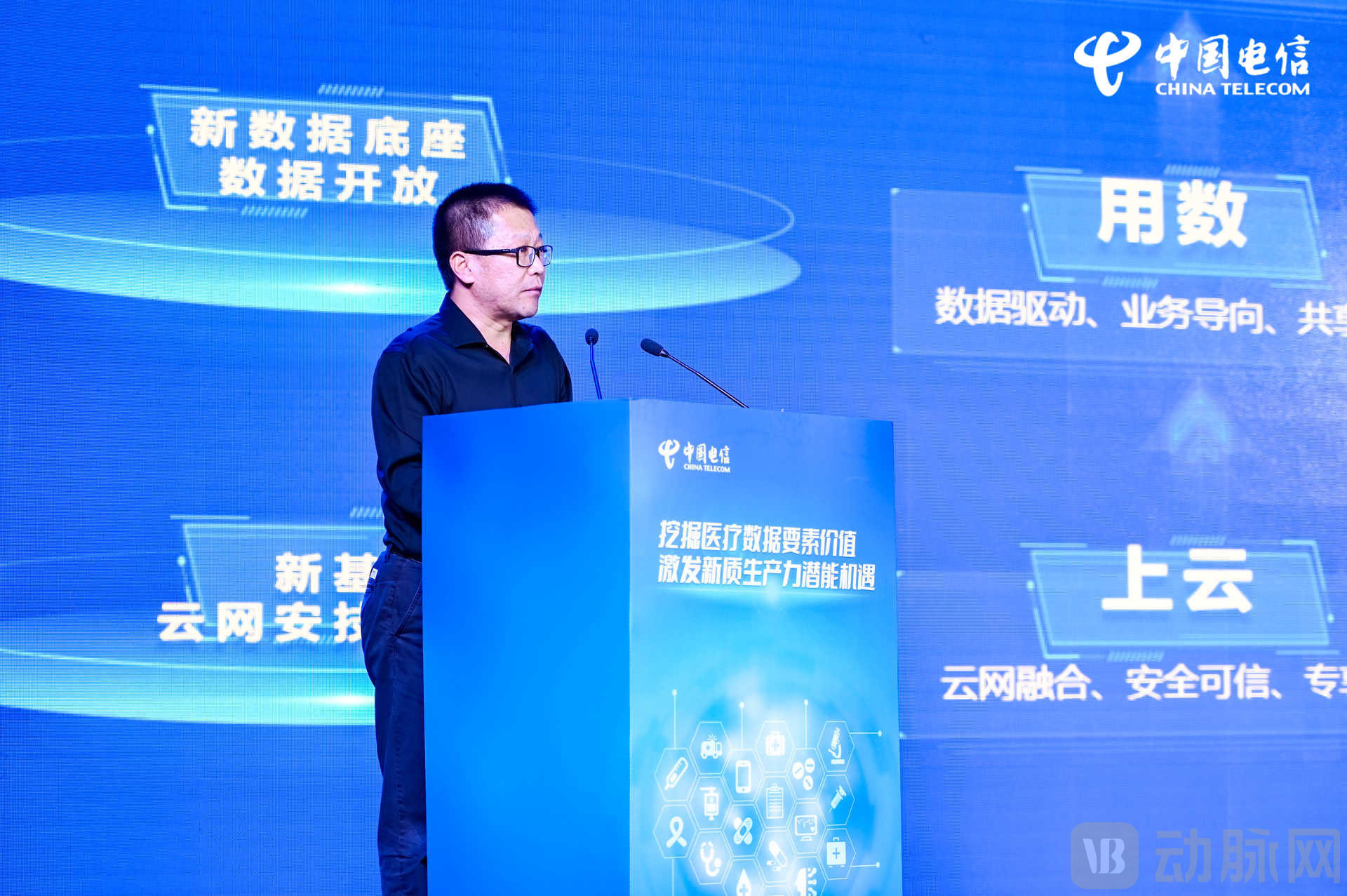
Vice President, Healthcare Industry Business Division, China Telecom Group Co., Ltd.Pang JinFrom the remarks, we can observe that,The launch of the Smart Infectious Disease Surveillance, Early Warning, and Emergency Command Information Platform is not only China Telecom’s proactive response to national policies but also a confident demonstration of its data governance capabilities.

Since launching its healthcare business in 2013, China Telecom has actively leveraged its role as a leading state-owned enterprise in harnessing data elements, driving high-quality development across the entire healthcare industry through new quality productive forces and better empowering the medical and health sector.
Against the backdrop of implementing the "Healthy China" strategy, and in the new stage of development where the nation actively advocates and practices the concepts of "Grand Hygiene" and "Grand Health," the connotations of public health and medical healthcare services have become intertwined. China Telecom’s promotion of efficient coordinated development and governance in public health and medical services helps improve the utilization efficiency of healthcare resources, strengthen disease prevention and control capabilities, and effectively promote the overall improvement of population health levels.
Deputy General Manager, Solutions Department, China Telecom Yikang Technology Co., Ltd.He LiIntroduction: Leveraging over a decade of industry expertise, China Telecom has developed comprehensive full-stack capabilities in healthcare informatics. It has established a tripartite framework integrating “cloud-network service capabilities, big data platform capabilities, and scenario-based intelligent empowerment products,” comprehensively supporting the informatization upgrade of the health and healthcare sector.
The Smart Infectious Disease Surveillance, Early Warning, and Emergency Command Information Platform released this time also demonstrates China Telecom’s comprehensive service capabilities in the field of public health.
To enhance capabilities in surveillance, early warning, and emergency response, the national government has proposed a “Three Unifications” strategy. This strategy encompasses: (1) vertical integration of surveillance, early warning, and emergency response operations to form a closed-loop system; (2) nationwide standardization of multi-point trigger early warning mechanisms and an external multi-channel surveillance network; and (3) internal coordination through collaborative case management among medical care, disease prevention, and research sectors. In this round of informatization platform development, emphasis has been placed on the concepts of coordinated multi-channel data acquisition, integrated data governance, and intelligent applications.
Based on this, China Telecom has established the design philosophy of “One Foundation, One Hub, Two Closed Loops, and Full-Chain Linkage,” and launched the “Smart Infectious Disease Monitoring, Early Warning, and Emergency Command Platform.”
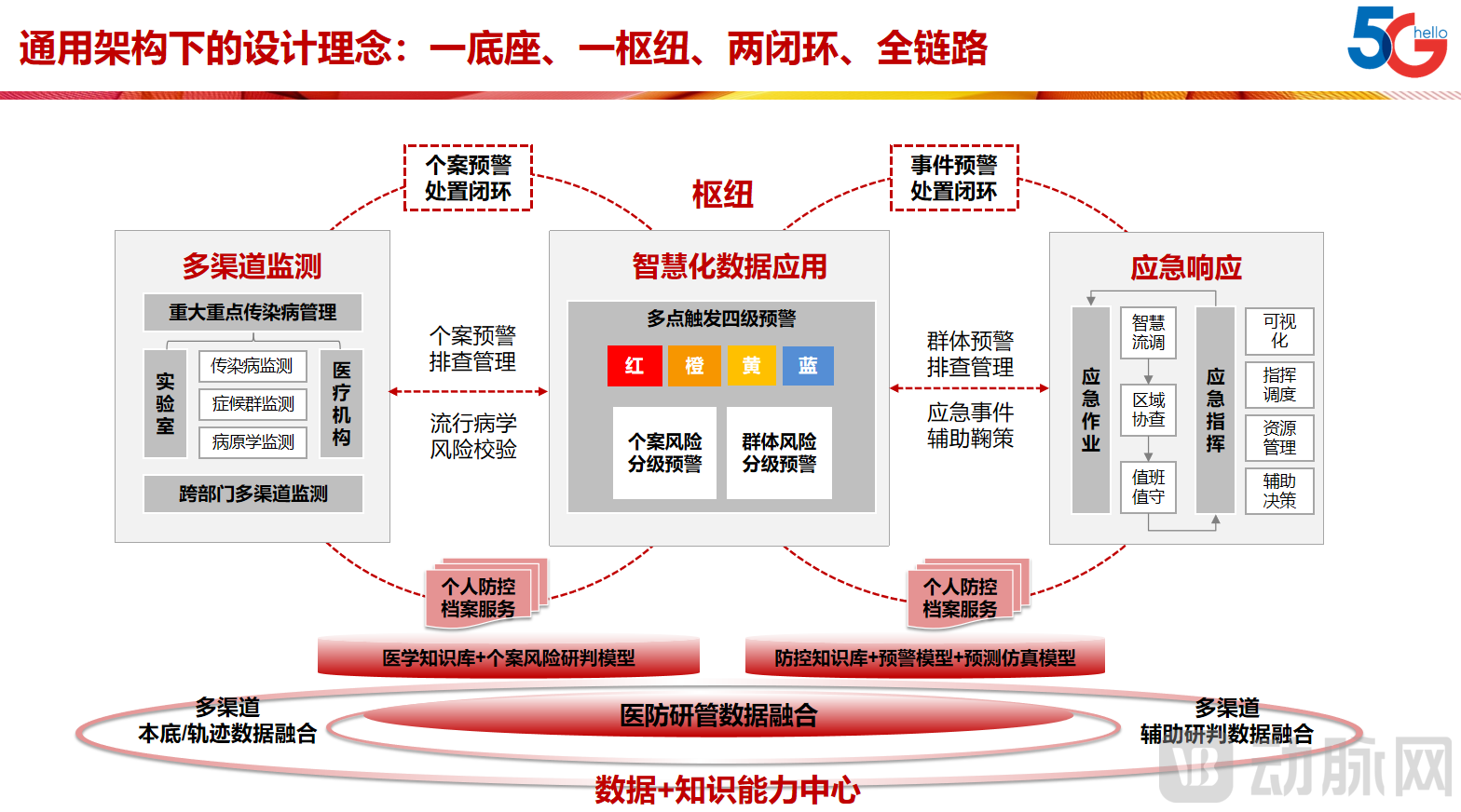
Leveraging big data and artificial intelligence technologies, this platform enables early anomaly warnings for both prevalent known diseases and emerging unknown diseases at the earliest possible stage. It also establishes a closed-loop workflow for collaborative response between medical treatment and disease prevention departments, facilitating the intensive sharing of surveillance data and emergency command resources, thereby effectively enhancing public health emergency response and management capabilities under new circumstances.
Expert in Disease Control and Prevention, China Telecom Yikang Technology Co., Ltd.Dong KenanA detailed introduction to the platform’s advantages and features is provided.
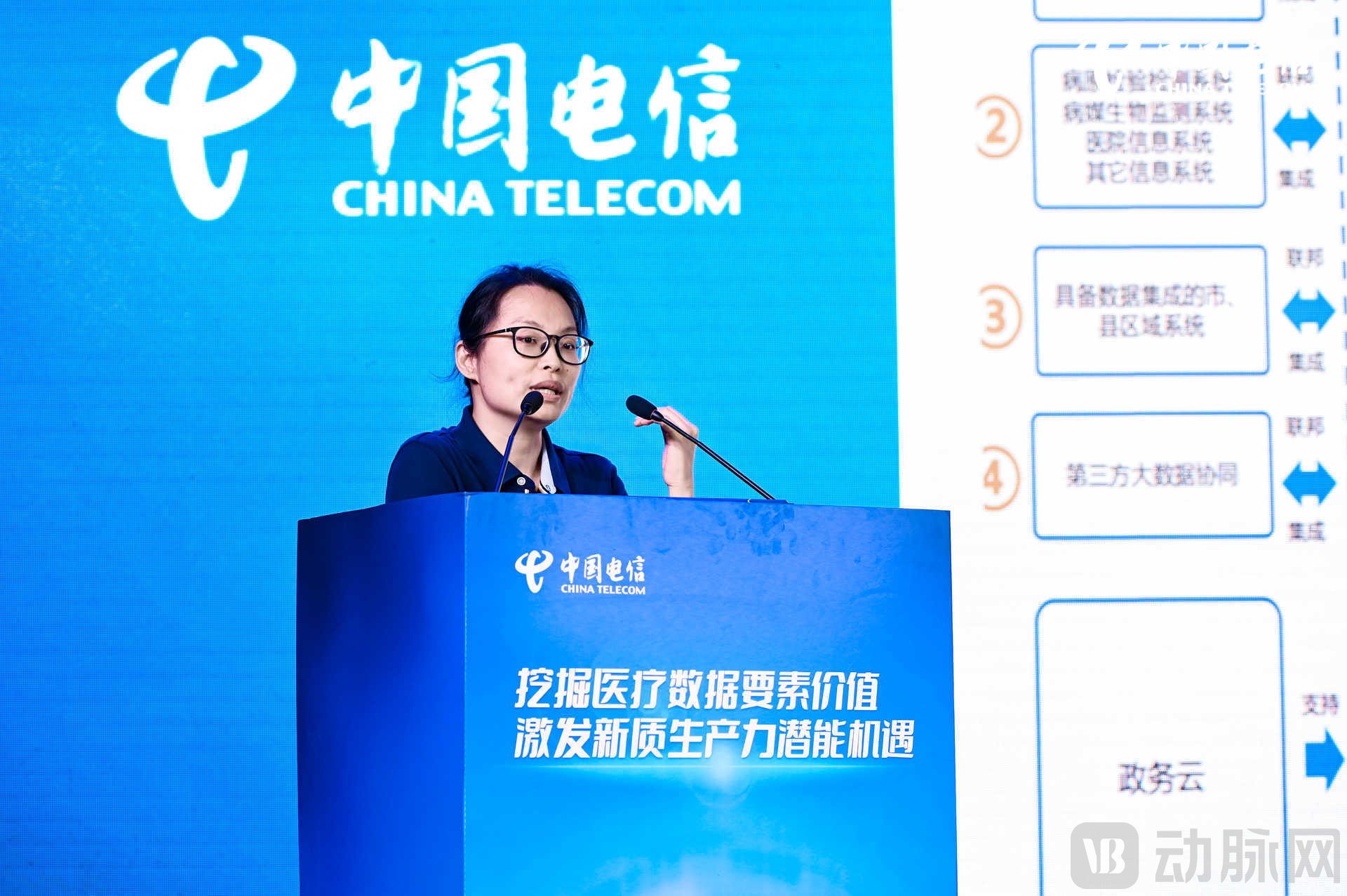
First, on the basis of comprehensive data capabilities, this platform leverages big data technology in conjunction with national front-end software to coordinate data collection and conduct multi-dimensional data governance. By building upon the Jishi Medical Data Foundation, it establishes a data capability platform dedicated to the full lifecycle of infectious disease data, enabling comprehensive data asset lifecycle management and thereby constructing a multi-tiered big data resource system for disease control and prevention.
Secondly, it possesses a unique knowledge system., this platform builds a “Data + Knowledge Capability Center” foundation by integrating multi-dimensional data collected from multiple channels, a medical knowledge base, and a suite of “individual + population” assessment models. On one hand, it combines an individual risk assessment model—comprising an intelligent clinical decision support system based on clinical data and an epidemiological individual risk calculation engine based on multi-channel data—with the medical knowledge base to generate individual risk profiles. On the other hand, leveraging early warning and analytical capabilities built upon a prevention and control knowledge base, 54 disease/topic categories, 252 early warning rules, and five types of models, it has established a four-tier regional early warning mechanism.
Then, the core business achieved a closed loop.Leveraging its aforementioned advantages in data capabilities and knowledge systems, the platform has established end-to-end personal disease prevention and control archive data services within its monitoring and early warning module. It has constructed a closed-loop system for risk case management integrating medical care, prevention, and research, thereby achieving full-process tracking and management of regional early warning signals. Furthermore, the platform features multi-dimensional prediction and simulation capabilities, enabling epidemic trend forecasting, transmission chain analysis, and resource consumption projections, as well as scenario simulations. These functionalities enhance the emergency response capabilities of various operational departments and establish an intelligent emergency command system that integrates routine and emergency operations with vertical coordination.
Currently, China Telecom has supported multiple provinces and prefecture-level cities, including Hubei, Gansu, Qinghai, and Shandong, in building infectious disease surveillance, early warning, and emergency command platforms featuring multi-channel monitoring and multi-point trigger mechanisms, thereby enhancing regional capabilities for risk anticipation and emergency response to public health emergencies.
Taking Hubei Province as an example, from a horizontal perspective, the platform achieves comprehensive monitoring through a single network, covering over 400 secondary-and-above medical institutions, more than 1,900 primary care facilities, and CDC agencies at all levels across the province. It also enables data sharing and interaction with 19 provincial commissions and bureaus, realizing automatic extraction of infectious disease report card data and proactive monitoring of clinical data from medical institutions. Vertically, the platform connects upward with medical institutions, regional platforms, the Chinese Center for Disease Control and Prevention (China CDC), and the China National Center for Risk Assessment; downward, it provides one-click access to grassroots levels. Emergency operations and command scheduling cover three-tier prevention and control headquarters, health commissions (bureaus), CDC agencies, 20 ministry- and provincial-level hospitals, and 235 municipal- and county-level medical institutions at the provincial, municipal, and county levels.
Furthermore, building a robust public health system is a systematic endeavor that requires collective effort. China Telecom is actively collaborating with its ecosystem partners to this end. For instance, Hangzhou Xujian Technology has developed an “Intelligent Brain” for disease control command based on China Telecom’s platform, which has been deployed in regions such as South and Central China, helping to enhance regional command efficiency and capabilities.
After more than a decade of practical business operations, China Telecom has achieved industry-leading status in terms of business scale and market influence. This means that in the healthcare informatization sector, which is currently undergoing transformation, China Telecom must assume the responsibility of a “new industry leader,” possessing the capability to lead and achieve self-breakthroughs, and exercising dominance in areas such as ecosystem integration and industry innovation. For China Telecom, this will be an extremely glorious yet immensely challenging Long March.