

Bota Bio Achieves First Commercial Project Milestone with Xinhecheng, Bridging the Industrialization Gap in Synthetic Biology

Bota
Synthetic Biology Technology Platform Provider
As a cutting-edge interdisciplinary field at the intersection of modern biology and bioengineering, synthetic biology is driving transformative changes in traditional industrial and medical sectors through its revolutionary innovations. With advancements in foundational technologies such as gene editing and genetic testing, coupled with reduced research costs and improved efficiency, scientific achievements in synthetic biology are increasingly being translated into industrial applications.
Recently, Bota Biosciences and Zhejiang NHU Co., Ltd., a leading enterprise in the fine chemical industry, jointly announced the successful commercialization of their first collaborative project. This partnership leverages NHU’s commitment to innovation and Bota’s proprietary full-stack strain and process development platform, enabling the rapid and efficient translation of cutting-edge biotechnological advancements into industrial value.
This collaboration not only marks the successful commercialization and real-world application of Bota’s biomanufacturing technology, transitioning from the laboratory to large-scale industrial production, but also signals that Bota and Zhejiang NHU Co., Ltd. will continue to work hand in hand to drive the continuous iteration and development of industrial biotechnology. By leveraging their respective strengths, both parties aim to deliver greener and more sustainable products and solutions to consumers.
It is reported that the project has generated tens of millions of yuan in economic benefits for both parties to date, and the co-developed products are projected to yield an economic value amounting to hundreds of millions of yuan.
Partnering with a Fine Chemicals Industry Leader: First Collaborative Project Achieves Commercial Launch
This collaboration was initiated by Zhejiang NHU Co., Ltd.’s aim to enhance the industry competitiveness of its target products through strain and process engineering.
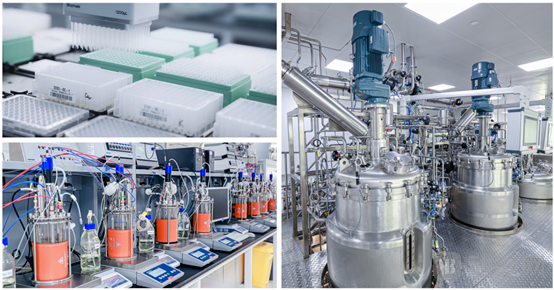
As a synthetic biology-driven industrial biotechnology company, Bota Biosciences has successfully established end-to-end technical capabilities over the past four years, spanning from computational biological design and high-throughput screening to laboratory-scale validation, process optimization, pilot-scale scale-up, and industrial production. It is precisely Bota’s technological prowess in synthetic biology, particularly its expertise in industrial strain optimization and process scale-up, that has attracted the attention of Zhejiang NHU Co., Ltd.
According to Dr. Cui Hao, Co-founder and CEO of Bota Biosciences, this collaboration leveraged Bota’s high-throughput screening platform integrated with computational biology-driven input analysis to conduct strain construction, rational design, and analytical screening on a scale of hundreds of thousands. The project was developed within two to three years, ultimately achieving validation and commercialization in hundred-ton-scale amplified production.
Leveraging Zhejiang NHU Co., Ltd.’s extensive production experience in high-value-added fine chemical products and Bota Biosciences’ independently developed full-stack strain and process development platform, the two parties have achieved comprehensive technology sharing. By optimizing and screening fermentation strains, they have continuously developed new-generation industrial strains with enhanced production efficiency, successfully achieving scalable manufacturing and green upgrades at an industrial level.
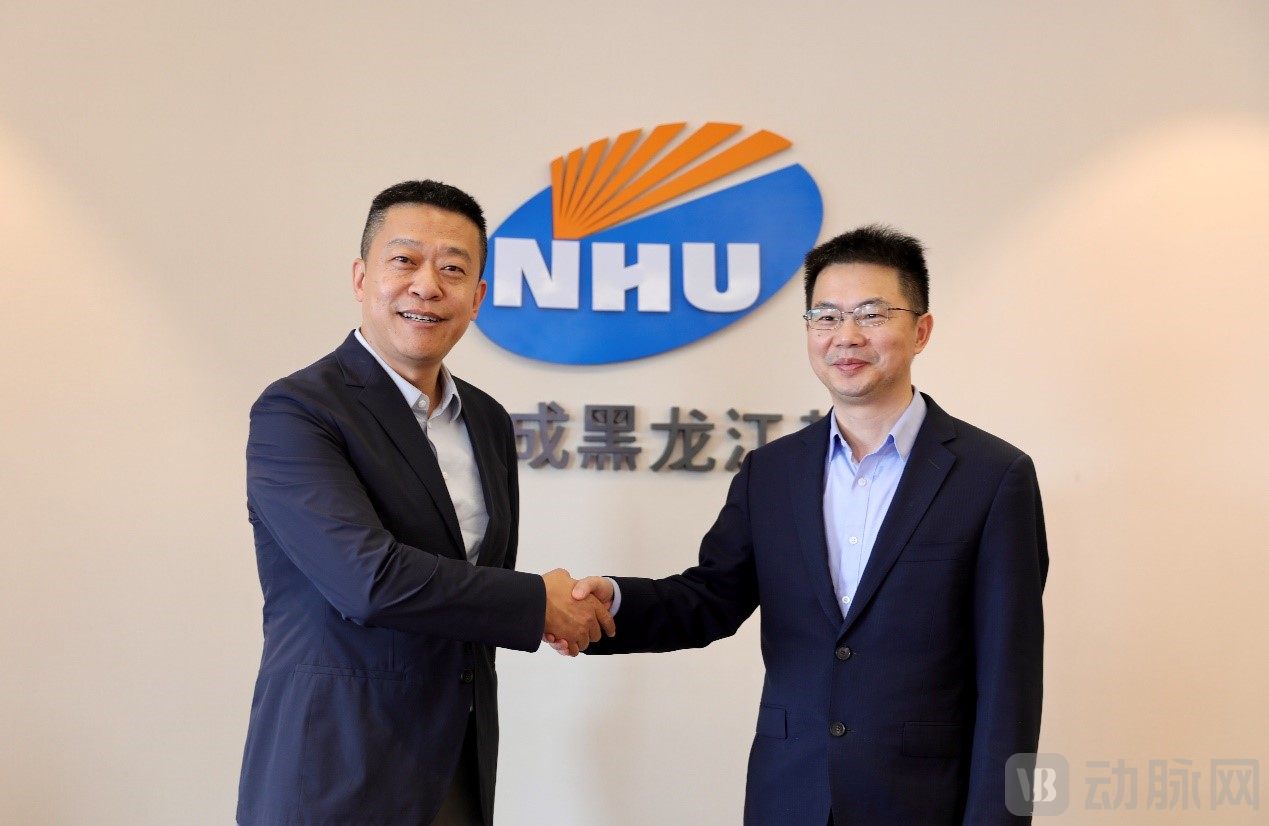
Mr. Lu Chunming, SVP of Bota (left), and Mr. Lv Guofeng, General Manager of Heilongjiang NHU (right)
For NHU, as a global leader in fine chemicals, the company places paramount importance on innovation and technological leadership and has been actively seeking advanced technology partners.
From the perspective of Bota, an innovative biotechnology company seeking to rapidly bridge the industrialization gap requires strong industry partners. Collaborations with leading enterprises play a crucial role in identifying new application areas, exploring novel use cases, and gaining insights into market demands.
This collaboration, by leveraging the respective strengths of both parties, has accelerated the industrialization of the technology. It not only validates Bota’s capabilities in industrial biomanufacturing and its technological value but also sets an excellent example for the industry.
As stated by Dr. Cui Hao of Bota Biosciences, the company hopes to instill greater confidence in the industry through this collaboration. Leveraging Bota’s technology development and application platform, the aim is to enable various sectors to embrace the broader possibilities of synthetic biology at the application level.
Building End-to-End Technical Capabilities to Bridge the Gap Between Technology and Industrialization
With the introduction of the concept of “new quality productive forces,” synthetic biology has once again taken center stage. By redesigning the genetic material of organisms, synthetic biology not only enhances production efficiency but also enables the creation of new products and processes unattainable through conventional methods, demonstrating substantial application potential across multiple sectors, including pharmaceuticals, agriculture, environmental protection, and energy.
Although the technology itself holds revolutionary potential, synthetic biology currently faces numerous challenges, including production scale-up, cost-effectiveness control, and accurate prediction of market demand.
Bota was founded with the mission to help the synthetic biology industry bridge the gap between laboratory research and industrial-scale production, overcome the various obstacles from R&D to practical application, and translate scientific achievements into large-scale manufacturing, ultimately delivering them as everyday consumer products on store shelves.
Bota’s high-throughput, automated strain and process development platform achieves end-to-end coverage of synthetic biology, from laboratory R&D to industrial-scale production. The platform’s strengths lie in its intelligent design capabilities and systematic, high-throughput engineering capabilities, particularly in the development of non-model industrial strains—a key feature that distinguishes Bota’s R&D platform from other technical platforms.
According to Dr. Zhu Jie, BD Director at Bota Biosciences and technical lead for the project, model strains are widely used in academic research due to their well-characterized biological properties and genetic backgrounds, which facilitate genetic manipulation. In contrast, non-model strains possess unique metabolic pathways or production characteristics suitable for specific industrial processes; however, their engineering is more challenging owing to the lack of detailed genetic background information.
Bota’s technology platform leverages high-throughput screening and gene editing technologies to overcome these challenges, enabling effective engineering of non-model strains. “We are capable of developing molecular biology parts and applying gene editing tools in non-model strains, which makes the engineering process faster and more efficient. This capability is particularly important for meeting specific industrial needs and realizing industrial applications.”
Moreover, the development of non-model strains also helps achieve product differentiation and reduce homogeneous competition.
In addition to strain selection, Bota places significant emphasis on comprehensive data collection and management during the industrial scale-up process. This approach helps further enhance R&D efficiency and accuracy while providing a solid foundation for industrial scale-up. “Currently, Bota’s industrial scale-up capacity can reach up to 105“With this leap in scale, we are translating empirical knowledge from the fermentation process into quantifiable and traceable data, thereby enabling precise monitoring and real-time adjustment of production conditions,” added Dr. Zhu Jie.
This transformation is key to achieving automation and intelligence in industrial fermentation, and represents a significant technological barrier held by Bota. By leveraging this approach, Bota can ensure the stability and reproducibility of the fermentation process, reduce production risks, and effectively enhance both production efficiency and product quality.
Focusing on the Specific Needs of Downstream Markets to Expand the Application Boundaries of Synthetic Biology
As demand for a green economy and healthy lifestyles continues to grow, the boundaries of synthetic biology will continue to expand, playing an increasingly important role in promoting sustainable development and addressing global challenges. Underpinning this trend, the rapid iteration and commercial translation of synthetic biology technologies will be key to meeting market demands.
According to Dr. Cui Hao, future development trends will be demand-driven, with each downstream industry having its specific requirements, as well as distinct competitive logics and barriers. For instance, the development of a biosynthetic pathway for a product may be driven by the high cost or insufficient supply associated with traditional synthesis methods, or by severe pollution issues linked to existing production processes, among other factors.
Based on this, Bota’s technological capabilities will continue to evolve in response to market demands. The company will not only focus on empowering individual products but also create value for diverse industries by adopting a model driven by the alignment of technology with industrial needs. “Throughout the technology development process, the company has consistently paid close attention to consumer trends and industrial demands, using these insights to reverse-engineer the technological capabilities required for industrial advancement.”
In addition, Dr. Cui Hao also mentioned that close collaboration between technology and industry is the key to promoting industry development. Beyond building full-chain technological capabilities, “we hope to promote the large-scale production and commercial implementation of technologies through extensive cooperation, including establishing strategic partnerships with BASF, Zhejiang NHU Co., Ltd., and other leading enterprises. By continuously advancing collaborations across various industries, we aim to achieve the goal of empowering industries through technology. Bota Biosciences is very fortunate to have these excellent partners, working together to complete the leap from laboratory research to industrial production in a relatively short period. In the future, we also hope to bring more good news about the implementation of technology-empowered industrial projects,” introduced Dr. Cui Hao.
In 2023, Bota Biosciences officially entered the industrialization phase. While collaborating with industry partners to commercialize its technological achievements, Bota has also launched its proprietary products into the market. Currently, the company has established a complete end-to-end value chain, spanning from R&D to sales, in select sectors.
Looking toward the future, Bota aims to fully unlock the potential of biotechnology in the long term, integrating it into daily life to foster a more sustainable, healthier, and environmentally friendly lifestyle. In the short term, Bota seeks to achieve efficient integration of technology and industry within specific niche sectors, meeting its phased goals of commercial production application and steady business growth.