

2024 China Medical-Aging and Rehabilitation Healthcare Industry Development Research Report

VCBeat
Internet Medical Health Media
I. Background of the Forum and Report
As demographic structures evolve, China has entered a phase of deep aging, creating substantial demand for elderly care services and supporting medical, nursing, and rehabilitation services. In recent years, national and local governments have progressively introduced policies aimed at addressing the imbalanced and inadequate development of the elderly care, medical-nursing combined, and rehabilitation industries. In October 2023, the Central Financial Work Conference designated pension finance as one of the five key priorities for the financial sector, underscoring the state’s high level of attention to aging-related issues. Meanwhile, the government has proposed accelerating the establishment of a coordinated elderly care service system that integrates home-based, community-based, and institutional care, while combining medical and health-focused elderly care. Efforts are also being intensified to expand basic elderly care services and home- and community-based elderly care services. These initiatives require active participation and support from the financial system.
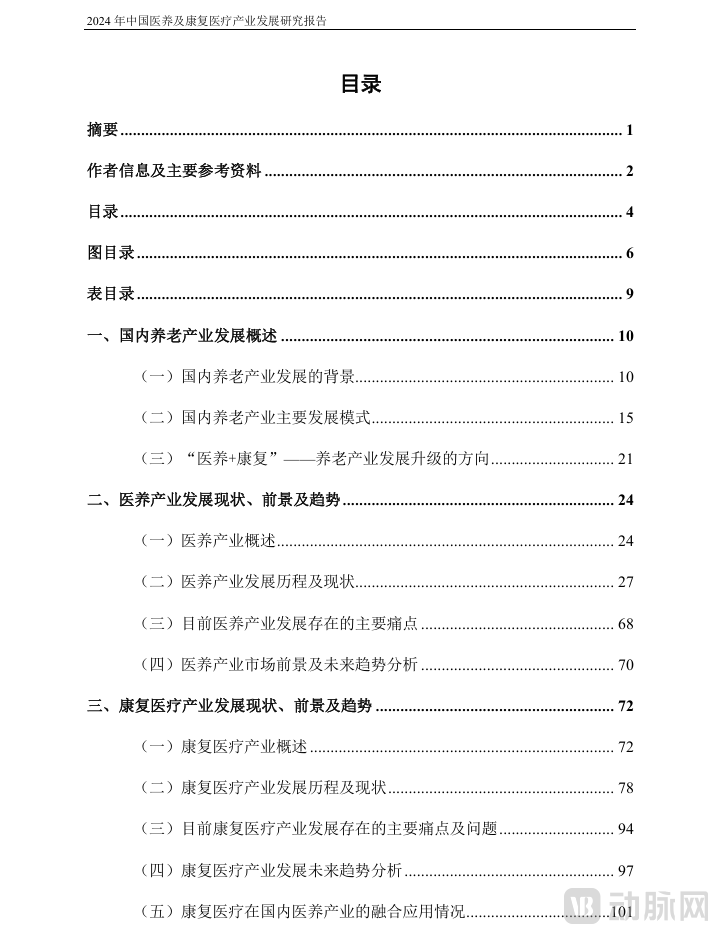
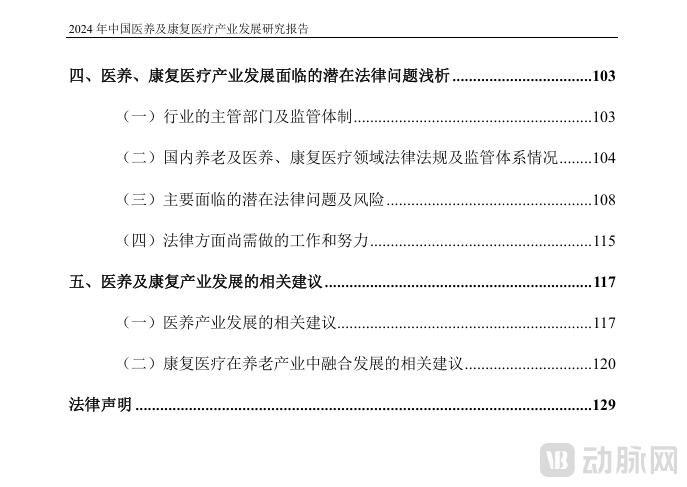
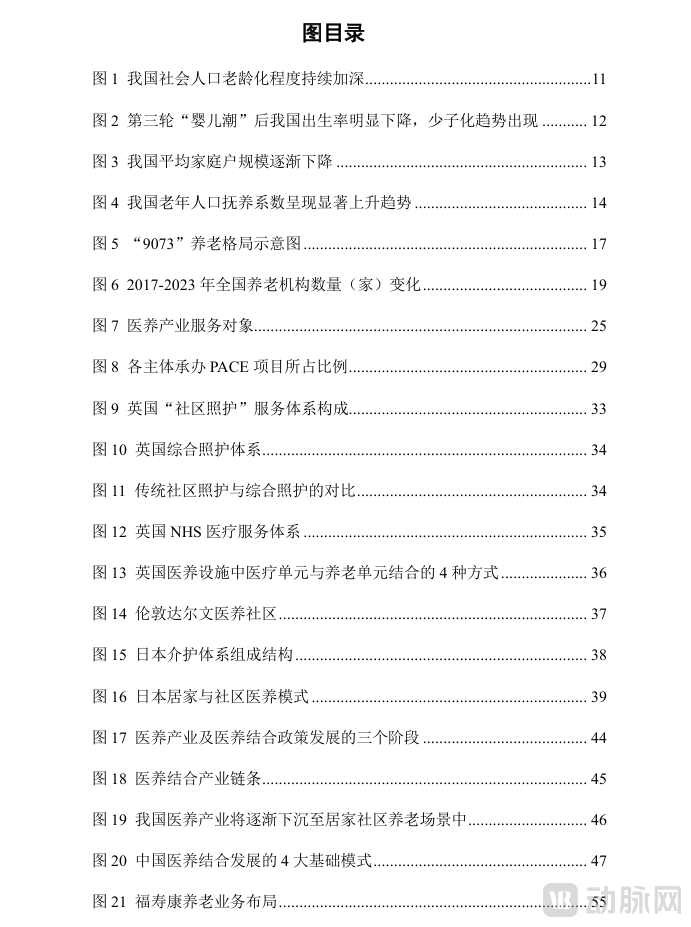
In active pursuit of its original mission to leverage finance in driving high-quality industrial development, the Healthcare Industry Group of Haitong Securities’ Investment Banking Committee, together with Beijing Hairun Tianrui Law Firm, Shanghai Zhongqiao Vocational and Technical University, and VCBeat, proudly hosted the Forum on the Development of the Elderly Care and Rehabilitation Medical Nursing Industry, and released the “2024 Research Report on the Development of China’s Medical-Elderly Care and Rehabilitation Medical Industries,” which provides a detailed account of the current state, opportunities, and challenges facing the domestic medical-elderly care and rehabilitation medical industries.
II. Report Content Summary
In 2023, the proportion of China’s population aged 65 and above reached 15.4%. According to internationally recognized criteria, China has entered a stage of deep aging, with approximately 220 million people aged 65 and above, accounting for about one-quarter of the world’s elderly population. This massive elderly population, compounded by issues such as declining birth rates and advanced aging, not only poses significant challenges to the development of China’s eldercare sector but also creates substantial opportunities for the growth of the silver economy industry.
With the evolution of social structures and industrial transformations, the connotation of elderly care services and models of eldercare have undergone profound changes. Traditional elderly care services primarily focused on meeting basic needs such as food, clothing, shelter, and transportation. Today, however, there is a greater emphasis on seniors’ autonomy, dignity, quality of life, and social participation, aiming to address their multifaceted needs, including health management, social activities, and psychological support. As population aging leads to a growing number of disabled older adults, the importance of medical, nursing, and rehabilitation services within eldercare settings has become increasingly prominent. Currently, however, China’s elderly care services remain disconnected from medical and rehabilitation sectors, resulting in an insufficient supply of high-quality integrated “medical-nursing-rehabilitation” care. Statistics show that the number of disabled individuals aged 60 and above in China has already exceeded 45 million, and is projected to surpass 77 million by 2030. For the very old, particularly those who are disabled, the integrated “medical-nursing-rehabilitation” service model can rapidly respond to urgent medical needs and post-treatment rehabilitation requirements, making its development both necessary and urgent.
However, by the end of 2023, there were fewer than 8,000 integrated medical and elderly care institutions nationwide that held both required credentials (possessing qualifications as medical and health institutions and being registered as elderly care institutions), accounting for less than 20% of the total. There has also been a persistent shortage of long-term care personnel skilled in integrated medical and elderly care. Therefore, the development model integrating elderly care with “medical care + rehabilitation” has become an important direction for the upgrading and development of China’s elderly care industry.
Internationally, medical and elderly care services, as a crucial component of elderly support infrastructure, have evolved into distinct models. The United States has developed the integrated long-term care PACE model, characterized by seamless coordination among prevention, treatment, rehabilitation, daily care, and hospice care. The United Kingdom has established a medical-nursing care system that integrates institutional and community-based care with comprehensive care, jointly delivered by the National Health Service (NHS) and local government Social Services Departments (SSD). Japan, building on its Long-Term Care Insurance system, has developed a model that combines home-based, community-based, and institutional elderly care with medical and nursing services.
China’s aging process began later than in Europe and Japan, so the integrated medical and elderly care service model naturally started later. In 2013, the State Council’s “Several Opinions on Accelerating the Development of the Elderly Care Service Industry” officially recognized the concept of integrating medical and elderly care for the first time, and numerous departments subsequently issued related policies. Despite the late start, the surge in demand has still provided a huge market for industry development. According to statistics, the number of signed partnerships between medical and health institutions and elderly care service institutions across China has reached 87,000. In 2020, the market size of China’s integrated medical and elderly care sector reached RMB 5.7 trillion. According to projections in the “White Paper on China’s Elderly Care Industry” released by the Chinese Academy of Social Sciences in 2016, the scale of China’s elderly care industry is expected to reach RMB 13 trillion by 2030.
After more than a decade of development, China’s integrated medical and elderly care industry has initially established four foundational models: contractual cooperation between medical institutions and elderly care facilities; provision of integrated medical and elderly care services by medical institutions; lawful and compliant delivery of medical services by elderly care institutions; and the extension of medical services to home and community settings. Additionally, represented by Shandong Province, the industry has developed 18 practical models across three major scenarios: institutional, community, and home-based integrated medical and elderly care.
Despite these advancements, the development of China’s medical-elderly care industry still faces numerous pain points and deficiencies. These include the disconnect between medical and elderly care services, the need to improve industry standards and regulatory frameworks, insufficient staffing of medical and nursing professionals along with inadequate allocation of related medical resources, a shortage of specialized medical-elderly care institutions that are predominantly concentrated in economically developed cities, limited fundraising capabilities and payment levels, weak overall profitability, and unproven business models. As society increasingly recognizes the critical importance of integrating medical and elderly care within aging-care scenarios, the industry boasts broad prospects for growth. Meanwhile, driven by diversifying demands and technological progress, the application of intelligent technologies such as AI, alongside traditional approaches like Traditional Chinese Medicine (TCM), will become key drivers of innovative development in the sector.
The concept of modern rehabilitation medicine began to take shape in the early 20th century. China introduced the modern rehabilitation medical system in the 1980s, and its development entered a fast track following the 2008 Wenchuan earthquake. After nearly 40 years of development, China’s rehabilitation medical system has established a three-tier operational framework comprising rehabilitation departments in tertiary hospitals, rehabilitation departments in secondary hospitals (or specialized rehabilitation hospitals), and community rehabilitation centers (outpatient clinics) or home-based rehabilitation services. Additionally, it has formed an integrated industrial chain encompassing rehabilitation materials, rehabilitation equipment and devices, tele-rehabilitation and information technology services, rehabilitation hospitals, and rehabilitation service institutions.
Among these, the upstream rehabilitation equipment industry has achieved a certain scale of development, yet it still faces the challenges of a high proportion of low- to mid-end products and a shortage of high-end offerings. Meanwhile, rehabilitation medical service institutions are characterized by a late start but rapid growth. In 2010, China had only 268 rehabilitation hospitals with a total staff of 18,547; by 2021, the number of rehabilitation hospitals had increased to 810, with total staffing reaching 87,507, representing more than a fourfold increase in both metrics.
From the perspective of ownership structure, private capital has contributed significantly to the development of rehabilitation medicine. In 2010, there were 150 public rehabilitation hospitals in China, accounting for 55.97%, while there were 118 non-public rehabilitation hospitals, accounting for 44.03%. By 2021, the number of public rehabilitation hospitals had increased to 182, with their share declining to 22.47%, whereas non-public rehabilitation hospitals grew rapidly to 628, with their share rising substantially to 77.53%. Driven by growing demand and expanding supply, the market size of China’s rehabilitation medical industry has continued to rise. According to statistics, the market size of China’s rehabilitation medical service industry was approximately RMB 101.1 billion in 2021 and is expected to reach RMB 268.6 billion by 2025, indicating broad growth potential for the overall market in the future.
However, China’s rehabilitation medicine industry remains in its early stages of development, with numerous shortcomings. For instance, while the rehabilitation equipment manufacturing sector has begun to take shape, it remains relatively fragmented, and high-end products are dominated by foreign brands. Although the supply of rehabilitation medical resources has improved significantly, challenges such as insufficient total volume and uneven distribution persist. In terms of payment capacity and per capita expenditure, China’s per capita spending on rehabilitation medical care is only about one-tenth of that in the United States. Moreover, only 29 rehabilitation-related items are covered under the national basic medical insurance system, representing a low proportion, while commercial insurance coverage remains extremely limited. These industry pain points constrain the sustainable and healthy expansion of China’s rehabilitation medicine industry.
In the future, driven by demand and empowered by new technologies, the rehabilitation medical industry is expected to witness new trends. For instance, against the backdrop of booming emerging technologies, innovative solutions such as AI, robotics, and brain-computer interfaces will provide unprecedented opportunities for the development of high-end rehabilitation equipment; emerging technologies like cell therapy may hold significant promise in areas such as anti-aging, tissue repair, and degenerative diseases; and rehabilitation medical resources will accelerate their decentralization to lower-tier markets, presenting a prime opportunity for the growth of community-based primary care rehabilitation.
In the context of integrated elderly care and rehabilitative medicine, there is a heightened risk of infringing upon the rights and interests of the elderly population and triggering related disputes. Furthermore, the payment system may face various compliance risks, including those related to medical insurance regulations. In the future, regulatory authorities, market operators, and professional legal institutions can take proactive measures—such as improving policy and regulatory frameworks, conducting legal education campaigns for the elderly, and enhancing judicial remedies and legal aid—to jointly promote the high-quality and healthy development of the industry.
1. Promoting the integrated development of medical care, health management, and elderly care to mutually empower each sector and enhance the efficiency of elderly care services. Government departments may appropriately facilitate the transformation of select primary and secondary hospitals in areas with abundant medical resources into nursing homes or rehabilitation hospitals, encourage contractual cooperation between healthcare institutions and elderly care service providers, and leverage market mechanisms to attract greater investment from social capital, thereby coordinating and advancing the integrated development of medical care, health management, and elderly care.
2. Rooted in the Healthy China development strategy, coordinate and plan the overall development of the integrated medical and elderly care industry. Gradually improve the policy and regulatory framework for the medical, health, and elderly care service industry, formulate industry standards and guidelines that take into account national conditions and public livelihood needs, refine rules and implementation measures, and strengthen standardization and guidance for industrial development.
3. Strengthen the cultivation of professional nursing and rehabilitation talent. Accelerate the training of personnel in high-demand fields, encourage general universities and vocational colleges to add relevant specialized courses, and intensify efforts to recruit qualified instructors. While ensuring the quality of education, appropriately expand enrollment scales. Additionally, incentivize medical professionals, particularly retired healthcare workers, to enter the integrated medical and elderly care service sector, thereby addressing the shortage of qualified personnel.
4. Promote the comprehensive implementation of the long-term care insurance system and establish a financing mechanism with reasonable cost-sharing among all parties. The long-term care insurance system has effectively alleviated the caregiving and financial burdens on families of disabled individuals, while significantly easing the strain on rehabilitation medical resources in public hospitals. China should appropriately draw on the cost-sharing mechanisms of countries such as Japan, in light of its national conditions, to accelerate the establishment of policies for the long-term care insurance system.
5. Prioritize the geriatric rehabilitation medical industry at the strategic level and reverse the prevailing mindset of “prioritizing treatment over rehabilitation.” Emphasize reshaping perceptions on the demand side of the industry, recognizing the principal role of service recipients and the importance of building corresponding service systems. Launch public education campaigns to enhance public awareness and acceptance of rehabilitative medical care.
6. Based on the national context of “getting old before getting rich,” explore a geriatric rehabilitation service model with Chinese characteristics, building upon the existing three-tier rehabilitation diagnosis and treatment system. On the policy front, establish and improve laws, regulations, and policies; on the talent front, provide comprehensive support for the cultivation of professional rehabilitation therapists; on the payment front, coordinate a diversified payment system with systematic participation from various payers, and upgrade and optimize payment models; on the social participation front, encourage all sectors to actively engage in the geriatric rehabilitation medical industry, draw on diverse strengths, and accumulate incremental progress to propel the industry into a new stage of development.
7. Learn from advanced international industrial models to address gaps in China’s rehabilitation service model. Develop an integrated “treatment, rehabilitation, and elderly care” one-stop service model, acknowledge the growing demand for hospice care, establish a tiered hospice care service system, and further advance the development of hospice care service models with Chinese characteristics.
III. Image Gallery

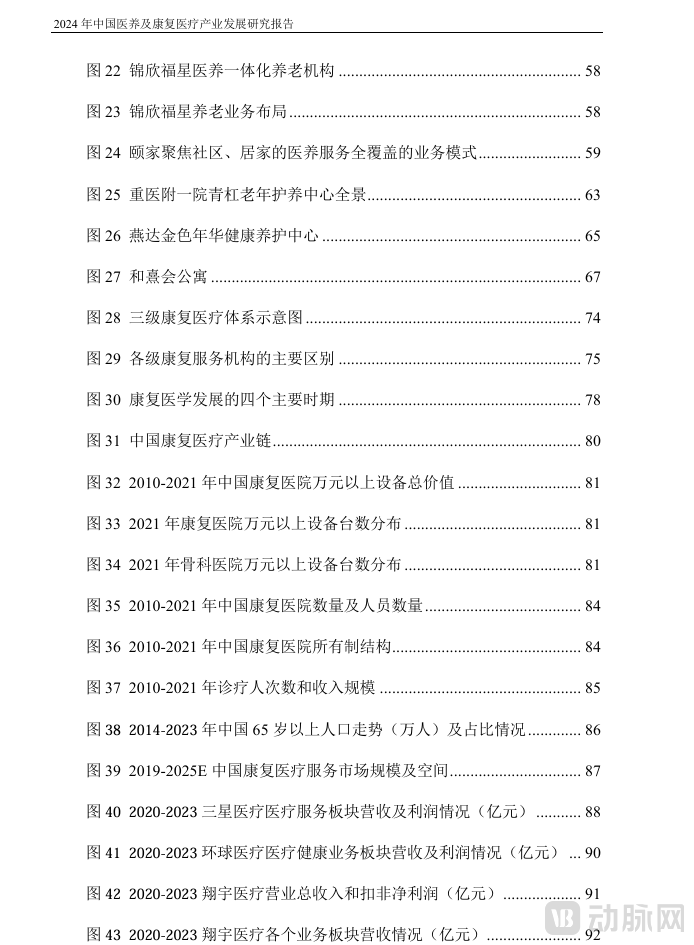
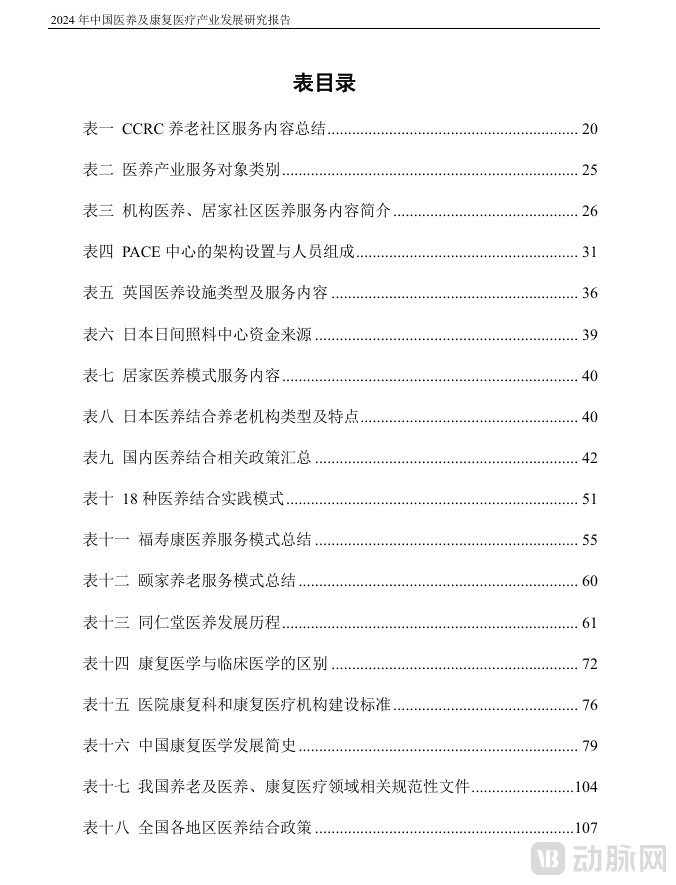
Note: The authors of this article include the Healthcare Industry Group of the Investment Banking Committee at Haitong Securities (content contributed by Hu Xuan, Deng Wei, Shen Sheng, Cai Xinxiian, Chen Dongyang, Shu Kejing, Dai Yang, and Wang Zhe; report cover designed by Zheng Min); Wang Zhen from Beijing Hairun Tianrui Law Firm; and Xiong Chuan, a partner at a prominent law firm. In addition, VCBeat and its affiliated VCBeat Research Institute provided relevant data support and suggestions during the preparation of this report.