

Tianjin University Unveils Groundbreaking Preoperative Planning Platform for Robotic-Assisted Hiatal Hernia Repair
Recently, Tianjin University Published a New Patent for a Preoperative Planning System for Robot-Assisted Surgery.
This patent discloses a preoperative planning platform for robot-assisted hiatal hernia repair, which validates the effectiveness of preoperative planning algorithms through surgical simulation, assists surgeons in performing tasks such as trocar placement and initial pose positioning for the surgical robot, and thereby enhances the safety and reliability of robotic surgery.
Hiatal Hernia (HH) is a common digestive system disorder, typically presenting with symptoms such as heartburn, acid regurgitation, food regurgitation, abdominal pain, and chest tightness. Contributing factors include, but are not limited to, advanced age (individuals over 50 years old are at high risk, with patients aged 70 and above accounting for 70% of cases), obesity, smoking, chronically elevated intra-abdominal pressure (e.g., due to chronic constipation, severe coughing, or frequent hiccups), post-surgical hiatal hernia, and traumatic hiatal hernia.
Smaller hypothalamic hamartomas (HH) are usually asymptomatic and can be managed conservatively with medication. For larger HHs that respond poorly to medical therapy, surgical intervention is the only treatment option.
In recent years, laparoscopic hiatal hernia (HH) repair has become a routine clinical practice; however, it still presents certain limitations and drawbacks, such as limited operative space, restricted instrument maneuverability, amplification of physiological tremor, insufficient precision during delicate maneuvers like suturing, knot tying, and mesh fixation, as well as a steep learning curve for surgeons.
With the continuous advancement of robotic technology, robot-assisted laparoscopic hiatal hernia repair combined with fundoplication can be performed to close the “defect.” Robot-assisted hiatal hernia repair is a minimally invasive surgical procedure that utilizes high-precision robotic arms and advanced imaging techniques to complete the operation through small incisions. This approach offers several advantages, including reduction of intraoperative human error, improved surgical success rates, minimized tissue trauma and bleeding, accelerated recovery, and reduced risk of postoperative complications.
Among these, preoperative planning is one of the key steps for surgical success. It involves selecting the initial pose of the robotic arm based on the patient’s individual characteristics and the type of surgery, as well as establishing appropriate surgical access routes to ensure that the robot’s end-effector can smoothly reach the patient’s lesion site.
However, current studies mostly validate the efficacy of preoperative planning algorithms in virtual environments, lacking equivalent simulated surgical experiments. Since virtual surgical environments cannot fully replicate complex factors such as tissue deformation and physiological responses encountered in real surgeries, surgeons may underestimate potential difficulties and risks during actual procedures.
To address this pain point, the Tianjin University team has improved the existing surgical simulation platform—
First, it realistically replicates the scenario of robot-assisted surgery by adjusting the abdominal wall shape in the CT 3D reconstruction model, while the 20° tilt angle of the base simulates the patient’s actual surgical position, providing a solid validation foundation for preoperative planning algorithms;
Secondly, the platform delineates the instrument incision planning area based on medical consensus and designs corresponding cutout areas on the rigid pneumoperitoneum shell, thereby enabling more precise initial instrument positioning and simulation of surgical procedures.
Furthermore, the platform’s magnetic navigation sensors can record the trajectory information of surgical instruments during simulated procedures, which is crucial for evaluating the effectiveness of preoperative planning algorithms;
Finally, the opening and closing mechanism of the rigid pneumoperitoneum shell, combined with the independently designed hiatal suture patch, makes it simple and quick to replace components and simulate different surgical scenarios, greatly enhancing the flexibility and effectiveness of preoperative planning.
These features collectively constitute an efficient, realistic, and user-friendly preoperative planning system, which is expected to significantly improve the success rate and safety of surgical procedures.
Publicly available information indicates that Tianjin University is currently the only institution developing a preoperative planning platform specifically designed for robot-assisted hiatal hernia repair, with no comparable products currently on the market.
Using this patent published by Tianjin University as a starting point, VCBeat’s Orange Bureau takes a brief look at the application of surgical robots in hiatal hernia repair.
According to publicly available information, robotic systems currently used in China for hiatal hernia repair include the foreign-made da Vinci system and the Toumai system developed by Shanghai MicroPort MedBot (Group) Co., Ltd.®Four-Arm Laparoscopic Surgical Robot.
As the “pioneer” of surgical robots, the da Vinci system needs no further introduction. Here we discuss Toumai®The four-arm laparoscopic surgical robot is slightly deployed.
MicroPort's self-developed Toumai®Four-Arm Laparoscopic Surgical Robot is a laparoscopic surgical system designed and developed for a wide range of surgical procedures, enabling the completion of complex surgeries through minimally invasive approaches. With advantages such as glasses-free 3D high-definition visualization, high-magnification tissue imaging, flexible robotic arms, and intuitive motion control, it assists surgeons in achieving the most realistic operative experience and synchronized eye-hand-instrument coordination. Additionally, equipped with wristed surgical instruments that surpass the dexterity of the human hand, it enables counter-articulation maneuvers beyond the capability of the human wrist, thereby helping surgeons perform more precise and minimally invasive procedures.
Approved for market launch by the National Medical Products Administration (NMPA) in October 2023, this surgical robot is currently the first and only four-arm laparoscopic surgical robot developed and approved for commercialization by a Chinese enterprise.
According to publicly available data, currently TuMai®The four-arm laparoscopic surgical robot has cumulatively assisted in over 1,500 high-difficulty clinical surgeries across more than 60 hospitals in 21 provinces (autonomous regions and municipalities) throughout China. These procedures span multiple specialties, including urology, general surgery (gastrointestinal surgery, hepatobiliary and pancreatic surgery, thyroid and breast surgery), thoracic surgery, gynecology, and pediatrics, marking the achievement of large-scale surgical adoption.
On April 23, 2024, Dr. Wang Jun, Director of the Department of Pediatric Surgery at Xinhua Hospital Affiliated to Shanghai Jiao Tong University School of Medicine, at Toumai®With the assistance of a four-arm laparoscopic surgical robot, hiatal hernia repair combined with fundoplication was successfully performed on an 11-month-old infant, marking the first time a domestically produced laparoscopic surgical robot has completed this procedure in the field of pediatric general surgery.
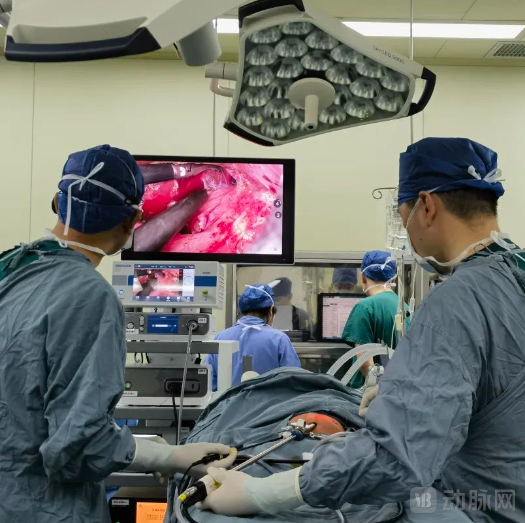
Toumai®Robotic-Assisted Repair of Infant Hiatal Hernia, Image from MicroPort Robot