

Indonesia's First IVD Company UBC Medical Soars Over 30% on Market Debut

UBC Medical
Distributor of in vitro diagnostic instruments, consumables, and reagents
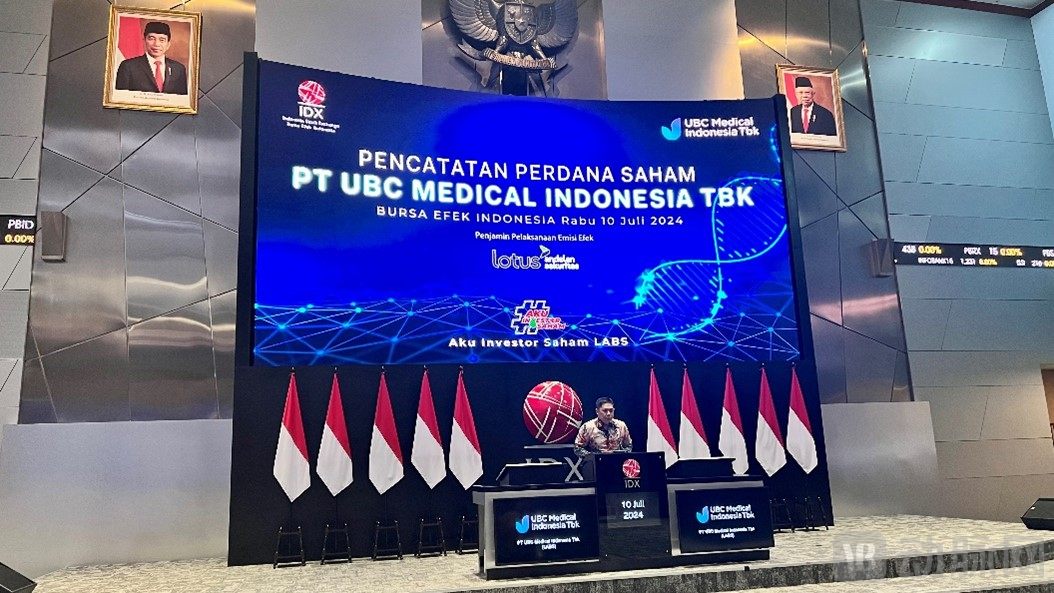
On July 10, local time, Indonesian in vitro diagnostics (IVD) company UBC Medical (LABS) officially listed on the Indonesia Stock Exchange, becoming the country’s first IVD stock.
In Indonesia, the listing of UBC Medical marks a new phase in the development of the local IVD industry, drawing significant attention from the sector. Data shows that during the IPO process, UBC Medical’s shares were oversubscribed by more than 60 times. On its first day of trading, the company’s stock price hit the upper limit with a 34.31% increase at the opening. It is understood that UBC Medical issued 700 million shares in this IPO, raising IDR 700 billion (approximately RMB 35 million). The proceeds will be entirely used for the company’s operational activities and business development.
Founded in 2014, UBC Medical started as a medical device distribution business, specializing in the agency sales of in vitro diagnostic (IVD) instruments, consumables, and reagents. The company bridges biotechnology manufacturers from countries such as the United States, Japan, and China with local channel networks on one end, and connects to laboratories across Indonesia on the other, delivering the world’s most advanced medical testing technologies. Prominent life science companies, including QIAGEN from the United States, Nipro from Japan, and Sansure Biotech from China, are key suppliers of UBC Medical. Today, UBC Medical has become a leading provider of infectious disease and congenital anomaly testing solutions in Indonesia.
Notably, UBC Medical has maintained close collaboration with Chinese enterprises. In recent years, as the volume of medical testing in Indonesia—particularly in newborn screening and infectious disease prevention and control—has continued to rise, UBC Medical has also invested in product development. This approach aligns well with the efforts of Chinese companies to establish localized production capabilities overseas. At the end of 2022, UBC Medical signed a memorandum of understanding on localized production cooperation with Sansure Biotech, introducing Sansure’s molecular diagnostic technologies for local manufacturing in Indonesia. In 2023, the jointly built local production facility officially commenced operations.
Yoshua Raintjung, President and Director of UBC Medical, stated that the company’s financing capabilities and corporate governance strategy would be further enhanced through its IPO. “Over the past three years, as one of the leading suppliers of neonatal screening products and solutions for latent tuberculosis infection (LTBI) in Indonesia, UBC Medical has steadily built its reputation in the medical device market.”
Dr. Dai Lizhong, Chairman of Sansure Biotech, was invited to attend the listing ceremony. Dr. Dai noted that the comprehensive strategic partnership between Sansure Biotech and UBC Medical has entered its third year. By exporting innovative Chinese technologies and training local industrial workers and technical professionals, the company aims to help Indonesia build a national disease prevention and control network, establish national diagnostic and treatment standards, and provide more accessible healthcare solutions for the Indonesian people.
Legend Capital has long focused on Indonesia’s healthcare innovation market and participated in the investment in UBC Medical’s parent company. Qi Fei, Executive Director at Legend Capital, stated that the current IVD market in Indonesia closely resembles the situation in China two decades ago, when the first Chinese IVD company went public. As the first IVD company to be listed in Indonesia, UBC Medical represents a significant milestone. It is believed that an increasing number of Indonesian IVD enterprises will subsequently enter the capital markets, leading to greater industry maturity. For domestic healthcare companies, paying attention to localized manufacturing opportunities unique to Indonesia, identifying suitable partners, and promoting the overseas expansion of products and technologies constitute a sound strategy for going global.
From Distributors to Localized Suppliers
UBC Medical represents the most advanced nationwide medical testing and laboratory capabilities in China.UBC Medical is headquartered in Jakarta, the capital of Indonesia. Centered in this largest city in Southeast Asia, UBC Medical’s medical testing services for infectious diseases, genetic disorders, tumors, and prevalent chronic conditions cover more than 15 cities across Indonesia.
During its first decade, UBC Medical established a strong brand reputation and market influence locally by distributing the world’s most advanced medical diagnostic products and rapidly responding to government demands for various disease prevention and control initiatives.
Specifically, by introducing the world’s most advanced testing and inspection technologies, UBC Medical primarily provides diagnostic services for various diseases, including tuberculosis, cervical cancer, neonatal genetic disorders, and fundus diseases. For instance, in tuberculosis testing, UBC Medical offers both screening programs for high-risk populations and specific diagnostic solutions for healthcare institutions. Similarly, in cervical cancer detection, UBC Medical provides state-of-the-art HPV DNA testing to enable early screening for cervical cancer.
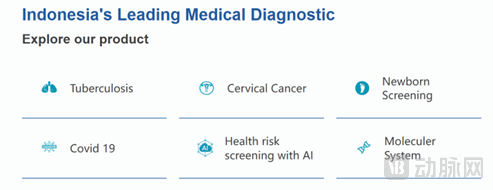
Medical Testing Services Provided by UBC Medical Image Source: Official Website of UBC Medical
UBC Medical is a key partner of the Indonesian government in health management and disease prevention and control.Since obtaining its medical device distribution license in 2016, UBC Medical has maintained close collaboration with various Indonesian government agencies to support their healthcare security needs. For instance, from 2017 to 2018, UBC Medical served as a procurement supplier for the research and development of cervical cancer treatment under the Indonesian Ministry of Health. During the subsequent COVID-19 pandemic, UBC Medical also became a supplier of COVID-19 testing laboratories for the Indonesian Ministry of Defense.
In recent years, driven by the goal of achieving “Golden Indonesia 2045,” the Indonesian government has placed greater emphasis on safeguarding public health, allocating substantial portions of its healthcare budget to health promotion and disease prevention programs. This initiative has significantly boosted the local medical device industry, enabling UBC Medical to rapidly identify its second growth curve.
In 2022, UBC Medical was selected by the Indonesian Ministry of Health as one of seven suppliers for vertical hospital laboratories under the neonatal procurement program. Within the framework of the Congenital Hypothyroidism Screening (SHK) initiative, it provided medical devices for newborn screening to Regional Health Offices. To enhance the local production capacity of neonatal testing equipment and consumables, UBC Medical established its subsidiary, Esora Medika, and signed a strategic cooperation agreement with Sansure Biotech, embarking on an upgrade path toward localized manufacturing and transformation.
The following year, UBC Medical became the first diagnostics company to achieve localized production and was selected as a supplier for Indonesia’s Tuberculosis-Free Screening Program 2030 (“Indonesia TB 2030”), providing complimentary HPV (human papillomavirus) and TB (Mycobacterium tuberculosis) screening products to the Director General of P2PTM (Non-Communicable Disease Prevention and Control).
Following its IPO, UBC Medical has entered a new phase of operations. In addition to Esora Medika and the Indonesian subsidiary of Sansure Biotech mentioned earlier, UBC Medical is actively exploring local technology transfer and production possibilities for other categories of medical diagnostic products. For Chinese medical innovation enterprises, the localization opportunities emerging from the healthcare industry transformation in Southeast Asia’s largest country are certainly worth attention.