

Youth Scientists & Entrepreneurs Forum (Shuang Jing Hui) to Unveil, Driving Future Development through Industry-Academia Synergy
Over the past year, the pharmaceutical and healthcare industry has entered a period of adjustment. Against the backdrop of weakening expectations and a cooling capital market, many companies have chosen to strategically contract and proactively lie low to “weather the winter.” In contrast,In the field of life sciences, various cutting-edge technologies have emerged, including AI-based protein prediction, gene editing, and brain-computer interfaces.Providing a powerful boost to the development of the biopharmaceutical industry and energizing the sector.
On one side, capital has turned cold; on the other, technology is heating up.Academia and industry need to achieve deep integration through mutual, bidirectional engagement.Yet the question before us is this: as we stand at the threshold of a new era of revolution, confronting the surging tides in frontier and high-profile sectors,How can the most promising technologies be transformed into industrial power? Which high-value innovative achievements await market exploration?"Following the trajectory of the global technology tree, how many more years can the current sector remain competitive?"Where Exactly Do the Market Opportunities Lie in the Pharmaceutical and Healthcare Industry?
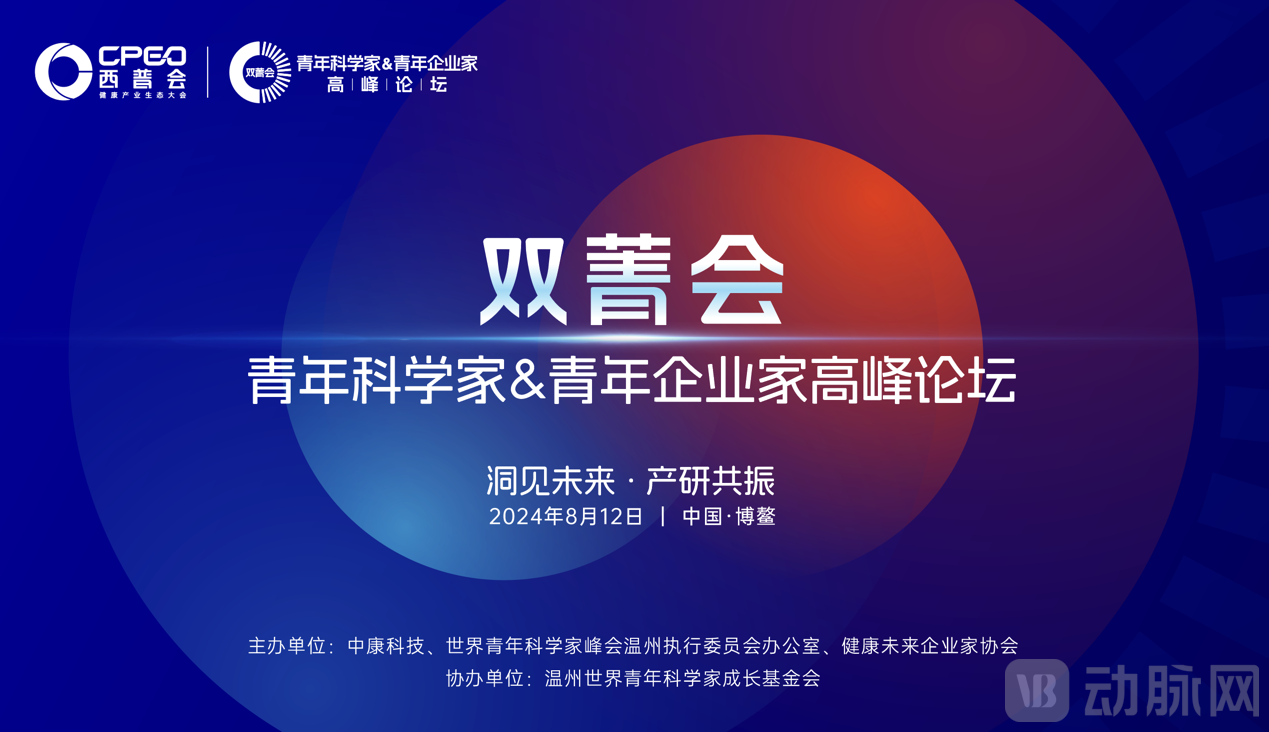
To this end, as the largest and most influential forward-looking industry event in China’s health sector, the XiPu Conference will host the “Insights into the Future, Industry-Research Resonance – Shuangjinghui · Young Scientists & Young Entrepreneurs Summit Forum” on August 12. Bringing together top young scientists and entrepreneurs in China, the forum will focus on hot frontier topics in the life sciences, sparking a meeting of minds between emerging scientific research forces and contemporary business powers, and driving the integration of industry and research to jointly stimulate new quality productive forces.
The scientist guests attending this conference are not only young but also boast outstanding academic achievements, having become the global representatives of China’s new generation of innovative forces.For example, Bai Rui, an Associate Research Fellow at the School of Life Sciences, Westlake University, who studied under Academician Shi Yigong, was named one of the “World’s Most Promising Female Scientists” at the age of 27 and has overcome multiple world-class scientific challenges. Meanwhile, Professor Liu Xiuyun, Dean of the School of Pharmaceutical Science and Technology at Tianjin University,Already the "youngest dean of a 985 university" in China, has been deeply engaged in the field of brain-computer interfaces (BCI) for many years. As the chief scientist of a National Key R&D Program project, he/she has contributed core technological innovation (“chip”) and fundamental theoretical breakthroughs (“soul”) to China’s BCI industrial system, with related research ranking among the world’s leading levels.
In April this year, a research team led by Cheng Xin, a researcher at the Center for Excellence in Molecular Cell Science of the Chinese Academy of Sciences, published their latest findings. They successfully cured a patient with severely impaired islet function due to diabetes by transplanting autologous regenerative islet tissue derived from stem cells. The patient has been completely free from insulin therapy for 33 months.This global first has also become a world-class innovation achievement of “Intelligent Manufacturing in China.”
In June, Professor Zhao Xingming’s team from the Institute of Science and Technology for Brain-inspired Intelligence at Fudan University, in collaboration with scientists from the United States and Germany, integrated artificial intelligence with biomedicine to predict nearly one million novel antimicrobial peptides from global microbiomes. Their findings were published in the prestigious journal Cell. This study providesDiscovery of Next-Generation Antimicrobial Agents (Nucleic Acid- and Peptide-Based) Urgently Needed by HumansOpened up new pathways.
The advent of gene-editing tools has brought hope for the treatment of various rare diseases, with novel gene-editing therapies accelerating their transition from the laboratory to clinical practice. Notably, a company co-founded by Professor Chen Jia, Director of the Center for Gene Editing at the School of Life Science and Technology, ShanghaiTech University, has successfully cured a patient with severe beta-thalassemia using gene-editing technology.This marks the world’s first cure for hemoglobinopathy using base editing therapy.
In addition to scientists developing new technologies,The conference also brought together young entrepreneurs and investors dedicated to commercializing new technologies,They are the backbone driving the development of new-quality productive forces. For instance, BrainCo, co-founded by Harvard Ph.D. He Xiyujin, specializes in brain-computer interfaces and human-computer interaction; its smart bionic hand was named one of “TIME’s 100 Best Inventions of 2019.” Zhu Fangfang, an associate professor at Shanghai Jiao Tong University and founder of Xueji Biotech, established China’s first cell therapy company focused on ex vivo regenerated platelets. The conference also featured guests from leading domestic investment firms, including Qi Fei, Partner at Legend Capital, and Du Zhou, Partner at Warburg Pincus.
According to the Organizing Committee of the Westpharm Conference, this Shuangjing Conference will conduct in-depth discussions on five cutting-edge topics of mutual interest to academia and industry: AI + biology, brain science, gene editing, mRNA technology, and stem cells and regenerative medicine.
AI + Biology: Everything is AI, the Biological Century Has Arrived
A new wave of technological innovation centered on artificial intelligence has arrived, poised to bring revolutionary changes to the pharmaceutical and healthcare industry.In terms of treatment, the integration of gene editing technology with AI enables more precise and effective disease management; in the pharmaceutical sector, the convergence of AI and biotechnology has broken through the limitations of traditional drug development. This forum will invite distinguished scientists and entrepreneurs from the field to explore industry applications of “AI + Biotech” and make bold predictions about future development directions.
Brain Science: Unlocking the Brain’s “Black Box” to Conquer Disease “Black Holes”
As the central hub for regulating life activities, the brain has long been regarded as a critical regulator. With the explosive growth of artificial intelligence technology, there is an increasingly urgent drive to explore brain function, aiming to treat brain disorders by understanding how the brain works.But how can we unravel the myriad mysteries within the brain to bring benefits to humanity?Scientists and entrepreneurs at the forefront of innovation will unveil their secrets on-site.
Gene Editing: “Magic Scissors” Break Boundaries, Genes No Longer Fixate Life
CRISPR/Cas9, hailed as “genetic scissors,” can target and correct “typos”—that is, disease-causing genes—within the three-billion-letter sequence of the human genome, thereby enabling the treatment of a wide range of diseases. Its ease of use, low cost, and high controllability have ushered in a new era for the gene-editing field. In this context, scientists and entrepreneurs will center their efforts aroundCurrent Applications, Technical Challenges, and the Industry of Gene EditingShare insights on topics such as these.
mRNA Technology: mRNA Brings Good News, Ushering in the Third Pharmaceutical Revolution
mRNA technology is considered to have ushered in the third pharmaceutical revolution. In the view of academia and industry, mRNA can be developed into vaccines or therapeutics for application inPrevention of Infectious Diseases, Tumor Immunotherapy, Protein Replacement Therapy, and Gene Editing for the Treatment of Genetic Disorders, it has become a key strategic focus for major pharmaceutical and biotechnology companies. The forum will showcase advanced global R&D practices, helping enterprises identify pathways that harmonize basic research with industrial application.
Stem Cells and Regenerative Medicine: Redefining the Body, Recreating the Miracle of Life
With the advent of an aging society, the incidence of diseases is rising. How can we promote human health and improve disease treatment? People have high expectations for stem cells and regenerative medicine. From the perspective of the scientific community,Stem cells, capable of unlimited expansion and known as "universal cells," hold immense potential in the treatment of major diseases.This forum will showcase the latest research achievements in stem cells, exploring the application prospects and optimal implementation pathways for regenerative medicine.
The integration of industry and R&D is the key to achieving a qualitative leap in the life sciences industry. As a forward-looking leader in the health industry, the West Lake Conference on Pharmaceutical Industry (Xipu Hui) hosts the Young Scientists & Young Entrepreneurs Summit Forum,Building a Platform for Intellectual Exchange and Wisdom Interaction Between Young Academic Leaders and Young Industry LeadersThis forum is jointly hosted by SinoHealth, a well-known digital technology company in the industry; the Executive Office of the World Young Scientists Summit (Wenzhou); and the Health Future Entrepreneurs Association. It focuses on linking basic research with applied research, translating scientific achievements, innovating models of scientific collaboration, and facilitating the mobility of research talent, thereby promoting the integration of industry and research and driving industrial development.
On August 12, the “Young Scientists & Young Entrepreneurs” (Shuangjing Hui) Summit will be held as scheduled, promising to deliver a feast of ideas for elites across the health industry.
