

Hong-E Medical Aims to Solve Three Major Nursing Challenges Through R&D Investment, System Building, and Capital Commitment
The deepening of population aging has propelled the nursing care industry to new heights, while also bringing numerous developmental challenges to the forefront.
On one hand, from in-hospital treatment and nursing care to out-of-hospital rehabilitation follow-up, from monitoring and early warning of abnormal indicators in chronic disease management and patient health education, to rehabilitative nursing in elderly care and even palliative care in hospice services, nurses are among the key roles enabling the healthcare system to function effectively.
On the other hand, despite their critical role, China continues to face a substantial shortage of nurses. According to data from the National Health Commission, by the end of 2023, the total number of registered nurses nationwide had reached 5.63 million, with 4 registered nurses per 1,000 population; however, the nurse-to-physician ratio remained below 1:1.2. Furthermore, relevant reports estimate that the national nursing shortfall has approached 4 million.
The massive staffing gap is merely the tip of the iceberg in the challenges facing the nursing profession. For instance, in stark contrast to their critically important job responsibilities is a pervasive sentiment among nurses: a “lack of sense of value.”
“We are only allowed one and a half days off per week and must also work night shifts. Yet our workload is fundamentally different from that of the average person; there is simply no time to recover in a single day. Even so, we feel invisible and undervalued.” In a report by CNR News (Yangguang Wang), such a case study of a grassroots nurse was shared.
In summary, we can draw one conclusion: the development of the nursing profession faces at least three major challenges—staff shortages, high work intensity, and a lack of professional fulfillment. These issues have caught the attention of Shanghai New Hongyi Medical Technology Co., Ltd. (hereinafter referred to as “New Hongyi Medical”).
Xinhongyi Medical’s attention to the developmental challenges faced by nurses is closely related to its core business—Established in 2015, New Hongyi Medical primarily provides intelligent healthcare service solutions tailored to diverse scenarios, assisting governments, medical schools, health commissions, hospitals, and brand manufacturers in delivering superior medical services to patients and families.
Starting from its core business—providing consulting, design, and development services to over 90% of global medical imaging consumable brands—Xinhongyi Medical has expanded its capabilities into fields such as cardiology, electrophysiology, dermatology, endocrinology, wound and ostomy care, PICC, digital therapeutics (DTx), contract research organizations (CRO), artificial intelligence (AI), supply, processing, and distribution (SPD), nuclear medicine, nephrology, nutrition, organ transport, and transplantation.
To date, New Hongyi Medical has cumulatively invested nearly RMB 100 million in research and development, securing more than 100 intellectual property rights.Its portfolio of over 60 developed products has served more than 6,000 medical institutions. Meanwhile, New Hongyi Medical has provided cloud storage and big data analytics services to over 700 hospitals across China, and has established a healthcare-based big data network in more than 22 cities and counties nationwide.
In other words, through collaborations with hundreds of cities and counties across dozens of municipal and county-level regions, New Hongyi Medical has gradually gained insight into the challenges faced by nurses. This has also prompted Luo Yuanliang, founder of New Hongyi Medical, to reflect on how the company can leverage its industry experience and core competencies to help nurses overcome these difficulties.
In Qingdao on June 30, 2024, Xin Hongyi Medical and the Shandong Luwei Nursing Research Center unveiled the answer to this question.At the “Second Council Meeting of Shandong Luwei Nursing Research Center and Inaugural Conference of New Red Doctor (Shenzhen) Nurse Care Group” held on that day,Xinhongyi Medical and the Shandong Luwei Nursing Research Center invited over 160 corporate representatives, experts, and scholars from home and abroad in the nursing field to jointly explore the informatization and standardization of nursing services, the construction of quality control systems, and the practice and application of intelligent nursing.
Meanwhile,Xin Hongyi Nursing Group was also officially established in the presence of hundreds of industry practitioners on site.Luo Yuanliang also provided a detailed overview of the core business and key innovations of New Hongyi Nursing Group.
Let’s turn the clock back to June 30 and join Luo Yuanliang as he shares insights into the world of New Hongyi Nursing Group.
The support provided by New Hongyi Nursing Group for nurses' career development can be described in two words: "comprehensive."
First, what are the main aspects of nurses' career development? The most important one is undoubtedly their core job responsibilities. In this regard,Leveraging the industry expertise and capabilities accumulated by New Hongyi Medical over many years of dedicated practice in the integrated field of medical informatics hardware and software, New Hongyi Nursing Group is primarily positioned to provide digital tool support for nurses’ daily workflows.
Specifically, New Hongyi Medical has launched an all-scenario medical service super all-in-one machine—the “Intelligent Medical Service Workstation.”This workstation features film clip functionality, split-screen display, multi-touch capability, a 3D structured light camera, as well as fingerprint recognition and electronic signature functions. It supports physicians in conducting offline consultations, prescribing medical orders, performing online follow-up visits, facilitating remote consultations, and enabling precise viewing of medical images such as radiology, ultrasound, endoscopy, and pathology.
The “Intelligent Medical Service Workstation” is applicable to various nursing-side operations, including patient registration, triage, guidance, nursing care, medical order processing, medical record management, and consultation. According to Luo Yuanliang, the adoption of the “Intelligent Medical Service Workstation” will improve nurses’ daily work efficiency by more than 40% and reduce the labor intensity of follow-up services by over 90%.
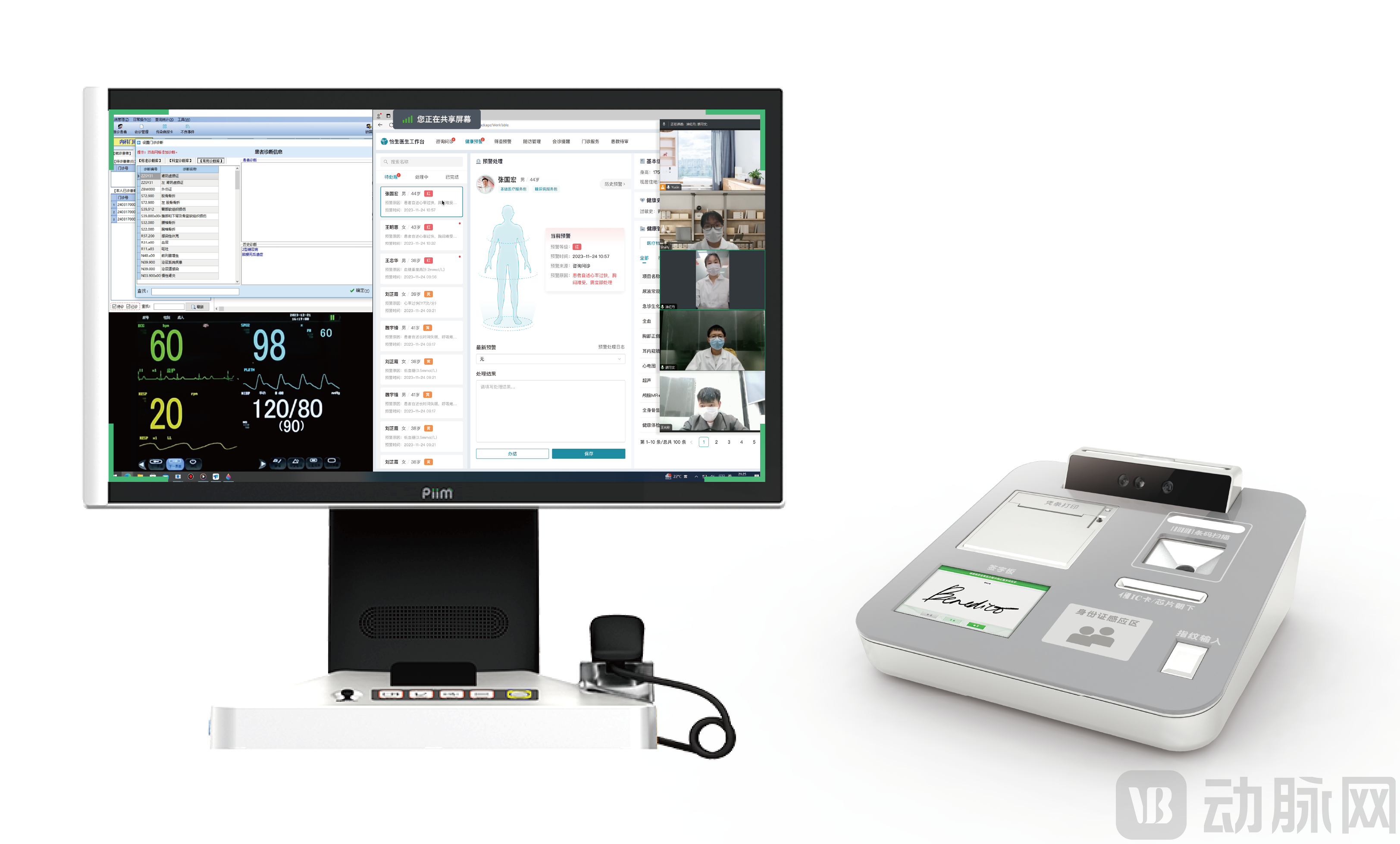
Furthermore, the “Intelligent Medical Service Workstation” not only empowers nurses to improve work efficiency but also facilitates the organic synergy of online and offline medical services, as well as intra-hospital, inter-hospital, and out-of-hospital (home) care, thereby enhancing the service capacity of healthcare institutions.
In the interview, Luo Yuanliang told VCBeat that in the future, with the further popularization of intelligent medical service workstations, offline patient traffic at hospitals may decrease by more than 40%. Moreover, without increasing the number of medical staff, the service volume of primary healthcare institutions will increase by over 50%, and the volume of specialized cases at tertiary hospitals will also rise by 30%.
Moreover, from the perspective of New Hongyi Nurse Care Group, with rising health awareness among residents and strong policy support from the state, health management services have become a key focus of nurses’ daily work.
“But where do the challenges lie in the current implementation of health management services in our country?” shared Luo Yuanliang. “The core issue is the disconnection across service scenarios: pre-hospital, in-hospital, and post-hospital; within hospitals, between hospitals, and outside hospitals (home-based); as well as online and offline.”
There is no doubt that information technology (digital) tools can provide strong support for addressing these two major issues. The field of healthcare informatics happens to be the “comfort zone” of Xin Hongyi Medical.
Overall,For health services, New Hongyi Medical has developed the “F.S.S (HELPx) Management System,”Aimed at making proactive and socially integrated relationship management the core and connecting link, and based on comprehensive medical records, to deliver warmer and higher-quality health management services to every household.
The so-called “F.S.S (HELPx)” management system refers to the “F (Family) Family Health Management System” used by the home side, the “SCRM (SCRM Service) Health Service Management System” used by the nurse side, and the “S (Smart Doctor) Smart Doctor Workstation” used by the doctor side.
Among them, the “F Family Health Management System” can meet the needs of C-end users for online health consultations, online appointments, online remote diagnosis and treatment, and self-testing for health management.It is worth noting that the system primarily conducts health management on a household basis and has expanded a range of services accordingly.
In other words, through the “F Family Health Management System,” users can not only monitor their own health status in real time and receive reminders for follow-up visits or abnormal health conditions, but also keep track of their family members’ health status and receive similar alerts. Furthermore, during family members’ medical consultations, relatives can provide remote online accompaniment via the aforementioned “Intelligent Medical Service Workstation,” enabling them to stay informed about the patient’s health condition and communicate promptly with healthcare professionals.

Meanwhile,New Hongyi Medical’s “F.S.S (HELPx) Management System” adopts a social media-style design, where communication between patients and healthcare professionals takes place in a social format. In addition to text messaging, the system supports features such as voice and video calls.Social-oriented design not only enhances usability for users (including both B2C customers and healthcare professionals such as nurses and doctors), but also subtly strengthens the trust between B2C customers and medical staff.
For physicians, Xin Hongyi Medical believes that their primary functions remain concentrated in the consultation and diagnosis process. Therefore, the physician-oriented applications of Xin Hongyi Medical’s “F.S.S (HELPx) Management System” are primarily focused on “Intelligent Diagnosis and Treatment.”
It is reported that the system integrates intelligent tools such as an AI platform, a digital therapeutics platform, and technical collaboration modules, providing professional support for physicians in online and offline diagnosis and treatment, remote consultations, and image review. In health management services, physicians typically become involved only after nurses, intervening solely when issues exceed the nurses’ authority or capabilities. Online consultation and Q&A clearly fall within the scope of the “S Intelligent Physician Workstation.”
For nurses, who play a pivotal role in health management services, the “SCRM Health Service Management System” serves as an excellent tool for extending nursing care. Based on users’ health records, the system categorizes health status using a “red-yellow-blue-white” coding scheme and assigns four levels of health management. It then provides health alerts, personalized health education and nursing care, intelligent reminders, smart follow-ups, health tracking, and health assessments accordingly.
The most notable highlight is the intelligentization of follow-up plans. According to New Hongyi Medical,The “SCRM Health Service Management System” supports the batch generation of follow-up plans. For patients with the same disease, the system can automatically generate follow-up plans in bulk based on relevant clinical guidelines and specific disease types. Nurses can send these plans to patients with a single click, either directly or after minor adjustments. Furthermore, the system continuously tracks the progress of follow-up plans and generates a dashboard for nurses, providing timely reminders to ensure adherence to the schedule. This enhances nursing efficiency and reduces the workload of post-discharge follow-ups by more than 90%.
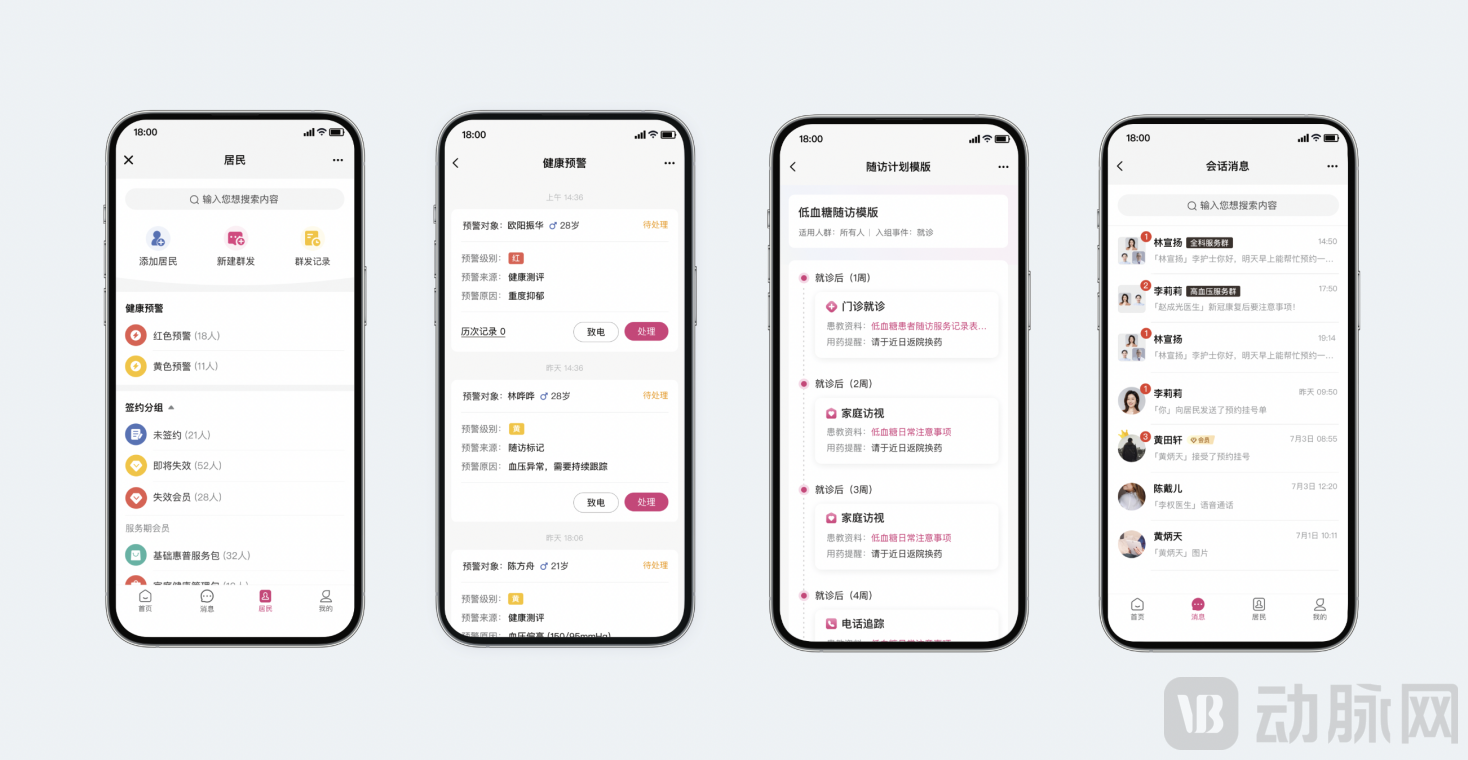
Whether it involves intelligent follow-ups, smart reminders, health alerts, or health tracking, Xin Hongyi Medical’s “SCRM Health Service Management System” not only enhances nurses’ work efficiency but also embodies a core principle of health management: proactivity. Within this framework, even if C-end users do not actively utilize the aforementioned features, nurses will still provide regular attention and reminders. This approach not only improves patient compliance but also subtly heightens C-end users’ awareness of their own health status.
In other words,Based on Xin Hongyi Medical’s “FSS Management System”, health management services can span the entire continuum of care—pre-hospital, in-hospital, and post-hospital—and achieve organic synergy between online and offline channels. Under this system,The work efficiency of nurses and doctors has been improved—one service provider can simultaneously manage 5,000–10,000 residents.More importantly, the health of consumer-end users is effectively managed.
With tools already in place, how can the development of “supporting infrastructure” be overlooked?
VCBeat has learned that,In addition to the “F.S.S Management System,” Xin Hongyi Nurse Care Group will collaborate with relevant entities to establish a regional, three-tiered “Integrated Nursing Personnel Network,” thereby forming a “Nursing Consortium” to optimize the allocation of nursing resources.
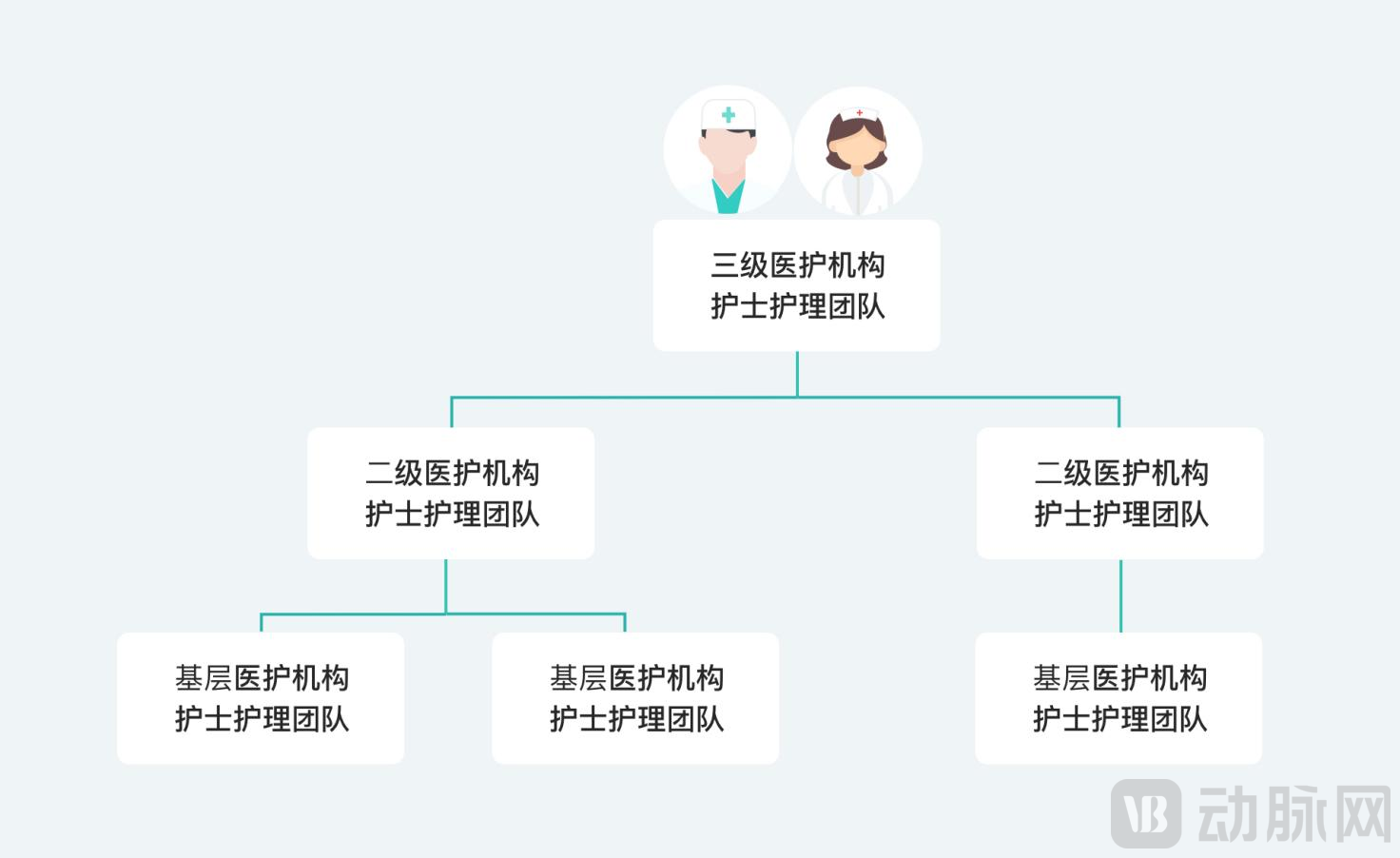
Meanwhile, New Hongyi Nursing Group will also assist primary healthcare institutions in conducting standardized nursing service training, help them establish a standardized nursing service system, and implement quality control and improvement throughout the service delivery process.
Among them,Notably, New Hongyi Nursing Group advocates for the diversified professional development of nurses.For nurses aspiring to excel in clinical care, New Hongyi Nurse Care Group provides essential support through the aforementioned digital tools, along with complementary nursing service training and quality control measures. For nurses inclined toward management roles, the Group further advocates innovation in nursing operations by adopting a “Committee + Studio” structure to manage nursing departments, thereby enabling every nurse to maximize their professional potential.
AndFor nurses with aspirations in scientific research, New Hongyi Nursing Group provides robust support. The group not only offers technical, organizational, technology transfer, and Sino-foreign exchange assistance to the nursing team but also commits substantial R&D funding.
“In fact, relatively speaking, China has placed less emphasis on the integration of industry, academia, and research in nursing. However, the standardization and even innovation of nursing practices are crucial to the overall development of healthcare,” said Luo Yuanliang. “Therefore, we hope to promote the development of industry-academia-research collaboration in nursing in China as much as possible by providing a range of support measures, including funding, organizational management, and tools. We also aim to help Chinese nurses identify suitable career paths and discover their own value in the process.”
At the end of the article, we need to add one more point for emphasis—New Hongyi Medical and New Hongyi Nursing Group’s empowerment of the industry is not limited to the C-end and H-end.
“Actually, both medical informatics and health management currently lack a certain degree of industrialization mindset.” During the interview, Luo Yuanliang made this striking remark.
Accordingly,Xinhongyi Medical is dedicated to building an open, industry-oriented platform, offering an alternative pathway for the modernization and upgrading of healthcare service systems.
Specifically,Xin Hongyi Medical’s “F.S.S (HELPx) Management System” will be provided free of charge in perpetuity to medical institutions, system developers, intelligent tool developers, and service providers across China, with no licensing fees, maintenance fees, or interface fees charged throughout the entire process.
Meanwhile, in addition to its strategic presence in key areas—Xin Hongyi Medical has already established partnerships with multiple industry leaders, including Medtronic’s CIED remote follow-up services, Yimai Yangguang imaging services, and Sinocare diabetes management services—the company’s “F.S.S (HELPx) Management System” also opens service/product “interfaces” to hospitals.
In other words, cooperative hospitals may independently design health management service packages, provided that they operate in full compliance with their internet hospital licensing regulations. Xin Hongyi Medical has configured a “Health Management Marketplace” within its B2C-oriented “F Family Health Management System,” enabling users to select advanced health management services on demand.
This setup, on the one hand, more fully meets the diversified health management service demands of the consumer market; on the other hand, it lays the foundation for the aggregation of industrial resources, innovates collaboration models with medical institutions to a certain extent, and fosters a more open industry ecosystem characterized by “win-win cooperation.”
Therefore, on the occasion of the official establishment of New Hongyi Nursing Group, New Hongyi Medical also calls on all stakeholders in the industry to collaborate in building a robust industrial ecosystem that integrates online and offline services as well as in-hospital and out-of-hospital care pathways, achieves seamless connectivity and efficient coordination of medical services, and fosters win-win cooperation among industry participants, thereby leading China’s healthcare services into their next significant phase of development.