

Shukangshi: A Global First Multimodal Radar 3D Vision-Based Integrated Rehabilitation System from Peking University Third Hospital
In the healthcare sector, every technological leap forward carries the profound weight of life and reshapes our perception of it. Particularly now, as breakthroughs in innovation sweep across the landscape alongside the waves of digitalization and intelligence, surgery is no longer the endpoint of disease treatment but rather a new starting point on the journey to recovery.
Postoperative Rehabilitation: This seemingly minor yet critical phase is key to patients’ full recovery from illness. Due to the relatively late development of rehabilitation medicine in China, patients often face practical challenges such as uneven distribution of rehabilitation resources and limited access to professional guidance. Even in top-tier tertiary hospitals, only about 5‰ of patients are able to remain in-hospital for rehabilitation treatment each year.
Amidst these contradictions, Beijing Yiyue Technology Co., Ltd. (hereinafter referred to as “Yiyue Tech”), leveraging its cutting-edge technologies in artificial intelligence, digital virtual humans, and big data, has collaborated with the Institute of Sports Medicine at Peking University Third Hospital and the CAD&CG Laboratory at Zhejiang University to develop a multimodal radar-based 3D vision rehabilitation system for “assessment, prescription, and training,” named “Shu Kang Shi” (Digital Rehab Therapist), thereby bringing new possibilities to rehabilitation medicine.
When discussing the original intention behind starting the business, Liu Zhenhua, founder and general manager of Yiyue Technology, stated: “The full name of ‘Shukangshi’ is Digital Rehabilitation Therapist. It is the result of years of research by Peking University Third Hospital in the field of sports medicine and is also part of the National Key R&D Program for Science and Technology Winter Olympics.”
As a project expert,Cui Guoqing, Chief Physician of the Department of Rehabilitation Medicine at Peking University Third Hospital, stated, “China has the largest rehabilitation demand in the world, but currently, there is a relative shortage of rehabilitation therapists and bed resources domestically, which prevents many patients from receiving professional rehabilitation treatment. To address these issues, intelligent rehabilitation products—such as the ‘Digital Rehab Therapist’—have emerged.”
“Digital rehabilitation therapists help patients receive professional rehabilitation treatment at home through personalized assessments and remote guidance. This concept of remote, intelligent, and digital rehabilitation therapists not only improves the accessibility of high-quality rehabilitation services but also helps standardize and promote patients’ recovery processes, enabling people to gradually recognize the critical role of rehabilitation and intelligent rehabilitation,” emphasized Cui Guoqing.
Li Dai, Associate Chief Physician in the Department of Sports Medicine at Peking University Third Hospital, also stated, “Currently, hospital ward bed turnover rates in China are high, and patients’ postoperative hospital stays are short. Many patients receive only a printed sheet as their rehabilitation plan, and some hospitals do not even provide postoperative rehabilitation plans. As a result, patients must carry out rehabilitation exercises on their own after discharge based on these plans, without adequate professional guidance or attention during the process, which directly affects their rehabilitation outcomes and progress.”
“Facing these challenges, my partner Wu Yan and I decided to found Yiyue Technology, aiming to build a comprehensive rehabilitation ecosystem that spans from in-hospital to out-of-hospital care, integrating various stages including outpatient services, inpatient wards, rehabilitation therapy, and home-based rehabilitation,” said Liu Zhenhua. “Through the four core functional modules of ‘rehabilitation assessment, prescription issuance, AI-driven training, and remote rehabilitation,’ Digital Rehabilitation Therapists help patients achieve a rapid and smooth transition from postoperative care to daily life.”
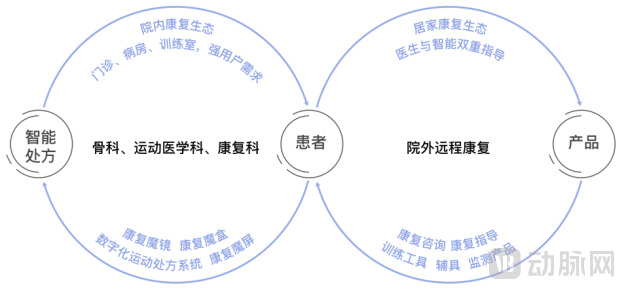
Shukangshi Full-Process Rehabilitation
Image provided by the interviewee
First is“AI + Rehabilitation Assessment”. Liu Zhenhua explained, “For example, doctors typically use subjective scales to assess the condition of patients after joint surgery, but this approach has limitations and fails to accurately reflect patients’ rehabilitation progress. The application of AI technology can provide more objective and quantitative assessment methods, helping physicians track and differentiate patients’ recovery status with greater accuracy and precision.”
Shu Kang Shi’s “Rehabilitation Assessment” feature supports the analysis of over 55 conditions across six major clinical departments, with more than 800 medical-grade precision motion parameters. For example, targetingTraumatic conditions in orthopedic surgery;Stroke and Parkinson’s disease in the Department of Rehabilitation Medicine; Parkinson’s disease, Alzheimer’s disease, and other conditions in the Department of Neurology, as well as departments such as Geriatrics and Obstetrics.
Quantitative analysis of movement parameters encompasses multiple functions, including gait analysis, assessment of shoulder joint range of motion, and proprioception testing. By leveraging generated digital-intelligent scales, the system can automatically analyze and evaluate patients’ balance, coordination, and stability, thereby enabling physicians to rapidly provide more precise rehabilitation assessments.
Upon completion of the assessment, the Digital Health Specialist intelligently recommends exercise prescriptions by algorithmizing the underlying logic of sports medicine and leveraging the “AI + Prescription Writing” feature. It is reported that the Digital Health Specialist currently supports approximately 700 post-operative and conservative rehabilitation prescriptions across orthopedics, sports medicine, rehabilitation medicine, and neurology.
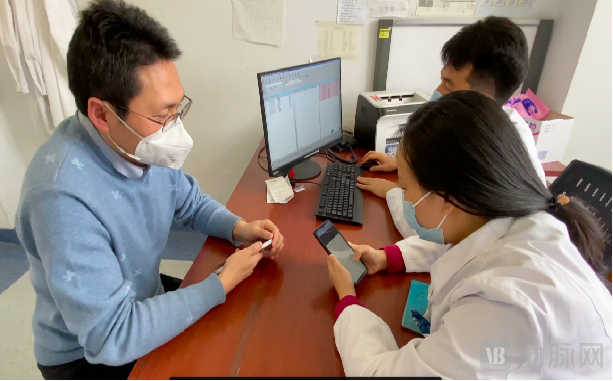
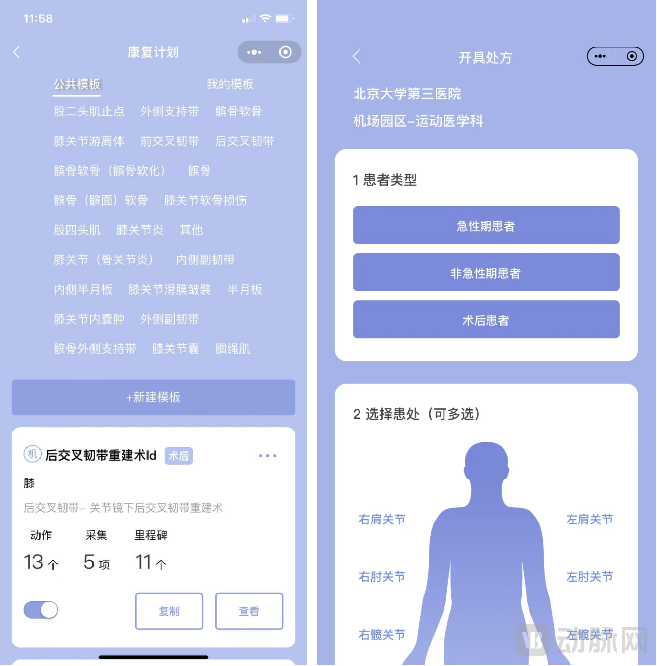
Li DaiAn Associate Chief Physician Prescribes Intelligent Prescriptions Using a Digital Exercise Prescription System (Left)
Mobile Digital Exercise Prescription System (Right)
Photo provided by the interviewee
“Shukangshi’s digital exercise prescription system has been implemented in thousands of real-world cases at Peking University Third Hospital. The system is highly convenient, operating via mobile phones, and supports personalized adjustments to rehabilitation plans while automatically generating them. With the support of this system, patients can quickly understand and master the key movements and progress of their rehabilitation plans through the mobile interface, which also reduces the burden on physicians for patient education and improves the efficiency of outpatient guidance,” introduced Li Dai.
Rehabilitation is a protracted process. In traditional active rehabilitation training, therapists face significant challenges: they must not only continuously and closely observe every patient movement, keenly detecting the subtlest changes, but also continually adjust treatment plans to help patients better restore motor function through active rehabilitative exercises.
To alleviate the workload of rehabilitation therapists and reduce manual errors, the third major function of Shukangshi is “AI + Rehabilitation Training,” which includes quantitative intelligent training, proprioception training, range of motion (ROM) training, muscle strength training, balance training, and hemiplegia training. It supports real-time movement analysis and corrective guidance for 1,000 exercises, generating training reports with a movement feature analysis accuracy of up to 6‰. The reports include patient joint angle curves, angular velocity curves, moment of inertia curves, relative external torque curves, joint load, prime movers and their muscle strength grades, activation timing variability, and muscle length.
Tailored to different application scenarios, the Beijing Yiyue Technology team has developed an interactive rehabilitation training device for physiotherapy rooms—the “Rehabilitation Magic Mirror.” This system leverages AI-powered visual recognition technology to capture patients’ movements, provide real-time feedback and guidance, and generate detailed training analysis reports. For ward settings, the “Rehabilitation Magic Box” delivers rehabilitation training courses directly to television screens, capturing patients’ movements via a camera and offering real-time instructional guidance.
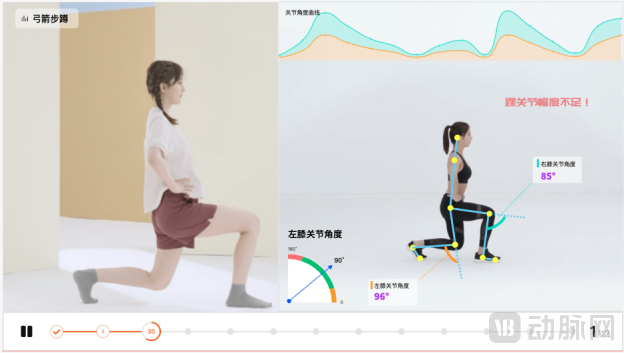
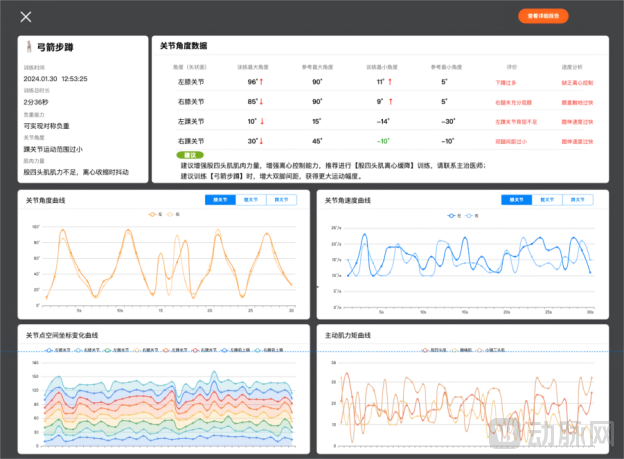
Real-Time Motion Parameter Acquisition and Analysis (Part I), Training Analysis Report (Part II)
Image provided by the interviewee
Furthermore, the team has developed multiple product models tailored to the clinical and research needs, cost-effectiveness considerations, and technical adaptability of medical institutions at different tiers. Examples include the “DRT-APS Full-Dimensional Intelligent Control 3D Rehabilitation Assessment, Treatment, and Training System (Eight-Eye Vision)” for benchmark tertiary A-grade hospitals; the “DRT-PS Radar 3D Vision Assessment, Treatment, and Training Mobile Workstation (Three-Eye Vision)” for mainstream secondary and tertiary hospitals; and the “DRT-AS Intelligent Rehabilitation Assessment, Treatment, and Training Mobile Workstation (Sensor-Based)” for community hospitals.
The fourth major function of Shu Kang Shi is “Remote Rehabilitation,” which leverages remote monitoring and feedback capabilities to provide AI-guided training for patients undergoing home-based rehabilitation, along with intelligent analysis reports, thereby making the rehabilitation process more transparent and real-time.
With the assistance of Shukangshi, patients can undergo training either within the hospital or opt for remote rehabilitation outside the hospital, receiving dual guidance from physicians and artificial intelligence (AI) at home. Meanwhile, physicians or rehabilitation therapists can remotely adjust prescription parameters using AI-driven intelligent decision trees, based on the system’s real-time recording and analysis of patient training data, thereby enabling the progression or regression of rehabilitation plans.
“This AI-enabled tele-rehabilitation model has significantly improved rehabilitation access for patients, particularly those living in remote areas or with limited mobility, allowing them to receive timely rehabilitation guidance without the need for frequent hospital visits,” said Liu Zhenhua.
Empowered by AI technology, Digital Rehabilitation Therapists can not only bridge the shortage of professional rehabilitation institutions and service personnel in the short term, freeing physicians from burdensome and repetitive training tasks to focus more on optimizing treatment plans, but also make remote rehabilitation possible through personalized treatment protocols and intelligent assistive tools. This expands the scope of rehabilitation services and helps alleviate the supply-demand imbalance in China’s rehabilitation medical resources.
As the Healthy China initiative advances, China’s healthcare model is shifting from a “disease-centered” approach to a “health-centered” one. To strengthen the rehabilitation medical service system, the government has successively introduced key policies such as the 14th Five-Year Plan for National Health, providing robust support for the widespread adoption and optimization of rehabilitation medical services, while also creating broader market opportunities and policy backing for the rapid development of the intelligent rehabilitation industry.
Amid this upward trend, the scale of China’s rehabilitation medical market officially surpassed the RMB 100 billion mark in 2023. Facing this expansive trillion-yuan market, Beijing Yiyue Technology Co., Ltd. is continuously leveraging clinical knowledge and data provided by Peking University Third Hospital and other Grade A tertiary hospitals to optimize and upgrade its AI models, enabling its Digital Rehabilitation Therapists to deliver more precise, intelligent, and convenient rehabilitation services to patients.
On the other hand, to address the root causes of the shortage of rehabilitation professionals in China, the team has developed the “Rehab Magic Screen” for educational settings. As an intelligent device for rehabilitation teaching and management, the Rehab Magic Screen supports instruction on joint and spinal rehabilitation exercises and prescription-based therapy, while enabling real-time monitoring of patients’ rehabilitation progress.
To address the shortage of professional rehabilitation resources at the primary care level, Yiyue Technology is also expanding its technological products from hospital settings to community and home-based scenarios. It is reported that the company is currently collaborating with the government to establish benchmark demonstration sites for “AI + Community Rehabilitation,” aiming to facilitate the downward flow of high-quality rehabilitation medical resources from large tertiary Grade A hospitals to the community level, and to leverage intelligent and digital technologies to bridge the gaps in primary rehabilitation healthcare services.
In addition, Shukangshi has entered into a partnership with Huawei’s HarmonyOS. “Leveraging HarmonyOS’s unique capabilities, such as the Internet of Everything and scenario-based user engagement, Shukangshi can better meet patients’ rehabilitation needs by providing more comprehensive and personalized services. Meanwhile, the integration of HarmonyOS has strengthened connectivity across our hospital-to-home rehabilitation service chain, enabling patients to enjoy a superior rehabilitation experience both in-hospital and at home,” introduced Liu Zhenhua.
In October 2023, Shukangshi entered into a strategic partnership with Sinopharm International to jointly build an integrated clinical rehabilitation platform. This initiative aims to empower medical institutions by establishing an intelligent rehabilitation platform covering all clinical departments, and to create a medical teaching framework and expert database for clinical rehabilitation. These efforts are designed to accelerate the integration of surgical rehabilitation, enable more surgeons to engage in rehabilitative care, and enhance the overall societal capacity for rehabilitation services.
Looking to the future, Liu Zhenhua stated, “Rehabilitation is not merely about physical recovery, but also about the holistic reconstruction of mind and body, enabling patients to return to daily life in optimal condition. Yiyue Technology aims to focus its Digital Rehabilitation Specialists on musculoskeletal rehabilitation, neurological and traditional Chinese medicine (TCM) rehabilitation, as well as psychological rehabilitation. By empowering more hospitals and departments, we strive to make personalized, high-quality rehabilitation services accessible to a broader population. Meanwhile, we look forward to collaborating with like-minded partners to jointly promote the prosperity and development of the sports rehabilitation industry.”