

Beijing Beizhuo Medical Technologies Establishes an 'Integrated Core with Two Wings' Cross-Modal Intelligent Ecosystem, Securing a First-Mover Advantage in China's Neurotechnology Digital Transformation
Neurosurgery is one of the most complex medical specialties, characterized by a wide variety of diseases, diverse types of medical devices, and high demands on technical precision and finesse. A significant feature of its end-use application is the steep learning curve for specialized physicians.
In recent years, neurosurgery has entered the phase summarized by Academician Zhao JizongThe Era of Neural Network Surgery. The anatomical cognition of brain networks originally stemmed from medical practices in neurosurgery, while neurosurgical procedures in the new era require more refined identification of neural networks to perform more precise surgeries. This imposes higher demands for digitalization and intelligence on the “three major tools” of neurosurgical instruments (surgical microscopes, surgical navigation systems, and intraoperative neurophysiological monitoring).
A Transformation of the “Digital and Intelligent Neurosurgical Operating Room” Is Currently Underway.
From the perspective of global R&D and regulatory trends, augmented reality (AR) surgical navigation systems developed by innovative companies such as Brainlab and Medivis have received FDA approval for market launch. Traditional optical equipment manufacturers and emerging microscope makers, including Leica, B. Braun, and Synaptive Medical, are also actively developing digital external visualization products. Medtronic, a global leader in neurosurgical devices, is expanding its neurosurgery portfolio and integrating intelligent technologies into its product offerings.
The wave of digital intelligence, initiated by the “Three Magic Weapons,” is further fueling the high growth rate of the neurosurgery market. According to Research and Markets, the global neurosurgical devices market was valued at $7.17 billion in 2022 and is projected to reach $12.93 billion by 2027, growing at a CAGR of 12.5%.
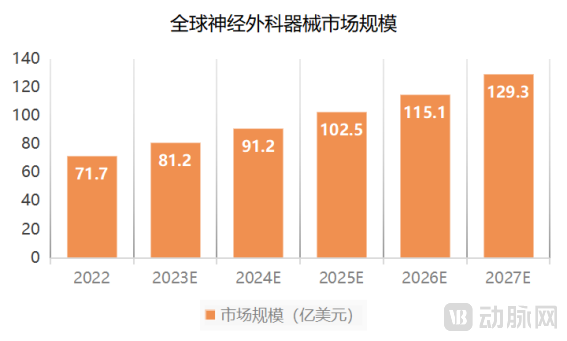
Data source: Research and Markets; chart by VCBeat
In contrast, China’s neuro-medical device market started relatively late. Although the substitution of imported products with domestically produced ones has been accelerating, many niche segments are still dominated by foreign technologies and products.On the path to accelerating the breakage of the monopoly on imported technological products through domestic substitution, one innovative enterprise aims to become a leader in building a domestic ecosystem for smart neurology specialty equipment, directly benchmarking against industry giants. This is Beijing Beizhuo Medical Technology Development Co., Ltd. (hereinafter referred to as “Beizhuo Medical”).
Domestic substitution cannot be achieved merely by empty slogans; the substitution rate is influenced by factors such as the size of the niche market, category growth rate, technical complexity, capital investment, regulatory barriers, and the intensity of product competition. In particular, neurosurgery, as one of the highly sophisticated frontier disciplines, demands extremely high levels of technological sophistication and precision in intraoperative medical devices.
As an emerging enterprise in the field of neuroscience, Beizhuo Medical, despite its recent establishment, is led by a seasoned, astute, and highly experienced founding team. Leveraging the team’s strategic insight and execution capabilities, Beizhuo Medical is steadily advancing toward its goal of becoming a leading platform-based company in the medical device industry through innovation and development.
VCBeat learned in an interview that the further advantages of the Beizhuo Medical team can be traced back to Beijing Beike Digital Medical Technology Co., Ltd. (hereinafter referred to as “Beike Medical”).
Since its establishment in 1992, Beike Medical has achieved remarkable success in the field of high-end medical devices, leveraging nearly three decades of professional expertise. The company specializes in the introduction, promotion, research and development, and manufacturing of medical devices. Its products are widely used in multiple key medical specialties, including neurology, neurosurgery, critical care medicine, general surgery, and spinal surgery.
Beike Medical’s business footprint spans across China, and by establishing five regional service centers, it has built a robust service network. The company has forged stable partnerships with over 2,500 channel-based commercial partners and served more than 4,500 end users.
Shang Honglei, Chairman of Beizhuo MedicalHailing from Beike Medical, Shang Honglei holds a Master of Medicine from Harbin Medical University and an MBA from Peking University. As an industry veteran with 30 years of extensive background and rich experience, he has successfully introduced multiple advanced international technologies and led his team to achieve annual sales of nearly RMB 300 million for five consecutive years, demonstrating profound and mature business acumen and leadership.
Yang Long, General Manager of Beizhuo MedicalAlso from Beike Medical, he previously served as the Head of the Neurosurgery Division at Beike Medical. With extensive experience in interdisciplinary research bridging neuroscience and medical engineering, a clinical background, and 15 years of expertise in medical device promotion, he pioneered the introduction and refinement in China of neurosurgical robotic technology, precise minimally invasive diagnostic and therapeutic techniques for refractory epilepsy, and non-invasive localization and modulation technologies for brain functional areas guided by multimodal imaging and neuroelectrophysiology.
Dr. Hui Rui, Chief Technology Officer of Beizhuo Medical, is an expert with a profound academic background in both medicine and engineering. He graduated from the Fourth Military Medical University, where he earned his Bachelor’s and Master’s degrees in Clinical Medicine, and obtained his Ph.D. in Computer Science from MDX University in London, UK. Dr. Hui Rui completed his postdoctoral research in image-guided navigation at Brigham and Women’s Hospital, affiliated with Harvard University, an experience that further enriched his professional expertise and skills.
As a reviewer for multiple international neurosurgery journals, Dr. Hui Rui has demonstrated exceptional professional expertise in the field of medical-engineering integration. He not only participated in the research and development of China’s first neurosurgical surgical robot but also played a pivotal role in the development of six generations of surgical robotic systems.
Highlighting the strengths of the R&D team, Dr. Hui Rui further emphasized, “Beizhuo Medical’s R&D team brings together outstanding talent from top institutions such as the Chinese Academy of Sciences, the University of Utah in the United States, and the University of Sunderland in the United Kingdom. Leveraging their profound expertise and extensive experience, the team”Adopt a Modular R&D Approach, ensuring the project advances efficiently and in compliance with regulations. By developing independent modules in parallel, the team not only effectively accelerated R&D speed and expedited the product launch process, but also fully integrated the underlying logic of technologies across products within the closed-loop ecosystem through cross-product module sharing, thereby establishing a robust R&D barrier for the ecosystem chain. These strategies have secured Beizhuo Medical’s competitive advantage in technological innovation and product development.”
Supported by the clinical experience and technical foundation provided by the founding team and Beike Medical, Beizhuo Medical has developed over ten products using cutting-edge technologies in the three major fields of intelligent neurosurgical systems, neuromodulation, and neuroprotection. This has been achieved through independent research and development and the translation of advanced scientific research into clinical applications, precisely addressing clinical needs.
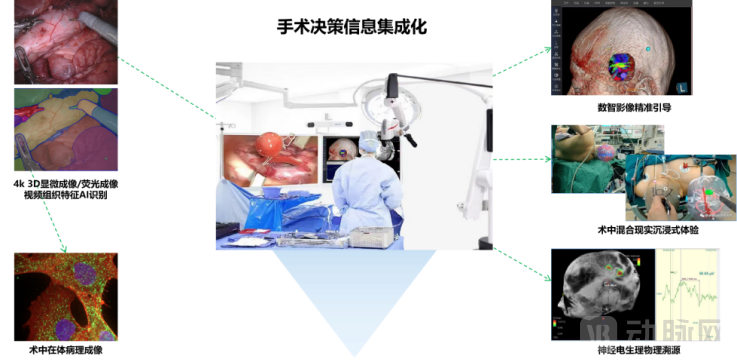
Beizhuo Medical: A Closed-Loop Ecosystem of Digital and Intelligent Neurology Specialty Products
The closed-loop ecosystem solution for neurology specialty products built by Beizhuo Medical can be divided into "one body with two wings."
“Integrated” Intelligent Neurosurgical Surgery System: Comprising eight products, namely a neuroimaging post-processing and mixed reality display system, a cross-modal neurosurgical navigation system, a digital microscopic imaging system, a high-frequency surgical system, and four types of disposable consumables.
The intelligent neurosurgical system developed by Beizhuo Medical is a closed-loop solution that breaks down “data silos.” Taking the digital microscopic imaging system as an example:
As neurosurgical procedures involve operating around the brain, where the intracranial space is confined and critical tissue structures are delicate and complex, any damage to brain tissue is difficult to repair or regenerate. Therefore, neurosurgery demands utmost precision and efficiency. The surgical microscope used in neurosurgery enables visualization of the operative site and fine structures within the cranial cavity, thereby enhancing surgical accuracy, reducing surgical trauma and patient suffering, and ultimately lowering medical costs.
Currently, the market for neurosurgical operating microscopes is monopolized by foreign brands such as Leica and Zeiss.In addition to its potential to break the foreign monopoly, the surgical exoscope developed by Beizhuo Medical is more importantly capable of integration with the company’s neurosurgical navigation system and mixed reality system.
This ecosystem can directly present navigation and positioning via microscopy either beneath the screen or in a mixed reality mode, and is poised to replace traditional optical microscopes in the future. It integrates diverse data streams—including various brain imaging modalities, microscopic visual data, electrophysiological source localization, and surgical planning and navigation—thereby truly realizing a closed-loop ecological solution for the product.Currently, the development of the product’s external-view mirror optical system has been completed, with all performance parameters reaching a globally leading level. The next step will involve system testing and validation.
Yang Long explained, “The ‘three major pillars’ of neurosurgery feature extremely high technical barriers and a very low rate of domestic production. The founding team of Beizhuo Medical has accumulated over 30 years of expertise and insight in this field. In the current era of ‘networked neurosurgery,’ standalone devices cannot meet the specialty’s need for ‘network’-based solutions. Therefore, it is essential to break through traditional technical barriers and achieve a high degree of integration across multimodal technologies.”
Beizhuo Medical's external viewer for the image-guided and electrophysiology dual-navigation system, which supports multi-technical elements and multi-data correlation integration, is a first-of-its-kind innovation in China.
“From the perspective of technological sustainability, a key component in the future will be the mining, application, and data-driven utilization of information; therefore, data quality is particularly critical,” explained Yang Long.Beizhuo Medical signed a strategic cooperation agreement with the Beijing Neurosurgical Institute (Academician Jiang Tao’s team) for the development of a “Digital Neurosurgical Surgical Platform,” actively promoting the translation and implementation of related clinical research achievements, demonstrating the company’s forward-looking vision in the field of scientific research.
Recently, the patented technology “Radiomics Prediction Method for Gene Expression Levels in Gliomas,” transferred from the Beijing Neurosurgical Institute to Beizhuo Medical, was awarded the Gold Medal at the 49th Geneva Inventions Exhibition in 2024.This not only affirms the research capabilities of the institute’s team but also serves as strong evidence of Beizhuo Medical’s strength in translating scientific research into practical applications. Currently, these research findings have been incorporated into Beizhuo Medical’s R&D pipeline.
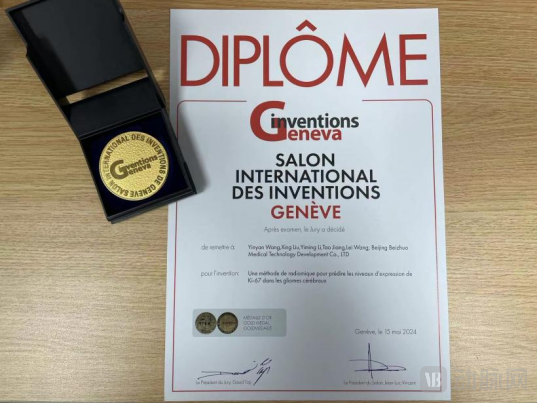
Gold Award at the Geneva International Exhibition of Inventions
Regarding the MR mixed reality surgical navigation system, Beizhuo Medical has completed its R&D efforts. The system is currently undergoing testing and validation at the Chinese PLA General Hospital and the Beijing Neurosurgical Institute, with regulatory submission scheduled to commence in the second half of the year.
Professor Chen Ling, Director of the Department of Neurosurgical Oncology, Chinese PLA General Hospital, after trialing Beizhuo Medical’s surgical navigation system, commented: “Compared with imported neuronavigation products and in conjunction with the actual intraoperative location of patient lesions, the precision and accuracy of Beizhuo Medical’s mixed reality (MR) neuronavigation system have met clinical standards. Furthermore, the MR glasses provide a more immersive intraoperative experience, enabling more intuitive and convenient visualization of lesion anatomy, thereby enhancing surgical outcomes.”
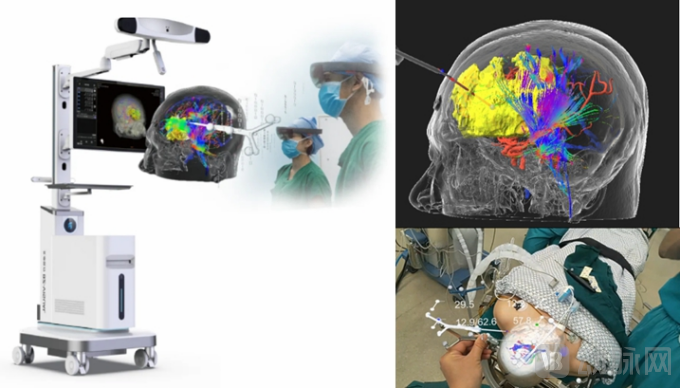
Beizhuo Medical MR Mixed Reality Surgical Navigation System
Furthermore, Beizhuo Medical will further upgrade its models to implement intraoperative in vivo pathological detection technology—namely, an ultra-high-resolution microscopic imaging system that can assist physicians in real-time exploration of surgical resection margins and cancer boundaries.The core advantage of this product is that it overcomes the challenges of high processing costs and poor consistency between the center and edge of the field of view associated with traditional optical technologies. By utilizing lens modules manufactured through photolithography technology, the product is expected to significantly reduce production costs after mass production, enabling single-use applications and minimizing the risk of cross-infection.
Meanwhile, the company has also completed the development of a plasma jet scalpel, which can be used in conjunction with in vivo pathological detection technology to enable truly “precision” surgery. This allows for selective, targeted clearance of cells at the “cancer margin” at the cellular level, reducing postoperative tumor recurrence and the associated high medical costs, thereby improving prognosis for cancer patients.
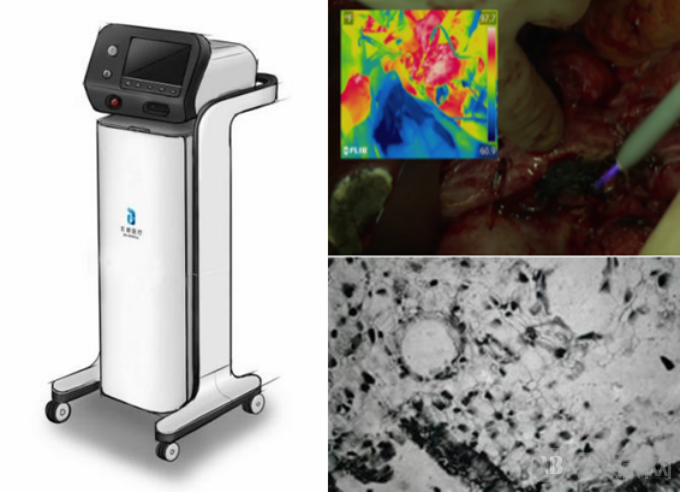
Beizhuo Medical Low-Temperature Plasma Jet Knife (Left)
Intraoperative atmospheric-pressure plasma jet treatment of residual cancer margins (upper right), high-resolution cellular microscopic imaging (lower right)
Wing 1: Non-invasive Neuromodulation Series
Currently, the Beizhuo neuromodulation series has three products under development: the navigated transcranial magnetic stimulation therapy system (nTMS), the navigated transcranial focused ultrasound stimulation therapy system (ntFUS), and the non-invasive navigated temporal interference electrical stimulation therapy system (nTI).
As China’s population ages rapidly, life expectancy increases, and stress from work and daily life intensifies alongside changing environmental factors, brain functional disorders—such as depression, Alzheimer’s disease, epilepsy, and motor dysfunction disorders—have become one of the conditions imposing the greatest healthcare burden in China.
Transcranial Magnetic Stimulation (TMS) is one of the most widely cited non-invasive techniques for neurological detection, diagnosis, and neuromodulation therapy. In conventional TMS procedures, physicians manually hold the magnetic stimulation coil and localize the stimulation site using cranial anatomical landmarks. However, these landmarks do not precisely correspond to cortical structures, leading to significant errors. Furthermore, variations among operators and differences in manual techniques can result in inaccurate positioning. Additionally, substantial inter-individual variability in stimulation thresholds and therapeutic effects, coupled with poor hand-held stability that readily induces electric field attenuation, all compromise the precision of treatment.
When evaluated against millimeter-level positioning standards, traditional operative methods can be described as operating in a state of “blindness,” with miss rates as high as 30%–40%. A localization error exceeding 5 mm may render the procedure ineffective; in contrast, traditional methods can exhibit errors greater than 10 mm, whereas navigation systems achieve an average localization error of only 0.3 mm. Therefore, recognizing individual cerebral anatomical differences and implementing navigation-guided precision therapy are essential to further enhance therapeutic response.
In response, Beizhuo Medical’s navigated transcranial magnetic stimulation (nTMS) therapy device can achieve the following:
① Visualization of Magnetic Field Energy Distribution, ensuring that the center of the coil's magnetic field spatially coincides with the targeted brain stimulation site;
② Visualization of Induced Current Direction, ensuring that the stimulation output is always perpendicular to the direction of the gyri (to ensure effective delivery of stimulation intensity);
③ Synchronization of TMS navigation with electrophysiological results (TMS-EMG/TMS-EEG) via event-triggered acquisition, providing objective and quantitative evidence for clinical practice;
④ Personalized, Multi-Target, Closed-Loop Brain Network Intervention Model and Robot-Assisted Approach。
Navigation-Based Transcranial Magnetic Stimulation Therapy Device,Beizhuo Medical has signed a collaborative research and scientific translation agreement with Beijing Anding Hospital to jointly advance the study on “Precision Neuromodulation for Depression Based on Contextual Neuroimaging.”This collaboration combines NorthZhuo Medical’s innovative neuromodulation technologies with Beijing Anding Hospital’s professional expertise in mental health, aiming to achieve more precise diagnosis and treatment of depression. It will provide patients with more personalized medical solutions while driving scientific research and innovation in the field of mental health.
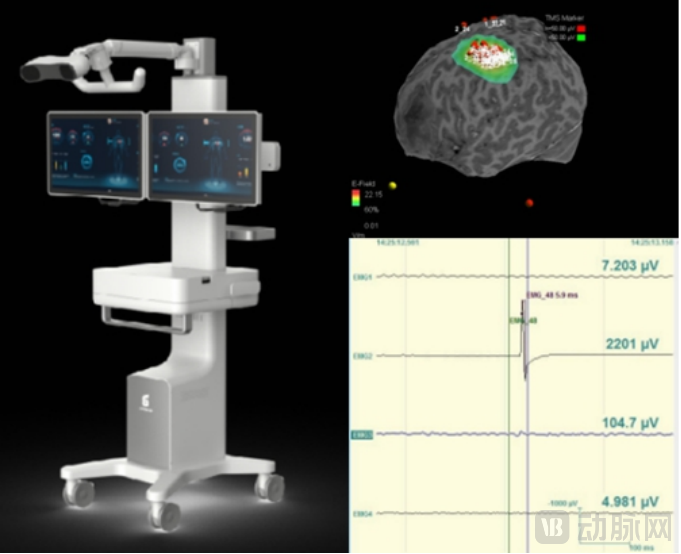
Beizhuo Medical Navigated Transcranial Magnetic Stimulation Therapy Device (nTMS)
Beyond TMS technology, there is an emerging non-invasive approach to modulating brain function—Transcranial Focused Ultrasound Stimulation (tFUS), low-intensity pulsed ultrasound is transmitted through the skull and other tissues to act on the cerebral cortex or deep brain regions, thereby inducing changes in neural activity. tFUS offers advantages such as high spatial resolution, deep stimulation depth, strong penetration capability, good compatibility, and compact device size.
Compared with transcranial magnetic stimulation (TMS) and transcranial electrical stimulation (tES), transcranial focused ultrasound stimulation (tFUS) can achieve a focal depth of up to 8 cm beneath the scalp, offering the potential to modulate deep brain regions and neural networks. It boasts a broad range of potential clinical indications, and its spatial focusing resolution can reach millimeter-level precision. Currently, several products from overseas companies have sequentially entered clinical trials for conditions such as depression and epilepsy.
Furthermore, low-frequency focused ultrasound can selectively induce a series of cavitation effects in microbubbles within intracranial vessels, including oscillation, expansion, contraction, and inertial collapse. These effects stretch, widen, and open the blood-brain barrier structure of intracranial vessels, thereby facilitating drug delivery to the brain.
Beizhuo Medical’s navigated transcranial focused ultrasound stimulation (ntFUS) therapy system integrates multimodal image navigation, physical field simulation, and neurophysiological feedback technologies. The control and focusing performance of its ultrasound field has reached an internationally advanced level, and the entire system is capable of achieving closed-loop tFUS.
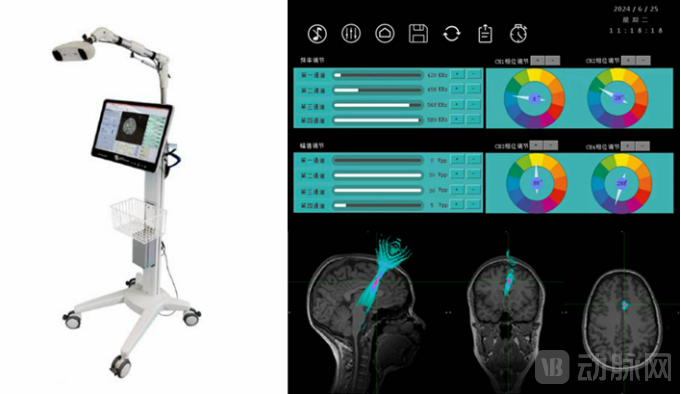
Beizhuo Medical Navigation Transcranial Focused Ultrasound Stimulation System (ntFUS)
According to reports, Beizhuo Medical has reached a research collaboration agreement with the Laboratory of Liu Yunzhe at the Beijing Institute for Brain Science and Brain-Inspired Intelligence, jointly advancing research on tFUS decoding of brain functions in memory, emotion, and cognition.Jointly develop novel brain-computer interfaces based on focused ultrasound stimulation, translating cutting-edge scientific achievements into practical medical applications to benefit patients.
The Second Wing: Neuroprotection Series
Over the past 30 years, the global number of stroke patients and those dying or becoming disabled from stroke has nearly doubled. The Lancet Neurology, in collaboration with the World Stroke Organization, published “Practical Solutions to Reduce the Global Burden of Stroke,” pointing out that without urgent action, the number of deaths from stroke worldwide is projected to increase by 50% by 2050, reaching 9.7 million annually.
Reperfusion therapies, represented by thrombolysis and thrombectomy, are the primary treatment modalities for ischemic stroke. During the therapeutic window surrounding these interventions, neuroprotective measures aim to help patients race against time and improve functional outcomes. Unfortunately, however, most clinical trials of neuroprotective agents have thus far failed.
Beizhuo Medical developed an atmospheric-pressure plasma therapeutic device through the patent commercialization of the Beijing Neurosurgical Institute.This technology can generate reactive plasma jets with neuroprotective effects under normal atmospheric pressure, and studies have confirmed that it reduces neuronal damage and apoptosis while enhancing the hypoxia resistance of nerve cells.
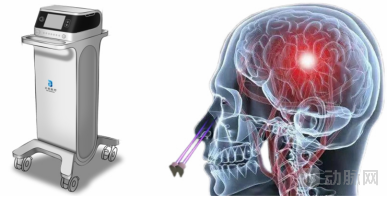
Beizhuo Medical Atmospheric Pressure Plasma Inhalation Therapy Device
Therefore, Beizhuo Medical applies this technology to address the gap in non-pharmacological neuroprotection during the pre-hospital emergency care phase for cerebral disorders such as ischemic stroke. Meanwhile, the technology features distinct advantages that facilitate its widespread adoption, which can be summarized into the following four key benefits:
① Anti-ischemic and anti-hypoxic, anti-apoptotic: Cellular and animal experiments have demonstrated anti-ischemic/hypoxic and anti-apoptotic effects on neural tissue in ischemic stroke;
② Rapid onset of action: The treatment duration is short (a few minutes), which can significantly reduce the area of potential lesions;
③ Portable and easy to operate: The device terminal is compact and integrates with a wearable inhalation device, offering operation that is as simple and convenient as using an oxygen concentrator;
④ Safe and Reliable Device: Safe for contact; configurable for use in diverse settings such as ambulances, primary care hospitals, emergency outpatient clinics, hospital wards, and field environments.
Atmospheric-Pressure Plasma Inhalation Therapy Device Has Completed Animal Trials, relevant experimental results showed that: after establishing the carotid artery embolism model and administering thrombolytic therapy for 30 minutes, comparisons of therapeutic efficacy at 15 minutes and 24 hours post-medication with those at corresponding time points following plasma treatment revealed that the edema zone after cerebral infarction in the experimental group was significantly reduced or disappeared. Further studies indicated that reactive oxygen and nitrogen species (RONS) generated by plasma could activate the intracellular NO/cGMP/PKG signaling pathway, thereby inhibiting the mitochondrial apoptotic pathway and reducing neuronal apoptosis induced by prolonged oxygen-glucose deprivation.
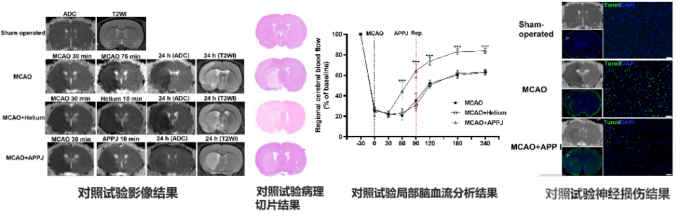
Animal Experiment Results of Atmospheric Pressure Plasma Inhalation Therapy Device
Yang Long stated, “In recent years, the medical applications of plasma have garnered increasing attention. Based on the oxidative/nitrative stress effects induced by plasma, growing clinical evidence has been accumulated for its use in sterilization, cancer therapy, and the treatment of oral and dermatological diseases.”
“Unlike previous plasma applications, the research team led by Dr. Yan Xu at the Beijing Neurosurgical Institute innovatively proposed the method of ‘nasal inhalation of plasma’ and discovered for the first time that, during cerebral ischemia, plasma inhalation reduces cerebral infarct volume, increases cerebral blood flow, and enhances the efficacy of reperfusion therapy. This approach holds promise for transforming stroke treatment outcomes and represents a globally disruptive innovative technology.”
“Building on this foundation, the medical plasma inhalation therapy device and disposable emission probes developed by Beizhuo Medical not only enable the treatment of cerebral ischemia through precise control of plasma generation and processing parameters, but also achieve the effects of various traditional plasma applications. Furthermore, the device retains expansion capabilities, laying the groundwork for further development of applications in other fields,” Yang Long continued.
It is evident from the “One Body, Two Wings” product matrix that Beizhuo Medical’s development strategy is as follows:A Rich Product Portfolio Built on a Diversified Technology Platform, meeting diverse clinical needs.
Looking to the future, Yang Long stated, “In addition to improving the efficiency of our existing R&D pipeline, advancing regulatory approval and certification for our pioneering products, establishing sales channels, and gradually achieving domestic substitution in niche sectors, Beizhuo Medical will continue to invest in scientific research. Through efficient management of technology transfer, we will accelerate the introduction of new products, bolster endogenous growth momentum, and help propel China’s neuroscience field rapidly into a new era of digitalization and intelligence.”。”