Six Misconceptions and Nine Key Questions About Entering the Korean Healthcare Market
Recently, VCBeat andVentureBlick Wanchuang PuliInitiated a series of collaborations to help medical innovations improve their efficiency in going global. Our first step was to strengthen global awareness, reduce information asymmetry, and assist enterprisesMore Precise AssessmentTarget Markets for Overseas Expansion.
In this process, we curiously found that Chinese medical companies rarely mention the market on their doorstep—South Korea—when discussing overseas expansion destinations. After further investigation, we realized that there are similar questions and concerns about the South Korean market, and these preconceived notions often contrast sharply with the actual situation.
However, the deeper the misunderstanding, the greater the opportunity, and opportunities always belong to the pioneers. We therefore withVentureBlickOn July 12, we hosted a live Q&A session to share our perspectives on Chinese enterprises expanding into the South Korean market. This article compiles key insights to help you identify promising opportunities in the healthcare sector and seize the momentum of global expansion.
Revisiting the program also provides access to more relevant data and information on the South Korean market,Click the link:https://tcoan.xetlk.com/sl/1YnoaOView All Live Broadcasts
Misconception 1:
The South Korean market is too small!
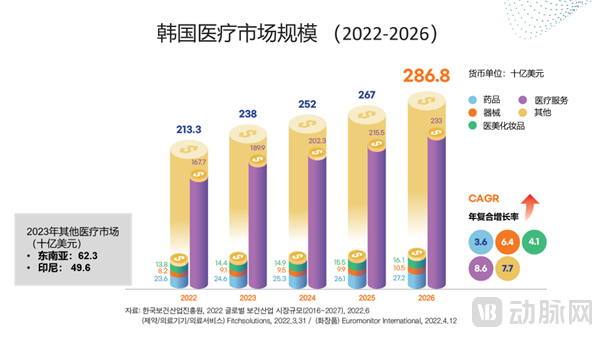
South Korea’s total healthcare market size was approximately $238 billion in 2023 (including $9.1 billion for medical devices and $24.6 billion for pharmaceuticals), and is projected to reach $286.8 billion by 2026. The compound annual growth rates (CAGRs) for key sectors from 2022 to 2026 are estimated as follows: pharmaceuticals at 3.6%, medical devices at 6.4%, healthcare services at 8.6%, and medical aesthetics and cosmetics at 4.1%.
By comparison, the combined healthcare market of the 11 Southeast Asian nations totaled approximately $62.3 billion in 2023, with Indonesia accounting for $49.6 billion. In other words, South Korea’s total market size is four times that of the entire Southeast Asian region.
Although South Korea has a small land area and population, its healthcare market ranks fourth in Asia, following China, Japan, and India. Globally, its ranking varies by specific niche segment but generally remains within the top ten.
Misconception 2:
South Korea is very xenophobic!
Focusing solely on South Korea’s medical device sector, the import ratio exceeds 50%. However, Chinese medical devices have accounted for an average of only about 10% of South Korea’s import share over the past five years. Moreover, South Korea is China’s third-largest import trading partner (after the United States and Japan) and ranked first among the top ten “Belt and Road” markets for China’s pharmaceutical product exports in 2023.
This indicates that South Korea has a strong demand for and welcomes imported products, with Chinese goods being imported across various sectors. Currently, the share of China’s medical exports remains minimal, which means Chinese medical enterprises have 90% of the market potential to explore, offering significant opportunities for growth.
Misconception 3:
The South Korean system is not very compatible with those of Europe and the United States!
Compared with the markets in Southeast Asia and the Middle East, South Korea’s healthcare market is highly mature and well-regulated, ranking among the top three healthcare systems globally and on par with developed markets. In terms of regulatory classification, procedures, and requirement standards, South Korea’s medical regulatory framework is most similar to those of Japan and the United States.
South Korea’s clinical trials also enjoy a high level of international recognition. As of 2022, Seoul ranked first globally among cities for clinical trials for three consecutive years, while South Korea held the fifth-largest share in the industry-led clinical trial market. Meanwhile, in 2022, South Korea’s regulatory oversight of domestically produced and imported pharmaceuticals and vaccines reached the World Health Organization’s highest maturity level (ML4) for medical product regulatory systems.
Therefore, enterprises can leverage the South Korean market to familiarize themselves with mainstream healthcare systems, accumulate valuable experience in engaging mature users and executing market operations, and enhance their readiness for entry into the Japanese, European, and American markets by capitalizing on data and endorsements from this market.
Misconception 4:
Low Market Access Success Rate in South Korea!
South Korea’s healthcare system is rated as the best in the world, precisely because of its transparency and openness. It is also one of the few markets globally that treats domestically produced and imported products equally in terms of regulatory oversight, reimbursement policies, and other regulations.
What are the benefits? Expanding overseas involves many uncertainties, particularly in unfamiliar markets. Whether it is understanding local market access procedures or identifying local distributors or partners, failing to engage the right contacts or obtain accurate information can result in wasted resources and even adversely impact corporate development.
However, South Korea’s policies on the approval and reimbursement of medical products not only treat domestic and imported products equally but are also highly transparent. The official website of the South Korean government publicly discloses the pricing and reimbursement rates for all medical products by category. Regardless of the number or identity of distributors involved, the price remains largely fixed. For new market entrants, these regulatory measures help mitigate many risks.
Taking the pre-market approval process for medical device products as publicly announced by the South Korean government as an example:
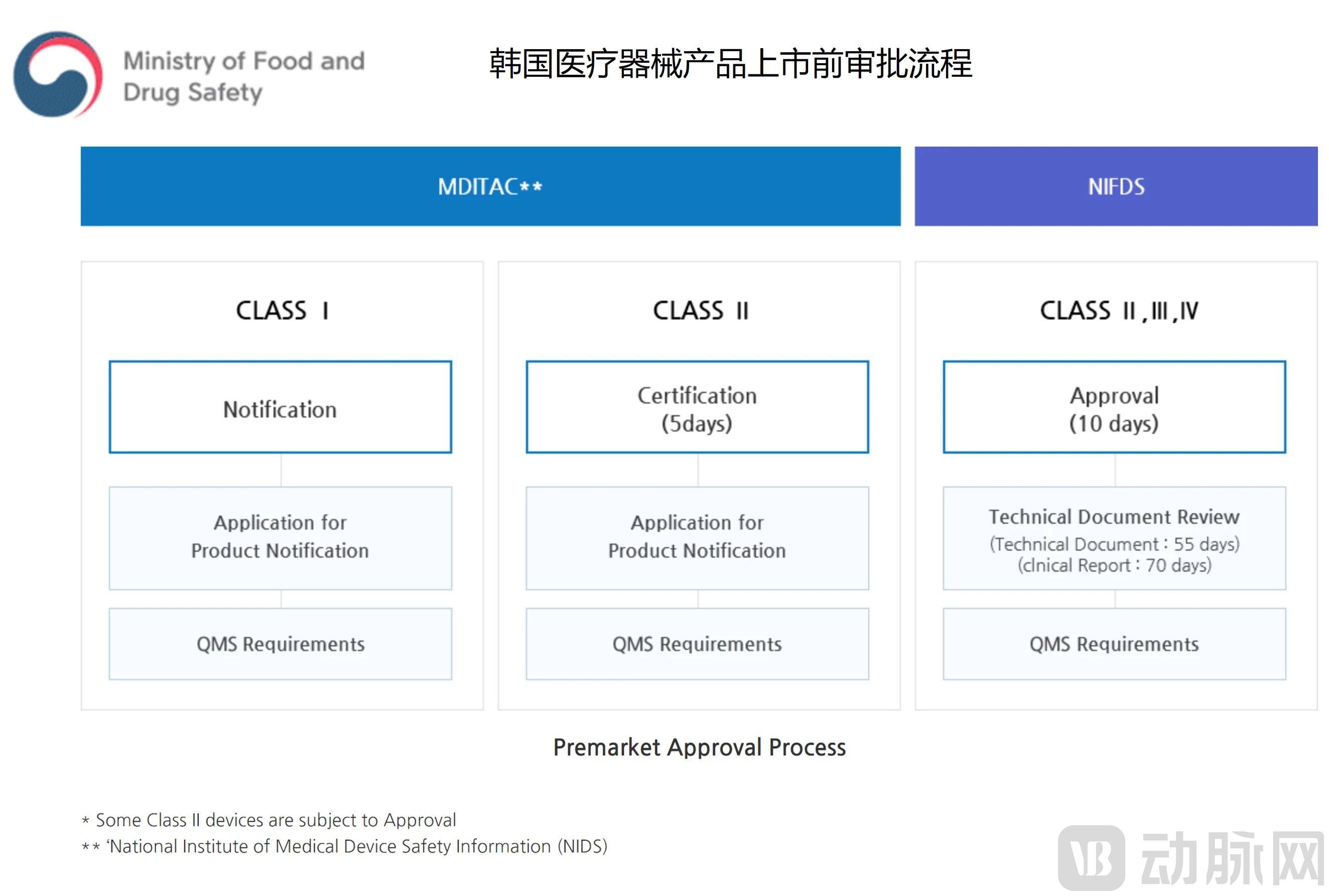
The classification system itself reveals its similarities to the frameworks in the United States and Japan. Class I devices require registration and filing; once all required materials are prepared, the entire process takes approximately one month. Class II devices require certification, with the whole procedure—from company preparation to submission of complete documentation and the subsequent five-day review period by the relevant authorities—taking approximately three months to complete. Class III and IV devices, along with certain Class II devices, are subject to an approval process, some of which even require clinical trials. Specific timeframes are stipulated for key stages of the review; for instance, the technical report review takes 55 days, and the clinical report review takes 70 days. The entire approval process takes approximately six months in total.
Misconception 5:
The South Korean market is highly saturated!
Numerous public data sources highlight the advanced nature of South Korea’s healthcare system and the high health status of its population. For instance, prior to the pandemic, South Koreans visited hospitals an average of approximately 21 times per person annually; life expectancy in South Korea reached 83.5 years in 2023; and among the top 45 hospitals in the “World’s Best Hospitals 2024” ranking, four were located in Seoul, South Korea—the highest number from any country in the Asian market.
These data indicate that South Korean physicians possess a relatively high level of professional competence, while the general population demonstrates strong health awareness. Patients actively seek and utilize efficient medical solutions spanning prevention, treatment, and rehabilitation, and are willing to adopt new products. Furthermore, South Korean doctors exhibit a high degree of openness to novel technologies and therapies, maintaining close alignment with medical communities in Europe, the United States, and Japan. This environment enables the positive clinical experiences of South Korean physicians to help innovative products establish their reputation within the international medical community.
Misconception 6:
South Korea: Fierce Competition, Thin Margins!
South Korea’s national health insurance covers nearly all residents, with an average reimbursement rate of 80% for medical products and a 20% out-of-pocket share for patients. What does this reimbursement structure imply for the public? And what does it mean for businesses? It signifies that there is room for pricing and profit margins.
The South Korean government publicly discloses the pricing and reimbursement rates for medical products by category. Nearly all products are eligible for reimbursement, with an average reimbursement rate of approximately 80%. For higher-priced categories, the inherent cost advantages typically held by Chinese products create room for profit margins. By aligning with South Korea’s pricing system, Chinese products can generally accommodate a price increase of 20%–30%, which constitutes additional profit margin—a highly substantial amount.
VCBeat, representing Chinese companies, conducted a series of Q&A sessions with VentureBlick (Wanchuang Puli) regarding market entry into South Korea. The specific questions and answers are as follows:
Question 1
Which Medical Products Are Suitable for Export to South Korea?
Hotspots in South Korea’s healthcare and medical sector primarily focus on the treatment of chronic and lifestyle-related diseases, as well as health promotion for the elderly.
Diseases with high incidence rates in South Korea include gastrointestinal cancers, liver cancer, cerebrovascular diseases, diabetes, and mental health disorders. The most imported products in South Korea include various chemical drugs for treating chronic diseases, biosimilars, high-tech diagnostic imaging equipment (MRI, CT) and surgical equipment, IVD diagnostic products, medical consumables, and disposable supplies.
Furthermore, unique products that help improve lifestyle-related diseases (such as obesity and depression), as well as patented healthcare products targeted at the elderly population, represent high-potential sectors.
From the perspective of enterprise type, this approach is better suited for companies that possess unique technological advantages, offer original or distinctive products, have already received regulatory approval for market launch in China, garnered positive feedback from patients and physicians, and intend to expand into developed markets to enhance their international influence.
Question 2
Those that have rapidly gained a foothold in the South Korean market through overseas expansionCorporate case studies?
Currently, few Chinese healthcare companies have seriously considered expanding into the South Korean market. We believe this may stem from certain historical factors: Over the past decade, China’s healthcare industry has flourished. Perhaps without fully realizing it, the rapid progress has equipped domestic healthcare enterprises with the technological foundation to compete more deeply in mature markets. Consequently, when going global, many companies naturally overlook opportunities in mature markets, assuming that Chinese products, known for their high quality and affordability, should instead focus on achieving high sales volumes in developing regions where high-quality products are scarce. When South Korea and Japan are mentioned, many companies hold the preconceived notion that these countries have highly developed healthcare industries with established major brands and are reluctant to adopt Chinese products. These are common misconceptions, reflecting a failure to keep pace with current market dynamics and feedback, and instead relying on assumed perceptions others may have of us. Companies that first confront reality, shift their mindset, and take proactive steps will be better positioned to seize opportunities in the South Korean market earlier than their competitors.
Many people also assume that going global is something companies only consider once they have reached a certain scale, but this is not the case. We have even helped some startups successfully enter the South Korean market. For instance, in 2023, we supported a Singapore-based company specializing in orthopedic products. At the time, the company had been established for only one year, its products were still in their early stages, with designs and materials undergoing revisions, and it had not yet completed local registration in Singapore. We assisted the company in conducting demand validation and market assessment, selecting South Korea as the global launch market for its products. In October 2023, we helped submit the regulatory registration application in South Korea, which was approved in approximately one month. Subsequently, we initiated the reimbursement application process, which was approved this April. In South Korea, most medical products cannot be sold without reimbursement approval; thus, applying for reimbursement is the next step after regulatory clearance. The reimbursement application took slightly longer—about three to four months—because some accessories of the product were not yet finalized and were still being modified. During the reimbursement application period, we resubmitted the documentation based on the updated specifications, which caused a minor delay. Afterwards, we helped the company establish its entire distribution network, and the first batch of orders was received in June.
Even such a small and young enterprise can establish its operational foothold in the South Korean market, suggesting that other products and companies may also find opportunities. We hope to share more case studies of Chinese enterprises expanding into the South Korean market in the future.
Question 3
South Korean Product Certification:
Does it take a long time?What is the level of alignment and mutual recognition with European and American certifications? Are the costs high?
Certification for products going global is a major concern for many. The prevailing perception is that South Korea is unfriendly toward foreign, particularly Chinese, products, and that its certification process is exceptionally difficult. We believe this issue should be viewed from two perspectives. First, the certification systems in developed markets such as South Korea, Japan, Europe, and the United States are highly similar. If companies aim to enter mainstream markets, they must undergo and adapt to these regulatory frameworks. Second, because regulations in developed countries are relatively stringent, certifications that are harder to obtain carry greater credibility and value once secured; conversely, certifications that are easier to acquire tend to have lower global recognition. Therefore, if companies are committed to pursuing genuine internationalization and have confidence in their products, they might consider using South Korea as a testbed and proving ground to refine their market entry strategies.
Regarding certifications in the United States, Europe, and South Korea, approvals from these mature markets are not mutually interchangeable. In other words, regardless of the certifications you currently hold, you must complete the regulatory procedures mandated by local authorities in each of these mature markets; this is standard practice. Only underdeveloped markets lacking a comprehensive regulatory system will fully accept foreign certifications in lieu of their own.
While it does not serve as a substitute, having existing FDA or CE certification is highly beneficial for obtaining Korean certification. If clinical results are recognized by the FDA, repeat clinical trials in Korea are not required. If clinical results are recognized under CE marking, clinical trials in Korea are still necessary, but the required sample size may be significantly reduced. Based on practical experience, holding FDA and/or CE certification can substantially shorten the approval timeline in Korea, with a very high likelihood of successful approval. Specific requirements should be discussed with Korean regulatory experts based on the particular product.
The majority of certification costs in South Korea are attributed to clinical trials. Due to its relatively small population, the required sample size for clinical trials is significantly lower than that mandated in the United States and Japan. For companies, this translates into the ability to conduct clinical trials more rapidly and at a lower cost, representing a potential advantage for market entry into South Korea.
Question 4
What is the level of acceptance and recognition of Chinese medical products by South Korean healthcare institutions?
Many of the Chinese products currently exported to South Korea are low-value consumables; as a result, South Korean doctors and the healthcare system have limited awareness of Chinese products, which fails to reflect the true current state of China’s industry.
However, taking a broader view, products from many other Chinese industries are currently very popular in South Korea, such as e-commerce platforms like Alibaba and automakers like BYD. E-commerce and automotive sectors are areas where South Korea itself is highly competitive, yet Chinese products managed to stage a remarkable turnaround within just one or two years of market entry, surpassing leading local incumbents. Consequently, in recent years, the overall favorability toward Chinese brands in the South Korean market has increased significantly. This also demonstrates that the South Korean market is not as “unfriendly” as many people assume. As long as products offer genuine value and competitive advantages, they will be welcomed by consumers.
Chinese products offer distinct advantages, including reliable quality and high cost-effectiveness, giving users every reason to embrace them. However, the presence of Chinese medical products in the South Korean market remains limited. Before gaining favorable recognition, it is essential to demonstrate product superiority, conduct effective physician education, and secure reputable local partners to facilitate recommendations and localization. Wanchuang Puli possesses strong resources and capabilities, and is fully committed to supporting the successful market entry and value enhancement of innovative Chinese medical products in South Korea.
Question 5
Although cultural differences between China and South Korea are minimal, high industry barriers persist. How can Vancure Plus help Chinese companies connect with high-quality resources in South Korea?
Implementing medical innovations indeed requires substantial resources. South Korea is a distributor-driven market where direct sales are prohibited; companies must operate through distributors. Furthermore, since product pricing and reimbursement are strictly regulated by the government, neither manufacturers nor distributors can independently adjust prices. Consequently, physicians hold the decisive power in determining whether to adopt specific products. Unlike China, South Korea does not have a centralized volume-based procurement (VBP) bidding system, so products must gain acceptance from physicians across individual hospitals.
In this regard, the high market concentration in South Korea presents a distinct advantage. The country’s top-tier hospitals are predominantly located in Seoul, which accounts for approximately 50% of the industry’s distribution. Once endorsement is secured from leading hospitals and physicians, expansion into regions outside Seoul and penetration into smaller hospitals become significantly easier. Therefore, gaining recognition from key opinion leaders (KOLs) and major hospital groups is critical for broadening product adoption in South Korea. To support this, within our “Global Expansion to South Korea” practical program co-organized with VCBeat, Vancure Plus will facilitate connections between enterprises and South Korea’s top-tier hospitals as well as senior physicians in relevant specialties.
Wanchuang Puli’s core resources revolve around medical experts. We have established a proprietary global database of medical experts, approximately 70% of whom are senior clinicians across various specialties, and the remaining 30% are industry specialists in areas such as market access, reimbursement, and distribution. These experts span 60 markets worldwide and cover more than 30 specialty fields, with their insights accurately reflecting user needs and market potential in their respective regions. We aim to leverage these scarce resources to pave the way for precise global expansion.
Furthermore, we maintain close ties with major domestic pharmaceutical companies in South Korea. We are currently assisting many of these Korean firms in identifying high-quality medical technologies or projects globally to integrate into their product portfolios. We have identified significant mutual needs and can facilitate effective matchmaking and alignment between the parties.
Question 6
Why is South Korea recommended as a springboard to Japan, Europe, or the United States, rather than entering the most developed markets directly?
Although some Chinese enterprises are highly capable and have achieved significant success domestically, those lacking experience in mature markets will face numerous challenges in learning, adaptation, and growth when addressing users with higher expectations and managing the complex process of large-scale commercial implementation.
Directly entering the markets of Europe, the United States, and Japan entails head-to-head competition with your strongest rivals in their home turf, which can lead to significant challenges or even setbacks. This approach may jeopardize a company’s entire global expansion strategy, consuming substantial resources and time. Therefore, we recommend that companies aiming for developed markets first gain experience in mature, mid-sized markets such as South Korea. This strategy not only allows them to accumulate clinical data and endorsements from key opinion leaders that are highly recognized by mainstream markets, but also enables them to demonstrate their commercial potential in the international arena with relatively lower costs and risks.
Question 7
How Strong Is South Korean Capital’s Interest in Investing in Chinese Healthcare Projects?
Among the customized services we provide to support the global expansion of medical innovations, some cases also involve facilitating investment and financing connections. Based on our interactions and observations, most capital in different countries still exhibits a preference for local enterprises. Moreover, since South Korea offers tax incentives for investments in domestic companies, this bias is inevitable. Nevertheless, Korean capital remains highly active on the international stage. Through our operations in Singapore and Germany, we have observed that some Korean investors do invest in overseas enterprises, facing fewer financial regulatory constraints when investing in foreign institutions.
To secure investment from South Korea or other overseas markets, the key lies in creating opportunities for investors to access and understand high-quality innovative projects. Overseas investment institutions often collaborate with WinCare Plus because they rely on our global network of medical experts and professional medical validation methodologies to conduct rigorous project screening and evaluation.
Question 8
Do Chinese IVD Companies Have Advantages in Expanding to South Korea?
South Korea’s IVD sector is indeed highly mature and robust, with international brands and domestic products already available across many subcategories. Given the government’s explicit policy of non-discriminatory review and reimbursement for both imported and domestically produced products, Chinese IVD companies can fully enter the market by following existing regulations and pathways. Since the vast majority of diagnostic products or services have already received reimbursement approval from other enterprises, new products applying for reimbursement will be granted the same reimbursement rate.
Secondly, the greatest advantage of Chinese products lies in their cost-effectiveness. When considering factors such as labor costs, manufacturing quality, and efficiency, Chinese products demonstrate clear advantages in both quality and price. Coupled with South Korea’s substantial demand for in vitro diagnostics (IVD), we believe that Chinese IVD products have a strong opportunity to become the preferred alternative to European, American, and domestic South Korean products in the South Korean market.
Question 9
How Does the South Korea Overseas Practice Camp Differ from Other Overseas Study Tours?
In the South Korea Market Entry Practice Camp, a collaborative initiative with VCBeat, Wanchuang Puli is responsible for all itinerary arrangements and resource coordination in South Korea. Our project features three key unique aspects:
First, tangible touchpoints: We aim to address the critical challenges that enterprises genuinely encounter during practical implementation, such as clinical trials, regulatory approval and market access, reimbursement, and distribution models. Leveraging our resource network that spans the entire industry value chain, we bring together authoritative experts on these issues—who also represent top-tier, scarce resources in the healthcare sector—to provide you with feedback and recommendations.
Second, highly customized services: Overseas study tours typically last only a few days, and superficial visits often provide merely a surface-level understanding, making it difficult to obtain answers tailored to your specific situation. Therefore, we have designed multiple sessions to facilitate one-on-one dialogues between enterprises and core institutions as well as local experts in relevant fields, thereby enabling a more precise assessment of the feasibility of introducing your products into the South Korean market.
Third, mutual understanding: Most overseas delegation groups involve enterprises unilaterally exploring local markets. However, we offer an opportunity for bidirectional engagement. The highlight of this practice camp is that we provide each enterprise with a centralized platform to showcase and present their innovative solutions directly to local Korean physicians, distributors, and large corporations, enabling proactive outreach and business matchmaking.