

Tongji University's Fang Yin Team Unveils Multifunctional Wireless Pacemaker Patent Amid 85% Foreign Market Dominance
On June 7, Professor Fang Yin’s team at Tongji University disclosed a patent for cardiac pacemakers.
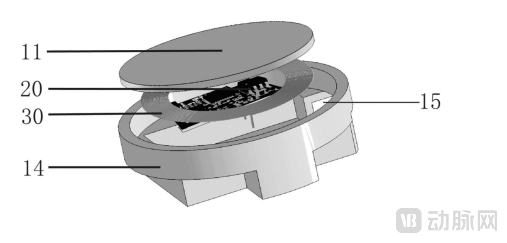
New Type of Cardiac Pacemaker, Image Source: Patent Specification
It is understood that, unlike traditional cardiac pacemakers, which have a single function of pacing and cannot integrate multifunctional capabilities, this patent enables wireless power supply while simultaneously providing cardiac pacing, electrocardiogram (ECG) signal detection, and biochemical signal detection.
Three Innovations Enable Multifunctional Applications of Cardiac Pacemakers
With the growing demand for cardiac health monitoring, integrating in situ electrophysiological and biochemical signal detection capabilities into cardiac pacemakers has become increasingly important.
However, traditional cardiac pacemakers still present numerous challenges: First, conventional medical ECG monitoring devices typically require skin-adhesive electrodes, long lead wires, and bulky equipment, thereby increasing the risk of patient allergies and infections. Second, traditional devices for biochemical status detection are often large in size and expensive, making it impossible to provide biochemical signal monitoring services to a large number of users simultaneously. Third, commercial cardiac pacemakers are battery-powered, with a typical battery lifespan of approximately 10 years, necessitating periodic additional surgeries to replace depleted batteries.
To overcome the aforementioned challenges, Professor Fang Yin’s team at Tongji University has developed a novel cardiac pacemaker. It is reported thatProfessor Fang Yin has developed implantable and wearable devices, as well as novel integrated diagnostic and therapeutic devices, by combining approaches such as structural and functional regulation of nanobiomaterials, micro- and nanodevice fabrication, and neuromodulation therapies.. The novel cardiac pacemaker developed by Professor Fang Yin’s team integrates the following three functions:
First, the cardiac pacing function: the team designed external electrodes connected to a circuit board, enabling the host computer’s control chip to output pacing pulses that stimulate the electrodes to achieve cardiac pacing, with adjustable pulse parameters to modify heart rhythm;
Next is the ECG signal detection function. The team detects signals from the heart using ECG electrodes, with the power supply energizing the circuit board. After processing by the circuit board, the host computer sends commands; the chip then amplifies the signal and transmits the digital signal back to the host computer.
Finally, the system features detection of the biochemical marker N-terminal pro-brain natriuretic peptide (NT-proBNP). The team developed a field-effect transistor (FET)-based sensor to detect biochemical signals. The sensor surface is modified with aptamers that bind to the target analyte, generating an electrical signal. This signal is amplified, filtered, and converted into a digital signal before being transmitted to the host computer.
It is understood that,This new type of cardiac pacemaker features an integrated design that enables wireless power transfer, eliminating the need for battery replacements, while also supporting wireless communication and offering a compact, low-power, and cost-effective solution. Functionally, this pacemaker meets various needs, including real-time monitoring, adjustment of pacing parameters, prevention of complications, and in situ detection of biochemical markers.
Multiple Industry Giants Enter the Leadless Cardiac Pacemaker Market
Prompted by a patent released by Tongji University, VCBeat’s Orange Fruit Bureau provides a brief overview of cardiac pacemakers.
Since the first pacemaker was successfully applied in clinical practice in 1958, this field has undergone significant technological leaps, evolving from the initial surgical transthoracic implantation of epicardial pacemakers to various developmental stages, including transvenous asynchronous pacemakers, demand pacemakers, rate-responsive pacemakers, dual-chamber pacemakers, intelligent pacemakers, and even MRI-compatible pacemakers.
Currently, miniaturization has become the mainstream trend in pacemaker development. As a transformative technology in this phase, leadless pacemakers have given rise to three leading companies: Medtronic, Boston Scientific, and Abbott.
As early as 2013 and 2015, NanoStim and Medtronic pioneered the launch of the NanoStim and Micra leadless pacemakers, respectively, which were subsequently marketed in the European Union, marking the formal entry of leadless pacemakers into clinical application.
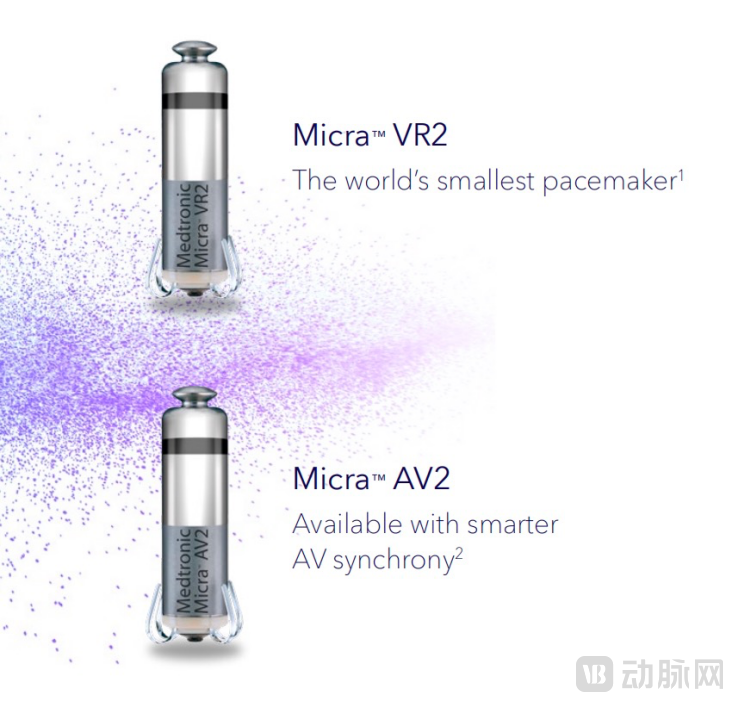 Micra AV2 and Micra VR2 Leadless Cardiac Pacemakers, image sourced from the company's official website
To date, Medtronic continues to demonstrate strong momentum in the commercialization of leadless pacemakers. Since its launch in the European Union, the United States, and China starting in 2015, the Micra pacemaker has achieved a cumulative global implantation volume exceeding 100,000 cases. In 2023, Medtronic announced further success as its next-generation Micra leadless pacemakers (including the Micra AV2 and Micra VR2) received approval from the U.S. Food and Drug Administration (FDA), followed by CE marking in January 2024. The AV model signifies the realization of atrioventricular conduction capability, more closely mimicking the heart’s natural physiological state and reflecting the precision and patient-centric design of pacing technology.
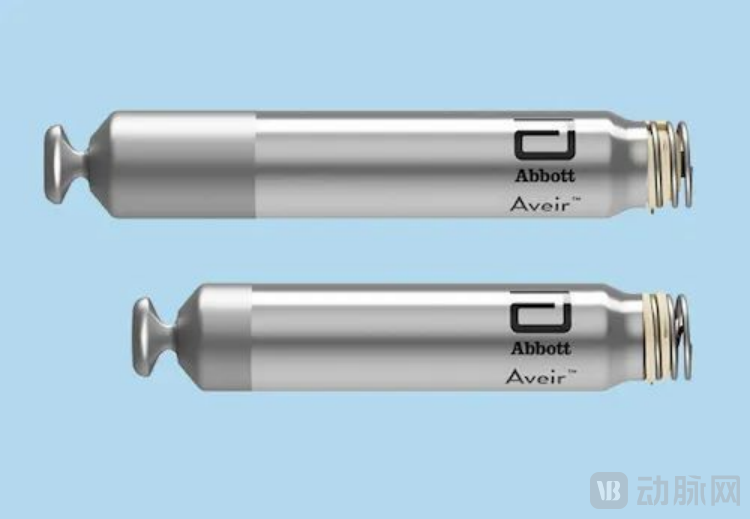 Abbott Aveir DR System, image sourced from the company’s official website
NanoStim, having been acquired first by St. Jude Medical and later by Abbott, ultimately evolved into Abbott’s Aveir series, becoming a significant player in the market. In 2023, Abbott announced that its developed Aveir DR dual-chamber leadless pacemaker had received FDA approval. This product is the world’s first dual-chamber leadless pacemaker.
Furthermore, Boston Scientific has innovatively integrated the EMPOWER leadless pacing system into its S-ICD platform, enabling subcutaneous ICDs with pacing capabilities, and continues to develop a subcutaneous CRT-D system with biventricular pacing functionality to enrich its product portfolio.
In contrast, the penetration rate of cardiac pacemakers in the Chinese market is relatively low. Influenced by factors such as technical barriers, foreign brands dominate the market. Data from the Qianzhan Industry Research Institute shows that foreign companies collectively account for nearly 85.0% of the Chinese market. As of the end of 2023, only three domestic brands—Lepu Medical, LifeTech Scientific, and MicroPort (Leadcare)—had obtained product approvals.
Taking Lepu Medical as an example, the Qinming 2312 and Qinming 8631 series of implantable cardiac pacemakers, which the company has sequentially registered and launched, are domestically produced medical device products with fully independent intellectual property rights. Among them, the Qinming 8631 pacemaker is China’s first dual-chamber pacemaker with rate-responsive functionality that possesses fully independent intellectual property rights.
Currently, no independently developed leadless cardiac pacemakers have been launched on the Chinese market. However, with the passage of time, it is believed that domestic innovative enterprises will achieve greater breakthroughs in the field of leadless pacemakers.