

Domestic Bioreactors Surpass 50% Localization Rate, Overcoming 'Chokepoint' Technologies
Not long ago, CDMO giant WuXi Biologics announced the completion of its first batch of 5,000L single-use bioreactors. These three newly commissioned bioreactors will add 15,000L of capacity to its Drug Substance Manufacturing Facility 20 (MFG20), significantly increasing the facility’s original capacity from 8,000L to 23,000L. This underscores the critical importance of bioreactors as core equipment in biomanufacturing.
Meanwhile, on the other side of the Pacific, the U.S. House Committee on Oversight and Accountability has just voted 40-1 to advance the latest revised draft of the “Biosecurity Act” to the next stage of the legislative agenda. The bill would prohibit federal agencies from entering into contracts with biotechnology companies deemed to be of concern—explicitly naming Chinese firms such as WuXi Biologics, WuXi AppTec, BGI Group, and MGI Tech—and would also ban contracts with companies that use equipment or services from these entities. Although an eight-year exemption period remains, the likelihood of the bill’s ultimate passage appears significant at present.
Turn the clock back more than two years. On February 7, 2022, the U.S. Department of Commerce added WuXi Biologics and 32 other Chinese entities to its “Unverified List” (UVL), subjecting these companies to import reviews for a range of production equipment, including single-use bioreactors, and sending shockwaves through the industry. At that point, many were surprised to discover that biomanufacturing, like semiconductor manufacturing, also has critical “chokepoint” vulnerabilities.
Since then, the domestic bioreactor industry in China has received unprecedented attention and entered a phase of rapid development. After more than two years of swift growth, what is the current status of import substitution for bioreactors produced in China? Have the previous “chokehold” bottlenecks been overcome? VCBeat has collected and organized relevant data and consulted industry experts.
In bioengineering, a bioreactor refers to a device used for the in vitro cultivation of microorganisms and cells, enabling the production of various target products and drugs through biochemical reactions or the metabolic activities of the organisms themselves. Fundamentally, any process involving cellular metabolism and cell culture requires the use of a bioreactor.
The concept of the “bioreactor” in its broad sense has a long history; for instance, the sealed fermentation vessels used in winemaking are one such example. However, it was not until the 1980s that the term “bioreactor” gradually emerged alongside the development of bioengineering, becoming a key piece of upstream equipment in biomanufacturing. Simply put, its role in biomanufacturing is as critical as that of machine tools in the mechanical industry or robots in general manufacturing.
According to Mordor Intelligence, the bioreactor market size is estimated at USD 5.45 billion in 2024 and is projected to reach USD 7.79 billion by 2029, registering a compound annual growth rate (CAGR) of 7.45% during the forecast period (2024–2029). However, driven by their advantages in cost, efficacy, and quality, domestic CDMOs are favored by the global pharmaceutical industry, resulting in a growth rate significantly higher than the global average.
Duoning Biologics submitted its IPO prospectus in 2022, which noted that the compound annual growth rate (CAGR) of the bioprocessing solutions market, including bioreactors, reached as high as 51.6% from 2017 to 2021, significantly exceeding the global CAGR of 17.8% over the same period.
Bioreactors can be primarily classified into stainless steel, glass, and single-use types based on their materials. Currently, stainless steel bioreactors and single-use bioreactors based on pharmaceutical-grade membrane materials are the main types used for commercial-scale production.
Stainless steel bioreactors are the most mature mass-produced bioreactors, with a long history of application. Depending on specific requirements, they typically use 304 or 316 stainless steel. Their key advantage lies in the ability to easily achieve ultra-large-scale production without the need to replace expensive single-use consumables throughout their service life, making them the preferred choice for stable, large-scale manufacturing of individual products.
However, stainless steel bioreactors require substantial upfront capital investment, and the construction timeline for facilities is relatively long (1.5 to 2 years). Furthermore, they lack flexibility due to the cleaning and validation processes required when switching production runs.
Single-use bioreactors gradually moved from the laboratory to industrial-scale manufacturing by the end of the last century, driven by technological breakthroughs. Their high flexibility, low contamination risk, ease of cleaning, and low validation costs significantly shorten construction and commissioning timelines (to as little as six months), reduce facility footprint, and accelerate drug development cycles. These advantages align with current trends in the biopharmaceutical industry, leading to substantial growth in recent years and making single-use bioreactors the preferred choice for biopharmaceutical companies and CDMOs.
However, single-use bioreactor technology presents a relatively higher technical barrier and demands exceptional stability. On one hand, leachables may be released from the single-use bags used for cell culture upon contact with the culture medium, potentially inhibiting cell growth or, in more severe cases, leading to culture failure. On the other hand, single-use bags have limited pressure tolerance, which may result in issues such as leakage under high-pressure conditions.
The optimization of these underlying technologies is not achieved overnight; it requires long-term accumulation of experience and a process of repeated trial and error. It is precisely for this reason thatMultinational giants such as Sartorius, Thermo Fisher Scientific, Merck Millipore, Cytiva, and ABEC, which have long been deeply engaged in the field of single-use bioreactors, essentially dominate the global market for single-use bioreactors.。
The domestic market was previously heavily reliant on imported single-use bioreactors, which gave rise to concerns in February 2022. According to the prospectus submitted by Duoning Biologics in 2022, domestically produced bioreactors accounted for less than 30% of the Chinese market at that time.
The head of sales at Baigaole Biologics told VCBeat that the formation of such a monopoly is entirely understandable from a commercial perspective: “The hardware cost of the entire bioreactor accounts for a relatively small proportion of the overall cost of biopharmaceutical production, likely between 5% and 10%, which is far lower than the cost proportion of its output. Assuming the bioreactor costs RMB 10 million, the material costs inside would be approximately RMB 100 million, and the final product value would reach around RMB 1 billion. Even if the cost of replacing the bioreactor drops from RMB 10 million to RMB 2 million, butOnce issues arise with the finished product, the losses far outweigh the cost savings achieved on hardware. Under such circumstances, naturally, no one is willing to take the substantial risk of making substitutions.。”
The 2022 “Unverified List” abruptly upended what had previously appeared to be a permanently stable situation. On the one hand,Chinese biopharmaceutical companies on the list are experiencing intense short-term anxiety over potential supply chain bottlenecks in bioreactors.—Whether domestically produced equipment is truly up to par, and whether it will deliver pleasant surprises or unpleasant shocks, remains an open question. On the other hand, thisForced external pressures have instead propelled domestically produced bioreactors, once mere supporting players, into the spotlight overnight, granting them a rare, once-in-a-lifetime opportunity.。
The breakthrough begins here.
In fact, China had already begun to prioritize upstream equipment for biomanufacturing before the United States imposed its restrictions. In January 2022, just one month before the U.S. released its “Unverified List,” the *14th Five-Year Plan for the Development of the Pharmaceutical Industry*, jointly issued by nine national ministries and commissions, listed “the focused development of ultra-large-scale (≥10,000 liters per tank) cell culture technology” as the top priority for breakthroughs in biopharmaceutical technologies. Bioreactors have also become a key focus for domestic substitution of imports and for overcoming critical technological bottlenecks.
This push for domestic substitution, coupled with the biomanufacturing industry’s acute anxiety over “chokehold” technologies,The domestic bioreactor industry has rapidly gained attention from the capital market since 2022.Represented by PureBio, several outstanding companies completed multiple rounds of financing between 2021 and 2024, thereby enabling them to expand production capacity and intensify R&D efforts. According to incomplete statistics from VCBeat Orange Data, domestic bioreactor companies completed 14 financing rounds after January 2022, accounting for as much as 45% of all financing events. Between January 1, 2021, and February 1, 2022, there were 7 financing rounds, representing 22.6% of all financing events.
That is to say,Nearly 70% of financing rounds were completed within three years.。
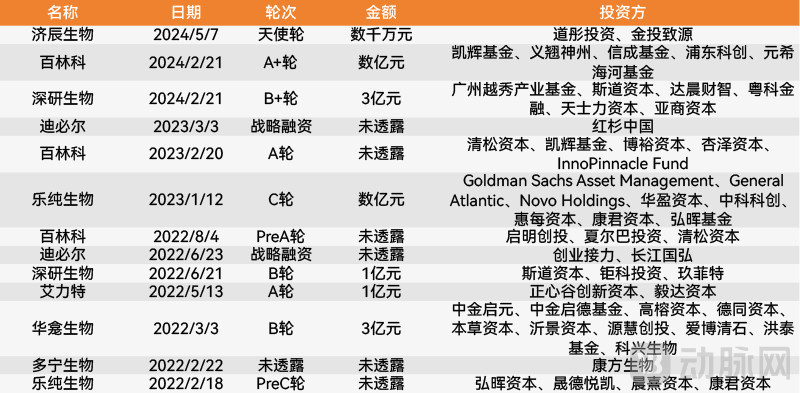
Incomplete Data on Investment and Financing of Domestic Bioreactor Companies (January 2022 to Present)
Domestic listed companies such as Tofflon and Truking Technology also experienced consecutive sharp surges in their stock prices shortly after the release of the “Unverified List.” Subsequently, these industry leaders began to intensify their R&D efforts on bioreactors. These R&D achievements have been mentioned in their annual reports over the years.
In its 2022 annual report, Tofflon listed several bioreactor projects for the first time among its R&D initiatives, such as glass vessel bioreactors, single-use fixed-bed reactors, and related single-use consumables. According to disclosures in the 2023 annual report, most of these projects have completed their R&D phases. Furthermore, the 2023 annual report highlighted that Tofflon’s “Project on Technological Breakthroughs and Industrial Application of Large-Scale Single-Use Bioreactors and Systems” received a government subsidy of RMB 17.676 million, underscoring governmental support for the domestic substitution of bioreactors.
Truking Technology established two subsidiaries, Truking Yuanchuang and Truking Syouthe, in 2020 to enter the bioreactor market. Specifically, Truking Syouthe was founded with the objective of researching, developing, and manufacturing single-use bioreactors and related consumables. In its 2021 annual report’s business planning section, Truking Technology explicitly stated its focus on advancing biopharmaceutical equipment, particularly upstream bioreactors for biopharmaceutical production, along with single-use technology products, consumables, packaging, and excipients, and announced the formation of a dedicated team for the development of innovative drug manufacturing equipment.
The 2022 annual report noted that subsidiaries such as Chutian Yuanchuang and Chutian Siyoute have established bioengineering solutions, including single-use bioreactors, stainless steel reactors, and related consumables. Among these, Chutian Siyoute’s single-use bioreactor systems have undergone extensive customer adoption and validation, achieving its first orders.
Truking Technology’s annual report also disclosed the performance of its relevant subsidiaries, both of which have seen significant improvements in the past two years. In particular, Truking Syto, which specializes in single-use bioreactors, is currently in the investment phase but is projected to achieve an annual revenue scale of RMB 800–1 billion within the next five years, according to its strategic plan.
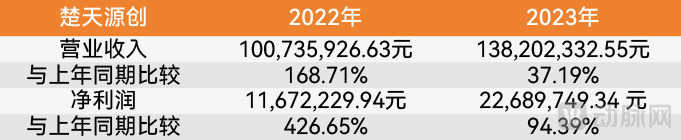
Recent Performance of Chutian Yuanchuang (Data from Chutian Technology's Annual Report)
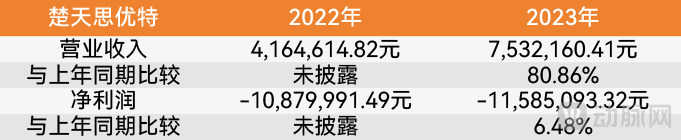
Truking Eusoft’s Recent Performance (Data Source: Truking Technology Annual Report)
Duoning Biologics submitted its IPO prospectus in September 2022, which also detailed the company’s strategic layout in this field in recent years. Duoning Biologics acquired Qizhi Bioengineering in 2019 and Chuyi Biotechnology in 2022, thereby completing its deployment in the bioreactor sector.
In fact, it is not only listed or pre-listed companies that are making significant efforts; the domestic substitution of bioreactors in China, including among small and medium-sized enterprises, has been gaining strong momentum over the past two years, with the landscape changing markedly compared to two years ago.
The head of sales at Baigaole Biologics told VCBeat that, after more than two years of effort, domestically produced bioreactors have made significant progress: “First,Stainless steel bioreactors have achieved domestic substitution in China; from my personal perspective, their market share has reached at least 70-80%., stainless steel bioreactors from multinational giants are basically no longer visible. As far as I know, the stainless steel bioreactor business of mainstream multinational corporations has essentially withdrawn from the Chinese market.”
As a milestone, in March 2023, the domestic CDMO Cell Therapy Life Sciences announced that its 15,000-liter stainless steel bioreactors had begun installation at its Shanghai facility. These ultra-large bioreactors, designed in Europe and manufactured in China, achieved domestic substitution for imports of the reactors and most upstream and downstream equipment “from scratch,” marking the first deployment of 15,000-liter ultra-large-scale stainless steel bioreactors in China.
“Although the pace of domestic substitution for single-use bioreactors is not as rapid as that for stainless-steel bioreactors, the industry has made significant progress. By the end of 2023, our company had successfully delivered a commercial-scale production line of single-use bioreactors to a domestic biopharmaceutical enterprise. Meanwhile, we have formed a small alliance for domestic substitution by collaborating with upstream and downstream partners, including suppliers of culture media, chromatography resins, and software,” added the executive.
It is understood that the domestic substitution rate for single-use bioreactors in China has currently reached at least 50%, and even 60%-70%.。
VCBeat has learned that leading domestic bioreactor manufacturers, represented by Lechun Bio, have achieved encouraging breakthroughs in the past two years. It is understood that Lechun Bio has successfully implemented multiple commercial-scale bioreactor production lines for its clients, whether for the commercial manufacturing of PD-1-based drugs or for top-tier CDMO companies. This reflects clients’ determination to pursue localization and their recognition of domestically produced equipment.
In fact, the domestic bioreactor industry is no longer confined to standalone bioreactors but is expanding its footprint across the broader field of cell culture. Take Lepu Biopharma as an example: by pursuing a dual strategy of in-house R&D and acquisitions, the company is rapidly strengthening its presence throughout the cell culture sector. In addition to benchtop bioreactors and culture media, Lepu Biopharma is also increasing its investments in reagents and consumables related to cell culture. According to its strategic plan, Lepu Biopharma will continue to ramp up its investments in the cell culture field, with planned acquisitions and internal R&D initiatives scheduled for both this year and next.
More importantly, once this substitution process is initiated, it will be irreversible. After all, given the precedents set by the semiconductor industry, no one harbors any illusions anymore.
The head of sales at Baigaole Biotech believes that,Compared with imported bioreactors, domestically produced bioreactors have their own competitive advantages in several aspects.。
“First, Supply Chain SecurityAs everyone is aware, Sino-US trade tensions have intensified in recent years, and any restrictions imposed can significantly impact business operations. Supply chain security has now become a primary consideration for virtually every pharmaceutical company and CDMO.Next is cost.“Currently, there is significant homogenization in biopharmaceutical pipelines, and the impact of price reductions under national medical insurance coverage must also be taken into account. Ultimately, competition boils down to production costs, which compels pharmaceutical companies to adopt domestically produced alternatives. After all, the cost of domestic bioreactors is approximately half or even one-third that of imported products.”
This estimate is not exaggerated. Reports on Lepu Biopharma’s domestic production lines have disclosed that their construction costs are significantly lower than those of international industry giants. The cost of building a 15,000-liter production line is only one-third or even less of that of Samsung Biologics in South Korea. For the biopharmaceutical industry, which places a high premium on cost efficiency, this represents a substantial incentive.
“Finally, domestic companies offer greater service flexibility and more rapid response.“Domestic companies are actually more responsive to customers’ processes, specialized customization, and service requests. For instance, imported reactors either do not allow customization or charge prohibitively high fees for it. Moreover, if an issue arises with an imported reactor, one must contact the headquarters via email and wait for an engineer to visit on-site, which can sometimes take up to a month. In contrast, with domestically produced reactors, a single phone call can secure support; at worst, response takes 24 hours, but since many manufacturers are based in Shanghai, an engineer can often arrive within two hours to resolve the issue without disrupting production,” he added.
Undoubtedly, domestically produced bioreactors have made significant progress. However, we must recognize the reality: given their relatively short history of large-scale application, there remains considerable room for improvement.
The Head of R&D at Lepu Biotech pointed out that,Current domestic substitution efforts primarily focus on integrated localization, with certain gaps still remaining in key areas.。“First is software. Our software has indeed made significant progress, but there is still room for improvement compared to imported products. Fortunately, leveraging the technological dividends of the national software industry, catching up is only a matter of time.。”
“Second, sensor components are critical for bioreactors. Although bioreactors have been domestically produced in China, certain key components—such as load cells and pH combination electrodes—still lack high-quality domestic alternatives."This involves interdisciplinary fundamental research spanning chemistry, physics, and other fields, making breakthroughs far from easy. We have also observed that certain research projects at Chinese universities are already underway. Of course, achieving breakthroughs will take time."
“Third, domestically produced bioreactors have largely been in a phase of rapid catch-up over the past two years, with further research and improvement needed in certain detailed design aspects.“Relatively speaking, imported reactors embody many design concepts. This is an area we need to catch up with as soon as possible in the coming years,” he said.
The person in charge further stated,Throughout the field of cell culture, there remain numerous emerging areas with high technical barriers that require further breakthroughs.“As a company that is moving relatively fast in this sector, Lepu Biotech also bears the responsibility to engage in R&D with longer investment return cycles. For instance, we collaborate with pharmaceutical companies to develop culture consumables for various innovative therapies. Such investments may take 3–5 years to yield results, but once breakthroughs are achieved, they will create a substantial new market. This actually requires a certain strategic vision and a long-term perspective to justify the commitment.”
The industry is generally optimistic about the future of domestically produced bioreactors.
Several industry experts have stated that the trend toward domestic substitution remains unchanged; beyond relative competitive advantages, the iterative development of domestic solutions is better suited to the evolving needs of the nation’s industries. The consensus within the sector is that leading domestic companies, such as Lepu Biopharma, already possess advantages in individual products, performance, and manufacturing processes. As applications deepen and experience accumulates, the overall quality of domestically produced products will gradually align with internationally advanced counterparts. Furthermore, the rapid industry growth over the past two years has attracted significant capital attention, providing leading enterprises with greater capacity to invest in research and development.
“From the current perspective,A significant proportion of current customers are already opting for domestically produced bioreactors. I believe that achieving substantial import substitution with domestic alternatives in China over the next two to three years is a virtually certain trend. Given our rapid iteration speed, I am highly optimistic that we can reach parity with imported products within three to five years..” said the head of R&D at Lepu Biopharma in an interview with VCBeat.
Two years ago, when the United States released its Unverified List, many people harbored significant doubts about whether domestically produced bioreactors were truly viable. However, thanks to the collective efforts of the entire industry, we now find the progress in domestic substitution of bioreactors heartening two years later. To some extent, the “chokehold” has instead become an opportunity for industry advancement, proving that China’s speed and ingenuity never disappoint. What is needed is greater patience across all segments of the industrial chain and coordinated efforts from all parties.
Of course, the localization of bioreactors is merely the tip of the iceberg in the broader effort to localize the entire industrial chain. It is not limited to single-use bioreactors; the localization process across the biopharmaceutical sector and even the wider medical industry must accelerate to catch up. We do not reject global cooperation; however, only by having viable domestic alternatives across the entire industrial chain can we secure autonomy over critical aspects such as R&D manufacturing, costs, and pricing, thereby avoiding being held hostage by external supply constraints.
As the Head of Sales at Baigaole Biotechnology noted during our discussion, China is ultimately poised to produce its own global giants in biomanufacturing equipment: “In the manufacturing sector, we Chinese have proven that, given sufficient time, we will achieve significant accomplishments, as seen with home appliances and mobile phones. The same holds true for bioreactors. Indeed, challenging international incumbents is no easy feat, but with the growing emphasis on biopharmaceuticals in China in recent years, I am confident that we will inevitably reach that milestone in the future.”
Let us wait and see, looking forward to the arrival of that day.
References:
Wang Jingyu, Donghai Fund: “Single-Use Bioreactors: Market Space Continues to Expand, with Promising Future Prospects”