

Simcere Pharmaceutical Invests $500 Million to Bring Daridorexant to China, Aiming to Add an Extra Hour of Sleep for Insomnia Patients

Simcere
Innovative Drug Developer
On July 16, according to the public notice on the official website of the Center for Drug Evaluation (CDE) under China’s National Medical Products Administration (NMPA), the new drug application for daridorexant hydrochloride tablets, jointly submitted by Simcere, has been accepted. According to Simcere’s public disclosures, this anti-insomnia medication was developed in collaboration with Switzerland-based Idorsia and is a dual orexin receptor antagonist. In June this year, Simcere announced that the Phase III clinical trial of this product for treating insomnia patients in China had met its primary endpoints.
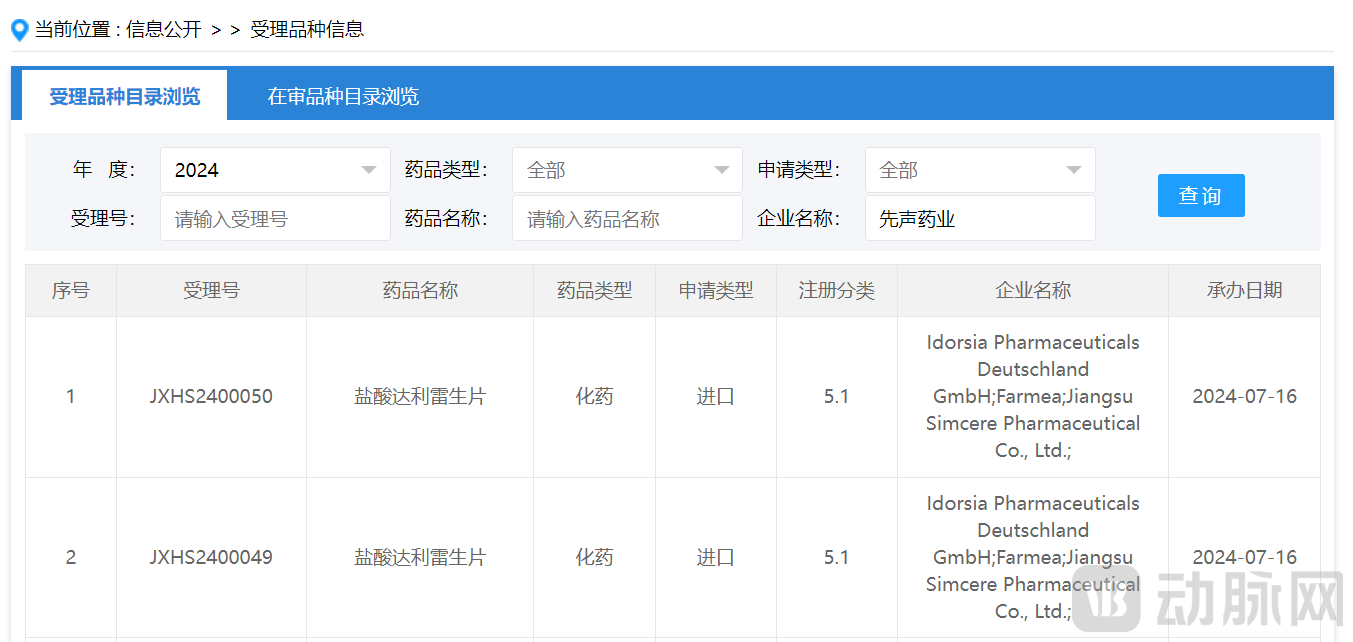 Source: CDE Official Website
Insomnia disorder is a condition characterized by difficulty initiating and maintaining sleep (lasting at least three months), which impairs daytime functioning in areas such as work and social interactions. According to the "2023 China Sleep Big Data Report," approximately 509 million people in China suffer from sleep disorders. Upon successful market launch, the product is expected to exceed sales forecasts due to substantial patient demand.
Total sleep time (sTST) significantly increased by 57.7 minutes; approved for marketing in multiple countries
Publicly available data indicate that, unlike traditional sedative-hypnotic drugs, which promote sleep by sedating the brain, daridorexant acts as a dual orexin receptor (OX1R and OX2R) antagonist. It reduces excessive central arousal by blocking the binding of orexin neuropeptides to their receptors. By selectively inhibiting the activation of orexin receptors, it diminishes wakefulness drive and facilitates sleep onset without altering patients’ sleep architecture or causing next-day residual effects.
The Phase III clinical study of daridorexant in Chinese patients with insomnia enrolled a total of 206 patients across 33 research centers, with the primary endpoint being the reduction in wake after sleep onset (WASO). Analysis results demonstrated that, compared with placebo, administering one tablet of daridorexant hydrochloride nightly before bedtime significantly improved multiple sleep parameters, including WASO, in patients with insomnia. Furthermore, it reduced next-day sleepiness, enhanced daytime functioning, and exhibited a favorable safety and tolerability profile.
According to the results of a pivotal Phase III clinical trial on daridorexant for the treatment of insomnia published in The Lancet Neurology, daridorexant significantly improved sleep onset, sleep maintenance, and self-reported total sleep time compared with placebo at Month 1 and Month 3 of treatment. In subjects receiving daridorexant 50 mg (milligrams), at Month 3 of treatment,Latency to persistent sleep (LPS) significantly decreased by 34.8 minutes, wake after sleep onset (WASO) significantly decreased by 29.4 minutes, and self-reported total sleep time (sTST) significantly increased by 57.7 minutes.Based on this calculation, patients taking daridorexant gain the equivalent of nearly one full night’s sleep per week.
Furthermore, the study found no evidence of dependence, rebound insomnia, withdrawal symptoms, or drug abuse, demonstrating a favorable safety and tolerability profile that supports long-term use.
Currently, daridorexant has been approved for marketing in the United States, the United Kingdom, the European Union, Switzerland, and Canada.
RMB 360 Million: Simcere Secures Exclusive Rights for Development and Commercialization in Mainland China, Hong Kong, and Macau
In 2022, Simcere and Idorsia jointly announced that they had entered into an exclusive license agreement for the development of Idorsia’s novel insomnia treatment, daridorexant, in China.
Under the agreement, Simcere will obtain exclusive rights to develop and commercialize daridorexant in mainland China, Hong Kong, and Macau. Simcere will be responsible for conducting clinical development of the project in China. Idorsia will receive an upfront payment of $30 million (RMB 217 million) and will be eligible for an additional milestone payment of $20 million (RMB 145 million) upon regulatory approval in China, as well as low double-digit tiered royalties based on future sales.
At the time of signing this agreement, daridorexant also submitted a new drug application in Japan. In addition to improving nighttime sleep in adults with chronic insomnia disorder, daridorexant is currently the only dual orexin receptor antagonist (DORA) approved by the European Medicines Agency (EMA) for improving daytime functioning.
Since the agreement was reached, Simcere and Idorsia have been actively advancing the market launch of daridorexant in China. The domestic Phase III clinical trial rapidly enrolled its first patient by late 2023 and completed recruitment of all participants within just three months, demonstrating highly efficient clinical development. Prior to the release of the domestic Phase III clinical data mid-year, daridorexant received a Certificate of Registration for Pharmaceutical Products/Substances from the Pharmacy and Poisons Board of Hong Kong, China, in late May, authorizing the sale, offer for sale, distribution, and possession of “QUVIVIQ TABLETS 50MG” and “QUVIVIQ TABLETS 25MG” in Hong Kong, China.
Poised to become China’s first dual orexin receptor antagonist (DORA) for insomnia, it has received a Class IA recommendation in the Chinese Guidelines for the Diagnosis and Treatment of Insomnia in Adults (2023 Edition).
Currently, the medications commonly used in clinical practice to improve insomnia symptoms are primarily sedative-hypnotics, which can be divided into two categories: one is benzodiazepine drugs (BZDs), such as diazepam, lorazepam, estazolam, and alprazolam; the other is nonbenzodiazepine drugs (non-BZDs), such as zolpidem, zaleplon, zopiclone, and eszopiclone.
Benzodiazepines (BZDs) are associated with physiological dependence, and discontinuation after long-term use can trigger withdrawal symptoms. In China, they are regulated as Class II psychotropic substances. Furthermore, prolonged use of BZDs may lead to drug tolerance or adverse reactions such as daytime drowsiness, dizziness, reduced muscle tone, falls, and cognitive impairment. Non-benzodiazepines (non-BZDs) offer hypnotic efficacy similar to that of BZDs, generally do not cause daytime drowsiness, and carry a lower risk of drug dependence compared to traditional BZDs. However, non-BZDs may cause transient rebound insomnia upon abrupt discontinuation.
The ideal medication for treating insomnia is one that is both safe and effective in short-term and long-term use, capable of improving quantitative metrics (such as total sleep time, wake after sleep onset, and sleep latency) while enhancing sleep quality, daytime functional performance, and overall health status.
Dual orexin receptor antagonists (DORAs) offer a novel therapeutic breakthrough for insomnia, anxiety disorders, and substance use disorders through their unique mechanism of action. Currently, the leading DORA medications available globally include daridorexant, suvorexant, and lemborexant, each of which was approved in the United States in different years. At present, no DORA has been approved in China. If daridorexant, jointly submitted by Simcere, receives approval, it will become the first DORA indicated for insomnia in the Chinese market.
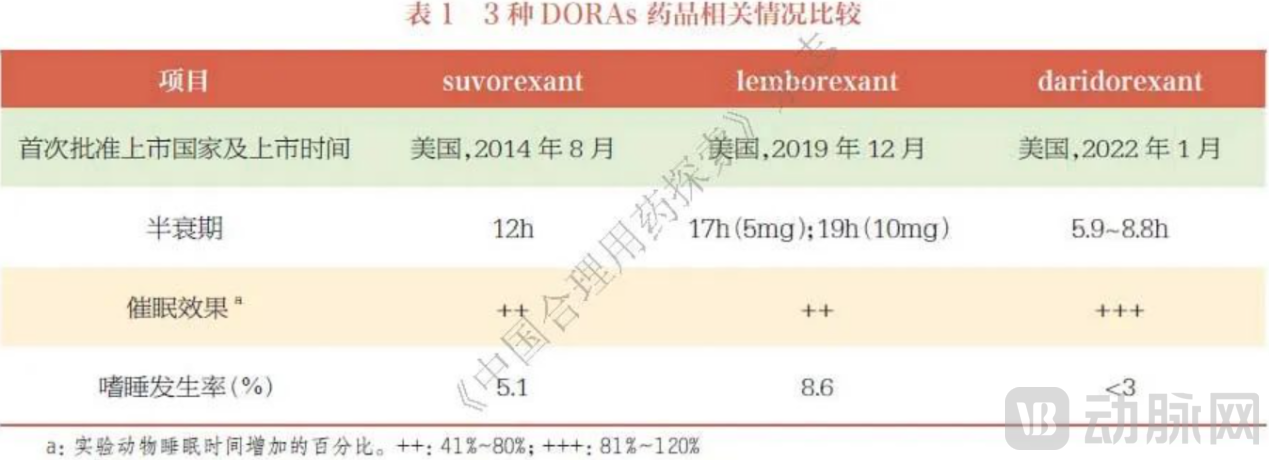 Source: Chinese Journal of Rational Drug Use
Furthermore, in the "Guidelines for the Diagnosis and Treatment of Insomnia in Chinese Adults (2023 Edition)" published in the June issue of the Chinese Journal of Neurology, dual orexin receptor antagonists (DORAs) are identified as the preferred new therapeutic targets for insomnia treatment. Daridorexant tablets received Grade A evidence and a Class I recommendation in the guidelines. The guidelines indicate that DORAs, such as daridorexant, can significantly improve patients' subjective sleep latency, total sleep time, sleep architecture, and sleep quality. Currently, there is no evidence suggesting that DORAs cause drug dependence; they can be used long-term, and discontinuation does not result in significant rebound insomnia.
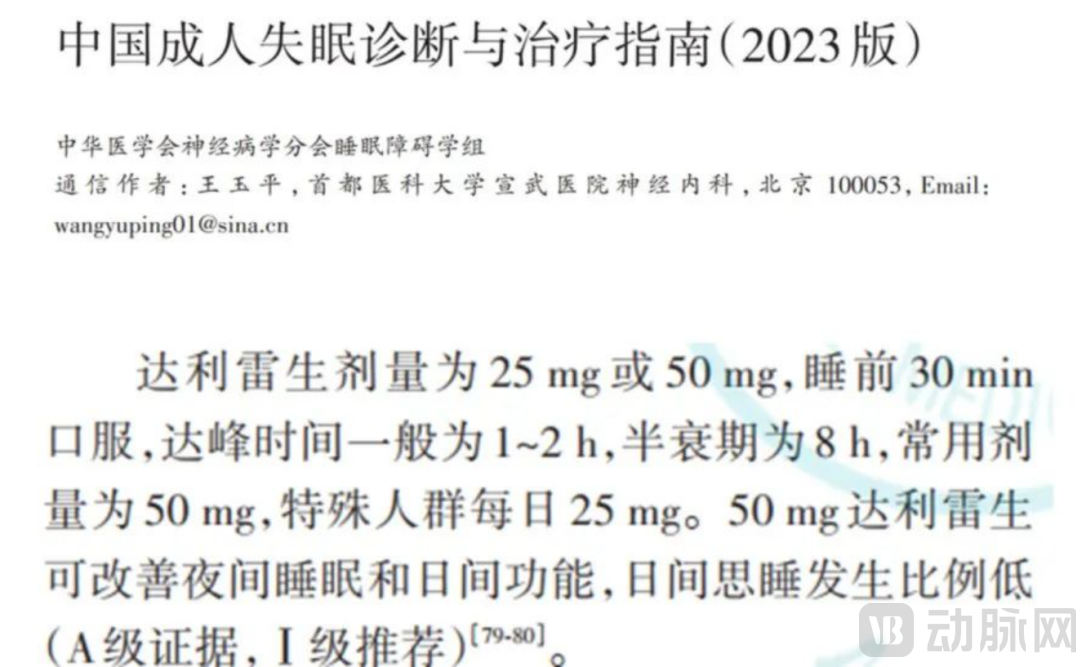 Source: "Guidelines for the Diagnosis and Treatment of Insomnia in Chinese Adults (2023 Edition)"
The guidelines also note that daridorexant “can improve nighttime sleep and daytime functioning, with a low incidence of daytime sleepiness,” a unique advantage of this innovative drug that is expected to provide new options for patients with insomnia in China.
References:
1. Yu Jingxian, Chi Liqun. Research Progress on Anti-Insomnia Drugs: Orexin Receptor Antagonists[J]. Chinese Journal of Rational Drug Use Exploration, 2024, 21(2): 20-25.
2. “Guidelines for the Diagnosis and Treatment of Insomnia in Chinese Adults (2023 Edition).” Chinese Journal of Neurology