

Breaking Through with Reform, Solving Challenges with Technology: The Practice and Insights of Sanming's Healthcare Reform
The Third Plenary Session of the 20th Central Committee of the Communist Party of China has convened, ushering in a new chapter of comprehensive deepening of reforms. Eleven years ago, the Third Plenary Session of the 18th Central Committee sounded the clarion call for comprehensive deepening of reforms, leading to historic changes, systemic reshaping, and holistic restructuring in many fields. It was also in that year that the medical reform in Sanming, Fujian Province, targeting the difficulties and high costs of accessing medical care, began to attract nationwide attention after one year of intensive efforts.
Sanming’s “Three-Medical” Reform Has Anchored a New Coordinate System for China’s Healthcare Reform. In Phase 1.0, Sanming targeted the governance of pharmaceuticals and medical consumables as its breakthrough point, rectifying chaos and curbing waste, thereby overcoming the entrenched problem of being “profit-driven.” In Phase 2.0, by establishing charters and institutional frameworks, Sanming steered healthcare back onto the track of being “disease-treatment-centered.” Currently, Sanming’s healthcare reform has entered Phase 3.0, driving the transformation of the entire medical service system from being “disease-treatment-centered” to “health-centered.”
Looking back on the past decade, it is evident that the historical inevitability of the Sanming experience underpinning China’s national healthcare reform plan lies in both bold institutional innovations and the empowering role of digital intelligence. The synergy between these two forces has forged a uniquely Chinese path to addressing the global challenge of healthcare reform. History follows its own logic; revisiting the Sanming experience at this critical juncture may offer greater certainty and valuable governance insights for navigating the complexities of healthcare reform in the new era.
Phase 1.0: Prioritize Pharmaceutical Reform Before Healthcare Reform to Break the Profit-Driven Model
The journey of the Sanming healthcare reform began with a thorough overhaul of the pharmaceutical system. “To advance healthcare reform, one must first tackle ‘pharmaceutical reform.’” Zhan Jifu, the first chief architect of the Sanming healthcare reform, recalled that the “first move” in launching the reform targeted the artificially inflated prices of drugs and medical consumables in the distribution sector. “The measures were sharp and incisive, directly addressing the ‘unwritten rules’ that had long prevailed in the industry.”
In 2012, Sanming in Fujian Province spontaneously launched a healthcare reform, taking the lead in addressing issues such as artificially inflated drug prices and excessive medical treatments. This became the most critical component of the early stage of the Sanming healthcare reform—“replacing old structures with new ones”: raising medical service prices, implementing an annual salary system for hospital directors and physicians, and significantly increasing the transparent income of medical personnel.
In this process, transparent and open procurement of pharmaceuticals and medical devices is key, with the digital support provided by WeDoctor’s SanYiLian platform serving as one of the critical levers for reform. By establishing a transparent online joint price-capped procurement platform for pharmaceuticals and medical devices, centered on the three core objectives of “reducing drug prices,” “improving efficiency,” and “strengthening regulation,” the initiative has not only achieved end-to-end integration of operations and regulatory oversight but also eliminated inefficiencies in the distribution chain while ensuring the quality of drugs and medical consumables. This has enabled “zero kickback” procurement, laying a solid foundation for the further advancement of healthcare reform.
Public data show that since the reform, the proportion of revenue from drugs and consumables in Sanming’s public hospitals decreased from 60.08% before the 2011 reform to 29.83% in 2023. By the end of 2023, the cumulative surplus of the municipal employee basic medical insurance pooled fund reached RMB 1.185 billion, while the cumulative surplus for urban and rural resident basic medical insurance stood at RMB 362 million, achieving a balanced budget with a slight surplus and completely reversing the previous deficit situation.
In 2018, the National Healthcare Security Administration launched the “4+7” centralized procurement pilot program, drawing on the experience of Sanming’s healthcare reforms. WeDoctor supported Xiamen in being the first to implement the new centralized procurement policies and has continuously provided in-depth services for the centralized procurement of pharmaceuticals and medical devices in healthcare reforms in Fujian, Hebei, and other regions, facilitating the implementation of multiple batches of national drug centralized procurement initiatives, including the “4+7” program.
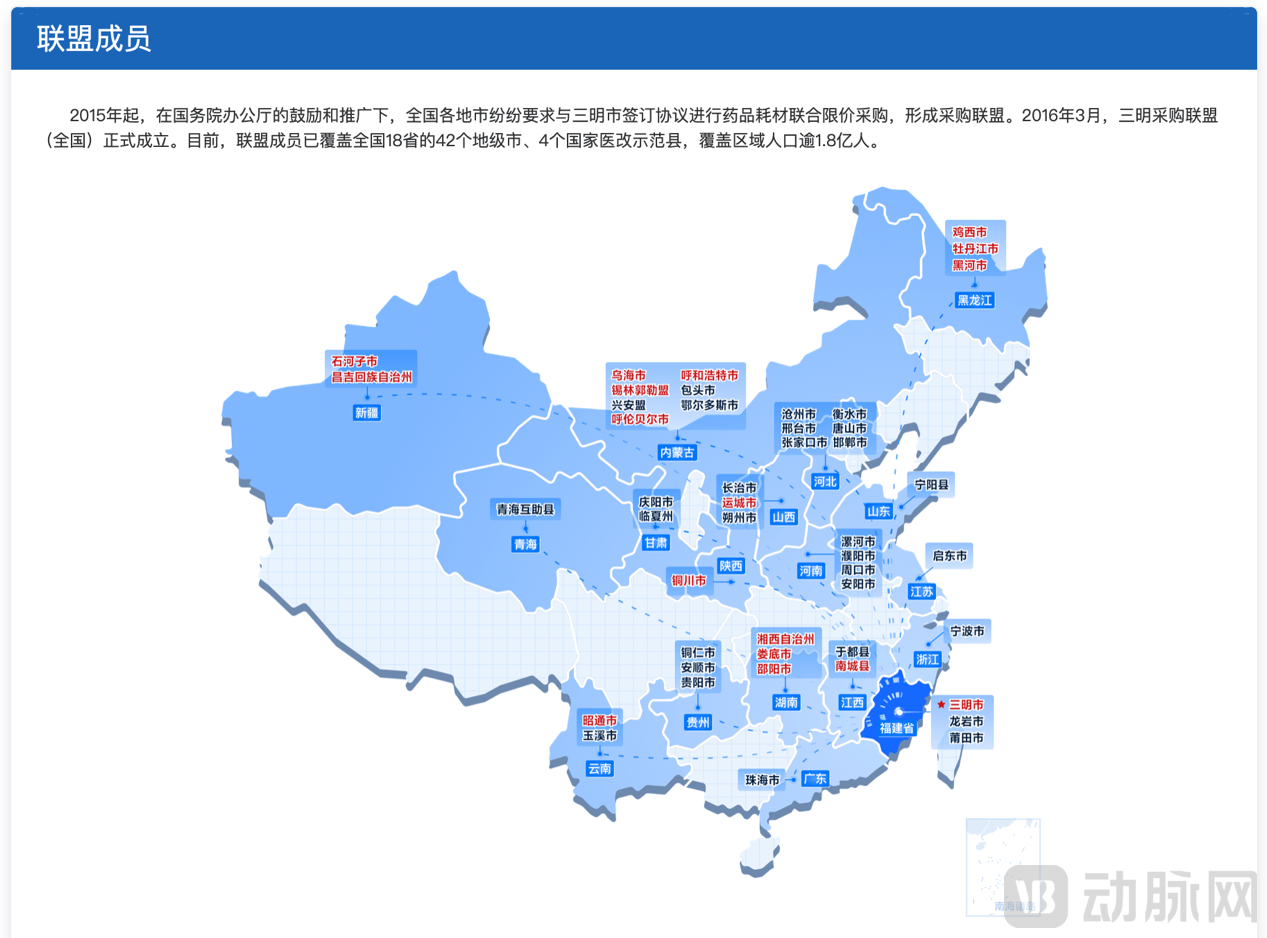
Figure | Digital Platforms Enable the Rapid Nationwide Dissemination of Sanming’s Healthcare Reform 1.0 “Pharmaceutical Reform” Experience
After achieving tangible results in reducing drug prices through its digital platform, WeDoctor was commissioned by the cross-regional national procurement alliance—the Sanming Procurement Alliance (National)—to build and operate the Sanming Procurement Alliance’s “Three-Medical Linkage” Platform. Under the guidance of the Sanming Procurement Alliance (National), the platform is dedicated to facilitating the transition from “centralized volume-based procurement” to a “marketplace model,” establishing a new Sanming Sunshine Procurement Platform characterized by “transparent quality, transparent pricing, and transparent efficiency.” This initiative provides robust support for deepening healthcare reform, controlling medical costs, and improving the quality of medical services. As of June 2024, the Sanming Procurement Alliance’s “Three-Medical Linkage” Platform had facilitated the implementation of centralized procurement of pharmaceuticals, medical devices, and consumables in 118 prefecture-level cities across 22 provinces in China, resulting in cumulative procurement cost savings exceeding RMB 27 billion.
Building on the Sanming experience, efforts to drive reform of the pharmaceutical distribution mechanism through digital and intelligent technologies have been ongoing. In May this year, the National Healthcare Security Administration proposed the establishment of a “Medical Insurance Drug Cloud Platform” to ensure medication access for insured individuals. Currently, WeDoctor is leveraging its mature digital platform, along with big data and artificial intelligence, to create a “Central Cloud Pharmacy.” This initiative integrates the medical insurance sector, healthcare providers, pharmaceutical production and distribution channels, and patients, pioneering in China the construction of an end-to-end pharmaceutical service system that combines a drug supply assurance center, a risk control management center, a pharmaceutical care service center, and a real-world study center. This approach aims to promptly meet patients’ medication needs and gradually address the challenge of difficult access to medicines.
This top-down reform, spearheaded and coordinated by the government with support from technological capabilities, achieved initial success. By initiating changes in pharmaceutical procurement, Sanming swiftly curbed the trend of deficits in its medical insurance fund, completing the “1.0 phase” aimed at “rectifying chaos and plugging waste.” It can be said that Sanming’s exploratory practice in healthcare reform 1.0 not only provided a vivid model for China’s medical reforms but also preliminarily demonstrated the significant potential and possibilities of leveraging technological power to drive reforms in the public service sector.
Phase 2.0: “Transplanting” Technologies from Large Hospitals, Returning to a Disease-Centered Model
Sanming’s Healthcare Reform 2.0 Phase Marks a Pivotal Transition in Its Reform Journey. With the issues of “chaos” and “waste” already addressed, further deepening of the reform and consolidation of its achievements require the establishment of clear guidelines and institutional frameworks to refocus healthcare on its core mission of disease treatment.
During this period, reforms of the healthcare system and operational mechanisms were advanced in parallel, making the establishment of a more rational medical service delivery system an urgent priority. On one hand, the comprehensive implementation of Medical Community (Yi Gong Ti) construction facilitated the effective integration and optimized allocation of medical resources. On the other hand, the introduction of measures such as annual salary systems for hospital directors and the work-point system stimulated the professional enthusiasm of healthcare institutions and medical personnel, thereby enhancing the professionalism and efficiency of medical services.
The institutional alignment of “channeling efforts through a single aperture” has already been achieved. During the implementation of these measures, “technological power,” particularly AI technology, has become the key driver in enhancing the quality and efficiency of medical services. Leveraging Sanming’s policy advantages and the solid foundation of its medical consortium, Shanghai Ruijin Hospital partnered with WeDoctor to achieve seamless technological “transfer” through continuous upgrades in big data and AI technologies. This collaboration successfully “transplanted” Ruijin Hospital’s cutting-edge medical technologies and extensive expertise to Sanming, establishing a comprehensive care system encompassing “prevention, screening, diagnosis, treatment, management, and rehabilitation,” along with a multidisciplinary diagnosis and treatment model.
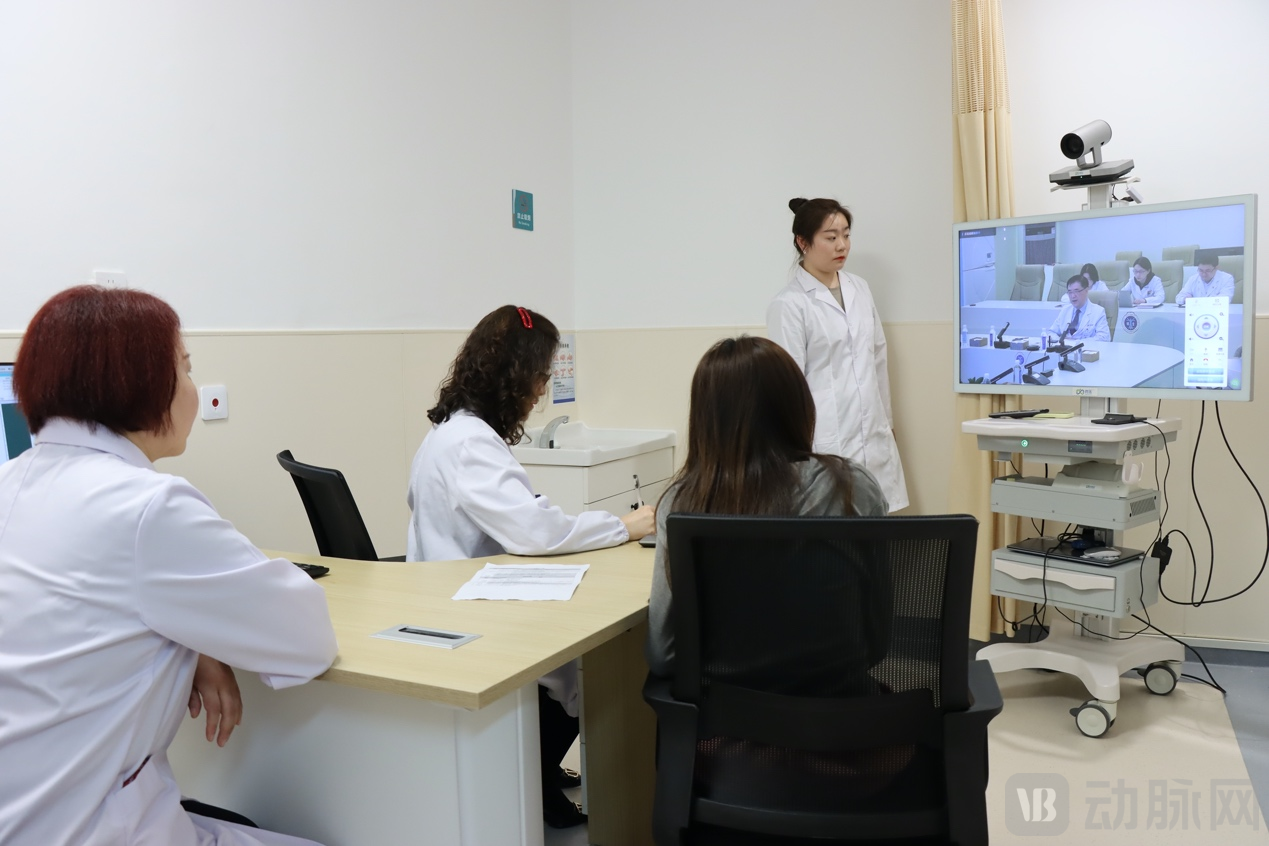
Figure | With AI support, Academician Ning Guang and doctors from Sanming First Hospital conduct a remote consultation for a patient
“We have specifically invited the Shanghai Digital Medical Innovation Center and WeDoctor Group to achieve a seamless transition in both management and technology through artificial intelligence,” stated Ning Guang, an academician of the Chinese Academy of Engineering and President of Ruijin Hospital. “We are not only dispatching Ruijin physicians to Sanming to treat patients and apply advanced technologies, but we are even more committed to transferring these capabilities to help Sanming’s healthcare system reach the same standardized level of care as Ruijin Hospital. Our goal is to truly make Ruijin Hospital feel like Sanming’s ‘next-door neighbor,’ enabling local residents to enjoy high-quality medical services right at their doorstep.”
Leveraging AI-driven technologies, Ruijin Hospital and Sanming have successfully achieved the “replication” and “transfer” of new medical technologies and standardized healthcare management practices, systematically disseminating Ruijin’s advanced expertise and experience to primary healthcare institutions in Sanming on a discipline-by-discipline basis. As China responds to the “Guiding Opinions on Comprehensively Advancing the Development of Close-Knit County-Level Medical Communities,” with timelines and task schedules for implementing such close-knit county-level medical consortia clearly defined across regions, the “Sanming Model” has once again become a focal point of attention for all stakeholders.
Evidently, in the 2.0 phase of the Sanming healthcare reform, “technological power” has become a key driver for deepening the reform. With robust support from big data and artificial intelligence, providing low-cost access to top-tier medical resources for primary healthcare institutions is regarded as a crucial lever to facilitate the implementation and upgrading of nationwide close-knit county-level medical consortia, and to help millions of primary healthcare institutions complete their digital and intelligent transformation. In May this year, at a press conference held by the National Health Commission to introduce the promotion of the Sanming healthcare reform experience in Fujian Province, the “collaborative management of six diseases” model was prominently recommended.
Phase 3.0: AI Empowers the “Integrated Management of Six Diseases,” Implementing a Health-Centric Approach
After years of vigorous reforms, the Sanming healthcare reform has become more than just a synonym for mature practices such as “centralized procurement,” the “two-invoice system,” and “annual salary schemes.” Currently, Sanming has entered a new phase of reform centered on health.
At this stage, building on the solid foundation established in the earlier development of medical consortia, Sanming began to promote the upgrading of these consortia into “Health Communities.” The core of this transformation lies in shifting from the role of a sole provider of medical services to that of a comprehensive health manager. By constructing a “community of shared interests” involving multiple stakeholders—including the government, healthcare institutions, patients, and enterprises—Sanming aims to achieve holistic, refined, and personalized health services, ultimately improving the overall health of the population.
Sanming’s Healthcare Reform Enters Phase 3.0, Identifying the Core Lever for UpgradingIn February this year, Shanghai Ruijin Hospital, WeDoctor, and the Sanming Municipal Government jointly established China’s first “Six-Disease Co-Management” Center covering the full life cycle. Leveraging advanced medical AI technology, the center commenced its first consultations in April. Academician Ning Guang outlined the post-implementation service scenario: relying on digitalization and artificial intelligence technologies, Sanming has formed a “Six-Disease Co-Management” model characterized by “Ruijin designing treatment plans, hospitals ensuring implementation, the Health Commission overseeing supervision, and individuals reaping tangible benefits.” This approach creates a “health chip” for every resident, fostering a collaborative framework where the government, hospitals, medical insurance agencies, physicians, and individuals jointly manage health outcomes.
Through the integration of “Ruijin Technology, Sanming Advantages, and WeDoctor Support,” the innovative model of “AI-Enabled Joint Management of Six Chronic Diseases” has not only revolutionized the concept of chronic disease prevention and control—shifting from a singular “disease-focused” approach to a comprehensive “patient-centered” strategy—but has also effectively driven the upgrading of service models from treatment to health management. Currently, WeDoctor is collaborating with partners such as Tencent to co-develop medical large language models, focusing on creating specialized intelligent products for the “joint management of six chronic diseases.” This initiative will serve as a new digital-intelligent engine propelling the healthcare reform process in Sanming and across China.
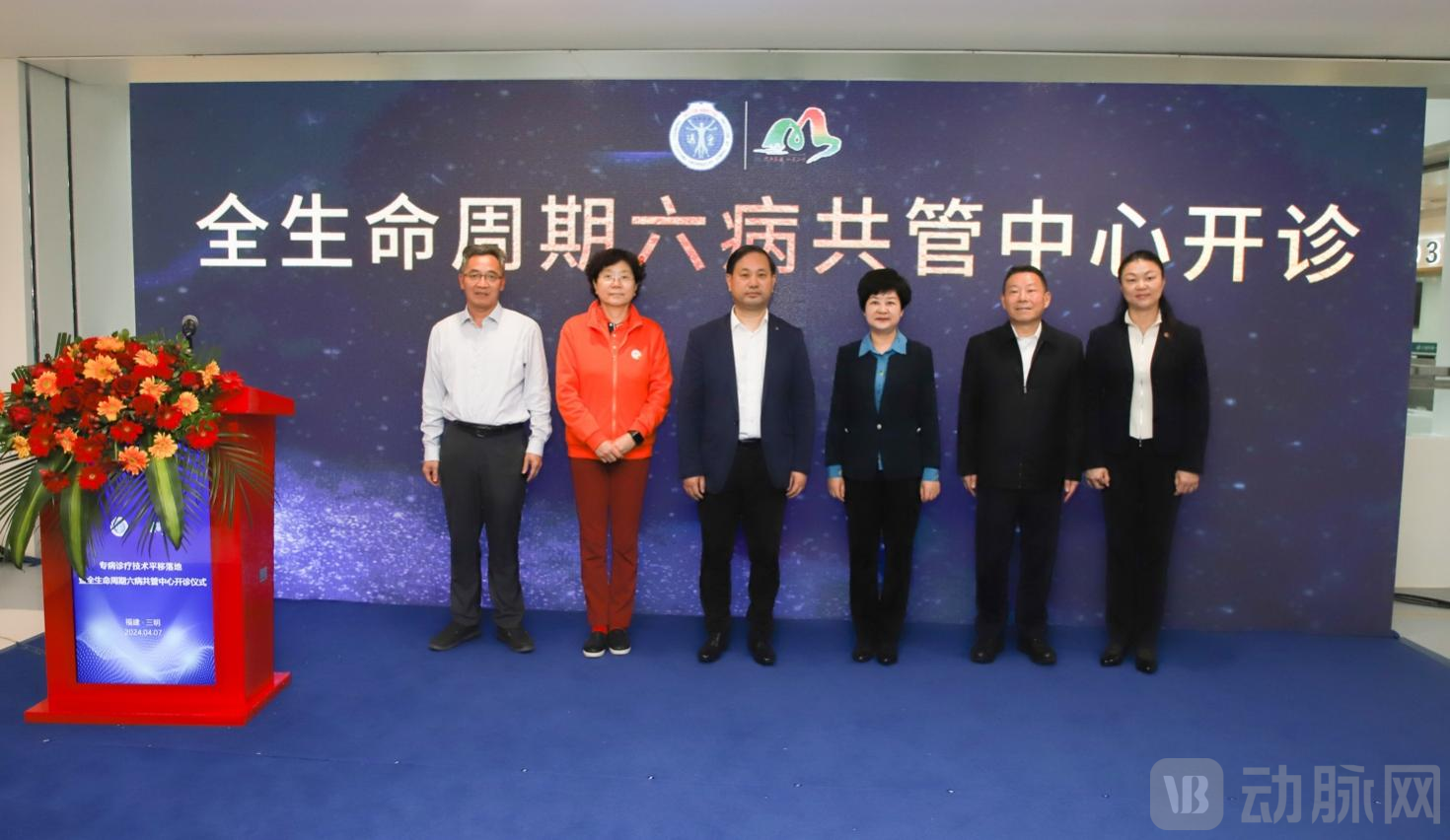
Figure | Sanming leverages the “Six-Disease Co-Management” system to drive the upgrade of medical consortia into health consortia
As a national highland for healthcare reform, Sanming’s reform initiatives have attracted significant attention. At the unveiling ceremony of Sanming’s Lifecycle “Six-Disease Co-Management” Center, Huang Yu, Deputy Director of the Fujian Provincial Health Commission, stated that after Sanming gradually establishes a national demonstration model for digital “Six-Disease Co-Management,” it can further summarize and form the “Sanming Experience” of promoting population health through digitalization. This includes exporting a supporting standardized system of digital medical products for promotion and application in municipal and county-level medical institutions across China, thereby systematically enhancing the diagnostic and treatment capabilities of primary healthcare institutions nationwide, fostering homogenization of medical services across different regions, and driving the upgrade of Sanming’s Medical Community into a Digital Health Community.
In fact, WeDoctor, which has been deeply involved in the entire process of building and upgrading the Sanming healthcare reform, first proposed and began implementing the “Digital Health Community” nationwide in 2019. This initiative integrates and connects the capabilities of medical care, pharmaceuticals, and health insurance—the “Three Medicals”—to alleviate pressure on large hospitals, enhance the capabilities of primary care institutions, and improve the efficiency of payments by both basic medical insurance and commercial insurance, thereby raising regional health indices. Notably, the Health Community has focused on chronic disease management and family doctor contracting services as entry points, exploring and implementing payment models such as “global bundled payment” and “capitated bundled payment” under medical insurance. Based on assessments of healthcare quality and management outcomes, it has established an incentive and constraint mechanism of “retaining surpluses and not covering deficits,” enabling medical insurance payers to pay for health outcomes at predetermined costs. Over the past three years, the Health Community model has achieved rapid development in regions such as Tianjin and Shandong.
From the perspective of model innovation, Tianjin’s Digital Health Community has taken a significant step forward. By leveraging internet hospitals to lead the formation of tightly integrated medical consortia, it is regarded as an upgraded version of traditional medical alliances and tightly integrated county-level medical communities. Notably, its exploration in health insurance payment reform has, for the first time at the provincial level, enabled payers to cover health outcomes based on predetermined costs. This move undoubtedly represents a creative promotion and elevated implementation of the “Sanming Experience.”
In a previous media interview, Zhan Jifu stated, “The Digital Health Community currently under construction in Tianjin is led by internet hospitals to establish a closely-knit medical consortium. It implements a ‘health responsibility system’ centered on family doctor contracts and focused on chronic disease management. This is, in effect, the goal of Sanming’s Healthcare Reform 3.0. The related practical experience has strong demonstrative value, and its results are worth noting.”
From Sanming to Tianjin, deepening healthcare reform is easier said than done. For over a decade, Sanming, once an “isolated island” of healthcare reform, has never halted its progress. Empowered and safeguarded by digital and intelligent technologies, it has maintained a steadfast and rapid pace, emerging as a beacon for China’s healthcare reform. As the deepening of healthcare reform faces new challenges in this new era, “learning from Sanming’s healthcare reform nationwide” has become an imperative path. Revisiting the journey of “Sanming’s Healthcare Reform” may offer new insights for national and local governments to accelerate the implementation of the Healthy China strategy and identify breakthroughs for advancing systemic reforms.