

Grand Pharmaceutical Acquires Two Pharma Companies for RMB 748 Million to Strengthen Cardiovascular and Respiratory Portfolios
On July 17, Grand Pharmaceutical Group Limited (0512.HK) issued an announcement stating that it had completed the registration of changes for the 100% equity interests in Tianjin Tanabe Seiyaku Co., Ltd. (“Tianjin Tanabe”), as well as in Nanchang Baiji Medicine Technology Co., Ltd. and Jiangxi Baian Baiyu Pharmaceutical Technology Co., Ltd. (collectively referred to as “Baiji Pharmaceutical”).
According to the announcement, Grand Pharmaceutical Group Limited has reached an acquisition agreement (the Second Acquisition Agreement) with the minority shareholders of Tianjin Tanabe Seiyaku Co., Ltd. Together with the First Acquisition Agreement, Grand Pharmaceutical has acquired 100% equity interest in Tianjin Tanabe Seiyaku for a total consideration of approximately RMB 488 million and recently completed the registration of changes in equity ownership. As a result, Tianjin Tanabe Seiyaku has become a wholly-owned subsidiary of Grand Pharmaceutical (China).
Meanwhile, Grand Pharmaceutical’s subsidiary, Grand Jiuhe, acquired 100% equity interest in Baiji Medicine for approximately RMB 260 million, thereby gaining access to its technologically advanced nasal spray formulation platform. This acquisition represents a significant strategic move for the Group’s Respiratory and Critical Care segment. Baiji Medicine’s products will form a portfolio with the Group’s combination nasal spray, Ryaltris®, to comprehensively meet the medication needs of patients with mild, moderate, and severe allergic rhinitis, while further enhancing the development of the Group’s inhalable drug delivery platform in the respiratory field.
With a total transaction value of RMB 748 million, Grand Pharmaceutical has acquired two pharmaceutical companies, further reinforcing its strategic focus on the cardiovascular, cerebrovascular, and respiratory sectors.
100% Acquisition: A New Growth Driver in the Cardiovascular and Cerebrovascular Sector
First, let’s discuss Tianjin Tanabe, the first pharmaceutical company to be fully acquired.
Tianjin Tanabe Seiyaku Co., Ltd. was established in 1993 as a joint venture between Japan’s Tanabe Mitsubishi Pharmaceutical Corporation and Lisheng Pharmaceutical, with each party holding a 50% equity stake. From 1999 to the present, the company’s shareholding structure has undergone multiple changes due to varying capital increase ratios by the two parties. Prior to the completion of this transaction, according to announcements by Lisheng Pharmaceutical, the shareholding structure of Tianjin Tanabe Seiyaku was as follows: Lisheng Pharmaceutical held 24.65%, and Tanabe Mitsubishi Pharmaceutical Corporation held 75.35%.
In December 2023, Grand Pharmaceutical Group Limited issued an announcement stating that it had entered into an equity acquisition agreement with Tanabe Mitsubishi Pharma Corporation of Japan to acquire a 75.35% stake in Tianjin Tanabe Seiyaku Co., Ltd. for HK$400 million (approximately RMB 368 million). Lisheng Pharmaceutical will retain its 24.65% stake, and Tianjin Tanabe Seiyaku Co., Ltd. will remain an associate company of Tianjin Lisheng Pharmaceutical.
By May this year, the situation took a turn as Lisheng Pharmaceutical issued an announcement stating its intention to publicly list and transfer its 24.65% equity stake in Tianjin Tanabe Seiyaku Co., Ltd. at a reserve price of no less than RMB 120 million. Upon completion of the transaction, Lisheng Pharmaceutical would no longer hold any equity in Tianjin Tanabe. Ultimately, Grand Pharmaceutical Group Limited acquired all the shares at the reserve price of RMB 120 million, thereby achieving 100% ownership of Tianjin Tanabe Seiyaku Co., Ltd.
Setting aside the reasons behind Lisheng Pharmaceutical’s share sale, let us turn to the specific operations of Tianjin Tanabe. As one of Tanabe Mitsubishi’s core enterprises in China, Tianjin Tanabe is primarily engaged in the production and sales of high-quality originator drugs for chronic diseases in the fields of cardiovascular and cerebrovascular health, endocrine metabolism, and gastrointestinal disorders. The company operates multiple GMP-certified production lines, with manufacturing capabilities covering various dosage forms including tablets, capsules, granules, and injections. It currently markets more than ten products, addressing indications for various chronic conditions such as hypertension, angina pectoris, coronary heart disease, diabetes, and gastrointestinal diseases. Tianjin Tanabe’s core products include Herbesser®, Dilzem®, and Ancor®.
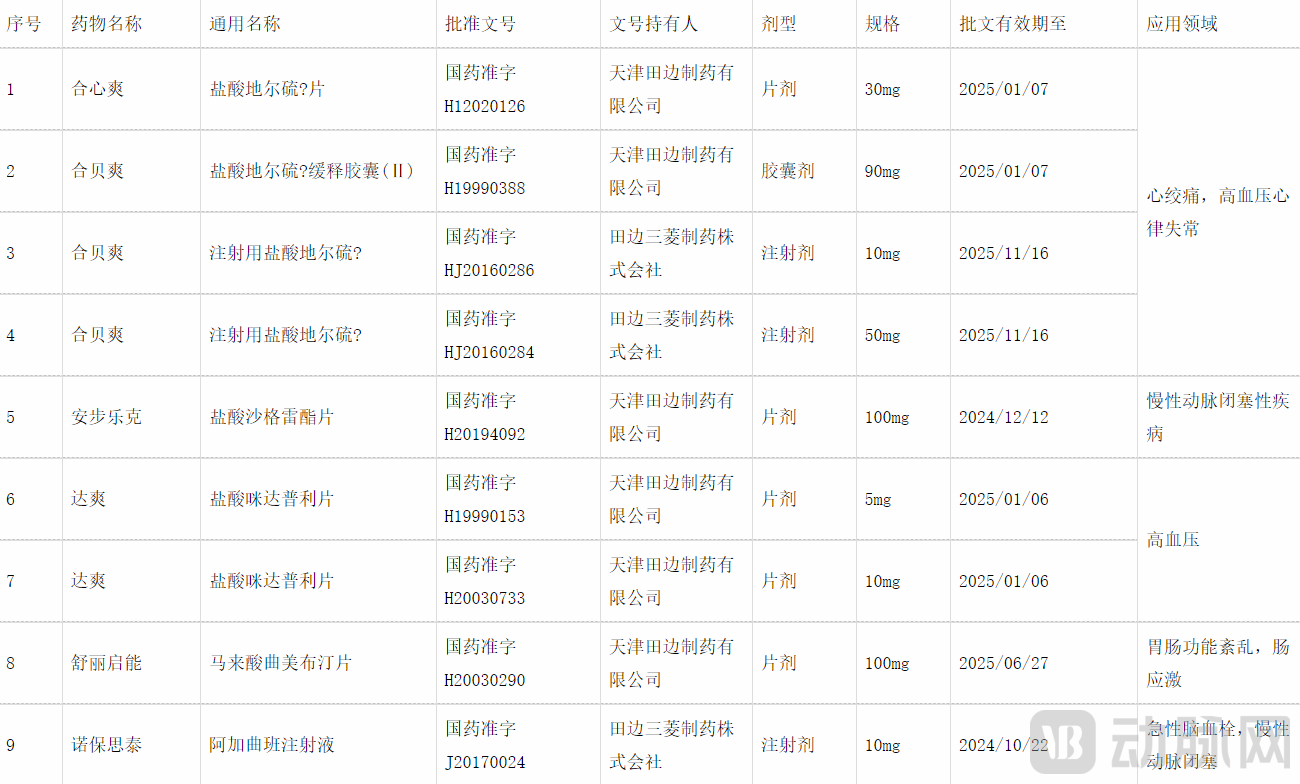 Selected Drugs of Tianjin Tanabe Source: Lisheng Pharmaceutical Announcement
From a financial performance perspective, according to the announcement by Lisheng Pharmaceutical, Tianjin Tanabe’s total operating revenue from January to November 2023 was approximately RMB 348 million, with a net profit of RMB 43.39 million. In comparison, although operating revenue declined in 2023, net profit saw a slight increase.
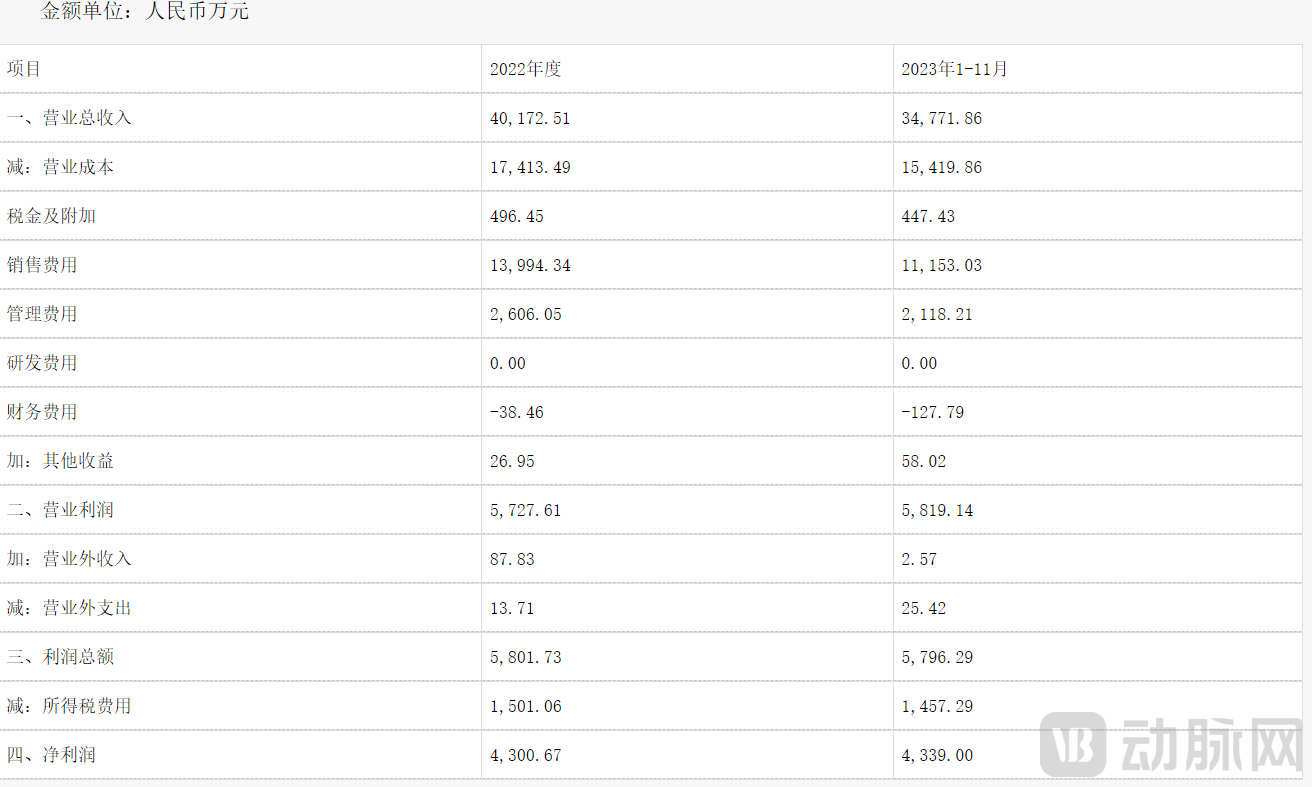 Tianjin Tanabe Seiyaku Co., Ltd. Business Operations: Source: Lisheng Pharmaceutical Announcement
For Grand Pharmaceutical, the business of Tianjin Tanabe exhibits strong synergies with its operations. According to the announcement, the cardiovascular and cerebrovascular emergency care segment is one of Grand Pharmaceutical’s key strategic focuses. In the emergency care sector, Grand Pharmaceutical already possesses a portfolio of nearly 30 products, among which 14 are included in the National List of Essential Medicines for Emergency and Critical Care, and 16 are listed in the Shortage Drugs List, placing its product pipeline among the industry leaders. In the area of chronic disease management, Grand Pharmaceutical’s exclusive product, eplerenone tablets, was approved for market launch in August 2023. As a second-generation selective aldosterone receptor antagonist, this drug introduces a novel therapeutic approach for hypertension management.
Therefore, following the acquisition of Tianjin Tanabe Seiyaku Co., Ltd., Grand Pharmaceutical Group Limited can leverage its existing sales capabilities to accelerate the market expansion and promotion of Tianjin Tanabe’s core products, creating new profit growth drivers and benefiting more patients with chronic diseases. Meanwhile, it will accelerate the integration of active pharmaceutical ingredient (API) and formulation production for Tianjin Tanabe’s core products, further reducing production costs and enhancing product profitability.
From the perspective of chronic disease management, Grand Pharmaceutical Group Limited can leverage Tianjin Tanabe Seiyaku Co., Ltd.'s existing chronic disease management products to rapidly enter the chronic disease market, thereby expanding its application scope in the field of cardiovascular and cerebrovascular disease treatment to achieve comprehensive coverage ranging from emergency care to chronic disease management, and from injectable formulations to oral preparations.
Secured Two Dual-Status Prescription and OTC Products to Further Enrich the Allergic Rhinitis Product Pipeline
Next, let’s discuss the second pharmaceutical company mentioned in this announcement that was fully acquired—Baiji Pharmaceutical.
The announcement reveals that Baiji Medicine is a high-tech enterprise engaged in the research, development, and production of hormonal nasal spray formulations. The company has established an R&D system covering the entire process from early-stage research and clinical trials to industrialization, along with a GMP-certified production system. It has developed core technologies including drug particle characterization, evaluation of formulation quality attributes, in vitro-in vivo correlation (IVIVC) studies for formulations, formulation process optimization, and scaled-up manufacturing, thereby building a domestically leading nasal spray formulation platform.
Currently, Baiji Pharmaceutical has three core products that meet the treatment needs of patients with allergic rhinitis across all age groups above three years old. Among them, Budesonide Nasal Spray was approved for marketing in China in November 2023 as the first domestic generic version, which is expected to change the competitive landscape dominated by foreign companies in the market for products with the same generic name. Fluticasone Propionate Nasal Spray had its first generic marketing application submitted in China in November 2023, and this product is expected to break the market monopoly held by the original branded product. Both products are dual-status prescription and over-the-counter (OTC) drugs, holding significant market potential. In addition, the registration process for Mometasone Furoate Nasal Spray is also being actively advanced.
According to the "Chinese Guidelines for the Diagnosis and Treatment of Allergic Rhinitis (2022, Revised Edition)," budesonide nasal spray, fluticasone propionate nasal spray, and mometasone furoate nasal spray are all first-line recommended nasal sprays for allergic rhinitis.
According to statistics from the PharmCube database, in the field of allergic rhinitis, three, two, and four pharmaceutical companies have entered the generic drug competition for budesonide nasal spray, fluticasone propionate nasal spray, and mometasone furoate nasal spray, respectively. However, Baiji Pharmaceutical has secured the first generic approval for two of these products. As products developed and launched under the most stringent standards, they are bound to hold certain advantages in quality tiering and early-market expansion.
Upon completion of this acquisition, Grand Pharmaceutical will become one of the companies in China with the most comprehensive product pipeline for allergic rhinitis treatment and will possess a domestically leading nasal spray formulation platform. The announcement stated that Grand Pharmaceutical will leverage its strong R&D and regulatory registration capabilities to advance the clinical registration processes for fluticasone propionate nasal spray and mometasone furoate nasal spray, while accelerating the market expansion and promotion of budesonide nasal spray, thereby benefiting a broader population of patients with allergic rhinitis.
In addition, the products from Nanchang Baiji Medicine Technology Co., Ltd.’s nasal spray platform will form a product portfolio with Enzhuorun® Breehaler® (Indacaterol/Mometasone Inhalation Powder II) and Enmingrun® Breehaler® (Indacaterol/Mometasone Inhalation Powder II, III), comprehensively advancing the construction of Grand Pharmaceutical Group’s inhalation platform in the respiratory field and further perfecting the comprehensive R&D, production, and sales layout of its Respiratory and Critical Care segment in the direction of inhalation formulations.
Grand Pharmaceutical’s Ambition: Capturing a Larger Share of the Market
In recent years, Grand Pharmaceutical has been hailed as the “leader” in radiopharmaceuticals due to its outstanding performance in this field. Indeed, Grand Pharmaceutical currently holds a portfolio of 14 globally innovative radiopharmaceutical oncology products, leading domestically in both pipeline completeness and clinical development. Meanwhile, YiganTai® Yttrium [90Y] Microspheres for Injection, which was the first to receive approval and achieve commercialization, recorded a year-on-year growth of nearly 300% in 2023.
However, Grand Pharmaceutical’s brilliance is by no means confined to the field of radiopharmaceuticals. In its pharmaceutical technology segment, the company has cultivated deep expertise for many years in ophthalmology, respiratory and critical care anti-infectives, and emergency treatment for cardiovascular and cerebrovascular conditions. Notably, in the area of respiratory and critical care anti-infectives, two innovative products—STC3141 and the Ryaltris® combination nasal spray—have entered the pivotal clinical trial phase and the final stretch toward commercialization, respectively, targeting sepsis and allergic rhinitis.
In September last year, Grand Pharmaceutical announced that Ryaltris®, a combination nasal spray indicated for allergic rhinitis, had completed its Phase III clinical trial in China and met the primary endpoints. As a novel combination nasal spray containing an antihistamine and a corticosteroid, this product has already been approved for marketing in multiple countries and regions, including the United States, Australia, South Korea, Russia, the United Kingdom, and the European Union. Currently, the New Drug Application (NDA) for this product in China has been accepted by the Center for Drug Evaluation (CDE).
In 2019, Grand Pharmaceutical Group Limited signed an exclusive agreement with Indian pharmaceutical giant Glenmark, securing a 20-year exclusive license for Ryaltris® in China. Industry insiders believe that strong sales of Ryaltris® following its approval are highly likely, positioning it to gain a significant advantage in the competitive market for allergic rhinitis. Data show that Ryaltris® provides rapid and sustained symptom relief within 15 minutes after administration, whereas symptoms are only significantly alleviated three hours after administration of Budesolv, a modified new drug formulation of budesonide nasal spray.
In terms of market share, according to AVIC Securities, taking mometasone furoate nasal spray, a first-line treatment for allergic rhinitis, as an example, its domestic sales in China showed a continuous growth trend from 2017 to 2021, reaching nearly RMB 1 billion in 2021 (a year-on-year increase of 55%). AstraZeneca's budesonide nasal spray is also one of the common drugs for treating allergic rhinitis and is the inhalation preparation with the highest sales volume in China, with its sales scale in the Chinese market reaching RMB 7.4 billion in 2021.
Judging from Grand Pharmaceutical’s recent M&A activities, in addition to capturing a share of the allergic rhinitis market with its new drug Ryaltris®, the company also aims to acquire multiple first-to-file generic drugs, including budesonide nasal spray, through its acquisition of Baiji Pharmaceutical, thereby building a more comprehensive product portfolio and securing a larger share of the market.
Acquisitions in the cardiovascular and cerebrovascular sectors have followed this same pattern. As a traditional area of strength for Grand Pharmaceutical Group Limited, acquisitions such as that of Tianjin Tanabe Seiyaku Co., Ltd. and the earlier acquisition of Chongqing Duoputai Pharmaceutical have continuously expanded the boundaries of its cardiovascular and cerebrovascular portfolio. Through ongoing external collaborations, investments, and mergers and acquisitions, Grand Pharmaceutical has successively entered fields including liver cancer, high-end cardiovascular devices, tumor immunotherapy, and sepsis treatment. The company has globally launched five R&D technology platforms and nine R&D centers.
Such mergers and acquisitions offer Grand Pharmaceutical, with its substantial capital reserves, a shortcut to capturing a larger market share—expanding continuously through business development (BD) alongside in-house R&D. According to the 2023 annual report, Grand Pharmaceutical achieved total annual revenue of approximately HK$10.53 billion in 2023, representing a 15.8% year-on-year increase excluding exchange rate effects; gross profit amounted to approximately HK$6.52 billion, up 15.3% year-on-year excluding exchange rate effects; and normalized net profit reached approximately HK$2.04 billion, a slight 0.2% year-on-year increase excluding exchange rate impacts. Net cash flow from operating activities was HK$2.425 billion (+31.6%), representing 129% of the net profit attributable to shareholders of the parent company, indicating healthy cash flow.
As Dr. Shao Yan, former CEO of Grand Pharmaceutical Group Limited, pointed out, domestic pharmaceutical companies need to enhance their competitiveness through mergers and acquisitions (M&A). Through M&A, companies can rapidly acquire key resources such as new markets, new channels, new technologies, and new products, thereby driving their transformation and upgrading. Today, Grand Pharmaceutical is actively demonstrating the viability of this path through its ongoing practices.
Reference Article:
1. Balancing Strong Innovation with Steady Growth: Learn from Grand Pharmaceutical’s Strategic Layout | VCBeat
2. China’s Most Powerful Nuclear Medicine Engine, Holding a Hand Full of Trump Cards. Gazelle Club