

Jinghan New Materials Files IPO Prospectus: Accelerating Domestic Substitution in Medical Devices Through Material Innovation
Looking back through the course of history, it is not difficult to discern that the profound driving force behind every innovation and launch of medical devices often stems from leaps forward in materials science and technology. In short, materials are to medical devices what a foundation is to a skyscraper; without the bedrock of advanced materials, it is impossible to construct the edifice of medical instrumentation.
Currently, as the global demographic structure shifts toward an aging population, the demand for medical services is increasing. This trend has not only directly driven the robust growth of the medical device and medical consumables markets but also indirectly stimulated innovation in upstream material sectors, creating a virtuous cycle where demand drives innovation. On the other hand, amidst the wave of healthcare system reforms in China, the implementation of centralized volume-based procurement policies and the deepening of the Diagnosis-Related Group (DRG) payment model are compelling medical device manufacturers to explore new pathways for cost reduction and efficiency improvement. In this context, the optimization and upgrading of materials and consumables have become a key breakthrough point.
“Driven by this insight, Jinghan is committed to tackling product challenges by innovating at the source—the molecular structure of materials,” said Mr. Yu Haiou, Co-Founder of Suzhou Jinghan New Materials Technology Co., Ltd. (hereinafter referred to as “Jinghan”). “We aim to provide domestically produced alternatives to imported medical-grade polymers, supporting the R&D of innovative medical devices and consumables from a materials perspective.”
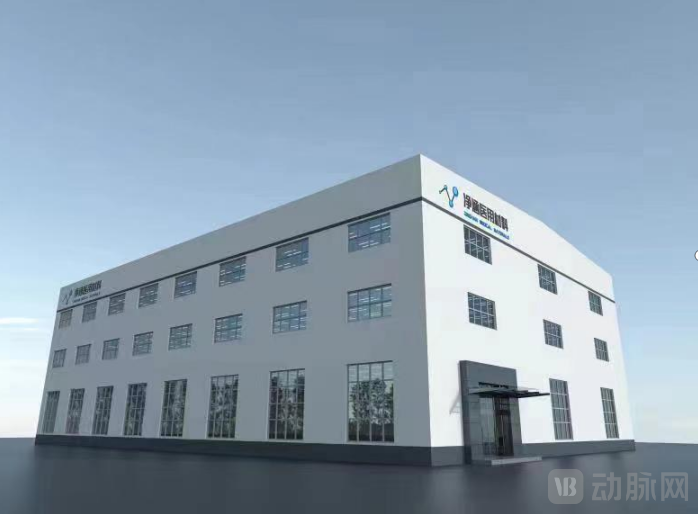
Jinghan Suzhou Production Base
“The medical polymer materials industry is characterized as a ‘large market with niche products.’ Although the overall healthcare market is vast, there are actually few enterprises truly dedicated to medical materials,” Yu Haiou told VCBeat. This is because most customers in the healthcare sector have small order volumes for individual items, and product certification cycles are lengthy; many materials only enter mass production two years or more later, after the associated medical devices have received regulatory approval.
Furthermore, the technical barriers for medical-grade materials are extremely high. Each material must be precisely matched to the performance requirements of specific medical devices, necessitating a specialized customization process for most materials. This not only poses a severe challenge to companies' technological capabilities but also entails substantial capital investment. Consequently, many material manufacturers choose to treat medical materials as a supplementary business line rather than their core focus.
It is precisely for this reason that companies capable of persevering, focusing on the research and development of medical materials, and willingly dedicating themselves to the long journey from R&D to market launch are particularly valuable. They serve not only as a solid foundation for manufacturers of medical devices and consumables but also as a key force driving industry progress.
Jinghan has targeted the blue ocean of polymer material development in the medical industry since its inception. Its founding team brings together over a decade of profound expertise and cross-disciplinary experience in materials science, medical technology, and processing manufacturing. Leveraging their diverse backgrounds, professional knowledge, and comprehensive capabilities, this elite team provides customers with end-to-end solutions spanning product R&D, validation, processing, and regulatory compliance, thereby helping customers resolve product issues at the material source.
Jinghan Materials offers extensive coverage, ranging from medical-grade thermoplastic elastomers (TPU, TPE) to various medical plastics—including polypropylene (PP), polyethylene (PE), styrenic polymers (ABS/MABS), polycarbonate (PC), amorphous copolyester (PCTG), and polybutylene terephthalate (PBT)—as well as medical functional masterbatches, comprehensively meeting the manufacturing needs of Class II and Class III medical devices and consumables.
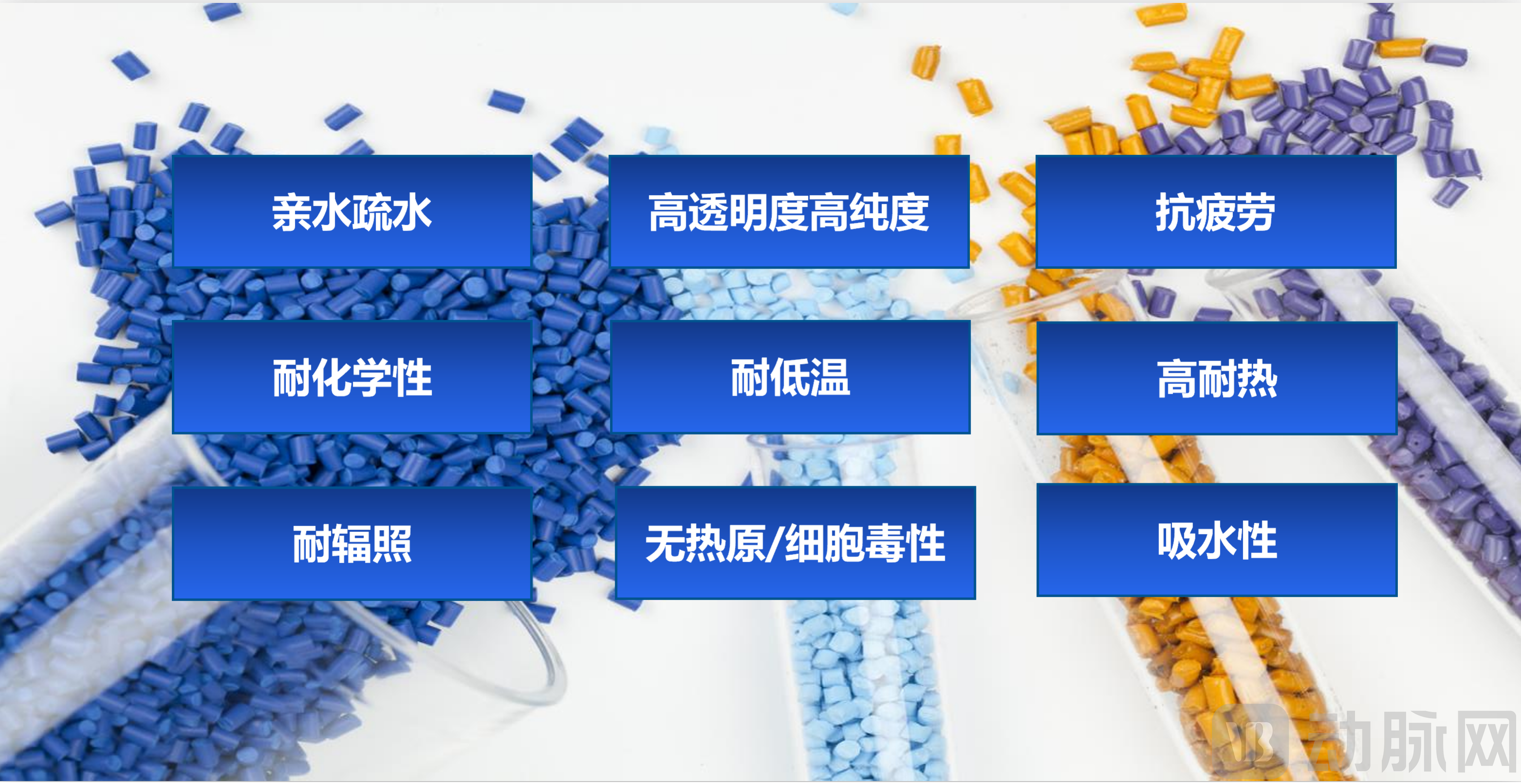
Jinghan Medical Materials Functions
In the production of medical-grade TPU, Jinghan has eliminated the use of traditional heavy metal catalysts. Through dual innovations in formulation and processing technology, it achieves clean production at the source polymerization stage, ensuring the product’s biosafety and high purity. The material meets diverse sterilization requirements, including steam autoclaving, irradiation, and ethylene oxide sterilization, and complies with USP Class VI and ISO 10993 regulatory standards.
To address the material degradation issues commonly caused by irradiation sterilization in the medical consumables sector, Jinghan’s polypropylene (PP) materials demonstrate exceptional radiation resistance. They can withstand irradiation doses of up to 50 kGy without discoloration, maintaining over 90% of their original performance properties. Furthermore, in sensitive applications such as blood processing, pharmaceutical packaging, and cryogenic storage tubes, Jinghan’s PP materials effectively prevent stress cracking due to their low residue characteristics, thereby ensuring product safety and drug efficacy. The company completed its Medical Device Master File (MDMF) registration in early 2024.
TPU, a high-performance polyurethane elastomer, has garnered significant attention due to its extensive applications in the medical field. From complex artificial heart components to everyday interventional catheters, balloons, valves, and plasma bags, as well as hospital protective isolation tents, its high strength, tear resistance, and excellent biocompatibility continue to drive product innovation across the entire healthcare market.
Jinghan demonstrates significant advantages in medical-grade TPU materials. Its diverse TPU product portfolio spans a hardness range from 42A to 85D and includes liquid TPU, covering aromatic, aliphatic, polyester, polyether, and polycarbonate series. By continuously refining base formulations and manufacturing processes, Jinghan has successfully overcome the limitations of traditional TPU materials. It has developed TPU variants with multifunctional properties such as moisture absorption, shape memory, yellowing resistance, ease of welding, high hardness, fatigue resistance, anti-aging, and radiopacity. These products can be customized to meet specific customer requirements, injecting greater vitality and possibilities into the industry’s development.
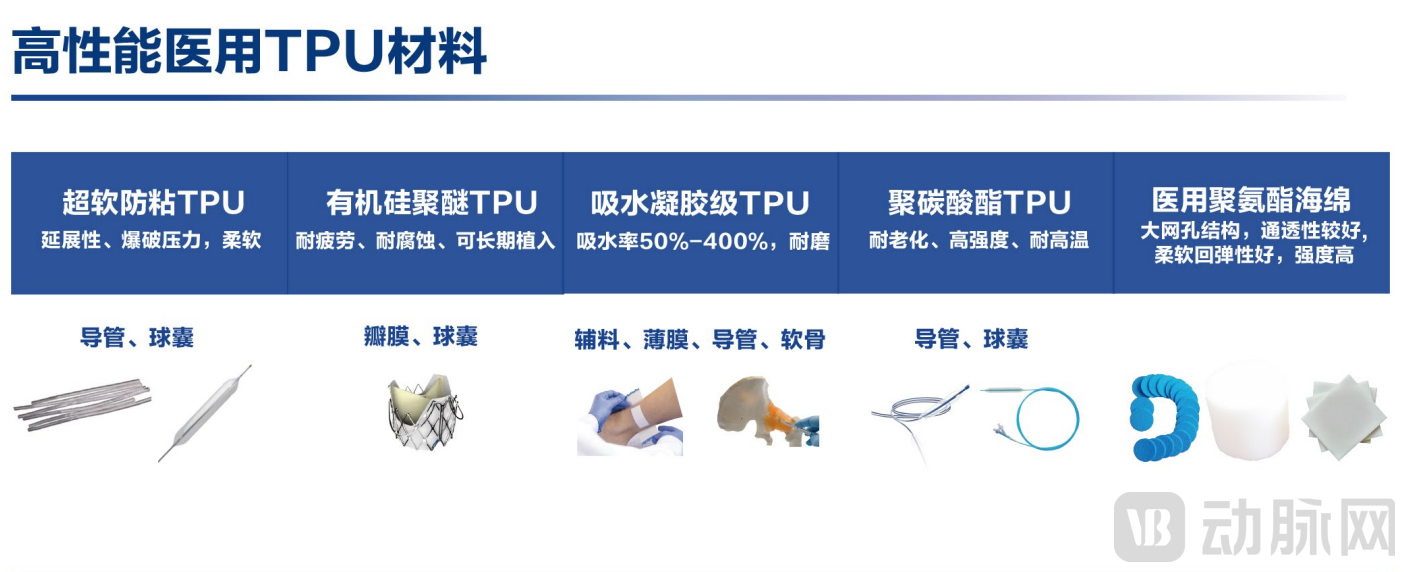
The “Super Capability Bandwidth” of Jinghan’s High-Performance Medical-Grade TPU Materials
Meanwhile, Jinghan Medical TPU is the first domestic brand of thermoplastic polyurethane to complete the master file safety registration in accordance with the NMPA’s Announcement on Matters Concerning the Registration of Master Files for Medical Devices. This facilitates medical device manufacturers during product registration, changes, and clinical trials, significantly reducing communication and filing time and accelerating time-to-market.
Looking ahead, Jinghan is actively expanding its R&D efforts into materials required for cutting-edge, high-end medical devices, including artificial blood vessels, heart valves, and urological stents. Meanwhile, in-depth collaborations with leading domestic research institutions are fueling its technological innovation, enabling the company to scale new heights in the field of medical polymer materials.
Yu Haiou shared that, whether in the domestic or international market, companies are increasingly prioritizing supply chain stability and Chinese-made alternatives in response to the pandemic and shifting political landscapes. Entrepreneurs in the pharmaceutical raw materials industry, in particular, have begun seeking domestically produced materials with higher cost-effectiveness and stability to reduce reliance on external markets, driven by uncertainties in the external environment. This shift has not only enhanced the recognition of Chinese-made materials but also created new opportunities for domestic suppliers.
Polymer materials are one of the eight key high-tech sectors prioritized for national support, with relevant policies and resources increasingly directed toward the research and application of polymer-related technologies and materials. Bolstered by this state backing, the R&D capabilities of the medical polymer materials industry are continuously advancing. In this field, Jinghan is making rapid in-depth strides, emerging as a pioneer in customized medical polymer solutions and facilitating the domestic substitution of imported medical devices.