

Vera Therapeutics Leverages Synthetic Biology to Accelerate Autoimmune Drug Development Amid Merck Pipeline Acquisition and Google's Continued Backing
Vera Therapeutics
Clinical-stage biopharmaceutical R&D company
Currently, synthetic biology is advancing with unstoppable momentum, continuously igniting market enthusiasm. At present, more than 40 countries and over 500 institutions are funding synthetic biology research. Hailed as the “Third Biotechnology Revolution,” synthetic biology is driving industry transformation in next-generation biomanufacturing and the future bioeconomy through its disruptive innovative power.
According to McKinsey’s forecasts, 60% of physical products in future global economic activities can be produced through biotechnology. Between 2030 and 2040, synthetic biology technologies will generate $2 trillion to $4 trillion in direct economic benefits annually worldwide.
The immense development potential and value demonstrated by the field of synthetic biology have made it a veritable “golden track,” attracting an influx of capital and enterprises. In recent years, with the iterative advancements in key foundational technologies—such as DNA synthesis and sequencing, gene editing—and scale-up processes, an increasing number of scientific achievements in synthetic biology are being translated into practical products and gradually entering the market.
Recently, Vera Therapeutics (“Vera”), a company in the field of synthetic biology applications, has also made significant progress in its new drug research. On January 25, 2024,Vera Announces Positive Data from the ORIGIN Open-Label Extension (OLE) Study of Its Phase 2b Clinical Trial Evaluating Atacicept in Patients with IgA Nephropathy (IgAN)。
Vera Therapeutics is a clinical-stage biotechnology company,Founded on the basis of oligomer chemistry and gene-editing technologies, the company is dedicated to developing innovative therapies for immune and inflammatory diseases. Its core asset is the recombinant fusion protein drug Atacicept, which is currently in pivotal Phase 3 clinical trials for IgA nephropathy (IgAN).. Based on the current clinical performance of Atacicept, Vera believes that Atacicept has the potential to become a “best-in-class” drug.
Vera Therapeutics, founded in 2016 and headquartered in California, USA, was co-founded by Marshall Fordyce and Beth Seidenberg, both seasoned veterans of the biopharmaceutical industry.Vera did not initially focus on the research and development of innovative drugs in the field of autoimmune diseases. Its predecessor, “Trucode Gene Repair” (hereinafter referred to as “Trucode”), was established with the goal of pioneering next-generation gene editing technologies to develop gene therapies capable of treating hereditary diseases.。
At that time, Trucode possessed substantial technical expertise and competitive advantages in oligomer chemistry, gene editing, and therapeutic drug development. Its core technology, “Triple Gene Editing Technology,” employs proprietary synthetic peptide nucleic acid (PNA) oligomers and DNA correction sequences to edit pathogenic mutations by leveraging natural DNA repair mechanisms. Trucode stated that, unlike CRISPR-based or other nuclease-mediated gene editing technologies available at the time, Triple Gene Editing Technology does not cause DNA double-strand break (DSB) damage and has the potential to enable intravenous delivery without the use of viral vectors.
Based on this, Trucode has developed a novel triple gene-editing technology platform, built upon the pioneering work of Dr. Peter Glazer, Dr. Mark Saltzman, Dr. Marie Egan, and their team at Yale University. Their research has demonstrated that PNA loaded into biodegradable polymer nanoparticles can induce gene editing and reverse disease phenotypes in various animal disease models, such as β-thalassemia and cystic fibrosis.
On September 10, 2019, Trucode emerged from stealth mode, announcing the completion of a $34 million financing round led by Google Ventures (GV) and Kleiner Perkins Caufield & Byers (KPCB).
However, Trucode did not remain on the path of gene therapy R&D for long.In April 2020, the company announced its renaming to Vera Therapeutics and shifted its focus to the research and development of novel drugs for autoimmune diseases.。
Notably, synthetic biology is a cutting-edge, multidisciplinary research field characterized by strong technology-driven dynamics. Significant technical barriers exist across the entire spectrum, from micro-scale gene synthesis to macro-scale fermentation engineering for amplified production. In this context, the resource advantages previously established by Trucode—particularly its core team and technological platform—have served as a critical foundation for enabling Vera Therapeutics to rapidly gain traction in the autoimmune disease sector.
From a team perspective, Marshall Fordyce has consistently served as the company’s CEO before and after the name change.Marshall Fordyce holds a bachelor’s degree from Harvard University and an M.D. from Harvard Medical School. He is a leader with over 15 years of experience guiding teams in drug development, clinical translation, and commercialization.. Prior to founding Vera, Marshall Fordyce served as an Entrepreneur in Residence at Kleiner Perkins. Early in his career, Mr. Fordyce held the position of Senior Director of Clinical Research at Gilead Sciences, where he contributed to the approval of seven new drugs and served as the lead for Gilead’s TAF/GENVOYA program.
Meanwhile, to further advance the development of core projects,In January 2024, Vera appointed two scientists—Robert Brenner and William Turner—as Chief Medical Officer and Chief Development Officer, respectively.。
Among them, Robert Brenner is an expert in the field of nephrology with over 25 years of industry experience. He has held senior executive positions, including Chief Medical Officer and Senior Vice President of Medical Affairs, at several biotechnology companies such as Orionis Biosciences and AMAG Pharmaceuticals, contributing to the approval and launch of AMAG’s first iron deficiency anemia treatment, Feraheme. Additionally, he served in various roles within Amgen’s Nephrology Franchise, where he led the company’s global development programs related to kidney disease, supported the regulatory approvals of two products—Aranesp and Sensipar—and facilitated the establishment of Amgen’s Nephrology Medical Affairs organization.
William Turner is also an industry veteran. With nearly 30 years of experience in drug development and commercialization, he has led multiple departments through all stages of product development. Previously, he served as Chief Operating Officer at Sierra Oncology (acquired by GSK), where he oversaw the U.S. New Drug Application (NDA) and European Marketing Authorization Application (MAA) for Ojjaara (momelotinib). Prior to joining Sierra Oncology, Turner held executive positions at companies such as Aimmune Therapeutics (acquired by Nestlé) and MedImmune, leading teams in the development of candidate drugs across multiple therapeutic areas.
In addition, Vera has attracted several experts with over a decade of industry experience. Chief Business Officer Lauren Frenz worked at Gilead for more than five years, where she led the launch and market development of multiple HIV drugs. Chief Operating Officer David Johnson brings over 30 years of commercialization and operational experience in the biopharmaceutical industry, having held executive positions at international pharmaceutical companies such as Global Blood Therapeutics (GBT), Gilead, and GSK, where he spearheaded the launch and commercialization of numerous new drugs.
 Vera Core Team. Image source: Vera official website
Since then, Vera Therapeutics has built a team with an average of over 15 years of experience in new drug development. Its core members hail from multinational pharmaceutical companies such as Gilead Sciences, Amgen, and AstraZeneca, providing strong momentum for the research and development of the company’s core products.
Following its rebranding and strategic pivot, Vera Therapeutics has turned its attention to the field of IgA nephropathy (IgAN), which represents a significant area of unmet clinical need.
IgA nephropathy (IgAN) is a common and severe primary glomerular disease. According to a Frost & Sullivan report, the global number of IgAN patients reached 9.3 million in 2020, is projected to reach 9.7 million in 2025, and will attain 10.2 million by 2030. Up to 50% of these patients will progress to end-stage kidney disease (ESKD). At this stage, patients experience severe renal failure, rendering their kidneys unable to maintain normal physiological functions, thus necessitating dialysis or kidney transplantation.
From gene editing to autoimmune diseases, Vera did not start from scratch but chose to acquire pipelines.On November 9, 2020, Vera Therapeutics and Merck announced a collaboration agreement regarding Atacicept.Under the terms of the agreement, Merck will acquire a 10% equity stake in Vera, receive up to €605 million in development and commercial milestones, and earn royalties on future net sales. Vera will be solely responsible for the development and commercialization of ataxicept across all indications.
Atacicept is also an asset acquired by Merck. In 2008, Merck acquired the global exclusive rights to develop and commercialize Atacicept from Zymogenetics. However, Merck’s R&D efforts for Atacicept faced setbacks, with clinical trial failures in multiple sclerosis in 2009 and in Phase 2b trials for systemic lupus erythematosus in 2016. Nevertheless, Atacicept has demonstrated positive efficacy in the treatment of IgA nephropathy (IgAN), yielding favorable data in Merck’s Phase 2a clinical trial for this indication.
Atacicept is a recombinant fusion protein containing the soluble transmembrane activator and calcium modulator and cyclophilin ligand interactor (TACI) receptor, which can bind to the cytokines B-lymphocyte stimulator (BLyS) and a proliferation-inducing ligand (APRIL).. These cytokines are members of the tumor necrosis factor family and promote B-cell survival and autoantibody production associated with certain autoimmune diseases, such as IgA nephropathy (IgAN) and lupus nephritis.。
After acquiring Atacicept, Vera prioritized its inclusion in a Phase 2b clinical study for IgA nephropathy (IgAN) to evaluate its safety and efficacy in patients with persistent proteinuria at high risk of disease progression. The study commenced in the second quarter of 2021.
In June 2023, Vera Therapeutics announced that ORIGIN, a Phase 2b randomized, double-blind, placebo-controlled trial of atacicept over 36 weeks, met its primary and key secondary endpoints. Data showed that with weekly subcutaneous administration of 150 mg atacicept, galactose-deficient IgA1 (Gd-IgA1) levels decreased by 64% from baseline in all patients at 36 weeks, hematuria resolved in 80% of patients, estimated glomerular filtration rate (eGFR) remained stable, and the urine protein-to-creatinine ratio (UPCR) continued to decline.Compared with the placebo group, Atacicept demonstrated clinically meaningful and statistically significant improvements.。
In 2024, among the 116 randomized subjects who completed the 36-week trial, 106 completed the 72-week treatment.Analysis of the data showed that after 72 weeks of treatment with Atacicept, patients' Gd-IgA1 levels decreased by 62% and UPCR decreased by 48%. Furthermore, the proportion of patients with hematuria was reduced to 19%, and eGFR remained stable in all patients.。
Following Vera’s release of these clinical trial data, its stock price surged 49% on the day, reaching a market capitalization of $1.125 billion. Furthermore, on May 28, 2024, Vera announced that the FDA had granted Breakthrough Therapy Designation to atacicept for the treatment of IgA nephropathy (IgAN).。
Currently,Vera is conducting a multinational, randomized, double-blind, placebo-controlled Phase 3 clinical trial to evaluate the safety and efficacy of 150 mg atacicept in adult patients with IgA nephropathy (IgAN) who have persistent proteinuria and are at high risk of disease progression.Patient enrollment for this trial is expected to be completed in the third quarter of 2024, with primary endpoint results anticipated to be announced in the first half of 2025, which may support regulatory approval of atacicept for the indication of IgA nephropathy (IgAN). Meanwhile, Vera Therapeutics will continue to explore the therapeutic efficacy of atacicept in other indications, including systemic lupus erythematosus, membranous nephropathy, and cytopenias.
In addition,Vera also has an asset under development—MAU868, a monoclonal antibody targeting BK virus (BKV).。
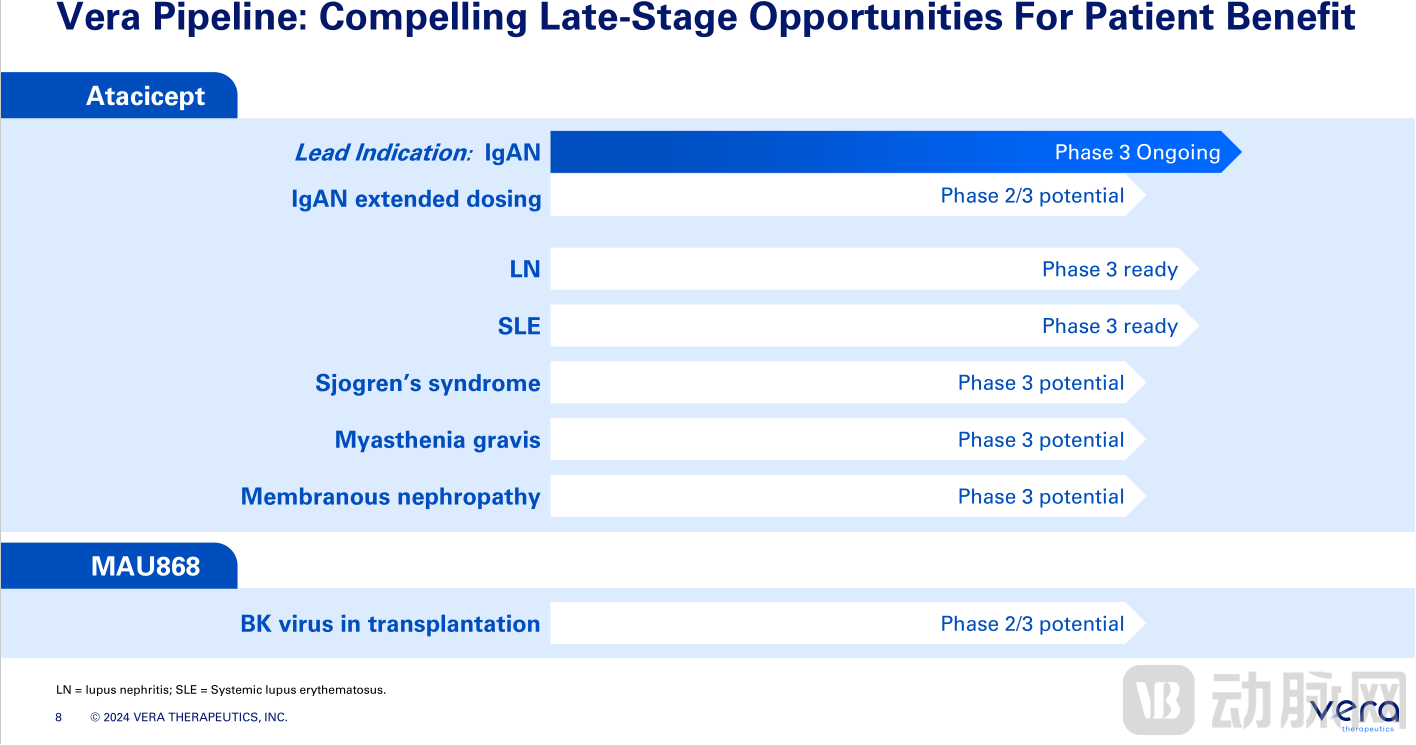 Vera’s Pipeline in Development. Image source: Vera’s official website
In December 2021, Vera announced the acquisition of MAU868, a first-in-class monoclonal antibody for the treatment of BKV infection, from Amplyx Pharmaceuticals, a wholly owned subsidiary of Pfizer.. Under the terms of the agreement, Vera is required to pay a $5 million upfront payment, as well as milestone payments totaling up to $7 million upon the achievement of certain regulatory milestones, plus low-single-digit percentage royalties.
At the time, Marshall Fordyce stated, “BKV is a leading cause of kidney transplant failure and the development of common complications, and there are currently no available antiviral therapies in the United States. Based on existing data, we believe that MAU868 has the potential to significantly impact clinical outcomes in kidney transplant recipients and become the first effective treatment for BKV.”
MAU868 is currently being evaluated in a randomized, double-blind, placebo-controlled Phase 2 clinical trial for its safety, pharmacokinetics, and efficacy in treating BK virus (BKV) infection in kidney transplant recipients. An interim analysis of Week 12 data from Cohort 1 and Cohort 2 of the Phase 2 study demonstrated that MAU868 was well tolerated. A higher proportion of subjects experienced a reduction in BK plasma viral load compared to the placebo group.
After choosing to enter the field of autoimmune diseases, Vera Therapeutics hit the accelerator, completing multiple rounds of financing within a year and officially listing on the Nasdaq on May 14, 2021.
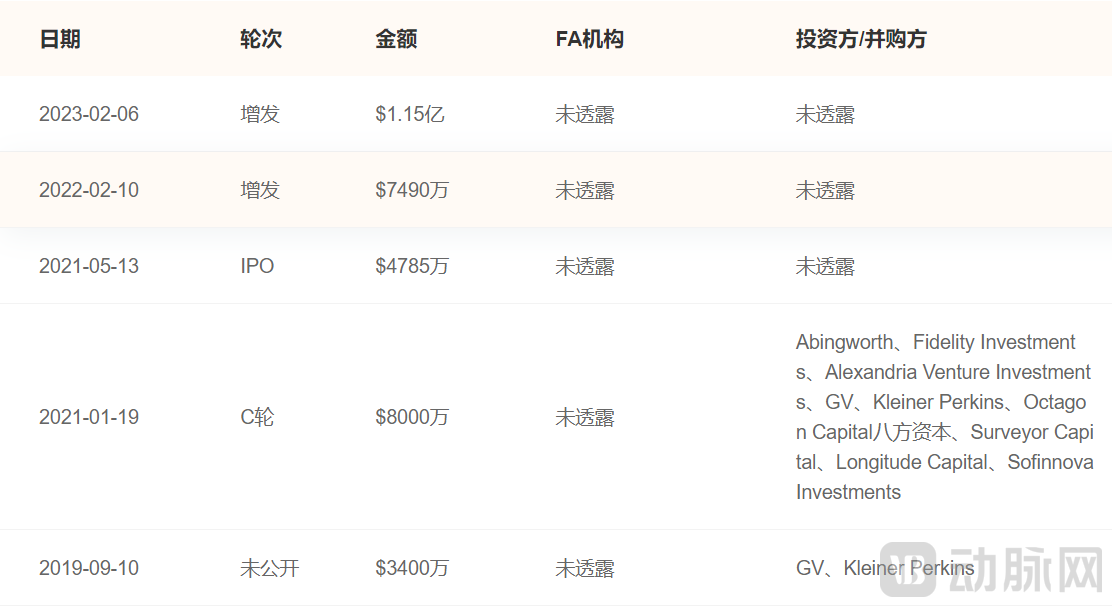 Vera’s Funding History | Source: VCBeat
Notably, in February 2023, Vera announced the completion of an expanded public offering of 16,428,572 shares of Class A common stock, raising a total of $115 million. According to the “2023 Investment Report: Insights into Synthetic Biology Trends” published by SynBioBeta, an innovation platform for synthetic biology, total financing for companies in the synthetic biology sector reached $2.8 billion in the first quarter of 2023, with Vera’s $115 million raise placing it among the top ten deals by transaction value for the quarter.
Furthermore, shortly after the release of Phase 2b clinical trial data for atacicept in the treatment of IgA nephropathy (IgAN), Vera Therapeutics completed a $287.5 million fundraising round in February 2024, further strengthening the company’s balance sheet and thereby advancing the clinical development of atacicept.
According to the first-quarter 2024 financial results released by Vera Therapeutics,As of March 31, 2024, the Company had cash and cash equivalents of $403.7 million, extending its expected cash runway through potential regulatory approvals and commercial launch preparations. The Company believes that this amount is sufficient to support the approval and future commercialization of Atacicept in the U.S. market.。
According to Frost & Sullivan data, the global market size for IgA nephropathy therapeutics reached $567 million in 2020 and is projected to grow to $1.196 billion by 2025. This expansive market has already attracted multiple companies. Based on incomplete statistics, two new drugs for the treatment of IgAN have been approved for marketing: budesonide delayed-release capsules (Tarpeyo/Nefecon) and Kinpeygo (budesonide).
Among these, budesonide delayed-release capsules are the first FDA-approved disease-modifying therapy for IgA nephropathy worldwide. In June 2019, Everest Medicines licensed the development and commercialization rights for this drug in Greater China and Singapore, and later acquired the rights for South Korea. In November 2023, budesonide delayed-release capsules (Chinese brand name: Nefecon) were approved by the National Medical Products Administration (NMPA) for marketing in China, indicated for the treatment of adult patients with primary IgA nephropathy at risk of progression.
Furthermore, several companies’ investigational new drugs have demonstrated potential in the treatment of IgA nephropathy (IgAN) in clinical trials. Examples include Novartis’ Fabhalta (iptacopan) and RemeGen’s telitacicept (RC18).
Fabhalta is the first oral factor B inhibitor targeting the complement system developed by Novartis. It blocks the alternative pathway amplification loop by inhibiting factor B and is used to treat complement-mediated kidney diseases (CARD). In April 2024, Novartis announced the pre-specified interim analysis results of the Phase 3 APPLAUSE-IgAN clinical study evaluating Fabhalta in patients with IgA nephropathy (IgAN). The data showed that Fabhalta effectively reduced urinary protein levels in patients, achieving one of the primary endpoints of the trial. Currently, the FDA has accepted the regulatory application for Fabhalta in the treatment of IgA nephropathy and granted it priority review status. If approved, Fabhalta could become the first IgAN therapy targeting the alternative complement pathway.
Telitacicept, a drug in the same class as atacicept, was approved for marketing in China in 2021 for the treatment of systemic lupus erythematosus, becoming the world’s first novel TACI-Fc therapeutic. Subsequently, telitacicept has undergone multiple clinical trials in the field of nephrology for the treatment of IgA nephropathy.
Previously, phase 2 clinical trial results of telitacicept for the treatment of IgA nephropathy showed that after 24 weeks of treatment, urinary protein levels in subjects receiving telitacicept 240 mg were significantly reduced compared with baseline, with a 49% decrease in mean 24-hour urinary protein from baseline. The study demonstrated that telitacicept reduced proteinuria in patients with high-risk IgA nephropathy, effectively lowering the risk of disease progression, and exhibited a favorable safety profile.
Currently, Phase 3 clinical trials of telitacicept for the treatment of IgA nephropathy are being conducted simultaneously in China and the United States to evaluate its efficacy and safety in patients with primary IgA nephropathy at risk of progressing to end-stage kidney disease (ESKD). In May 2024, patient enrollment for the domestic Phase 3 clinical trial of telitacicept in IgA nephropathy was completed, with a total of 318 patients enrolled.
From a clinical development perspective, Vera’s atacicept is progressing on par with other investigational drugs. According to Vera, unlike agents that target only BLyS or APRIL alone, atacicept can simultaneously inhibit both related cytokine pathways, potentially enabling more comprehensive disease control. Furthermore, atacicept supports once-weekly subcutaneous administration, and patients may in the future be able to self-administer the drug using an autoinjector.
According to Vera Therapeutics, as Phase 3 clinical trials progress further, Atacicept is expected to receive FDA approval for market launch in 2026, potentially becoming the first self-administered B-cell modulating therapy.. In the future, Vera’s technological expertise and team strengths will support its continued potential in the field of synthetic biology applications, driving the development and commercialization of more innovative products.