

Baiyang Medical Group: Acting as a 'Catalyst' for Medical Innovation with an Ecosystem-Driven Approach
The importance of biopharmaceuticals is self-evident.
The “Implementation Plan for Full-Chain Support of Innovative Drug Development,” recently reviewed and approved, points out that the development of innovative drugs is crucial to the growth of the pharmaceutical industry and to the health and well-being of the people. The Plan emphasizes the need to “mobilize scientific and technological innovation resources from all sectors, strengthen basic research in new drug creation, and solidify the foundation for the development of China’s innovative drug industry.”
Earlier this year, innovative drugs and life sciences were not only included in the 2024 Government Work Report for the first time but also categorized under “new quality productive forces,” a concept signifying a leap in productivity. The so-called new quality productive forces are driven by revolutionary technological breakthroughs, innovative allocation of production factors, and deep industrial transformation and upgrading.
Undercurrents Stir in the Industry, Targeting Pharmaceutical Innovation.
VCBeat has also noted that leading pharmaceutical companies are actively engaging in the exploration of medical innovation. As of April 22 this year, the R&D investment of 259 A-share listed pharmaceutical companies that disclosed their financial reports reached RMB 81.1 billion. BeiGene, a pharmaceutical company listed on the NASDAQ, invested over RMB 12 billion in R&D in 2023. Furthermore, leading pharmaceutical enterprises have clearly recognized the inefficiency of traditional R&D processes and are attempting to enhance new drug development efficiency through digital transformation, leveraging technologies such as large AI models, thereby changing the previous situation of excessively high investment risks.
Among numerous enterprises, BAHEAL PHARMACEUTICAL GROUP has carved out a differentiated path of ecosystem-driven innovation. In brief, leveraging industrial capital and sound mechanisms, the controlling shareholder, BAHEAL PHARMACEUTICAL GROUP, collaborates with “national team” partners to explore source innovation, which is then channeled to its industrialization platform, BAHEAL PHARMACEUTICAL, for manufacturing and commercial promotion, thereby realizing the translation pathway from laboratory to clinical application. As “patient capital,” BAHEAL not only identifies “genuine innovations” but also provides all essential resource allocations required for the growth and translational implementation of innovative achievements, offering maximum support for successful incubation.
The difficulties in achieving source innovation, gaining insights into application scenarios, and breaking through technological blockades have become major pain points hindering the innovative development of medicine in China.
First, there is a scarcity of source innovation.Not long ago, Academician Zhang Lihe pointed out that China’s pharmaceutical R&D is “accustomed to using proven, mature targets.” The reliance on following existing targets, excessive concentration of target selection, and insufficient mastery of key core technologies for novel drug creation constitute the “three major obstacles” blocking the path to source innovation.
Second, there is a lack of exploration into application scenarios.Technological innovation and industrial application require a “two-way engagement” to truly unlock value. However, in reality, researchers often remain confined to laboratories, distant from the clinical demand side, making it difficult to verify whether their R&D outcomes can genuinely optimize clinical healthcare scenarios.
Once again, there is the obstacle of technological blockade.Many of China’s core biotechnologies and supporting products rely on imports; certain high-end equipment and core components cannot yet be replaced by domestically produced alternatives, and over 50 types of critical materials, such as intraocular lens materials, remain heavily dependent on imports. “Key core technologies cannot be requested, purchased, or begged for.” Only by mastering these key core technologies independently can we fundamentally secure the initiative in the development of the biopharmaceutical industry.
From the perspective of innovation, the advantages of the new whole-nation system in China’s scientific and technological breakthroughs are becoming increasingly evident. National-level research institutions possess the resources and capabilities to concentrate strategic research efforts on extensive early-stage original research. The long-term accumulation of basic research will inevitably yield new discoveries, many of which hold first-in-class potential and represent innovations capable of overcoming critical technological bottlenecks.
Clearly, the innovative development of the medical field must first align with the developmental laws of biomedicine. Meanwhile, the incubation and implementation of innovative achievements urgently require a stable and efficient cultivation system that serves as both an “escort” and a “catalyst.” Such roles are crucial for removing obstacles across various stages and optimizing resource allocation, representing a key force in driving the successful translation of medical innovations.
“The scientific pathways in China and the United States are identical, but their capital pathways differ significantly. The U.S. model is driven by market-oriented capital with corporations as the primary entities, whereas China employs a whole-nation system, where talent and resources for source innovation are concentrated within the ‘national team.’ Consequently, it is extremely difficult to fund source innovation through self-raised capital in China, which is the fundamental reason why many biotech companies have experienced broken capital chains.” This perspective on the pathway for source innovation was shared by Fu Gang, Chairman of BAHEAL PHARMACEUTICAL GROUP, at a recent forum.
“To truly unleash the vitality of source innovation and ensure that innovative achievements are translated into practical applications, it requires the synergistic coordination of multiple factors, including continuous advancements in basic research, precise identification of clinical application scenarios, and rational allocation of industrial resources. Only through such collaboration can innovative outcomes ultimately achieve scaled production and commercial operation, thereby realizing their innovative value.”
Based on this principle, BAHEAL PHARMACEUTICAL GROUP avoids duplicating investments in the scientific research resources of national teams. Instead, it chooses to integrate underutilized achievements from these national teams with various production factors, advancing them to a stage suitable for industrialization and thereby serving as a “catalyst.” The innovative practices of BAHEAL have demonstrated tangible results—incubating multiple innovative enterprises, such as Tongxin Medical, which develops fully magnetically levitated artificial hearts; RadioPharm, the first Chinese pharmaceutical company to independently develop Class I innovative nuclear medicines; and Huake Pioneer, a developer of medical linear accelerators that has overcome critical technological bottlenecks.
“These are all innovative enterprises we have co-founded with scientists. BAHEAL will allocate resources across R&D, clinical trials, regulatory submissions, and commercialization. To some extent, we are embarking on entrepreneurial ventures together with these scientists. As a private enterprise, we also have a relatively flexible incubation mechanism, giving us the confidence and capability to assume certain innovation risks,” said Fu Gang.
Over a longer time horizon, BAHEAL PHARMACEUTICAL GROUP, as an “industry investor,” maintains a far-sighted vision.
In April this year, the state proposed to “strengthen patient capital” while deploying the strategy of “developing new quality productive forces in light of local conditions.” So-called “patient capital” refers to capital that does not prioritize short-term returns, but instead insists on long-term investment and possesses a high tolerance for risk. Pharmaceutical innovation involves lengthy cycles and is closely linked to human life and health, thus precisely requiring the support and companionship of patient capital.
In fact, BAHEAL PHARMACEUTICAL GROUP already exhibited the characteristics of patient capital when it initially entered the field of medical investment.
Recently, Baiyang Pharmaceutical (301015.SZ), a listed company under BAHEAL PHARMACEUTICAL GROUP, announced the completion of its acquisition of Shanghai Baiyang Pharmaceutical Co., Ltd. (hereinafter referred to as “Baiyang Pharmaceutical”): Baiyang Pharmaceutical acquired a 60.199% equity stake in Baiyang Pharmaceutical for RMB 880 million, becoming its controlling shareholder. Both Baiyang Pharmaceutical and Shanghai Baiyang Pharmaceutical are subsidiaries of BAHEAL PHARMACEUTICAL GROUP.
Today’s Baiyang Pharmaceutical is the result of the merger between two enterprises—Shanghai Modern Traditional Chinese Medicine and Qingdao Baiyang Pharmaceutical—that Baiyang had invested in nearly two decades ago. Through years of incubation and cultivation by Baiyang, both companies have grown into leading representatives in China in the fields of modernization of traditional Chinese medicine and high-end controlled-release formulations, respectively.
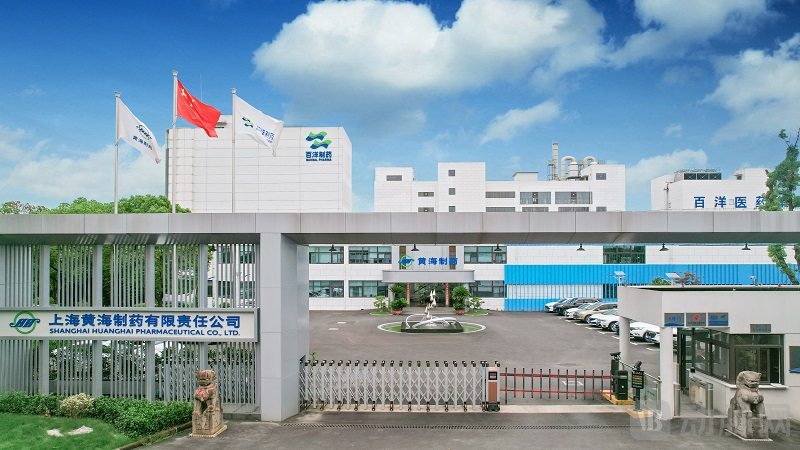
Following the merger, Baiyang Pharmaceutical has adopted a dual-focused strategy centered on the modernization of traditional Chinese medicine (TCM) and advanced drug formulations, boasting a portfolio of proprietary products targeting liver diseases and metabolic disorders. Among these, Fuzheng Huayu Tablets (Capsules) stand out as a core product, indicated for the reversal of liver fibrosis and cirrhosis. As the only TCM product in the hepatology field to have completed Phase II clinical trials in the United States with FDA approval, Fuzheng Huayu is underpinned by robust clinical evidence and a strong foundation in evidence-based medicine. It has gained widespread recognition among clinicians based on the “dual-antagonism” concept (combining antiviral and anti-fibrotic effects). Furthermore, Fuzheng Huayu is recommended by consensus in 11 authoritative clinical guidelines, often appearing as the first-line recommendation in multiple guidelines.
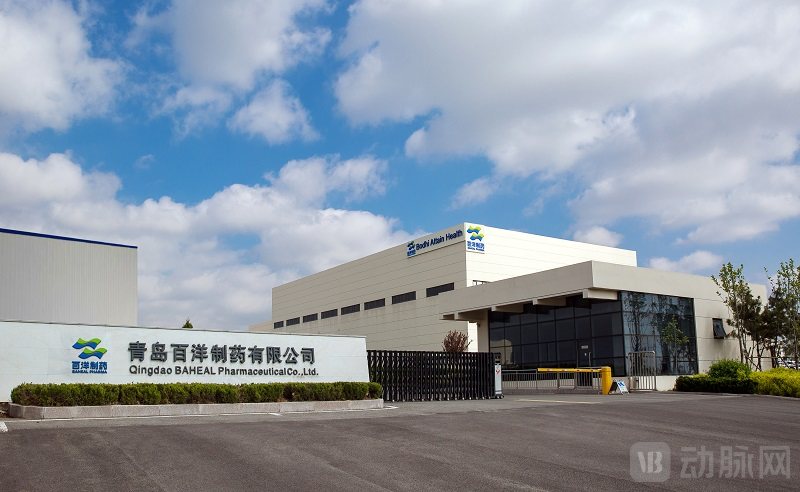
Another product from BAHEAL PHARMACEUTICAL GROUP, the extended-release metformin hydrochloride tablet Naida, has an even more legendary story. Approved by the U.S. FDA in 2018, Naida is China’s first approved osmotic pump-controlled release formulation of metformin and was included in the National Reimbursement Drug List in 2023. However, its journey from research and development to market launch was far from easy. Due to the high technical barriers associated with osmotic pump-controlled release technology, BAHEAL PHARMACEUTICAL GROUP dedicated over a decade to intensive R&D starting in 2005, ultimately achieving a technological breakthrough. In 2018, after two years of legal litigation and strategic maneuvering, the company successfully broke through foreign patent blockades with its innovative osmotic pump-controlled release technology, and began sales in the U.S. market in 2019.
BAHEAL PHARMACEUTICAL GROUP, the acquirer of Baiyang Pharmaceutical, has incubated and operated multiple blockbuster products with annual sales reaching billions or hundreds of millions of RMB throughout its development history. These include well-known brands such as Diccal, the leading imported calcium brand; MiTe, a brand for chemical indigestion; and Nutrama, a medical-grade whey protein brand. BAHEAL PHARMACEUTICAL GROUP’s core strength lies in brand operation and building. Upon completion of this acquisition, the Group will expand its footprint in upstream pharmaceutical manufacturing, while Baiyang Pharmaceutical’s products will benefit from enhanced commercialization capabilities. This synergy will further unlock the potential value of both parties, achieving a “1+1>2” effect.
Anchoring on strengths, nurturing with patience, seizing opportunities, and integrating at the right time—BAHEAL PHARMACEUTICAL GROUP’s steadfast support has enabled Baiyang Pharmaceutical to grow and thrive. Through this acquisition, an ecosystem of “group-level innovation incubation–listed company manufacturing and commercialization” has been established, building an industrial landscape where the incubation of medical innovations, manufacturing, and commercialization develop in synergy.
Another highly representative case is Tongxin Medical. Leveraging its independently developed, fully magnetically levitated artificial heart—the first of its kind in China to receive marketing approval with complete independent intellectual property rights—Tongxin Medical has become an undisputed star enterprise in the domestic high-end medical device sector. In China, approximately 300 clinical implantations of Tongxin Medical’s product have been performed. On the international stage, Tongxin Medical is also gradually emerging as a notable player: in the second quarter of this year, its product received U.S. FDA approval for clinical trials, becoming the first implantable medical device from China to obtain such approval in the United States. Shortly thereafter, the product’s clinical trials were approved for reimbursement by U.S. insurance programs, with each case eligible for a subsidy of $220,000.
As early as 2016, BAHEAL PHARMACEUTICAL GROUP demonstrated its strategic insight by participating in multiple rounds of investment, facilitating the clinical development, regulatory submission, market approval, and commercial launch of Tongxin Medical’s products in China, while also supporting Tongxin Medical in expanding into broader international markets.
A review of the projects incubated by BAHEAL PHARMACEUTICAL GROUP mentioned above reveals that nearly all bear eye-catching labels such as “China’s first,” “China’s only,” “first-in-class,” and “breaking through bottleneck technologies.” An increasing number of innovative projects are not only successfully realizing commercial value but also validating BAHEAL’s investment capabilities.
“Accurate investment, viable nurturing, and substantial growth.” As previously mentioned, the development and progress of biomedicine follow their own inherent laws. BAHEAL’s strategy of precision investment is also grounded in adherence to these principles:
Medical advances stem first from biological discoveries, such as the elucidation of disease pathogenesis and the identification of novel therapeutic targets; second, from breakthroughs in bioengineering, which leverage these biological insights to design new drug structures and intervene at specific targets; and third, from the support of clinical medicine, which validates the clinical applicability, safety, and efficacy of these R&D outcomes. Throughout this process, computational science serves as a critical tool to enhance research and development efficiency.
This “methodology” of medical advancement is the fundamental reason behind BAHEAL’s precision-guided strategy, enabling BAHEAL to establish a unique ecosystem-driven innovation system:
First, collaborate closely with the “National Team” to identify source innovation projects that possess technological barriers.BAHEAL has partnered with top-tier institutions such as Peking University Health Science Center, Capital Medical University, and Fuwai Hospital of the National Center for Cardiovascular Diseases to jointly conduct R&D and establish multiple joint laboratories. For instance, Raydio, an innovative nuclear medicine company mentioned above, was strategically invested in by BAHEAL and co-established a Joint Laboratory for Nuclear Medicine and Molecular Imaging with Peking University Health Science Center.
Secondly, establish an innovative incubation system for "six-specialty consultations" to identify "genuine innovations" capable of optimizing clinical healthcare scenarios.Leveraging years of industry experience and clinical insights, BAHEAL PHARMACEUTICAL GROUP can precisely screen and evaluate innovative projects from multiple dimensions—including drug development feasibility, target competitiveness, and technological leadership—thereby mitigating R&D risks. Following investment, the company also allocates industrial resources according to the enterprise’s growth stage, providing support across all phases such as clinical trials, patent applications, and regulatory submissions.
Once again, we will actively collaborate with local governments to jointly establish a “base” for scientific and technological innovation.On July 12, BAHEAL PHARMACEUTICAL GROUP, in collaboration with the Suzhou Institute of Systems Medicine at the Chinese Academy of Medical Sciences and two other government-guided funds from Suzhou, jointly established an industrial fund dedicated to facilitating the translation of medical research achievements. Managed by BAHEAL’s subsidiary, Baiyang Zhongxin Fund, this vehicle has been instrumental in investing in and incubating numerous innovative enterprises under BAHEAL’s investment portfolio. As a leading early-stage value investor in China’s life and health sector, Baiyang Zhongxin Fund has become the management platform for specialized biomedical industry funds in multiple regions, including Beijing and Qingdao, leveraging capital to drive innovation.
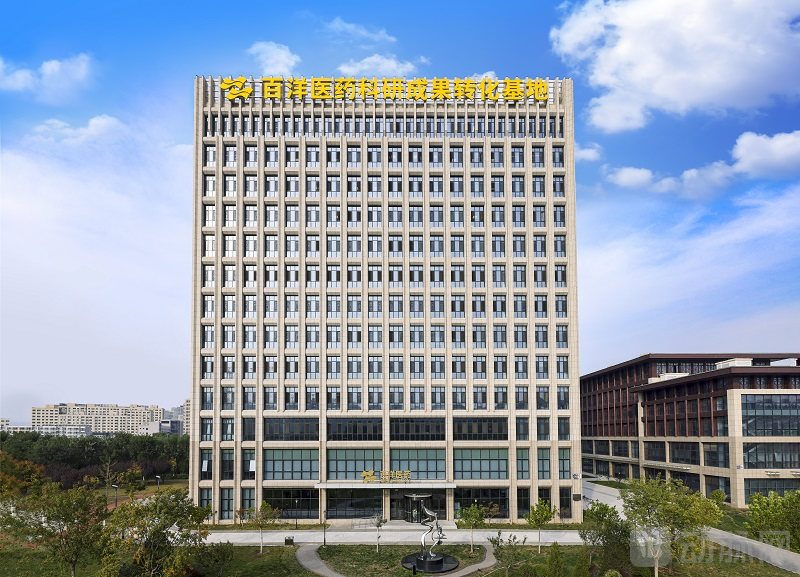
Finally, from product launch to commercialization, BAHEAL PHARMACEUTICAL GROUP leverages its industrialization capabilities to better facilitate the realization of enterprises’ commercial value.
There remain many unknown codes of life to be deciphered and explored in the field of medical science, while healthcare needs are boundless. The introduction of “new quality productive forces” has raised higher demands for the development of the pharmaceutical industry. Only through disruptive innovation can the pharmaceutical industry achieve high-quality development, reshape its value chain, and secure a firm footing in the global competition of biomedicine. As a “catalyst” for pharmaceutical innovation, BAHEAL PHARMACEUTICAL GROUP is injecting new vitality and possibilities into the industry.