

Elite HPLC Technologies Files IPO Prospectus: China's Liquid Chromatography Leader with Over 95% Domestic Component Localization and Presence in 45 Countries
China’s first commercial chromatography column, first commercial liquid chromatograph, first commercial diode array detector, and first commercial quaternary low-pressure liquid chromatograph... Elite, having secured multiple “China Firsts,” remains the only domestic enterprise with mass-production experience in both chromatographic instruments and chromatographic consumables.
Since its establishment in 1993, Elite has been dedicated to the field of liquid chromatography, consistently adhering to independent research and development and design. After more than 30 years of technological breakthroughs, the company has accumulated over one hundred technical patents. As an industry leader, Elite took the lead in formulating multiple national standards, including GB/T 26792-2019 "High Performance Liquid Chromatographs," GB/T 38125-2019 "Auto-samplers for Liquid Chromatographs," and GB/T 25478-2010 "Chromatographic Data Workstations."
Its products feature 100% domestic design and a localization rate of over 95% for components. To date, Dalian Elite Analytical Instruments Co., Ltd. has cumulatively sold more than 17,000 liquid chromatography instruments, with column sales surpassing the 200,000-unit mark, securing a leading market share in China.
Headquartered in China with a global outlook, Elite has extended its sales operations overseas, entering into strategic cooperation agreements with renowned international pharmaceutical companies and commencing sales. Currently, the company’s products are available in 45 countries worldwide, including the United States, Canada, the United Kingdom, Italy, and Russia.
In the global analytical instrument sales market, affected by economic contraction, the procurement growth rate of liquid chromatography products in fields such as clinical and pharmaceutical sectors has slowed down significantly, with many leading import manufacturers experiencing a decline in performance. However, Dalian Elite Analytical Instruments Co., Ltd. achieved a 25% quarter-on-quarter increase in sales in the first half of 2024, not only consolidating its existing market share but also successfully expanding into emerging markets such as Africa and Southeast Asia.
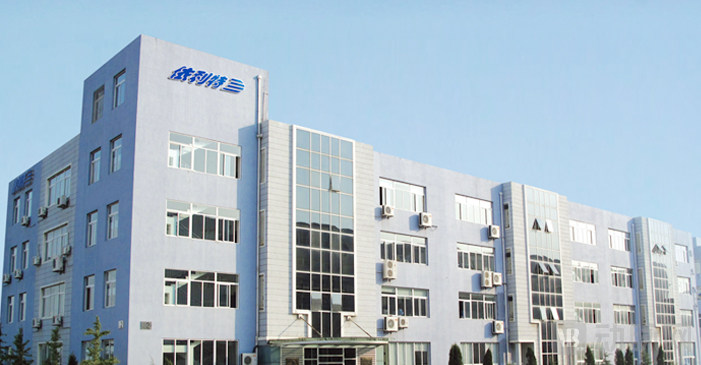
Image from the company's official website
Notably, within just four months this year, Dalian Elite Analytical Instruments Co., Ltd. successfully secured nearly RMB 200 million in substantial financing from more than ten renowned investment institutions, backed by top-tier capital firms and “national team” investors including Jifeng Capital, Guotai Junan Venture Capital, Suzhou New District Financial Holdings, and Suzhou State-owned Venture Capital.
Regarding the timing of this fundraising round, Li Yabo, General Manager of Elite, told VCBeat that the core objectives are twofold: first, to bolster working capital and accelerate the layout and expansion of its domestic and international sales networks; second, in light of the numerous collaborative orders Elite has secured both at home and abroad, to urgently expand production capacity and diversify its product portfolio in order to meet market demand and further strengthen its competitive advantage in the marketplace.
Liquid Chromatography (LC) is a crucial analytical instrument for organic compounds, playing a vital role in scientific research, pharmaceuticals, environmental monitoring, and food safety. It achieves component analysis and purity testing of complex mixtures by separating analytes through their interactions between the mobile phase and the stationary phase. Among these, High-Performance Liquid Chromatography (HPLC) is the most predominant type of liquid chromatography instrument.
Seemingly ordinary, the liquid chromatograph harbors myriad intricacies. Its nearly 3,000 components are all precision parts, each playing a critical role and demanding exacting standards. System design must carefully consider the interplay among these delicate components. The instrument relies on extremely narrow tubing for liquid flow. To prevent liquid adhesion, retention, or flow obstruction along the tube walls, a high pressure differential must be applied to drive the fluid forward; however, this significantly increases the risk of leakage around the tubing.
As a consumable, the chromatography column serves as the separation core, functioning much like the “heart” of a liquid chromatograph. It demands high pressure resistance, excellent sealing performance, and stable flow rates. Furthermore, the column oven must maintain a constant temperature. Preventing leaks, ensuring temperature stability, and enabling pressurized flow each require meticulous precision, necessitating advanced technical expertise in materials science, sealing technologies, and fluid dynamics.
China has a large liquid chromatography market, but the localization rate remains low. According to SDI data, the market size of chromatographs in China was approximately RMB 10.7 billion in 2020, with a compound annual growth rate (CAGR) of about 8.2% from 2016 to 2020, making it the region with the fastest growth in related global demand. Among these, liquid chromatography (LC) instruments constitute the largest subcategory within chromatographic instrumentation. In 2022, imports exceeded 22,477 units, with a total value surpassing RMB 6.4 billion, while domestic sales amounted to approximately RMB 300 million, resulting in a localization rate of around 5%.
The global mid-to-high-end liquid chromatography market is predominantly controlled by Waters (USA), Agilent, and Shimadzu (Japan), resulting in a relatively stable competitive landscape. Nevertheless, against this backdrop, China’s development of liquid chromatography instruments has witnessed numerous highlights and breakthroughs.
In reviewing the development history of liquid chromatographs in China, Academician Lu Peizhang, Academician Zhang Yukui, and their team at the Dalian Institute of Chemical Physics have made significant contributions—
In 1953, they designed China’s first volumetric chromatograph. To meet the needs of national economic development and break the monopoly of imported instruments, the Dalian Institute of Chemical Physics began to transform scientific and technological achievements into commercial products.
In 1993, Dalian Elite Analytical Instruments Co., Ltd. was established and launched the P100 series, China’s first commercially available liquid chromatograph, marking the beginning of domestic commercial production of liquid chromatographs in China.
In 2000, Dalian Elite Analytical Instruments Co.,Ltd. was established, further promoting the development of chromatography technology.
Driven by growing market demand, Elite established a manufacturing facility in Nano City, Suzhou Industrial Park, in 2018.
In March 2023, Suzhou Elite Technology Co., Ltd. was established, acquiring a 100% stake in Dalian Elite Analytical Instruments Co., Ltd. and becoming the operational entity of Elite.
In a market dominated by overseas giants, Dalian Elite Analytical Instruments Co., Ltd. has carved out a niche through its relentless efforts and innovative spirit, making significant contributions to the localization of liquid chromatography instruments in China.
Renowned industry observer Lin Xueping once pointed out: “Entrepreneurs in the scientific instrument sector are like ascetics, charging forward while bearing two massive burdens on their shoulders. One burden is manufacturing reliability; the other is an unreliable supply chain.”
Regarding manufacturing reliability, Elite has accumulated extensive know-how and independent intellectual property rights through over 30 years of experience and real-world feedback from application endpoints. It has become one of the few domestic manufacturers capable of independently developing and producing liquid chromatographs from hardware to software, and is also among the few enterprises in China with mass production capabilities for both liquid chromatographs and chromatography columns. Leveraging its deep understanding of downstream applications and feedback from global customers, Elite can rapidly respond to demands in clinical and emerging biotechnology fields by developing instruments that are user-friendly and more cost-effective.
“The challenge with liquid chromatographs lies not in the ‘0-to-1’ breakthrough, but in scaling from ‘1 to 100’ while ensuring consistency in mass production.” Li Yabo, General Manager of Dalian Elite Analytical Instruments Co., Ltd., cited the high-pressure constant-flow pump—a key component of HPLC systems—as an example. The design and manufacturing of such pumps must address multiple technical challenges, including precise flow-rate control, pulse-free delivery, and accurate mixing during gradient elution. Each stage requires meticulous process adjustments and continuous refinement to ensure superior and stable overall performance.
Undeniably, even when examining the interior of liquid chromatographs from foreign manufacturers, the core components are typically a “multinational assembly.” For instance, the leading manufacturer of vacuum degassers is SYSTEC, a subsidiary of the U.S.-based IDEX Corporation; high-pressure switching valves are sourced from Rheodyne or VICI, also under IDEX; and deuterium lamps and silicon photodiodes with an ultra-broad spectral range are supplied by Japan’s Hamamatsu Photonics.
Although directly “borrowing” components for assembly is simple, Elite is well aware that achieving true independence and sustainable development requires mastering core technologies and building a robust domestic supply chain. Therefore, the company remains committed to independent research and development and promoting the localization of its upstream supply chain. It has currently achieved 100% domestic design, with over 95% of its components sourced domestically.
Li Yabo emphasized that domestic substitution is not merely a matter of brand replacement, but rather centers on user needs to build a reliable and stable supply chain system—a point that is particularly crucial in the field of analytical instruments.
Rather than focusing on breakthroughs in a single direction, Elite has adopted an “all-in” strategy for the comprehensive development of chromatography technologies, establishing a tripartite business portfolio encompassing “laboratory physicochemical analysis, upstream purification for emerging biotechnologies, and clinical analytical testing.” Its product line spans multiple fields, ranging from laboratory physicochemical analysis and upstream purification for emerging biotechnologies to clinical analytical diagnostics. Key products include the 1100/3100/3200/3200L series High-Performance Liquid Chromatography (HPLC) systems, chromatography data system software, the MS² Vertical 9100 triple quadrupole mass spectrometer, gas chromatographs, preparative purification chromatography systems, metering pumps, chromatography columns, and related accessories.
Taking Elite’s flagship product, the EClassical 3200L Ultra-High Performance Liquid Chromatograph (UHPLC), as an example. This instrument features a maximum pressure tolerance of 90 MPa and is suitable for UHPLC analysis. For its infusion pump system, the EClassical 3200L offers multiple operational configurations, including binary pumps, quaternary pumps, and dual-binary pumps. Its patented seesaw-type hydraulic pulse damper significantly reduces flow pulsation, while the T-type pre-mixing joint and gradient mixer substantially enhance mixing efficiency. In terms of automated sampling, it features rapid injection capability, achieving sample introduction in as little as one second, and provides various temperature control modes, including heating, cooling, and intelligent modes.
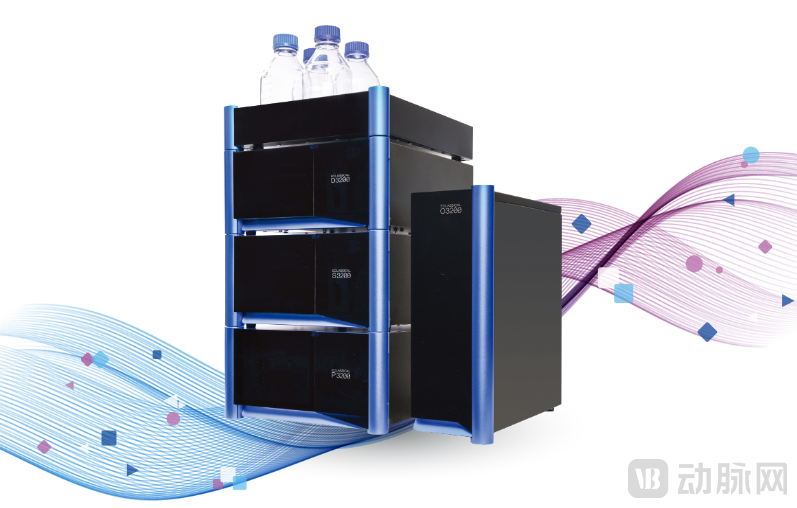
Elite's EClassical 3200L Ultra-High Performance Liquid Chromatography System
In terms of software, the current market offers a wide variety of compatible software solutions, making it difficult to achieve interoperability among instruments. To address this challenge, Dalian Elite Analytical Instruments Co., Ltd. has developed a dedicated chromatography data system (CDS) for its LC systems, built from the ground up at the architectural level. Presented as a standalone version, this software integrates functions such as database management, audit trails, GMP compliance, data archiving and backup, electronic signature verification, granular permission settings, and networked management. It not only meets the stringent audit trail requirements of GMP and FDA regulations but has also gained widespread recognition for its test results in China, the Asia-Pacific region, and many other countries and regions that are signatories to mutual recognition agreements. Furthermore, the software features strong scalability and can be integrated with other equipment products.
It is reported that Dalian Elite Analytical Instruments Co., Ltd. is intensively preparing to launch a web-based software solution, aiming to better address the specialized needs of high-end users such as pharmaceutical companies and drive the upgrade of laboratory management toward greater intelligence and network connectivity.
In terms of commercialization, Elite’s business covers three major segments: analytical laboratories, preparative purification, and in vitro diagnostics. These segments respectively serve the needs of university scientific research, corporate R&D, pharmaceutical industrial applications, and in vitro diagnostics, offering a diverse range of products. With over thirty years of development, Elite has accumulated more than 8,000 clients across multiple fields, including food, pharmaceuticals, agriculture, forestry, animal husbandry and fisheries, environmental protection, third-party testing, chemicals, and scientific research and education.
Regarding the development opportunities and challenges for domestically produced scientific instruments, Li Yabo pointed out that national policies promoting equipment upgrades and domestic substitution have brought development opportunities to Chinese manufacturers. Meanwhile, under pressure from the overall economic environment, customers are becoming more careful and cautious in their purchasing decisions, amplifying the advantage of “high quality at affordable prices,” which presents an opportunity for domestic instrument manufacturers. It should be noted that when imported brands intensify their competition in the Chinese market due to global market fluctuations or declining performance, domestic manufacturers must make adequate preparations to cope with a more severe competitive landscape.
As a pioneer in the global expansion of Chinese-made liquid chromatographs, Elite’s products are now available in 45 countries worldwide. Over the past two years, the company’s overseas business has maintained a rapid growth rate, doubling annually. Amid shifting international economic and political landscapes, the Far East market has become the primary “battleground” for the company’s overseas expansion. Meanwhile, Elite has successfully broken through barriers in emerging markets such as Africa and Southeast Asia, further broadening its global business footprint.
Elite prioritizes a consistent customer experience for both domestic and international clients, emphasizing the importance of product reliability, durability, and service. In overseas markets, Elite adopts a flexible strategy that prioritizes after-sales service, closely aligning with the actual sales performance in each region: for emerging markets or regions where sales are still in their early stages, the company focuses primarily on building the capabilities of local distributors; as business scale expands, it establishes dedicated local sales and service teams at the appropriate time to ensure rapid response and high-quality service.
It is reported that Elite will further focus its efforts on the research and development of chromatography products for the biopharmaceutical sector. Meanwhile, the company will more actively embrace the global market by leveraging diverse channels, such as participating in renowned overseas exhibitions, to showcase Elite’s innovative achievements and brand strength, with the aim of further expanding its global market share and deepening its international influence.
References:
1. “No. 1 in China! A Mysterious Suzhou Enterprise ‘Attracts Strong Investment’: Ten Investment Firms Pour In Within Four Months,” Maker Community
2. “Elite: 30 Years of Forging an Elite Brand, the Dream Team Unites to Embark on a New Journey,” Analysis and Testing Wiki