

From 'Internet-Addicted Teen' to Digital Health Pioneer: Wen Gang's Journey in Transforming Healthcare through Technology
Year after year, hundreds of compassionate, dedicated, and introspective medical students have completed their hooding ceremonies at No. 9 Dongdan Santiao, passing on the torch as they embark on their journeys across the land.
They all graduated from China’s premier medical institution—Peking Union Medical College.
Among them, the vast majority chose to work on the clinical frontline. A small minority, however, entered the industry sector, continuing their journey in medicine as investors.
These investors’ extraordinary experiences, spanning several decades, have coalesced into a multidimensional quadrant that maps the cyclical fluctuations of the healthcare industry.
The stories in this series will revolve around them.
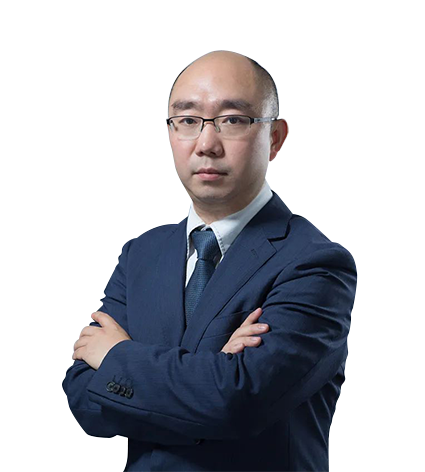
Image source: Provided by the interviewee
Kaifeng Venture Capital has two partners who graduated from Peking Union Medical College.
One is Huang Xin, an elite investor in the traditional sense and the ultimate role model of “other people’s children”: he holds an M.D. from Peking Union Medical College, a Ph.D. from Johns Hopkins University, and was the top scorer in China’s National College Entrance Examination (Gaokao) for science students.
The other is Wen Gang, a hot-blooded and hyperactive teenager addicted to the internet.
When I first met Wen Gang, he seemed to be in constant motion. His fingers fidgeted restlessly, his head bobbed and swayed, and he occasionally glanced out the window at the traffic conditions. Although seated, he appeared ready to spring up at any moment. His metabolic rate was likely remarkable as well; he downed an entire bottle of cola in just a few gulps without even burping.But the attention given to you is 100%.
Investing has been the longest-held career for Wen Gang. He has worked as a private tutor, traded phone cards, sold optical discs, traded stocks, tested bugs for websites, and served as an acquiring editor at a publishing house. All of these experiences occurred before he graduated and became a physician.
Wen Gang’s reason for taking the PUMC entrance exam was very chūnibyō: because it’s cool.
In 1995, Peking Union Medical College (PUMC) recruited students from Sichuan Province for the first time. During that year’s national college entrance examination, Wen Gang filled out his application form while boldly declaring, “If I study medicine, I will only go to PUMC!” In his own words, “Because PUMC has a rather prestigious aura.”
He then actually got admitted to Peking Union Medical College.
According to the usual script, a young man who has just shown off is bound to take a major tumble. Soon after entering medical school, Wengang quickly discovered that he had a critical flaw in his pursuit of medicine:Difficulty in memorization.
As a qualified PUMC medical student, one must master by heart every single foundational textbook, each of which often runs to nearly a thousand pages, stacking up to a height taller than a person. In addition, the PUMC Library, hailed as one of the “Three Treasures of PUMC,” offers an extensive collection of original foreign-language books, allowing students to switch gears from memorizing Chinese texts to tackling English ones when their minds need a break.
Other students would open their books and immediately begin filtering out irrelevant information, focusing their eyes and minds solely on the key points highlighted in fluorescent ink. But when Wengang opened his book, he might have just been opening a book.
“I truly put in the effort, but I genuinely cannot remember.”
Although reciting from memory was excruciatingly painful, Wen Gang’s receptivity and sensitivity to new things far exceeded those of the average person.
In the millennium, when the dial-up internet connection sound was not yet a household name, Wen Gang had already begun leading his medical school classmates to serve those who were just entering the Chinese market.Overseas Internet Companies Troubleshoot Website Bugs, earning extra income.
This experience planted a seed poised for wild growth.
In 2005, the total number of internet users in China exceeded 100 million for the first time.The shifting landscape of the internet industry has pushed many people toward entirely new crossroads.
That year, Robin Li took Baidu public, Jack Ma partnered with Yahoo, and Richard Liu underwent a painful transformation. Li Tiantian had just decided to make DXY his full-time career, while Wang Hang was conceiving the initial framework for Haodf in Qihoo’s offices.
Wen Gang walked into the Human Resources Department of the Oncology Hospital and submitted a letter of resignation.
Wen Gang is resolute in his intention to leave.The HR staff at the Cancer Hospital were also quite shocked, saying, “I’ve never seen anyone like you!” But Wen Gang realized that he was not suited to be a doctor. As for what else he could do,The youth must seek answers on their own journey.。
Wen Gang’s first stop was Sanofi, where he was responsible for selling the blockbuster drug--DocetaxelDocetaxel is a novel drug obtained through artificial structural modification based on the natural antitumor drug paclitaxel.
As one of the fiercely contested battlegrounds for pharmaceutical companies, this drug has witnessed over two decades of head-to-head competition and strategic maneuvering between Sanofi and Hengrui Medicine. Ultimately, with the implementation of the fifth round of volume-based procurement (VBP), Sanofi’s originator product has reclaimed its leading position in the market.
After several years in sales, Wen Gang felt unfulfilled and chose to follow his former leader to join Merck, pursuing a role that combines sales with medical affairs.. Here, Wen Gang began to engage in the design and execution of clinical trials for new drugs, performing with ease and proficiency. The professional competence honed over many years at Peking Union Medical College Hospital was not lost.
As the scale of operations expands, pain points inevitably emerge.In the days that followed, Wen Gang moved on to an innovative pharmaceutical company. Due to his involvement in managing a large volume of clinical trials, he developed a firsthand need for the digitization of clinical trial processes.
In clinical trials,Case Report Form (CRF) is the primary document for data collection in clinical studies, used to gather data generated by each study participant during the course of the study.. The forms often run to dozens of pages and must be completed for each patient at every follow-up visit, resulting in a massive volume of data. In that era lacking electronic solutions, the accuracy of handwritten entries, the efficiency of transferring paper-based materials, and the security of data storage were all subpar, thereby significantly increasing the costs of clinical trials.
Wen Gang once attempted to source solutions from foreign vendors. In the process, he had to withstand the inertial pressure of traditional pharmaceutical companies transitioning from paper-based to electronic systems. Upon seeing the quotes provided by the foreign vendors, Wen Gang exclaimed, “Good heavens! The cost of this single tool is nearly equivalent to the entire budget for my clinical trial!”Of course, he also realized that there must be opportunities for domestic substitution here.。
Vague ideas begin to take shape in the mind, as electrical currents collide between neurons, exploring pathways and awaiting breakthrough.
In 2013, Huang Xin helped Wen Gang concretize the answers.
At this point, Wen Gang had already been working at Haodafu for a year. “Their values are very sound.”
Wang Hang’s approach to inviting Wen Gang to join was also full of warmth and approachability. “It doesn’t really matter whether you come or not; we hold our executive meetings every Monday evening, and you’re welcome to sit in and listen.” After attending these sessions for a month, Wen Gang officially joined the company.
That year, Wen Gang, a medical studentStillNo StopReflectionHow toforPatientCreationValueMeanwhile,Can againImplementationCommercialization。
At Peking Union Medical College Hospital, years of training in a high-pressure, high-intensity environment have instilled in generations of medical students, represented by Wen Gang, with muscle-memory-like empathy for patients. Every second, they are contemplating how to resolve issues for their patients.
Clinical preceptors would go out of their way, even at the cost of extra trouble for themselves, to save patients money. They would dispatch Wengang and a group of students to run around collecting reports and test results, so that patients could receive treatment earlier and be discharged sooner. They would rigorously train students in their auscultation skills, because every CT scan avoided meant one less financial burden and one less ordeal for the patient.
This inertia, even after many years and even if one never picks up a scalpel again, remains difficult to change.
His training at Peking Union Medical College Hospital did not permit him to deviate from the social values expected of a physician.At this moment, perhaps Wen Gang finally understands what that persistent lump in his throat has been all about after years away from the hospital. He still wants to solve problems for patients. And he is deeply troubled by his inability to find a way forward.
"The Troubles of Youth Can Only Be Shared with Brothers."
Wen Gang reached out to his classmate from Peking Union Medical College, Huang Xin. On one side was a spirited, impulsive, and exuberant young man; on the other, a calm academic prodigy who carefully planned before acting and whose words carried undeniable authority.
In fact, this was not the first time the two had engaged in heartfelt discussions about their future. Back in college, Wen Gang and Huang Xin often played soccer together, and after matches, fueled by sweat and endorphins, they would invariably share their respective visions for the future. Wen Gang still remembers that even then, Huang Xin offered considerable insights into sports medicine—a relatively niche field at the time but one with significant market demand—and his ideas were remarkably forward-looking.
Sitting together, the two discussed the new opportunities that the major trend of integrating healthcare with digitalization has brought to the industry. Yet both knew that the core of the issue lay much deeper.
“By striking out on your own, you can only build one company. But if you join Kaifeng, you can support many such early-stage companies simultaneously.” Huang Xin truly understands his brother.
He recognized that Wen Gang’s boundless energy deserved a more distinctive outlet, and that his insatiable curiosity should generate greater value through the convergence of traditional industries and cutting-edge technologies.
In 2013, Wen Gang joined Kaifeng Venture Capital.Centering on the investment theme of “digitalization (including AI derived therefrom) in healthcare,” he explores the broader possibilities of the medical industry. His acumen in perceiving and connecting cross-industry information enables him to identify hidden opportunities and underlying linkages across multiple sectors, including healthcare services, medical devices, diagnostics, and new drug development.
In 2014, Wen Gang led the exclusive angel round investment in Taimei Medical Technology., and continued to increase its investment in subsequent rounds. As a digital operations platform for the life sciences industry, Taimei Medical Technology’s business spans multiple domains, including pharmaceutical R&D, pharmacovigilance, medical affairs, market access, and marketing.
The smooth development of Taimei Medical Technology has finally alleviated the helplessness and resentment that Wen Gang felt in his early years due to the lack of affordable and user-friendly tools in the paper-based era.
Judging solely by his resume on paper, Wengang’s frequent jumps between different companies, roles, and industries make him resemble a capricious adolescent boy. Yet who among those harboring firm dreams has not experienced brief periods of confusion in their youth?
The historical legacy and profound heritage of the medical institution ultimately did not become a burden or shackle for Wen Gang; rather, they served as an ever-present anchor while he drifted in search of direction.
Wen Gang fulfilled the bold promise he made during his college entrance examination through a series of deliberate choices, and carved out his own unique path in medicine through step-by-step exploration.