

Tailoring Sanming's Healthcare Reform: WeDoctor Leverages Digital Intelligence to Tackle Systemic Challenges
“The aspiration that ‘major illnesses are treated within the county, and minor ailments are addressed nearby’ not only provides the public with a tangible sense of gain but also represents a key objective in deepening healthcare reform. On July 18, the Decision of the Central Committee of the Communist Party of China on Further Comprehensively Deepening Reform and Advancing Chinese-Style Modernization, reviewed and adopted at the Third Plenary Session of the 20th CPC Central Committee, clearly outlined the acceleration of a tiered diagnosis and treatment system, the promotion of closely integrated medical consortia, and the strengthening of primary healthcare services. It also emphasized expanding the availability of high-quality medical resources, facilitating their downward distribution, and ensuring balanced regional allocation, thereby providing specific direction for the next steps in healthcare reform.”
Amid the surging tide of healthcare reform, Sanming City in Fujian Province has taken the lead by pioneering the development of close-knit medical consortia. By actively leveraging digital and intelligent technologies, it has promoted the implementation and upgrading of the Digital Health Consortium model, delivering high-quality, efficient, and convenient medical services to the people of Sanming and writing a new chapter in "Healthy Sanming."
Sanming’s healthcare reform practices have not only laid a solid foundation for health and well-being in the local region, but also charted a replicable and scalable path for deepening healthcare system reforms across China, emerging as a model for healthcare reform in the new era.
“Translating” Frontier Technologies to Create Digitally and Intelligently Empowered Samples
In April this year, Ning Guang, an academician of the Chinese Academy of Engineering and president of Shanghai Ruijin Hospital, together with Zhang Yadong and Liu Jie, chief physicians in the Department of Endocrinology at Sanming First Hospital, leveraged the WeDoctor AI System for Specialized Diseases to conduct a remote consultation. They issued the first “AI co-management” plan under the Center for Co-Management of Six Chronic Diseases Across the Full Life Cycle, providing detailed treatment protocols and full life-cycle management recommendations across six dimensions—prevention, screening, diagnosis, treatment, management, and rehabilitation—for a patient with complex, rare diabetes complicated by peripheral neuropathy.
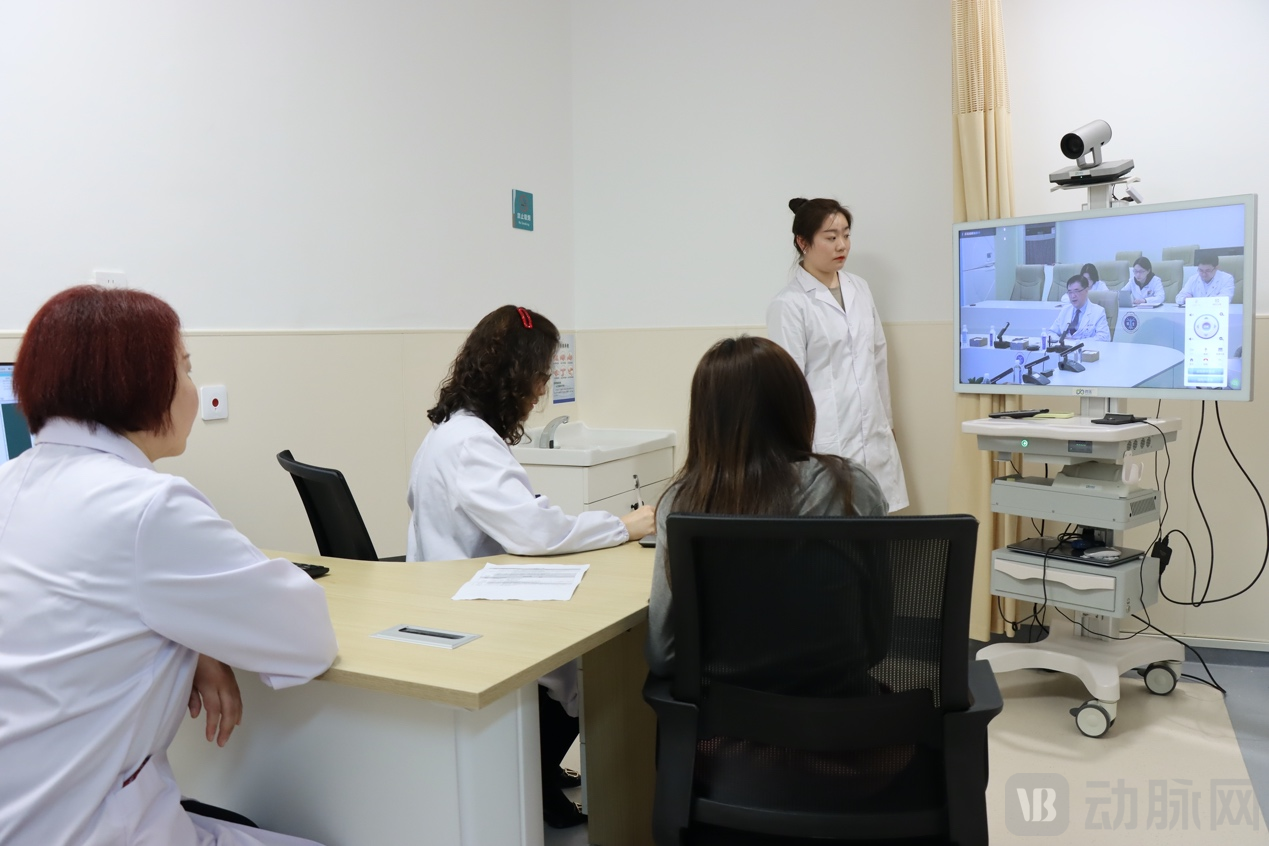
Figure | With AI support, Academician Ning Guang and doctors from Sanming First Hospital conduct a remote consultation for a patient
The disease-specific AI system deployed in this context leverages patient medical record information to rapidly analyze key diagnostic and therapeutic priorities, generating recommendations for treatment plans and alerts for necessary tests and screenings, such as complication screening, to serve as a reference for attending physicians. The Center for Integrated Management of Six Chronic Diseases has also introduced the “MMC Model” (Standardized Metabolic Disease Management Center), initiated by Academician Ning Guang and the Endocrinology Branch of the Chinese Medical Doctor Association. This model significantly improves patients’ comprehensive compliance rates for glycemic control and metabolic indicators through standardized, one-stop management of diabetes.
How to Rapidly Bring the “Ruijin Experience” to Sanming and Integrate It into the Local Healthcare Service System to Benefit the People of Sanming? By joining forces, WeDoctor and Ruijin Hospital have achieved a seamless “transfer” of advanced technologies through continuous upgrades in big data and artificial intelligence. This initiative has effectively “transplanted” Ruijin Hospital’s cutting-edge medical technologies, innovative diagnostic and treatment concepts, and clinical expertise to Sanming, successfully establishing a comprehensive healthcare delivery system covering prevention, screening, diagnosis, treatment, management, and rehabilitation, and forming an efficient model of multidisciplinary collaborative care.
Sanming City has made the promotion of digital and intelligent “joint management of six chronic diseases” a key lever for upgrading Sanming’s Healthcare Reform 3.0. Academician Ning Guang outlined the service scenario following implementation: leveraging digitalization and artificial intelligence technologies, Sanming has established a joint management model for six chronic diseases characterized by “Ruijin Hospital designs treatment plans, hospitals ensure implementation, the Health Commission oversees supervision, and individuals reap tangible benefits.” This approach creates a “health chip” for every resident, fostering a collaborative framework in which the government, hospitals, medical insurance agencies, physicians, and individuals jointly manage population health.
Innovative AI Application Technologies Empowering the Digital and Intelligent Transformation of Healthcare Services
Technologies such as artificial intelligence are driving the upgrading and transformation of healthcare services. WeDoctor has been deeply involved in every stage of the Sanming Healthcare Reform’s development and enhancement, evolving into a leading medical AI platform. By providing advanced digital-intelligence technical support solutions and comprehensive healthcare service solutions, it fully empowers the upgrading of local healthcare reforms.
Since first proposing the concept of the “Digital Health Community” and implementing it nationwide in 2019, WeDoctor has partnered with multiple provinces and municipalities, including Tianjin, Shandong, and Fujian, to jointly explore an “upgraded version” of medical consortia—the Digital Health Community. This initiative aims to address the issue of “connection without integration” prevalent in the construction of traditional medical consortia and medical alliances by leveraging digital and intelligent solutions. By employing data-intelligence technologies such as big data and AI, it seeks to enhance the quality and efficiency of medical services and promote the coordinated development of health insurance, healthcare delivery, and pharmaceuticals.
The “Tianjin Model,” which has received repeated affirmations from national competent authorities, is particularly noteworthy. In 2020, the Tianjin Municipal People’s Government and Weiyi signed the Strategic Cooperation Agreement on Digital Health, thereby embarking on a path to break new ground in Tianjin’s healthcare reform by leveraging digital intelligence.
Under the guidance of the Tianjin Municipal Health Commission and the Healthcare Security Administration, Tianjin Weiyi Shuzhi Hospital has taken the lead in collaborating with 266 community health service centers and over 2,000 stations and clinics across the city to jointly establish the Tianjin Primary Care Digital Health Consortium. Leveraging the “Four Clouds” platform to empower primary care facilities, the consortium is exploring an integrated healthcare delivery system centered on health. With chronic disease management and family doctor contracting services as entry points, Tianjin has implemented phased reforms in global budgeting based on diagnosis-related groups (DRGs) and capitation. These efforts aim to expand coverage from single-disease management to population-wide family doctor contracting services, while enforcing incentive and constraint mechanisms such as “retaining surpluses and not covering deficits,” thereby achieving significant innovation in healthcare payment methods. Furthermore, building on its mature operational model, the consortium platform is assisting various districts in Tianjin to strengthen the construction of close-knit medical consortia and establish AI-enabled chronic and multi-disease management centers, further advancing the evolution toward regional digital health consortia.
Since Tianjin implemented the digital health community reform, operational results have been remarkable. According to publicly available data, by the end of March 2023, 230,000 patients with diabetes enrolled in the special outpatient program had voluntarily signed up and selected their designated health management institutions, achieving a patient satisfaction rate as high as 97%. Before and after the implementation of the health manager responsibility system for these patients, the average monthly medical expenditure per patient decreased from RMB 1,643 to RMB 1,255, representing a 23.6% reduction. The growth rate of medical insurance expenditures significantly declined. Through capitation-based management of patients with diabetes in the special outpatient program, the overall surplus rate for the designated health management institutions and their collaborating medical facilities reached 23.3%.
By building three “digital foundations”—the Three-Medical-Linkage Digital Platform, the AI-driven Intelligent Chronic Disease Co-management Center, and the Regional Population Health Information Platform—WeDoctor has progressively established systematic, intelligent support for the Digital Healthcare Community. This enables medical consortia to effectively leverage health insurance as a key driver, spearhead the integrated reform of healthcare, health insurance, and pharmaceuticals, and guide the transformation of healthcare delivery models toward a health-oriented approach, with health insurance payment reform as the leading force.
Zhang Jun, President of WeDoctor Holdings, stated in a media interview that WeDoctor is building a digital and intelligent discipline, product, operational, and management system for the co-management of multiple chronic diseases, based on Sanming’s innovative practices and Tianjin’s pilot experience. By continuously refining the overall solution for the Digital Health Community, WeDoctor aims to provide systematic and scientific solutions for the construction and development of Medical Consortia across China, facilitating the localized promotion and application of the Sanming healthcare reform experience nationwide, and jointly driving the intelligent upgrade and healthy development of medical services.
A Long Journey of Healthcare Reform, Driven by a Sincere Commitment to the People. From Sanming, Fujian to Tianjin, WeDoctor has continuously empowered the innovation and effectiveness of healthcare reform through digital intelligence technologies, helping the “Sanming Healthcare Reform” model become a benchmark and exemplar for deepening medical reforms nationwide. Following the Third Plenary Session of the 20th Central Committee of the Communist Party of China, in response to the emerging challenges and issues in the process of deepening healthcare reform, national and local governments will accelerate the upgrading of the healthcare service system, with particular emphasis on strengthening primary healthcare capabilities. Digital intelligence technologies will continue to play an empowering role, ensuring that the benefits of healthcare reform reach every household.