

Owens & Minor Announces $1.36 Billion Acquisition of Rotech Healthcare to Strengthen Home Medical Equipment Portfolio

Owens & Minor
Medical Supplies Distributor

Rotech Healthcare
Home Medical Device Provider
On July 23 local time, Owens & Minor (NYSE: OMI) announced the acquisition of Rotech Healthcare Inc. for nearly $1.4 billion in cash (approximately RMB 10 billion).
It is understood that Rotech Healthcare is a leading U.S. provider of products and services related to respiratory health equipment. According to data from Owens & Minor, Rotech generated approximately $750 million in revenue in 2023, with an EBITDA (earnings before interest, taxes, depreciation, and amortization) margin close to 30%. The transaction is valued at $1.36 billion in cash, plus approximately $40 million in tax benefits, resulting in a net acquisition price of approximately $1.32 billion.
Notably, this marks another major acquisition for Owens & Minor, following its $1.6 billion purchase of home medical equipment developer Apria in 2022.
This acquisition will strengthen the product portfolio of Owens & Minor’s Patient Direct segment, expanding its offerings in respiratory care, sleep apnea, diabetes, and wound care, thereby reinforcing Owens & Minor’s competitive advantage in this sector. Meanwhile, Owens & Minor will also use this as a springboard to enter the durable medical equipment (DME) market.
Who would have thought that Owens & Minor, now so generous in its spending, was on the verge of collapse in 2019, with its stock price continuously depreciating and even seeking mergers and acquisitions at one point...
Owens & Minor was founded in 1882, initially as an ordinary roadside pharmacy, and gradually grew into a pharmaceutical wholesale company. Since 1966, Owens & Minor has expanded through the successive acquisition of surgical supply companies, with sales revenue and company size growing rapidly in tandem. The company went public for the first time in 1971 and listed on the New York Stock Exchange in 1988 under the ticker symbol: OMI.
In 1992, the company divested its pharmaceutical wholesale business to become a firm focused on medical supplies. It primarily manufactures medical consumables, such as disposable gloves, dressings, endoscopic products, intravenous infusion devices, needles and syringes, sterilization containers, surgical instruments and apparel, urology products, and wound care products.
In addition, it operates a chain management company for medical products, distributing its proprietary MediChoice brand to 4,500 hospitals, integrated health systems, and care centers across the United States through 50 distribution centers, while providing a wide range of value-added product services.
In October 2011, sensing opportunities in the Chinese market, Owens & Minor established Shanghai Mingruo Medical Device Trading Co., Ltd. in China. This company was Owens & Minor’s first investment project outside its home market in the United States, primarily engaged in global procurement and supply chain management of disposable medical devices.

A sub-brand of Owens & Minor. Image source: Owens & Minor official website
Time has endowed Owens & Minor with a rich historical legacy and a wide economic moat, but it has also brought new challenges and crises. Due to the rigidity of its product business structure, the company’s stock price has been in continuous decline since early 2017. In 2018 and 2019, Owens & Minor reported negative earnings per share for the first time.
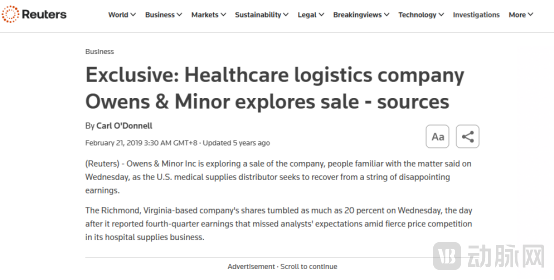
By 2019, the company was forced to confront a host of challenges, including a heavy debt burden, supply chain disruptions, intense competitive pressure, sluggish growth, and investor sell-offs. In January 2019, Reuters reported that Owens & Minor was reportedly seeking to sell itself due to poor performance. Owens & Minor had reached a “critical juncture of survival.”
Unexpectedly, the pandemic that swept across the globe in 2020 reversed Owens & Minor’s downward trend, enabling the company to return to profitability within the year.
However, the window of opportunity for such dividends is always short-lived, as profits and losses stem from the same sources. Since most of Owens & Minor’s products are low-value consumables, its stock price fell by 55.4% in 2022 amid the post-pandemic era, making it the fourth-worst performing healthcare company that year. Under significant pressure, management announced a restructuring plan after releasing its financial results for the fourth quarter and full year of 2022. Meanwhile, like all large corporations, Owens & Minor has also begun seeking new growth curves through acquisitions.
Post-pandemic, the home medical device market has surged, prompting Owens & Minor to act swiftly. In April 2022, Owens & Minor announced its acquisition of Apria, a home medical device company, for $1.6 billion. This transaction ranked among the largest acquisitions in the global healthcare sector that year and marked the most significant expenditure in Owens & Minor’s century-long history.
In a sense, Apria is like a gift that the 140-year-old Owens & Minor “bet big” on to give itself. And it is this acquisition that has completely rewritten the fate of Owens & Minor.
Apria is a developer of home medical devices for respiratory therapy, obstructive sleep apnea (OSA) treatment, negative pressure wound therapy, and continuous glucose monitoring. In 2019, it generated $1 billion in net revenue, approximately 80% of which came from home respiratory therapy and OSA treatment.
The acquisition of Apria significantly expanded Owens & Minor’s product portfolio, enabling the company to successfully enter the “new battlefield” of home medical devices. Owens & Minor merged Apria with its Byram Healthcare subsidiary to form the Patient Direct division, which provides patients with medical support outside of hospital settings—thereby “enhancing the Patient Direct product line,” as mentioned at the beginning.
Perhaps driven by path dependence after tasting initial success, perhaps determined to build home medical devices into Owens & Minor’s next 140-year hallmark brand, or perhaps due to other considerations, in any case, two years later, Owens & Minor has made another move.
Then and there, just like here and now.
Let us turn our attention back to Rotech Healthcare, the company acquired in this transaction. As a leading U.S. provider of products and services related to respiratory health equipment, it primarily offers ventilators, oxygen therapy, obstructive sleep apnea (OSA) treatment solutions, wound care solutions, and home medical equipment, with operations spanning 300 locations across 46 states.
According to the company’s official website, it boasts a professional team comprising pulmonologists, customer service representatives, health insurance specialists, and patient service technicians. Primarily through collaborations with insurance companies, it provides patients with medical devices for the treatment of respiratory disorders and other respiratory diseases.
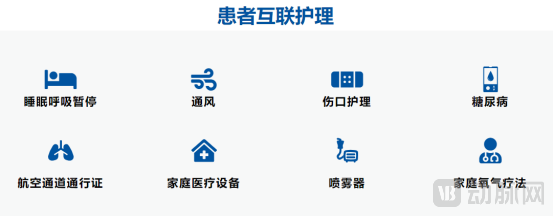
Products and services offered by Rotech Healthcare,
Image from Rotech Healthcare official website
Although Rotech Healthcare and Apria have slight overlaps in their business products, both involving the fields of sleep, respiratory care, and home medical devices, VCBeat’s comparative analysis reveals that Rotech’s acquisition is not merely a supplement to Apria’s existing related products and services, but also significantlyEnriched and strengthened Owens & Minor’s product and service offerings in the respiratory care sector, while also expanding its footprint in diabetes care and assistive devices. The blue text in the figure highlights the various business products.
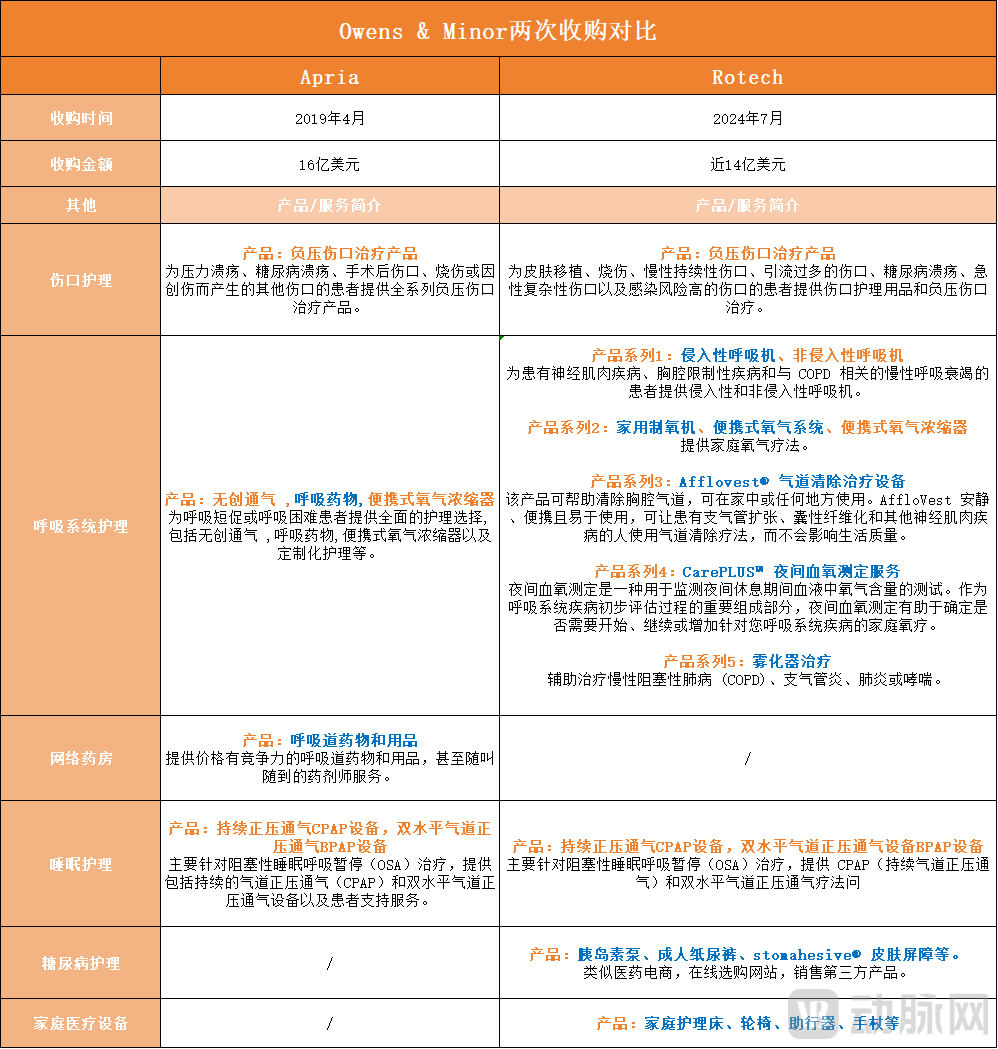
It is worth noting that, whether it was Apria or Rotech Healthcare, at the time of their acquisition by Owens & Minor,Both companies have achieved revenues in the hundreds of millions of dollars, making them veritable “cash cows.”
Interestingly, during the COVID-19 pandemic, Rotech Healthcare experienced a surge in business driven by skyrocketing demand for home medical devices such as ventilators and oxygen concentrators, achieving sales of $503.2 million (approximately RMB 3.623 billion) in 2020. Buoyed by this business growth, the company filed for an initial public offering (IPO) in April 2021, only to abandon its listing plans a year later.
Although it failed to go public, Rotech has maintained its expansion momentum, advancing through incremental yet rapid steps. Over the past few years, it has acquired nearly 70 small companies and leveraged these acquisitions to achieve impressive growth.
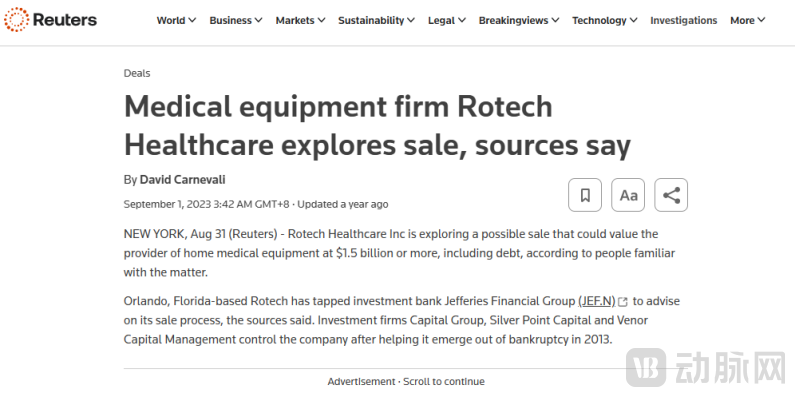
In a similar vein, just as Reuters reported in 2019 that Owens & Minor was “selling itself,” Reuters reported in September 2023 that Rotech Healthcare was exploring a potential sale, possibly for $1.5 billion (approximately RMB 10.5 billion). After nearly a year of efforts, the acquisition has finally been formally finalized, largely in line with expectations.
Winds rise from the tips of duckweed; waves form from subtle ripples. From a small street-side pharmacy to a dominant U.S. medical supplies giant, Owens & Minor has traversed 140 years. However, as its vast business landscape gradually solidified, growth slowed, and by 2019, the company was even “hanging by a thread.”
Based on the foregoing analysis, the author believes that Owens & Minor offers three key insights, which are shared herein with readers.
I. Break Path Dependence and Unlock New Growth Through Transformation
Starting a business is challenging, but sustaining it is even more difficult. The development of Owens & Minor serves as a vivid testament to this arduous journey. From its origins as a small pharmacy, it gradually transformed into a pharmaceutical wholesaler before diversifying into the surgical supplies sector. Every step taken by Owens & Minor exemplifies a spirit of proactive adaptation and courageous innovation.
By examining the growth trajectory of Owens & Minor, we can, to varying degrees, glimpse the myriad microcosms within the vast landscape of China’s healthcare industry—enterprises striving to transform in the low-value consumables market, those battling against the tides of the times, and particularly those that experienced a decline after seizing opportunities for growth during the special period of the pandemic. Perhaps Owens & Minor’s response can offer some reference points.
II. Acquire high-quality assets; even if the price is slightly higher, prioritize companies with excellent quality.
Charlie Munger has repeatedly emphasized the importance of purchasing high-quality companies at reasonable prices, rather than merely seeking bargains; even if the price is slightly higher, one should choose companies with superior quality.
Based on Owens & Minor’s M&A activities over the past five years, its two major acquisitions—Apria and Rotech Healthcare—were both leaders and cash cows in their respective sectors.
III. Focus on Respiratory Care, Sleep Health, Wound Care, and Home Medical Devices
Capital, much like migratory birds, is constantly in search of lush pastures and abundant water. This is particularly true for enterprises that are deeply embedded in their industries and navigating the tumultuous waves of market change; their investment strategies serve as more representative barometers of emerging trends.
Owens & Minor Charts a Grand $3 Billion Blueprint for the Future (Perhaps the Next 140 Years)—Focusing on Four Key Areas: Respiratory Care, Sleep Therapy, Wound Care, and Home Medical Devices.
Upon conducting an in-depth analysis of its business layout, the author subtly perceives that Owens & Minor’s development trajectory appears to closely parallel that of Yuwell Medical. Yuwell Medical has established a presence in the same sectors, including respiratory oxygen generation, blood glucose monitoring, and rehabilitation equipment.
Since 2015, Yuwell Medical has seen its operating revenue grow nearly fourfold and its net profit increase almost sixfold. As the leading enterprise in China’s home medical device sector, the company achieved an operating revenue of RMB 7.972 billion in 2023. Although performance fluctuated slightly in the first quarter of 2024, with minor declines in both revenue and net profit, these shortcomings do not overshadow its overall strengths; its results remain robust and resilient.
The home medical device market is large, growing rapidly, diverse in product categories, and characterized by iterative product improvements. The industry is in its growth stage with low penetration rates. Most importantly, since home medical devices are primarily purchased for personal consumption, they are less affected by centralized procurement and medical insurance cost-control measures. In the future, the sector will fully benefit from population aging, rising per capita income, and increasing life expectancy. VCBeat’s Orange Bureau will continue to monitor this trend closely.
References:
“Century-Old Giant Halts Production, Lays Off 1,300 Employees!”, “140 Years: America’s Leading Surgical Supply Distributor Completes Largest Acquisition”, MedDevice Home
2. “The 140-Year-Old Giant in Low-Value Consumables,” Siyu MedTech