

Telix Pharmaceuticals Secures AUD 650 Million (RMB 3.1 Billion) in Convertible Bonds, Marking 2024’s Largest Nuclear Medicine Financing

Telix Pharmaceuticals
Radiopharmaceutical Developer
July 24,Telix Pharmaceuticals (“Telix”), a biopharmaceutical company focused on the field of radiopharmaceutical conjugate drugs (RDC), announced that it has successfully issued convertible bonds worth AUD 650 million (approximately RMB 3.1 billion).。
According to the announcement, Telix’s convertible bonds will mature in 2029, with a term of five years and a coupon rate of 2.375%. The initial conversion price is AUD 24.78 per ordinary share, representing a 32.5% premium over the reference share price of AUD 18.70 per ordinary share. The issuance is expected to be completed on July 30, 2024.Regarding the use of proceeds, Telix stated that the funds will provide the company with financial flexibility to pursue strategic mergers and acquisitions and to continue investing in its global supply chain and manufacturing operations.。
According to VBInsight, this is the largest financing round in the nuclear medicine sector in 2024., surpassing the previous fundraising record of €188 million (approximately RMB 1.48 billion) set by the German radiopharmaceutical company ITM Isotopen Technologien München.
Telix, founded in 2015 and headquartered in Melbourne, Australia, specializes in the development and commercialization of diagnostic and therapeutic radiopharmaceuticals, with international operations in Belgium, Switzerland, Japan, and the United States. Telix’s technology combines targeted radiation imaging and therapy, holding the potential to transform how clinicians detect and treat cancer and rare diseases, thereby better informing treatment decisions and delivering truly personalized care to patients.
In November 2017, Telix listed on the Australian Securities Exchange. At that time, Telix’s market capitalization was less than $40 million. As of July 25, 2024, Telix’s market capitalization reached A$6.4 billion (approximately US$4.2 billion), representing an increase of more than 100-fold.。
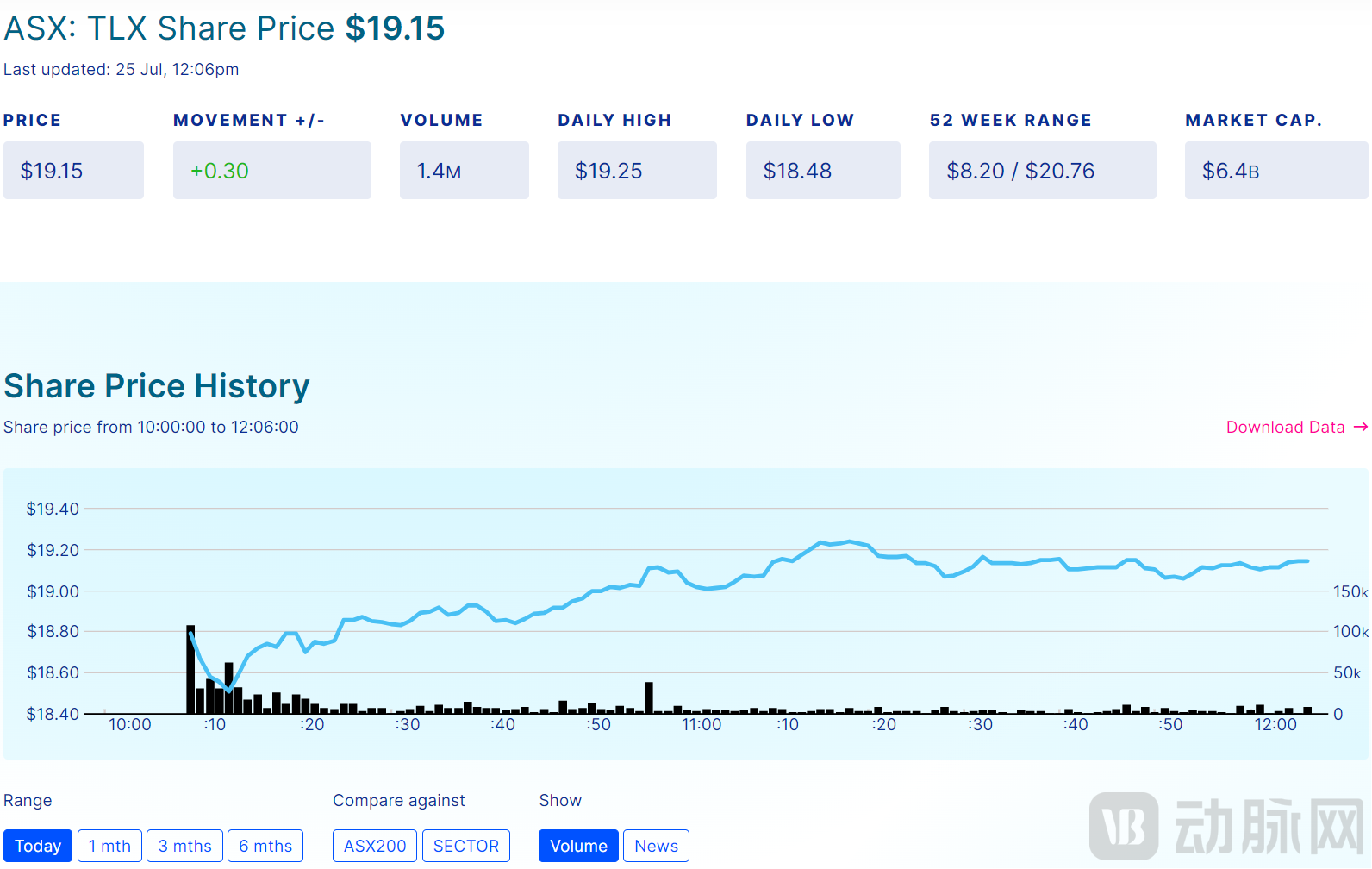 Image source: Telix official website
Furthermore, through successive mergers and acquisitions and collaborations, Telix has rapidly expanded its business footprint and bolstered its R&D pipeline and manufacturing capabilities.According to incomplete statistics, Telix has acquired eight companies to date.
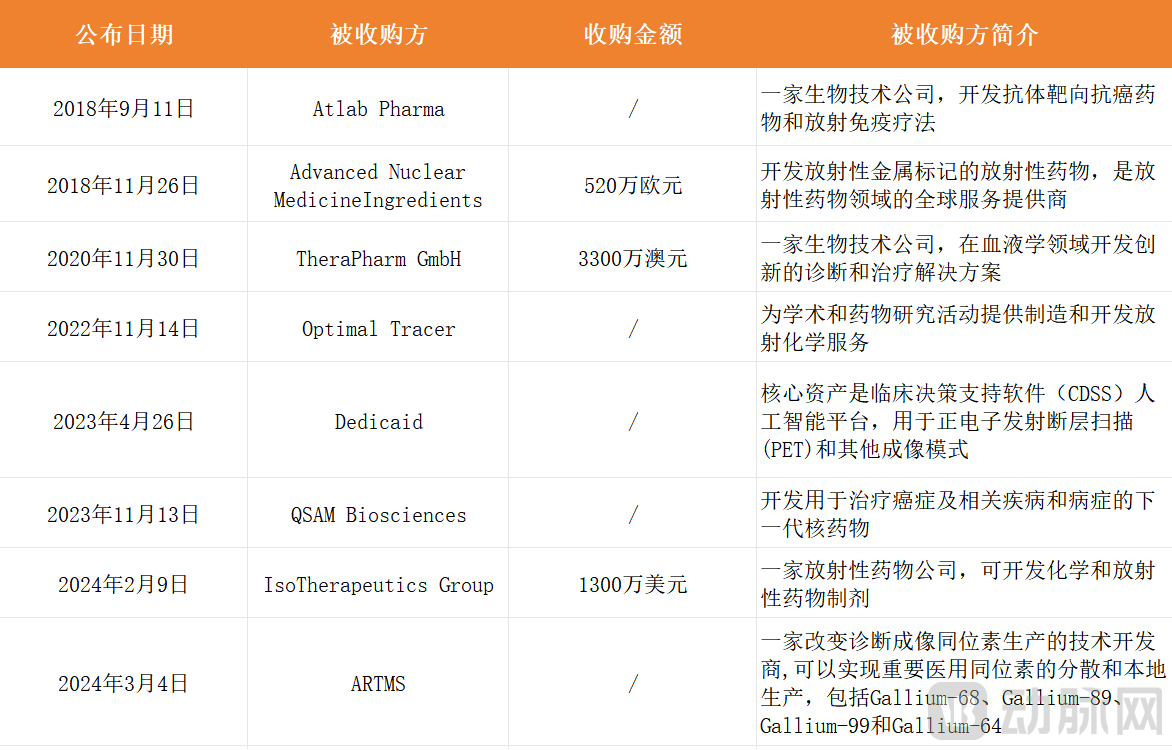 Telix Acquisition Overview | Image Source: Data from Crunchbase, Graphic by VCBeat
Telix has been particularly active in external collaborations. According to incomplete statistics, the company has entered into 15 partnerships since its listing.
It is worth mentioning that,Grand Pharma entered into a collaboration with Telix, with a total value not exceeding $250 million.. In November 2020, Grand Pharma announced that it had entered into agreements with Telix Pharmaceuticals, covering product licensing, exclusive commercialization rights, and equity subscription.
Under the agreement, Grand Pharma will obtain exclusive rights in China for the license, development, manufacturing, and commercialization of several innovative radiopharmaceutical conjugates developed by Telix for oncology treatment (TLX591-CDx, TLX250-CDx, TLX599-CDx). Meanwhile, within a specified future period, Grand Pharma will have the right of first negotiation for the exclusive development, manufacturing, and commercialization rights of other pipeline products from Telix in China. Furthermore, upon satisfaction of the relevant conditions stipulated in the agreement, Grand Pharma will subscribe to approximately 7.6% of Telix’s equity interest for USD 25 million. Combined with the upfront payments and milestone payments totaling up to USD 225 million under the licensing agreement, the total transaction value will not exceed USD 250 million.
To date, Telix has established a broad pipeline of theranostic radiopharmaceutical candidates across four major disease areas: urologic tumors (prostate and kidney), gliomas, musculoskeletal tumors, and bone marrow conditioning.Currently, Telix has its first approved commercial product—the prostate cancer imaging agent Illuccix ([68Ga]Ga-PSMA-11).。
Illuccix is a kit for the preparation of gallium-68 (⁶⁸Ga) gozetotide (PSMA-11) injection.This is a radioactive diagnostic agent capable of rapid radiolabeling at room temperature, featuring high radiochemical purity and manufacturing consistency, making it suitable for commercial and hospital radiopharmacy settings. As a diagnostic positron emission tomography (PET) tracer targeting prostate-specific membrane antigen (PSMA), it binds to PSMA after administration, enabling the visualization of PSMA-positive prostate cancer lesions in body tissues through PET imaging.
In November 2021, Illuccix received approval from the Australian Therapeutic Goods Administration (TGA); in December 2021, it was approved by the U.S. Food and Drug Administration (FDA); and in October 2022, it obtained approval from Health Canada.。
Since Illuccix was officially launched and made available for sale in April 2022, Telix has generated AUD 824.3 million (approximately USD 540 million) in revenue from Illuccix product sales as of March 1, 2024, with 98% of this revenue derived from sales in the United States. According to Telix’s financial report for the second quarter of 2024, the company’s revenue for the quarter was approximately USD 124 million, representing a year-on-year increase of 55%, primarily driven by marketing revenue from Illuccix.
Telix is also actively expanding the indications for Illuccix to broaden its scope of use.In March 2023, the FDA approved Illuccix’s supplemental new drug application (sNDA) for selecting patients with advanced prostate cancer who are suitable for treatment with Novartis’ new drug Pluvicto (177Lu-PSMA-617).. The label expansion means that Illucix has become the first FDA-approved drug for selecting potential patients for PSMA-targeted radioligand therapy (Pluvicto), providing clinicians with key information to help optimize and guide treatment decisions.
In May 2023, Telix announced an agreement with Bayer to provide Illuccix for the Phase 3 ARASTP studyThis global study is investigating the efficacy of adding Bayer’s androgen receptor inhibitor (ARi) darolutamide to androgen deprivation therapy (ADT), compared with ADT alone, in high-risk biochemical recurrence patients with hormone-sensitive prostate cancer who show no evidence of metastasis on conventional imaging but have positive baseline PSMA-PET/CT scans.
Meanwhile, Telix is actively developing other radiopharmaceutical therapies, with multiple clinical pipelines in place and a substantial body of clinical trial data accumulated.
Among these, TLX591 (177Lu-DOTA-rosopatamab) is a radioantibody-targeted candidate drug for prostate cancer. Currently, Telix is evaluating the efficacy of TLX591 across all stages of prostate cancer, from first recurrence to advanced metastatic disease, in pivotal Phase 3 clinical trials. Multiple trial sites in the United States are currently being activated and prepared to administer the drug to the first patients, with preliminary interim data expected to be reported in the first half of 2025.
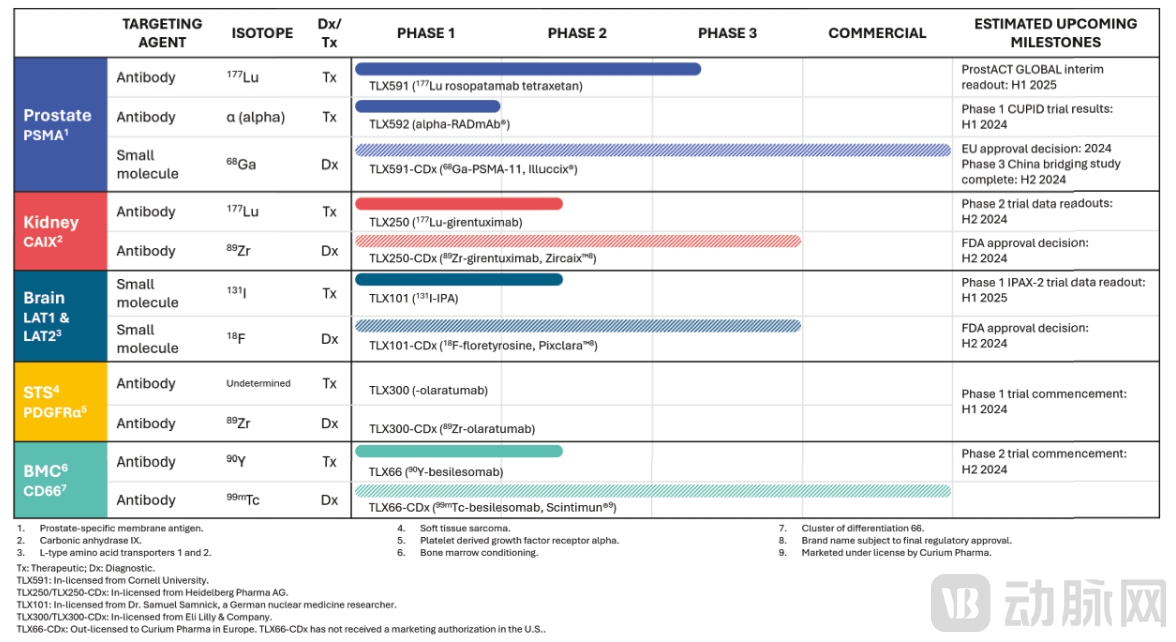
Source: Telix prospectus
Returning to the A$650 million that Telix raised through the issuance of convertible bonds, it is worth noting thatThis A$650 million represents the latest round of funding secured by Telix after it halted its IPO.。
In early June 2024, Telix officially announced its latest IPO plan, aiming to raise approximately USD 200 million. The company is scheduled to list on the Nasdaq on June 14, with a planned fundraising target of around USD 202 million.However, on the day originally scheduled for its IPO, Telix announced that it had chosen to withdraw its proposal for an initial public offering in the United States.。
In response, Telix stated that, given the proposed Nasdaq listing was not driven by a need to raise capital, the Company’s management and board of directors decided not to proceed with the transaction under the terms offered in the current market conditions. The Company believes that the proposed discount is inconsistent with its responsibilities to existing shareholders.
Judging from Telix’s development trajectory and the current state of the U.S. IPO market, there were clear reasons for Telix to halt its IPO at the eleventh hour. On one hand, according to incomplete statistics, nine biotechnology companies successfully completed their IPOs on NASDAQ in the first half of 2024. Among them, three had closing prices above their offering prices, one traded flat, while the remaining five fell below their offering prices, resulting in a break-even failure rate of 55.6%. In light of this, listing on NASDAQ at this juncture was not the optimal choice. Following the official announcement of its U.S. IPO plans, Telix’s share price on the Australian Securities Exchange experienced a decline.
On the other hand, Telix maintains a healthy cash runway. According to data disclosed in Telix’s prospectus, as of March 31, 2024, the company held cash and cash equivalents of AUD 122.7 million (approximately USD 80.3 million). In other words, amid the current surge in popularity of radiopharmaceuticals, Telix—with its commercialized products and multiple candidate assets—is well-capitalized.
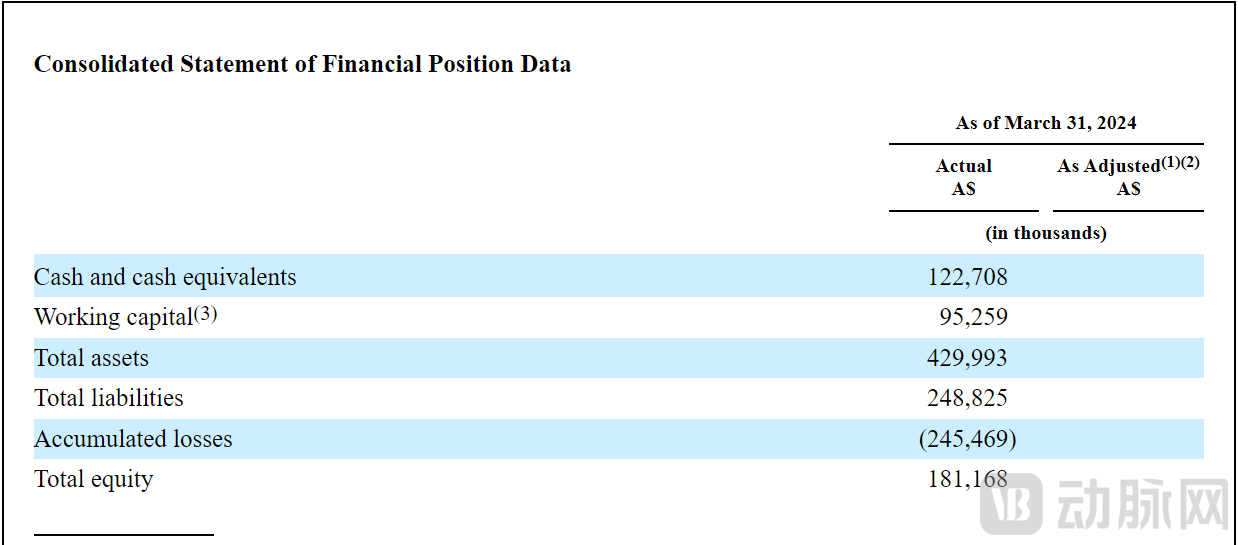 Image source: Telix prospectus
Therefore, convertible bonds represent a more favorable option for Telix than an initial public offering (IPO). Dr. Christian Behrenbruch, Managing Director and Group CEO, stated, “The convertible bond offers us attractive low-cost financing, which is clearly a turning point in Telix’s development journey. This issuance provides us with financial flexibility to execute our strategic priorities while minimizing potential dilution for existing shareholders. We have been able to leverage our strong business execution and favorable market conditions to secure attractive financing terms.”
However, halting the IPO does not mean that Telix is truly short of cash.
Although Telix has achieved revenue growth through Illuccix, the revenue growth rate of Illuccix is currently slowing down. According to its Q2 2024 financial report, the quarter-on-quarter sales increase of Illuccix in Q2 2024 was 8%, significantly lower than the 14% increase in Q3 2023. Currently, the sales volume of Illuccix has not yet exceeded $1 billion.
It is important to note that production capacity and distribution are two major challenges that companies in the radiopharmaceutical sector must address. However, the current global shortage of radioactive isotope raw materials, coupled with the lack of a mature and comprehensive supply chain system, has significantly constrained the expansion of market share for radiopharmaceuticals.
From this perspective, Telix’s $80.3 million in cash flow is insufficient to support the expansion of its production capacity and supply chain. Moreover, Telix still has multiple ongoing research projects and candidate products that urgently require advancement in both R&D and commercialization. Under these circumstances, the A$650 million undoubtedly serves as a significant driver for Telix’s strategic expansion.
Currently,Three Telix projects—TLX007-CDx, TLX250-CDx (Zircaix), and TLX101-CDx (Pixclara)—are nearing commercialization.。
Among them, TLX007-CDx is a novel proprietary lyophilized kit used for preparing prostate cancer PSMA-PET imaging.On July 24, 2024, Telix announced that the FDA had accepted its New Drug Application (NDA) for TLX007-CDx.. The PDUFA target date is March 24, 2025. If TLX007-CDx is approved, it will expand the sales scope of PSMA imaging products.
TLX250-CDx (Zircaix) is a PET diagnostic imaging agent indicated for the diagnosis of ccRCC.In December 2023, Telix submitted a Biologics License Application (BLA) for TLX250-CDx to the U.S. Food and Drug Administration (FDA). Upon regulatory approval, the company plans to commercialize TLX250-CDx in the second half of 2024, at which point it is expected to become the first targeted radiopharmaceutical imaging agent for kidney cancer in the United States.。
TLX101-CDx (Pixclara) is a PET diagnostic agent designed to image brain cancer lesions by targeting LAT1 and LAT2 transporters.In the second quarter of 2024, Telix submitted a New Drug Application (NDA) for TLX101-CDx to the U.S. Food and Drug Administration (FDA) via the 505(b)(2) regulatory pathway, for characterizing progressive or recurrent gliomas associated with treatment-related changes. Telix stated that the regulatory agency was expected to make an approval decision in the second half of 2024.. Furthermore, Telix also plans to conduct a Phase 3 label-expansion trial of TLX101-CDx for imaging patients with brain metastases from non-brain cancers, including lung and breast cancer.
References:
1. Drug Era: >50% Trading Below IPO Price! Biotech Companies Listed on NASDAQ in 2024 Continue to Face Challenges