

Southwest Medical University Achieves RMB 1.65 Million Technology Transfer for Extracellular Vesicle Extraction and Cell Therapy Innovations
Recently, Southwest Medical University announced that it had entered into a technology transfer partnership with Sichuan Ruijiena Biotechnology Co., Ltd. by contributing three patents as equity investments: “An Extracellular Vesicle Extraction Device” (Patent No.: ZL202223174346.2), “A Method for Promoting Cell Activation and Differentiation” (Patent No.: ZL201710377305.8), and “A Cell Therapy Transformation Instrument” (Patent No.: ZL201520633809.8).
The inventors of this patent group are the team led by Wu Jianbo. According to the official website of Southwest Medical University, Wu Jianbo is the Director of the Innovation Center for Basic Pharmaceutical Research on Metabolic Cardiovascular Diseases at Southwest Medical University. He serves as an Executive Director of the Chinese Society of Microcirculation, Vice Chairman of the Microcirculation Professional Committee of the Chinese Association of Integrative Medicine, and a member of the Thrombosis and Hemostasis Branch of the Chinese Physiological Society. He has long been engaged in research on cardiovascular pharmacology, stem cell therapy, and the mechanisms and interventions of thrombosis. He is also the Director of the Sichuan Provincial Key Laboratory of Natural Active Substances and Molecular Pharmacology. He has published more than 50 SCI-indexed research papers in journals including *Molecular Cancer*, *ATVB*, and *Cancer Research*, and holds four granted patents.
The undertaking entity, Sichuan Ruijiena Biotechnology Co., Ltd., was established in 2024 and is located in Luzhou City, Sichuan Province. It is an enterprise primarily engaged in research and experimental development.
Extracellular vesicles (EVs) are lipid bilayer-enclosed membrane structures secreted by cells, containing various bioactive molecules. They play a crucial role in intercellular communication and signal transduction, and have diverse applications in disease diagnosis, cell therapy, drug delivery, tissue repair and regeneration, and pain management.
Subpopulations of extracellular vesicles (EVs) include exosomes, microvesicles, and apoptotic bodies, which differ in their biological origins and sizes. Currently, exosomes are the most intensively studied subtype. Their application as diagnostic tools is primarily focused on neurodegenerative diseases, cardiovascular disorders, and oncology, with research in liver, kidney, and pulmonary diseases also advancing rapidly.
Applications of Extracellular Vesicles in Medicine Include, but Are Not Limited To:
Disease Diagnosis:Characteristic biomolecules carried by EVs, such as proteins, nucleic acids, and lipids, can serve as biomarkers for disease diagnosis. For instance, the presence of EVs in biological samples including blood, cerebrospinal fluid, urine, and saliva makes them potential tools for non-invasive “liquid biopsy.”
Drug Delivery:EVs can serve as ideal drug delivery vehicles due to their low immunogenicity and stability, enabling them to traverse biological membranes such as the blood-brain barrier.
Cell Therapy:EVs are considered a potential alternative to cell therapy, as they avoid some of the risks associated with cell therapy, such as immune responses and issues related to cell sources.
Therapeutic Applications:Extracellular vesicles (EVs) have demonstrated therapeutic potential in the treatment of acute myocardial ischemia, acute kidney injury, and acute lung injury. For instance, mesenchymal stem cell (MSC)-derived EVs have been shown to reduce infarct size and improve cardiac function in models of myocardial ischemia.
Due to the overlap among extracellular vesicle (EV) populations in terms of size, density, cargo, membrane orientation, and surface molecules, existing isolation and analytical methods struggle to effectively distinguish different EV subpopulations. Current devices for purifying cellular vesicles generally suffer from a design flaw where adjacent chambers are connected solely via microporous filter membranes at the bottom. This configuration makes the filters prone to clogging by larger particles or molecules, resulting in impaired filtration flow and reduced efficiency.
The highlights of the “Extracellular Vesicle Extraction Device” (Patent No.: ZL202223174346.2) are as follows:
The device features simple assembly and user-friendly operation. The filter membrane within the filter cartridge can be replaced with membranes of different pore sizes as needed, or substituted with an ultrafiltration membrane to concentrate solutions. In addition to routine filtration applications, it is also suitable for the large-scale extraction of extracellular vesicles.
The stirring paddles connected to the top cover can rotate large particles toward the side walls, effectively ensuring membrane permeability during filtration and enabling stable, high-efficiency filtration.
It can be applied in the food industry, as well as in cosmetics, health supplements, and pharmaceutical carriers within the medical field.
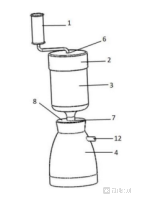
An extracellular vesicle extraction device, image from the patent specification
A method for promoting cell activation and differentiation (Patent No.: ZL201710377305.8) and a cell therapy transformation device (Patent No.: ZL201520633809.8) activate cytokines in PRP components in vitro, forming a stable network structure through sustained activation. Compared with the lethal activation methods using traditional calcium chloride and thrombin, this approach offers superior clinical application performance and can be widely used in cell preparation laboratories, dermatology and cosmetic departments, rehabilitation departments, and other settings.
Exosomes are nanoscale extracellular vesicles with a diameter of 30–150 nm, generated through budding from the plasma membrane and endosomal membranes. They contain diverse cargoes, including nucleic acids, lipids, and proteins, and express transmembrane proteins and receptors that facilitate intercellular communication. Exosomes possess the ability to traverse biological barriers, such as the cytoplasmic membrane and the blood-brain barrier. Furthermore, they offer several advantages, including small size, reduced susceptibility to autoimmune attack, prolonged circulation in vivo, and low toxicity to the human body.
In recent years, research interest in exosomes has continued to grow. From basic research to technological development, exosomes have become a focal point across multiple hot fields, with research findings blossoming everywhere and attracting significant attention and favor from the industry and capital markets. Taking this opportunity, VCBeat’s Chengguo Bureau provides a brief overview of domestic exosome companies and their products. If you are interested, please visit VCBeat for more information or contact us.
Kaixiang Hongkang
The α-synuclein assay kit produced by Beijing Kaixiang Hongkang Biotechnology Co., Ltd. utilizes a proprietary, innovative technology for enriching brain-derived exosomes, enabling efficient isolation of neuron-derived exosomes from peripheral blood and quantification of α-synuclein levels via chemiluminescence. The kit has successfully completed clinical registration in China, marking it as the first registered product domestically and the first globally to detect α-synuclein in exosomes, thereby achieving an internationally leading position in this field. Clinical registration data demonstrate that, compared with existing diagnostic methods, the assay achieves a sensitivity of 91.48% and a specificity of 93.38%, exhibiting superior performance and holding promise as a new tool for the precise diagnosis of Parkinson’s disease.
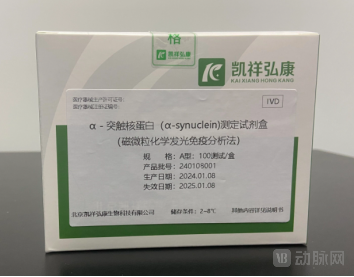
Yiwei Jianhua
Yiwei Jianhua, established in September 2021, is an innovative biotechnology company dedicated to the development of precision diagnostic and therapeutic products based on exosomes. To date, the company has successfully developed a mass spectrometry-based platform for discovering exosomal protein biomarkers for diagnostics, as well as a scaffold-based targeted delivery platform for active therapeutic molecules. It offers a range of high-quality exosome products, raw materials, and specialized technical services. Furthermore, building upon its existing technological platforms, the company has developed a series of products for proteomics research, further accelerating advancements in exosome research.
Er Rui Xin Yue
Since its establishment in 2021, Erui Xinyue has remained dedicated to the research, development, and application of exosome-related technologies. The company has developed an exosome targeted enrichment technology and created the world’s first automated exosome targeted enrichment platform, for which multiple domestic and international patents have been filed. By leveraging automated equipment, Erui Xinyue standardizes the enrichment process, thereby eliminating manual operational deviations and enhancing the reproducibility of exosome enrichment. The mass-produced automated systems feature high integration, compact size, and high throughput. These systems are suitable not only for clinical diagnostics but also serve as powerful research tools in the life sciences, facilitating translational research and unlocking greater clinical value.
Leveraging this technological approach, Erui Xinyue has developed an exosome targeted enrichment platform capable of purifying exosomes from specific sources in clinical samples. This platform is compatible with various detection systems, including chemiluminescence, ELISA, and single-molecule detection, thereby facilitating clinical diagnostics and scientific research for a wide range of diseases.
iMab Biopharma
ExoRNA Bio, founded in early 2022, is dedicated to developing a broader portfolio of products that address unmet clinical needs and benefit more patients in real-world therapeutic settings, with a particular focus on therapeutics for central nervous system (CNS) disorders, thereby establishing itself as a platform-based innovative RNA pharmaceutical company.
It leverages the body’s own organ tissues as bioreactors to “process” and produce siRNA in its active form, which is then packaged into exosomes generated by these “bioreactors.” This endogenous exosome-mediated “transport” mechanism not only protects siRNA during transcellular and biological barrier crossing but also exhibits excellent biocompatibility.
Aimabio’s third-generation nucleic acid delivery technology platform ensures the safety of nucleic acid drug delivery, achieving a breakthrough in establishing an effective extrahepatic delivery system for nucleic acid therapeutics. Meanwhile, this platform completely circumvents the challenges associated with using exosomes as carriers for in vitro production, such as high costs, difficult quality control, instability, susceptibility to degradation, and insufficient supply to meet demand. Even at extremely low administration concentrations, Aimabio’s developed drugs can exert potent effects in vivo. Furthermore, leveraging the company’s advantages in engineered synthetic biology, Aimabio enables drugs to carry multi-gene components with targeting capabilities, ultimately delivering them to different organs via exosomes.
Huixin Bio
Huixin Biotech has independently developed and launched EXODUS, the world’s first label-free, fully automated purification system for exosome isolation and purification.®, it has garnered widespread attention and recognition from multiple stakeholders. EXODUS® is a novel exosome isolation technology based on negative-pressure oscillation and dual-coupled ultrasonic oscillation. This method consists of an exosome isolation and enrichment nanochip and a workstation. The workstation automates the EXODUS® process, thereby simplifying operations while delivering excellent stability and reproducibility, making it suitable for standardized isolation from various biological samples.
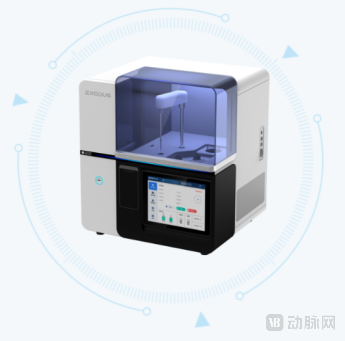
EXODUS®Fully Automated Exosome Extraction System
EHang Bio
EHang Biologics was established through the restructuring of two leading enterprises in China’s exosome industry—Jiangsu Beigeer Pharmaceutical and Shanghai Yiwei Biopharmaceutical. In October 2022, it was introduced to Suzhou with support from the “case-by-case” key project initiative of the Suzhou Industrial Park. The company is located in the Artificial Intelligence Industrial Park within the Suzhou Industrial Park, adjacent to Jinji Lake.
The company owns an exosome isolation platform with independent intellectual property rights and has developed multiple product pipelines based on large-scale, multi-center clinical studies involving thousands of cases, including early blood-based diagnosis of neurodegenerative diseases, early cancer diagnosis, and dynamic monitoring of advanced-stage cancer. The company’s team and advisory board comprise top experts from the International Society for Extracellular Vesicles, leading domestic and international specialists in neurology and clinical oncology, as well as seasoned professionals in industrialization. It boasts internationally competitive exosome R&D capabilities and a Class 100 cleanroom facility for exosome production.
TheraXyte
Sailuosi focuses on novel nanomedicines, particularly the research and development and application of innovative exosome-based therapeutics. The company is dedicated to developing innovative technologies for exosomes themselves and their use as drug delivery vehicles, as well as translating these advancements into clinical applications. Currently, the company operates a R&D and production facility spanning nearly 1,000 square meters. Leveraging its proprietary exosome drug development platform and comprehensive GMP-compliant production and quality control systems, it possesses the capability for large-scale exosome manufacturing from laboratory to industrial scales. Additionally, the company provides scientific research services and CDMO (Contract Development and Manufacturing Organization) solutions in the field of exosomes.
Enze Kangtai
Enze Kangtai, established in 2017, is dedicated to the development and clinical translation of exosome technologies. The company has built three proprietary exosome research and application platforms: the Exoomics® exosome omics platform, which provides exosome products/kits and comprehensive scientific research solutions to research-oriented hospitals and scientific institutions; the Echosome® engineered exosome platform, which offers CRO services such as engineered exosome vector design and development, drug loading, and targeted modification to biopharmaceutical companies; and the EchoPharm® exosome CMC platform, which provides CDMO services and raw material production for engineered exosomes to biopharmaceutical companies.
Yumeibo Biotech
Yumeibo Biotech, established in 2015, has become a specialized supplier of exosome-based drug delivery systems and reagent solutions. The company operates a 2,000-square-meter GMP-compliant manufacturing facility. Its business scope includes the research and development of novel drug carriers, large-scale purification and production of exosomes, development of exosome-based diagnostic reagents, and sales of exosome-related products. Its core technologies address key technical challenges in large-scale exosome purification, exosome-mediated drug delivery, and exosome labeling.