

Myopia Control's New 'Game-Changer': Is Defocus Soft Contact Lens the Next Billion-Dollar Ophthalmic Product?
Since 2024, a new “miracle product” for myopia control has gained popularity on social media platforms: defocus soft contact lenses (also known as multifocal soft contact lenses).
In the past, defocus spectacle lenses were one of the primary methods for myopia control. Defocus spectacles are convenient to wear, have a broad range of indications, demonstrate effective myopia control, and are relatively cost-effective among myopia management products; however, they pose inconveniences during vigorous exercise or other activities.
Orthokeratology (OK) lenses have seen a rapid increase in penetration within the field of myopia control in recent years, owing to their significant efficacy in slowing progression and the convenience of overnight wear that does not interfere with daytime daily activities. However, strict pre-fitting examinations are required, as not all patients are suitable candidates. Furthermore, OK lenses are made from rigid gas-permeable materials and require an adaptation period; some children may even find them intolerable.
Defocus soft contact lenses combine the advantages of the two main products mentioned above while avoiding their drawbacks. First,Both defocus soft contact lenses and defocus spectacle lenses are designed based on the theory of optical defocus. Light passing through the correction zone is focused on the retina to form a clear focal point, while light passing through the treatment zone is focused in front of the retina to create peripheral myopic defocus, thereby aiming to slow axial elongation.Secondly,The material of defocus soft contact lenses is similar to that of conventional contact lenses, mostly consisting of hydrogel or silicone hydrogel. They offer superior comfort and a shorter adaptation period compared to orthokeratology (OK) lenses, providing a new option for patients who are unable to wear OK lenses and unwilling to wear spectacle frames.
According to research data from the Shanghai Biopharmaceutical Fund, ophthalmic devices that have achieved single-product revenues exceeding RMB 10 billion are primarily concentrated in the broad category of “correction and control” products within the vision care sector. These include laser refractive surgery, Implantable Collamer Lens (ICL) surgery, orthokeratology lenses (OK lenses), contact lenses, and defocus spectacles. Defocus soft contact lenses combine the functionalities and characteristics of multiple such products. Could they become the next ophthalmic blockbuster product with single-product revenues surpassing RMB 10 billion?
Currently, multiple studies have demonstrated the efficacy and safety of defocus soft contact lenses in controlling myopia progression. Data from CNKI show that there are dozens of publications indexed with the keywords “defocus soft contact lenses” and “multifocal soft contact lenses.”
The Department of Optometry and Vision Science, West China School of Clinical Medicine, Sichuan University; the Laboratory of Optometry and Vision Science, West China Hospital, Sichuan University; and the Department of Ophthalmology jointly conducted a study to observe and compare the safety and efficacy of defocus soft contact lenses and orthokeratology lenses in myopic children. The results indicated that both defocus soft contact lenses and orthokeratology lenses could effectively control the progression of axial length in myopic children, with superior efficacy compared to spectacle lenses. The axial length control effects of the two types of contact lenses were comparable. Both contact lens modalities were associated with fewer corneal and conjunctival complications, demonstrating a high level of safety.
In 2023, the Optometry Group of the Ophthalmology Branch of the Chinese Medical Association, the Optometry Professional Committee of the Ophthalmologist Branch of the Chinese Medical Doctor Association, and other organizations jointly released the “Expert Consensus on the Fitting of Multifocal Soft Contact Lenses for Myopia Control (2023)” (hereinafter referred to as the “Consensus”), which further affirmed the efficacy of defocus soft contact lenses and standardized their clinical application in China.
The Consensus reviews the efficacy of defocus soft contact lenses with different designs in slowing myopia progression. The article notes that multifocal soft contact lenses currently commonly used in clinical practice feature two designs: concentric bifocal and progressive multifocal. Concentric bifocal soft contact lenses have a central optical zone for distance vision, surrounded by several concentric circular treatment zones with positive add power. Progressive multifocal soft contact lenses have a central optical zone for distance correction, with treatment zones extending from the center to the periphery where the near add power increases gradually. Studies have shown that both concentric bifocal and progressive multifocal soft contact lenses achieve good myopia control in school-aged children, slowing myopic refractive error progression by 25%–50% over two years. Benefits are still observed even when use is initiated during adolescence.
Furthermore, the myopia control efficacy of multifocal soft contact lenses is influenced by numerous factors, such as the amount of defocus, defocus ring design, and wearing duration.
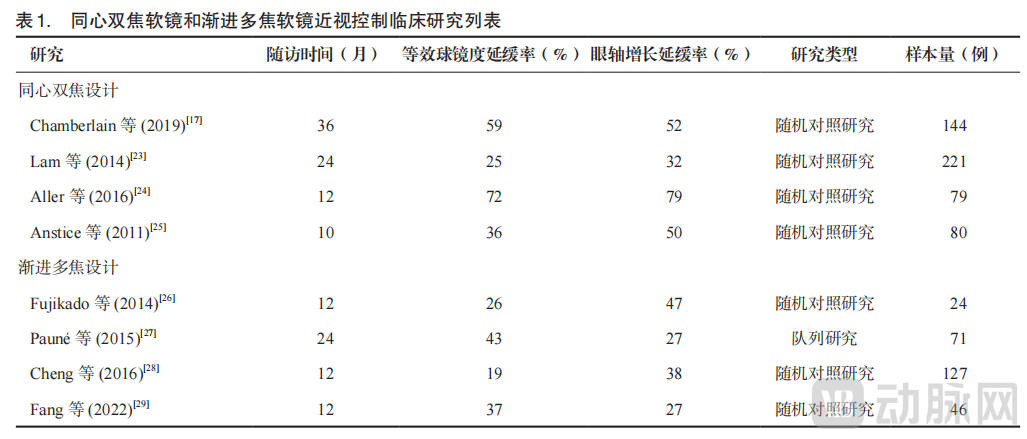 Study on the Myopia Control Efficacy of Defocus Soft Contact Lenses with Different Designs. Image source: “Expert Consensus on the Fitting of Multifocal Soft Contact Lenses for Myopia Control (2023)”
It is understood that defocus soft contact lenses have been used abroad for myopia control for several years. The International Myopia Institute (IMI)’s “International Myopia Institute White Paper” and the Asian Optometric Practice Management Association’s “Asian Consensus on Myopia Management” both list them as one of the effective methods for myopia control.
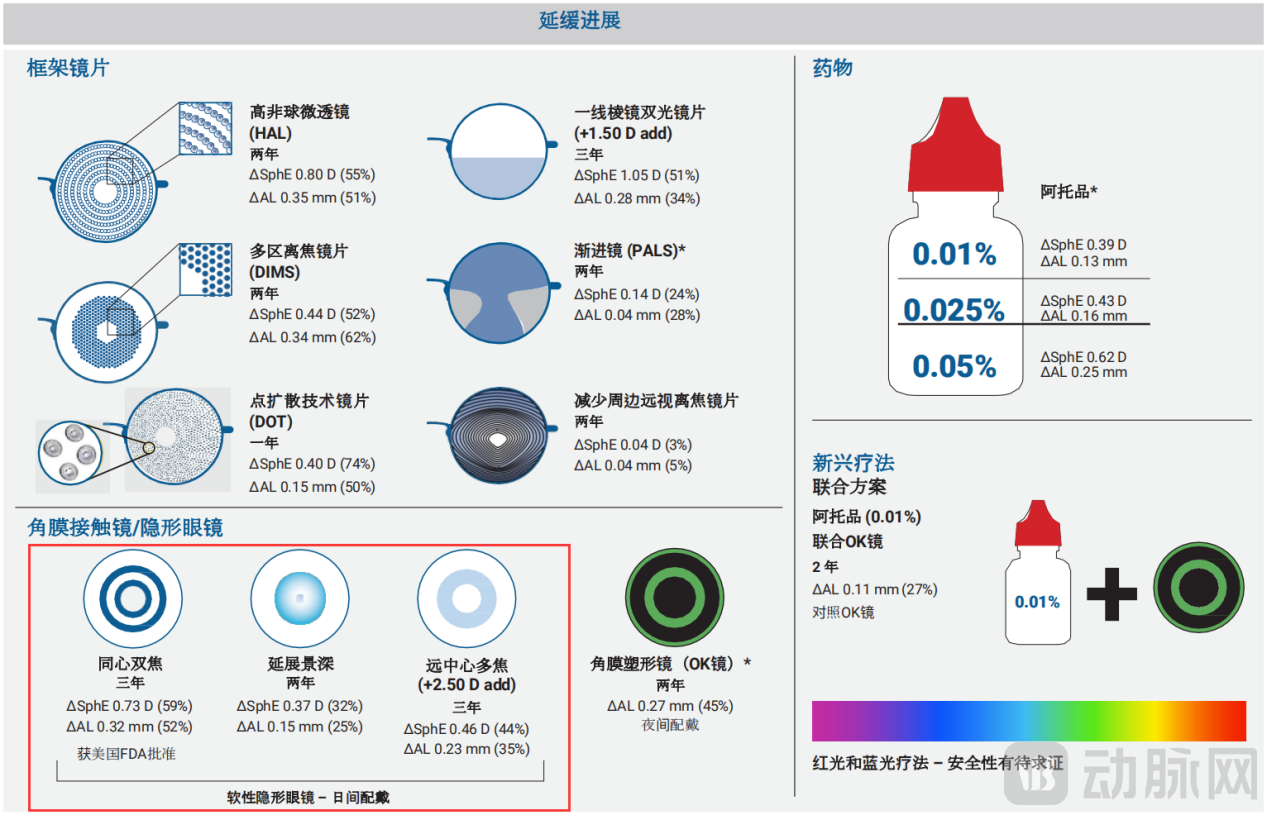 Key methods for slowing myopia progression, including defocus soft contact lenses. Image source: IMI official website
Efficacy and safety are merely the most basic functions of defocus soft contact lenses. Compared with other myopia control methods, what additional advantages do they offer?
As contact lenses, defocus soft lenses have the advantages of minimal impact on daily daytime activities and high comfort compared to myopia-control spectacle lenses; however, their price is significantly higher than that of spectacles. Due to their different forms, a detailed comparison of their specific advantages and disadvantages will not be elaborated here.
Compared with orthokeratology (OK) lenses and rigid gas permeable (RGP) lenses, which are also contact lenses for myopia control, defocus soft contact lenses demonstrate complementary advantages across multiple dimensions.
Studies have shown that the primary advantage of orthokeratology (OK) lenses is their efficacy in controlling axial elongation. For myopia within −5.00 D, most wearers achieve clear and stable uncorrected visual acuity during the day after wearing the lenses overnight for 8 to 10 hours. However, OK lens fitting has certain contraindications and limitations, such as specific ranges of corneal curvature, corneal e-value, and prescription power, as well as conditions like trichiasis and foreign body sensation. Therefore, this method may not be suitable for some myopic children to control myopia progression.
The primary characteristics of defocus soft contact lenses include a broad fitting power range, from −1.00 D to −10.00 D. Due to their low elastic modulus, these lenses feature base curves that can accommodate a wide range of corneal curvatures, ensuring comfortable wear. Defocus soft contact lenses address certain fitting limitations associated with orthokeratology lenses; the two modalities are complementary in clinical practice. Consequently, defocus soft contact lenses have gradually become one of the commonly used optical methods for myopia control.
Furthermore, based on principles of myopia progression control, material comfort, and diopter range, defocus soft contact lenses are not only suitable for children and adolescents but can also complement rigid gas permeable (RGP) lenses in myopia management for adults.
In the past, it was widely believed that myopia in adults no longer progresses; however, this perception holds true only in comparison to children and adolescents. In recent years, with the widespread adoption of electronic devices, adults have been spending prolonged periods using digital screens in both work and daily life, often coupled with poor eye-use habits. Consequently, myopia prevention and control among adults can no longer be overlooked. According to data from IMI, annual myopia progression in adults aged 18–25 ranges from +0.02 D to -0.23 D. Studies focusing on individuals aged 25–40 indicate an average annual progression ranging from -0.03 D to -0.18 D.
In terms of pricing, taking a box of 30 daily disposable defocus soft contact lenses as an example, the price is approximately RMB 600–800 per box. Based on this, the annual cost is estimated at around RMB 14,400–19,200, which is basically on par with or slightly higher than the annual cost of orthokeratology (OK) lenses (product plus care).
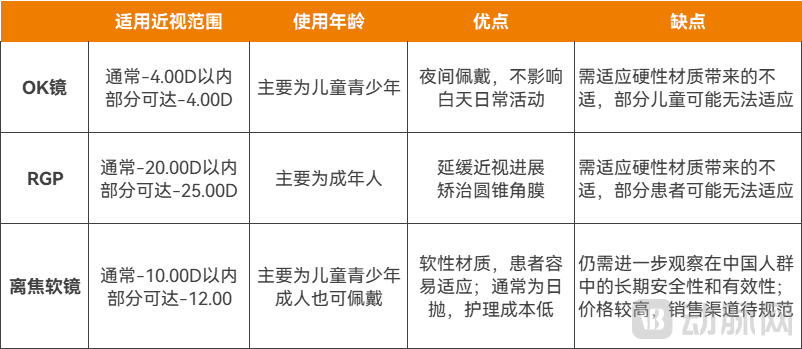 Comparison of the Characteristics of Defocus Soft Contact Lenses, Orthokeratology Lenses, and RGP Lenses. Source: Academic Literature and Public Information
Defocus soft contact lenses have gained favor among physicians and patients due to their suitable prescription ranges, target populations, and comfort. Although long-term safety and efficacy require further observation, and sales channels need greater standardization, they still offer a significant new option for addressing the increasingly severe challenge of myopia prevention and control.
Historically, the defocus soft contact lens products already marketed in China have mainly included MiSight, Discus, and BioThin Vision, which were predominantly imported or introduced through technology licensing.
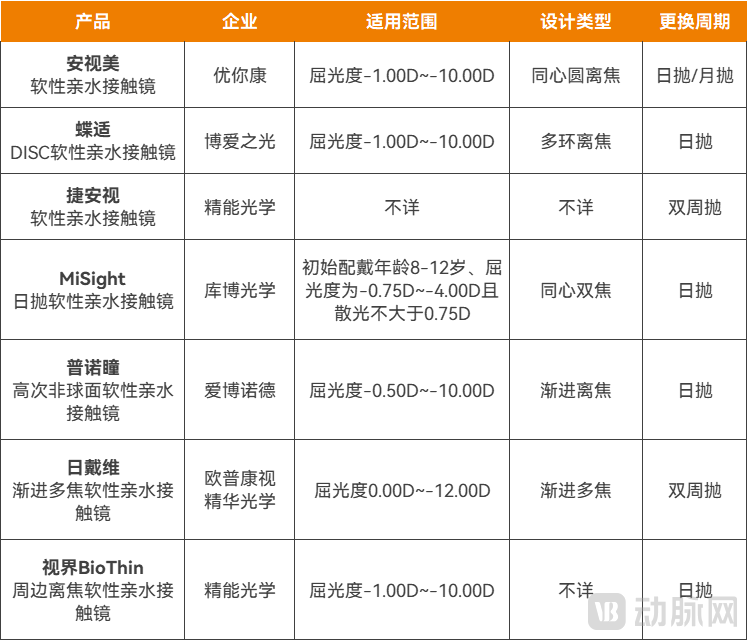
Market-Launched Defocus Soft Contact Lens Products, Source: Public Company Information
In July 2022, CooperVision’s MiSight soft hydrophilic contact lenses were launched in mainland China. MiSight is the first soft contact lens approved by the U.S. Food and Drug Administration (FDA) to slow myopia progression in children aged 8–12 years at initial fitting; following FDA approval in 2019, it was marketed in the United States in 2020. In 2021, MiSight received registration approval from the National Medical Products Administration (NMPA).
Currently, MiSight has entered a large number of ophthalmic medical institutions across China, becoming one of the most popular defocus soft contact lenses in the myopia control and prevention market.
Brands or technologies such as Anshimei, BioThin Vision, Dieshi, and Jieanshi primarily originate from Taiwan, China, and Hong Kong, China.
In 2018, Zhuhai Bo’ai Zhiguang Technology Co., Ltd. (hereinafter referred to as “Bo’ai Zhiguang”) entered into a strategic partnership with the Centre for Myopia Research of The Hong Kong Polytechnic University, launching the latter’s patent resulting from 18 years of R&D: the myopia control product “DISC Soft Hydrophilic Contact Lens.”
DISC Soft Hydrophilic Contact Lenses utilize “multi-ring defocus” R&D technology to convert hyperopic defocus into emmetropic or myopic defocus states, thereby controlling axial elongation; adopting the principle of optical defocus,DesignNine concentric circles; a greater number of concentric circles is used to achieve a more stable visual effect.
In addition, Johnson & Johnson Vision’s ACUVUE Abiliti 1-Day has been introduced for use in the Boao Lecheng International Medical Tourism Pilot Zone through supportive policies. ACUVUE Abiliti 1-Day received U.S. FDA Breakthrough Device designation in June 2019 and has since been launched sequentially in Canada, Singapore, and Hong Kong, China. This product features excellent efficacy in both myopia control and vision correction, and is specifically designed for children.
In 2023, the Aier Institute of Optometry and Vision Science partnered with Johnson & Johnson Vision to launch a “Pilot and Early Access” real-world study project on ACUVUE Abiliti 1-Day at Boao Lecheng Aier Eye Hospital.
Since 2023, domestic enterprises have accelerated their R&D efforts in myopia-control soft contact lenses.
In November 2023, Autek China launched the Ri Dai Wei progressive multifocal soft hydrophilic contact lens. This product, with a prescription correction range of 0.00D to -12.00D, is a daily-wear, bi-weekly disposable soft contact lens designed for myopia correction. It adopts a progressive multifocal design that smooths and continuousizes multiple focal rings, enabling simultaneous retinal imaging of both near and distant objects through the lens for clear vision.
A search of the device registration information for this defocus soft contact lens from Autek China reveals that the registrant remains Jinghua Optical Co., Ltd. (Taiwan, China). However, Autek China disclosed in its financial report that it completed the registration testing for its multifocal-design soft contact lenses and initiated clinical trials in 2023. The company aims to complete the clinical trials for these multifocal soft contact lenses in 2024 and strive to submit the registration application.
In May 2024, Aierbode launched the PnuTong high-order aspheric soft hydrophilic contact lens. In terms of optical design, this product replicates the corneal refractive power distribution achieved after orthokeratology (OK) lens wear, and it also utilizes silicone hydrogel material with superior oxygen permeability.
In the past, Aierbo Nuode developed the Pnuotong progressive defocus rigid gas permeable (RGP) contact lens, which features a specialized high-order aspheric design on its front surface to simulate the ideal defocus distribution observed after orthokeratology (OK) lens wear. Given that progressive defocus RGP lenses have demonstrated efficacy in myopia control in clinical applications, the newly launched high-order aspheric soft contact lens adopts the same optical design as the progressive defocus RGP lens. It replicates the ideal refractive power distribution achieved after corneal reshaping, thereby balancing visual correction with myopia control effectiveness.
Colored contact lens brands are also actively expanding into the myopia control sector, represented by defocus soft lenses.
In 2023, Tongxue Technology (the parent company of the Chinese-made colored contact lens brand “Kilala”) initiated a collaboration with the Eye Hospital of Tianjin Medical University. In the field of myopia prevention and control, both parties will jointly advance the research and development of cost-effective, inclusive soft contact lens products.
In summary,Although defocus soft contact lenses offer new options for doctors and patients, the range of available products remains limited, particularly with regard to domestically developed Chinese brands.However, it is also gratifying to see that,Listed companies represented by Autek China and Eyebright Medical have leveraged their technological capabilities and sales channels to prioritize defocus soft contact lenses as a key product while expanding their myopia control portfolios, thereby increasing investment in independent research and development. Moreover, domestic enterprises are differentiating their products in terms of prescription ranges and replacement cycles to foster healthy competition with imported brands.
Globally, the development of soft contact lenses based on novel theories for myopia control is ongoing, with multiple products yet to enter the Chinese market.
According to media reports, soft contact lens products available in the UK market for myopia management include, in addition to MiSight, Mark’ennovy’s Mylo, Safilens’ Delivery Tyro, and VTI’s NaturalVue.
It is reported that the Spanish company Mark’ennovy has launched Mylo, a soft contact lens brand for myopia control. Mylo is a silicone hydrogel lens specifically designed for myopia management, powered by the patented Extended Depth of Focus (EDOF) technology from the Brien Holden Vision Institute, which has been proven to effectively slow myopia progression.
As a monthly disposable soft contact lens, Mylo can be personalized for patients of any age or stage of myopia management.
Previously, extended depth of focus (EDOF) technology has been applied in the field of intraocular lenses for cataract surgery, providing patients with continuous high-quality vision at distance, intermediate, and near ranges. Gradually, EDOF contact lenses have been found to achieve favorable outcomes in presbyopia correction. According to the IMI white paper, recent studies indicate that myopia control efficacy is comparable between multifocal soft contact lenses and orthokeratology lenses, as well as between multifocal soft contact lenses and EDOF soft contact lenses. Industry experts believe that EDOF will become one of the key research and development directions for myopia-control soft contact lenses.
Japan’s Seed 1-Day Pure EDOF soft contact lens, also designed based on EDOF technology and originating from the Brien Holden Vision Institute, is indicated for early myopia management and presbyopia, enabling users to perceive continuously focused images across a wide range of visual distances from near to far.
In addition, NaturalVue from the U.S. company VTI has received CE approval for myopia control and presbyopia.
More novel principles for myopia control have also been explored.
For example, the Italian company Safilens has launched Delivery Tyro, a soft contact lens for myopia control.This product promotes the normalization of eye development by continuously releasing tyrosine to the anterior segment of the eye during wear.
Based on the design principles of Delivery Tyro, tyrosine is a semi-essential amino acid that can cross the blood-retina barrier and, as its precursor, promote the natural production of dopamine; sufficient dopamine levels in the retina have been proven to play a crucial role in eye development, particularly in inhibiting axial elongation of the eyeball.
As a common refractive error, myopia occurs when parallel rays of light from the outside world focus in front of the retina while the eye's accommodation is relaxed, resulting in image formation anterior to the retina. The currently widely accepted mechanism for myopia is the theory of peripheral retinal defocus; other proposed mechanisms include the theory of accommodative lag and the theory of form deprivation.
Clinical understanding of the principles underlying myopia control has progressively advanced among clinicians and scientists, and innovation in the research and development of myopia control products continues to evolve within the industry. Nevertheless, the overarching trend remains focused on delivering solutions that are not only effective and safe but also more comfortable, convenient, and cost-effective. Ongoing exploration of soft contact lens R&D mechanisms abroad can serve as a valuable reference for domestic enterprises.
Returning to the topic of defocus soft contact lenses.
Currently, an increasing number of patients who are not suitable for orthokeratology (OK) lenses or have achieved suboptimal results with other myopia control methods are opting for defocus soft contact lenses. As mentioned at the beginning of this article, defocus soft contact lenses have become a “viral sensation” in myopia control on social media platforms, with numerous parents sharing their experiences regarding the efficacy and precautions of various brands, as well as recommending fitting channels.
Notably, due to the high cost and growing demand for defocus soft contact lenses, out-of-hospital purchasing channels have emerged on various social media and e-commerce platforms. Since 2024, MiSight and Disc have successively issued statements emphasizing that their products should only be prescribed and fitted at qualified medical institutions, and warning consumers against purchasing through e-commerce platforms, optical stores, or individual sellers.
According to the approval information from the National Medical Products Administration (NMPA), MiSight must be fitted by licensed ophthalmologists with at least an intermediate professional title in medical institutions, and regular follow-up examinations are required. Other defocus soft contact lens products are also primarily distributed through collaborations between brands or distributors and medical institutions, rather than via direct-to-consumer (DTC) channels.
Although the safety and efficacy of defocus soft contact lenses are supported by numerous studies and publications, with multiple products currently used for myopia control based on this evidence, myopia progression is a long-term process spanning over a decade in children and adolescents. Consequently, significant observational and research challenges remain regarding the long-term safety and efficacy of defocus soft contact lenses across different age groups and stages of myopia management.
The Optometry Center of Tianjin Eye Hospital previously released a “Comprehensive Interpretation of the 7-Year Clinical Trial of MiSight Dual-Focus Soft Contact Lenses.” This study was a multicenter, prospective, randomized controlled trial involving participants aged 8 to 18 years, with a follow-up period of seven years. It is understood to be the longest-running soft contact lens–related study conducted in the pediatric population to date.
For myopia progression spanning over a decade, even the longest current study duration of 7 years covers only a portion of this period.
Therefore,In practical application, defocus soft contact lenses require strict adherence to standards in clinical use, sales channels, and other areas. During the early introduction of orthokeratology (OK) lenses into China, irregular practices within the industry compromised patient safety and ultimately hindered sector development. Consumer trust was only gradually rebuilt after companies invested substantial time and effort. The developmental trajectory of OK lenses serves as a cautionary tale for defocus soft contact lenses.
While the growing market popularity of defocus soft contact lenses is certainly a positive development, this niche segment remains in its very early stages. Only through collaborative efforts by enterprises, healthcare institutions, and regulatory authorities to standardize the market can these products achieve faster and more sustainable growth, thereby laying the foundation for tapping into a billion-dollar market.
We thank Yuan Meng, Ph.D. from the Zhongshan Ophthalmic Center of Sun Yat-sen University and Assistant Research Fellow at the Institute of Hospital Management, Tsinghua University, for her support of this article.
References
West China Hospital: A Comparative Observational Study on the Safety and Efficacy of Defocus Soft Contact Lenses versus Orthokeratology Lenses in Myopic Children
Research Progress on Peripheral Retinal Defocus Control of Myopia and Measurement Methods for Peripheral Defocus
Chinese Medical Association: Expert Consensus on the Fitting of Multifocal Soft Contact Lenses for Myopia Control (2023)
Shanghai Biopharmaceutical Fund: Seeing Is Believing—Investing in Ophthalmic Devices Under the National Strategy for Eye Health