

Medcura Files for IPO: Pioneering FDA Breakthrough-Designated Absorbable Hemostatic Gel Based on Proprietary Chitosan Modification Technology

Medcura
Wound Care Product Developer
Driven by factors such as advances in medical technology, the increasing volume of surgical procedures, and rising patient expectations for healthcare quality, the absorbable hemostatic materials industry is ushering in new development opportunities. In this field, VCBeat has taken note of Medcura, a U.S.-based developer of wound care products established in 2007.
The company has developed the world’s only absorbable surgical hemostatic material to receive FDA Breakthrough Device Designation for its “non-expanding” property.In this regard, VCBeat has already“Granted FDA Breakthrough Device Designation, It Raked in 100 Million with a Novel Absorbable Hemostatic Agent”introduced in detail in the article.
Recently,VCBeat Conducts Exclusive Interview with Jim Buck, President, CEO, and Director of Medcura, to gain a deeper understanding of Medcura’s core technologies, business strategies, and future roadmap.
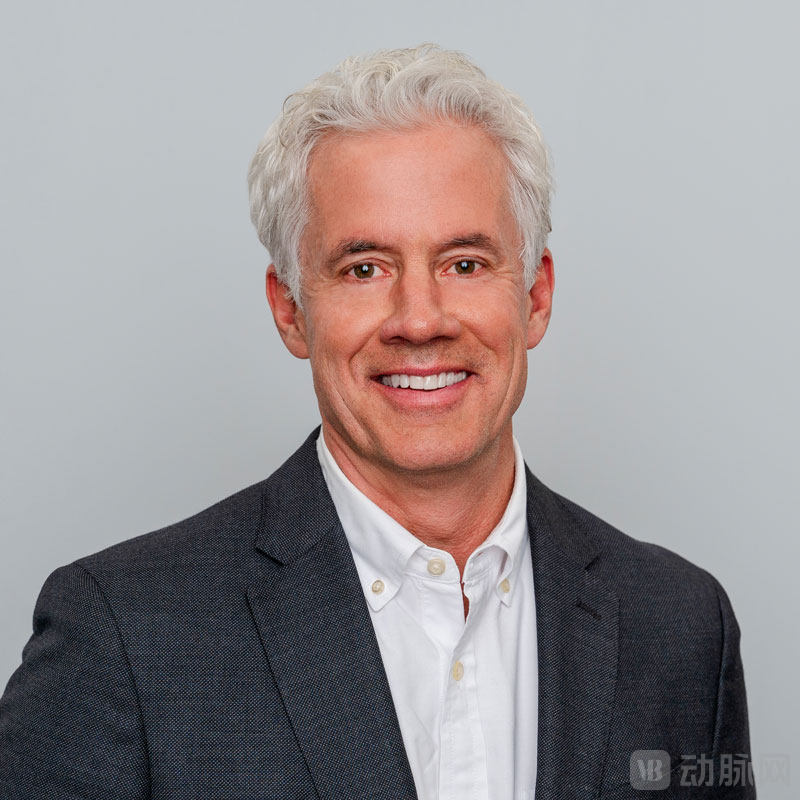
Jim Buck, President, Chief Executive Officer, and Director of Medcura
Buck has 30 years of experience in successfully developing and commercializing innovative medical technologies., has served as a director on Medcura’s Board of Directors since 2018 and became CEO of Medcura in 2022. Prior to this, Buck accumulated extensive experience in mergers and acquisitions within the healthcare industry, having held positions at Abbott and Johnson & Johnson’s BD division. Additionally, Buck served as Vice President of Marketing and Business Development at Closure Medical, where he oversaw product planning and strategic execution for novel surgical sealant and adhesive technologies, which were later acquired by Johnson & Johnson for over $370 million.
Surgical hemostasis scenarios largely rely on a derivative extracted from bovine or porcine blood—thrombin. This substance plays a crucial role in the hemostatic process but also has many drawbacks. For instance, traditional thrombin production is significantly constrained by source availability, and the complex extraction and purification processes result in high production costs, limited indications, and adverse reactions such as bleeding tendencies and thrombosis.
This realization led the Medcura team to recognize that products developed using non-thrombin polymers held significant promise in the hemostasis market. Consequently, the team turned its attention to chitosan, whose ready availability and low cost effectively addressed the inherent limitations of thrombin. However, a new challenge emerged: although chitosan demonstrates excellent hemostatic efficacy, it is unsuitable for internal use due to its high cytotoxicity and neurotoxicity upon absorption. For this reason, chitosan-based absorbable hemostatic agents had previously never received FDA approval for internal use in non-traumatic surgical applications.
To crack this “hard nut,” the team embarked on an exploration of chitosan modification technologies. Buck admitted that this was also the greatest challenge Medcura encountered during its product development process: “After nearly a decade of effort, we have finally overcome this challenge, enabling chitosan to eliminate toxicity while retaining its hemostatic properties, thus allowing it to be safely absorbed by the human body.。”
According to Buck, although other companies have also attempted to modify chitosan,Currently, Medcura is the only company to have achieved success, and it possesses a robust barrier of intellectual property and patent protection surrounding this achievement."The company has published 12 articles in different high-impact, peer-reviewed journals over the past decade."
Disruptive innovation is inseparable from the early academic and scientific research achievements of Medcura’s founders.Dr. Matthew Dowling, Chief Scientist, Founder, and Director of Medcura, is a recognized thought leader in the field of novel hemostatic materials, with extensive expertise in research on chitosan-based self-assembling soft materials for wound treatment.
During the first four to five years after its founding, Dowling and the team from the University of Maryland’s College of Chemical and Life Sciences conducted in-depth research to create a novel biochemical process for reformatting chitosan, leading to the development of a new type of rapid hemostatic material. This patented hemostatic technology is based on modified chitosan, a biopolymer extracted from the exoskeletons of crustaceans such as shrimp and crabs. It not only adheres closely to tissue but can also be removed from patients without causing further injury, making it suitable for a wide range of applications.
Subsequently, the Medcura team conducted in-depth applied research on the aforementioned technology, developing a biomaterial platform based on amphiphilic self-assembling biopolymers and advancing its commercialization. The backbone of the platform’s biopolymers is primarily hydrophilic or water-soluble, with hydrophobic moieties extending from the polymer backbone. This enables the material to self-assemble upon contact with blood or biological fluids, forming various new structures.
Currently, Medcura has developed a product line called LifeGel for surgical applications based on this technology. It can be loaded into syringes for sterilization and delivered through the syringe tip. LifeGel is easy to apply on wound surfaces and exhibits good elasticity. With gentle pressure, physicians can spread it over irregularly shaped wound surfaces to cover and seal wounds, bleeding, and other sources of exudate.
According to the latest research report from QY Research, the global market size for absorbable hemostatic materials is projected to reach $3.864 billion by 2029, with a compound annual growth rate (CAGR) of 6.8% in the coming years. Currently, there is a wide variety of absorbable hemostatic material products on the market, and no shortage of companies entering this sector. So, amid increasingly fierce competition in this field, what are LifeGel’s differentiated advantages?
Buck pointed out that LifeGel demonstrates strong performance in the three key areas of safety, efficacy, and cost-effectiveness.It is currently the only absorbable hemostatic material product worldwide to have received FDA Breakthrough Device Designation.
From an efficacy standpoint, LifeGel achieves hemostatic performance comparable to that of mainstream hemostatic products in the United States. Composed of three ingredients—self-assembling hydrophobically modified chitosan, crosslinked fully hydrated gelatin particles, and water—LifeGel is a fully hydrated, absorbable hemostatic gel designed to control mild to moderate surgical bleeding.
Safety is primarily demonstrated by the fact that LifeGel does not swell upon exposure to moisture, which is the product’s most significant highlight.. For complex surgeries, particularly spinal procedures, the expansion of hemostatic agents may lead to nerve injury, and their use in confined spaces can even result in paralysis. Medcura’s LifeGel is specifically designed for highly specialized surgical interventions such as spinal surgery,It is the first and only flowable hemostatic gel that can address the issue of hemostatic agent expansion.It can effectively reduce the risk of major adverse events such as nerve injury and paralysis, and is highly effective in controlling bleeding from adjacent tissues in both open and minimally invasive surgeries.
Leveraging this advantage, Medcura has anchored the strategic focus of LifeGel on applications in spinal surgery. The company also boasts extensive expertise and accumulated experience in spinal surgery research.Chief Medical Officer Kenneth RenkensHe was a co-founder of the Indiana Spine Group and participated in the research, development, and commercialization of biosurgical products that are now in routine use worldwide. Renkens is a senior expert in the treatment of complex spinal and spinal cord disorders. He previously served as a Clinical Instructor in Orthopedic Surgery at the Indiana University School of Medicine and is a member of the American Association of Neurological Surgeons and the North American Spine Society.
Bryan Cunningham, Director of Spinal Translational ResearchWith over 35 years of experience in basic science and clinical research in orthopedics and neurosurgery, Cunningham served as Professor of Orthopedics at Georgetown University School of Medicine in Washington, D.C. He has published more than 135 peer-reviewed journal articles and presented over 500 abstracts at professional society meetings in orthopedics and neurosurgery. Cunningham has received 24 nationally recognized research awards, including the North American Spine Society’s Henry Farfan Lifetime Achievement Award, in recognition of his contributions to orthopedic research.
Based on years of deep expertise in spinal surgery, Medcura’s LifeGel has received high acclaim from numerous neurosurgeons and spine surgeons. “We invited 24 neurosurgeons and orthopedic spine surgeons to the LifeGel product demonstration laboratory, where they used the product in bleeding scenarios that closely mimic the conditions they encounter daily in human procedures,” introduced Buck. TheseThe feedback from clinicians was directly reflected in their actual investment actions—following the product demonstration, Medcura secured a total of $8 million in investments from these physicians.
Moreover, LifeGel offers a significant cost advantage. “Most hemostatic materials on the market rely on thrombin, which is expensive and requires stringent storage conditions. In contrast, LifeGel eliminates the dependence on thrombin, has no special storage requirements, and differs significantly from other hemostatic products in terms of raw materials,” Buck explained.Compared with similar products, the cost of LifeGel is only one-third that of its competitors.
Currently, market demand for absorbable hemostatic gels is gradually increasing; however, due to their high cost, they are not frequently used in certain surgical settings. This is precisely the gap that Medcura aims to fill. “Our cost advantage will significantly reduce hemostasis-related expenses for hospitals and promote the widespread application of absorbable hemostatic gels in surgical hemostasis scenarios. In global markets, including Europe and Asia, Medcura is poised to capture market share and increase the utilization rate of absorbable hemostatic gels through its economic benefits,” said Buck.
Through patented modifications to chitosan—a rich, natural, and highly biocompatible material—Medcura’s products offer strong scalability and multifunctionality, enabling the cost-effective development of various product forms. In terms of application scenarios, Medcura has strategically prioritized intraoperative hemostasis in spinal surgeries while simultaneously expanding into other non-strategic markets. “These markets allow us to generate substantial revenue and profits without diverting the company’s focus, accounting for less than 1% of management time,” added Buck. Currently, the company’s absorbable hemostatic materials serve multiple sectors, including consumer, clinical, military, and veterinary markets.
"Across the absorbable hemostatic materials industry, giant corporations have maintained a dominant position for over two decades, empowered by excellent management and marketing teams."It goes without saying that breaking this deeply entrenched monopoly is extremely difficult and requires a highly transformative innovative technology with broad application potential. However, we believe that Medcura’s hemostatic products—with their non-expansion safety advantages, multi-form performance benefits, and cost-effectiveness—will be sufficient to reshape the market order of the surgical hemostatic materials industry..” Buck is highly confident in the market potential of absorbable hemostatic products centered around LifeGel.
Currently, LifeGel is in the preclinical animal testing phase, which is expected to conclude in 2025. Its clinical trials are scheduled to commence in the United States in the second half of 2025, followed by expansion into Europe. The company is currently focused on rapidly bringing its absorbable flowable hemostatic gel, LifeGel, to market. After achieving a significant increase in market share, it plans to leverage the same core biopolymer to launch other product forms, such as powders, foams, sheets, sponges, and films. “These products will enable us to gain a competitive advantage across all segments of the $2.8 billion hemostasis market with offerings that are highly effective, safe, and cost-efficient,” explained Buck.
Regarding Medcura’s future plans, Buck pointed out that the company will continue to focus on surgical hemostasis in spinal surgery, which represents the greatest opportunity for Medcura and is the area most conducive to building a premium product image. “In this nearly $3 billion hemostasis market, spinal surgery will be the largest application segment. Coupled with LifeGel’s outstanding safety advantages in spinal surgery applications, this will strongly influence purchasing decisions by hospitals and physicians,” Buck explained. In terms of geographic markets, Medcura plans to launch LifeGel first in the United States and Europe, and indicated that China is a promising potential market for the company’s next expansion.
“Leveraging this core technology with significant market-disruptive potential, we are committed to establishing a new standard of care in surgical bleeding management.” In the concluding remarks of the interview, Buck expressed this vision for Medcura. How will Medcura reshape the landscape of the absorbable hemostatic materials industry? What compelling story will it unfold? Only time will tell!