

Professor Wang Yuliang of Shanghai Jiao Tong University: Repurposing Artemisinin through a Full-Chain Approach to Unlock the Potential of Medicinal Plants
Artemisia annua is an herbaceous plant with a distinctive aroma. To many, it may simply be a touch of green along country paths, an unassuming presence in urban wastelands, or wild grass swaying in the breeze by lakesides. It commonly appears in homemade wines brewed by rural households, as a seasoning, or in livestock feed troughs.
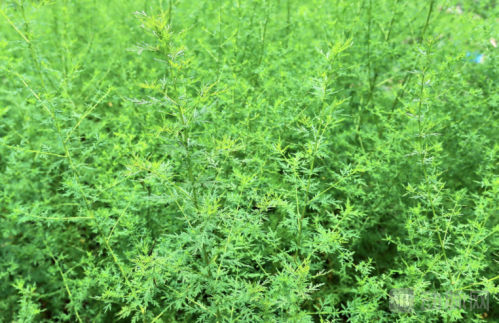
Schematic Diagram of Artemisia annua (Photo provided by the interviewee)
But after Tu Youyou was awarded the Nobel Prize in Physiology or Medicine in 2015, Artemisia annua leaped from an obscure roadside weed to the center of attention in both the scientific community and the public eye.
The transformation of Artemisia annua from a common weed into a “miracle drug for malaria” also suggests that medicinal plants hold immense untapped potential.Starting with artemisinin, Professor Wang Yuliang of Shanghai Jiao Tong University shares his 20-year journey working with medicinal plants.
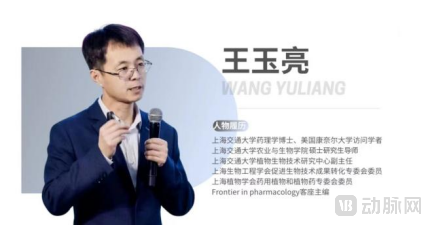
Profile of Professor Wang Yuliang (Photo provided by the interviewee)
"Full-Chain" Understanding of Medicinal Plant Development
Joining the military is a dream that many boys have had since childhood, and Wang Yuliang was no exception. After the college entrance examination, he was admitted toSecond Military Medical University, which is now the Naval Medical University of the Chinese People's Liberation Army, where I majored in Pharmacy.
Life in the military followed a simple, even monotonous, rhythm. Yet this structured lifestyle enabled Wang Yuliang to devote himself fully to scientific research. During his undergraduate studies, he gained a foundational understanding of pharmacy and embraced the shared aspiration of pharmaceutical professionals:Develop a new drug that benefits human health.Looking back on this dream, Wang Yuliang feels that his younger self was somewhat “fearless like a newborn calf unafraid of tigers,” yet it has indeed remained the dream he has steadfastly pursued since embarking on his career in pharmaceutical research.
During his graduate studies, he chose a field closer to Traditional Chinese Medicine.PharmacognosyDirection. Crude drugs are a general term for natural, unprocessed or minimally processed medicinal materials derived from plants, animals, and minerals. By definition, they bear some resemblance to Traditional Chinese Medicine (TCM), yet also incorporate research methodologies used in the study of chemical pharmaceuticals. During his studies, he recognized the vast, untapped potential of medicinal plants, which subtly influenced the direction of his future research.
After graduating with his bachelor’s degree, Wang Yuliang joined a military unit in Ili, Xinjiang. The unit was located only 80 kilometers from the national border, facing Kazakhstan across the frontier. The harsh environment of Xinjiang, coupled with its abundant and unique medicinal plant resources, not only tempered his willpower but also strengthened his interest in traditional Chinese medicine (TCM). His research work there primarily focused on meeting the military’s needs, such as the treatment of burns and combat injuries.This experience also gave him a new perspective on drug development:“Only by understanding actual needs can R&D be effectively implemented.”
In 2006, Wang Yuliang ended his decade-long military service to pursue a Ph.D. at Shanghai Jiao Tong University, delving deeper into the study of medicinal plants. His research primarily focused on how the active constituents of medicinal plants exert their effects within the human body. This line of inquiry filled the final knowledge gap in the development of natural drugs. In Wang Yuliang’s own words:“Rather than delving deeply into a single area, I am more interested in understanding the complete upstream and downstream chain of drug development.”This also paved the way for his entry into industrialization.
Medicinal Plant Development: Strengthening Upstream, Midstream, and Downstream Linkages
Currently, there are over 10,000 medicinal plant species included in the Medicinal Plant Database. However, the vast majority of these plants have not been widely applied in clinical practice, primarily because they have not been developed into marketable products.
Wang Yuliang explained, “This is because, compared with chemical drugs, botanical drug products place greater emphasis on collaboration and linkage among upstream, midstream, and downstream sectors.”
The upstream segment of the medicinal plant industry involves agriculture-related cultivation and harvesting. However, factors such as growth methods, geographic origin, and even harvest timing can significantly affect their medicinal value. Compared with chemical drugs, it is more difficult to ensure consistent quality for medicinal plants. Furthermore, the lack of precise quality standards and industry guidelines makes unified management challenging, resulting in inconsistent product supply.
The midstream sector comprises processing facilities for traditional Chinese medicine (TCM) decoction pieces, formula granules, products derived from substances that are both food and medicine, and proprietary Chinese medicines. This segment is also referred to as the “secondary industry” within the sector. At this stage, medicinal plants may be processed into functional foods or pharmaceutical drugs. However, drug approval processes are stringent, production barriers are high, and functional foods are constrained by domestic regulatory policies, making industrialization challenging. Consequently, the current application of medicinal plants is primarily limited to primary processing such as slicing for use as TCM decoction pieces, which in turn restricts the development of the medicinal plant industry.
Downstream segments include pharmaceutical e-commerce platforms, medical institutions, and pharmacies that distribute functional foods, proprietary Chinese medicines, and other products. However, in light of the national Healthy China Strategy currently being promoted, the immense potential of medicinal plants in the broader health and wellness sector remains to be fully tapped.
Uncertain quality and supply of raw materials, uneven processing capabilities, unclear national regulatory policies, and weak downstream sales channels collectively constitute the challenges hindering the development of medicinal plants.
New Opportunities for Artesunate: From Treating Malaria to Fatty Liver Disease
Wang Yuliang shared his experience using the development of *Artemisia annua* as an example.
First, it is essential to ensure the quality of Artemisia annua.Starting from the breeding stage, Wang Yuliang’s team has maintained strict control over *Artemisia annua*, including throughGene Editing, Synthetic BiologyBy employing modern biotechnological methods, we increase the content of artemisinin, the primary active ingredient in *Artemisia annua*, reduce pathway competition from inactive components, and enhance the quality of this medicinal plant. Furthermore, the team ensures the quality and stability of *Artemisia annua* raw materials by establishing standardized planting bases, advanced extraction processes, and a rigorous quality control system.
During the R&D phase, the team did not blindly develop new efficacy claims; instead, it started from the market side to identify niches with sufficient market potential. The team’s research found that,Metabolic Dysfunction-Associated Steatotic Liver Disease(hereinafter referred to as fatty liver disease) has a large patient population, but no therapeutic drugs have yet emerged in clinical practice. Over the past few decades, many pharmaceutical companies have attempted to develop related drugs, but all have failed without exception.
In the Compendium of Materia Medica, Artemisia annua is recorded as having the effects of clearing heat and detoxifying, as well as clearing the liver and promoting bile flow. In-depth research by the team revealed that Artemisia annua’s ability to clear the liver and promote bile flow is primarily due to its dual action of lowering blood lipid levels and inhibiting inflammatory responses in the body, thereby reducing hepatic fibrosis. This mechanism aligns closely with the pathogenesis of fatty liver disease.Based on thorough market research and foundational studies, the team ultimately selected fatty liver disease as the focus for artemisinin-based drug development.
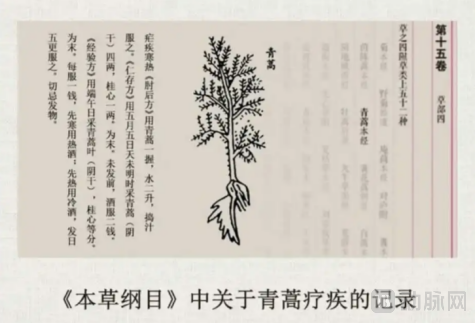
“Compendium of Materia Medica” records (photo provided by the interviewee)
During the R&D process, the team collaborated with Guilin Pharmaceutical, the originator of artesunate (an artemisinin derivative). After years of effort, they identified a new indication for artesunate, which was originally used to treat malaria. Drug repurposing accelerated the regulatory approval process for artesunate. The team has currently completed preclinical studies and is applying for Phase 2a clinical trials.
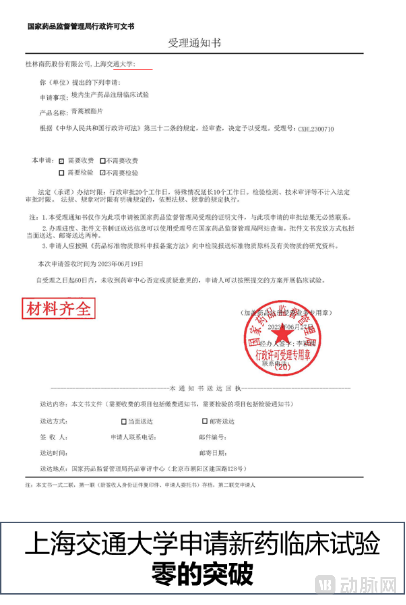
Clinical Trial Acceptance (Photo provided by interviewee)
In 2021, China received WHO certification as a malaria-free country, and there was virtually no domestic demand for artemisinin-based drugs. However,The development of new indications not only provides an opportunity for the resurgence of artesunate in the Chinese market, but also addresses the clinical needs of hundreds of millions of patients with fatty liver disease in China through innovative pharmaceuticals, thereby saving substantial social healthcare costs.
In addition to the development of new indications for artesunate, the team is also promoting the application and development of Artemisia annua and its extracts in various sectors—including daily chemicals, cosmetics, and animal health—by leveraging the moisturizing, antibacterial, and antioxidant properties of artemisinin.
Wang Yuliang stated, “The development of Artemisia annua is not an isolated case. As long as we understand the connection between technological research and the transition from technology to market, many medicinal plants have the potential to be revitalized.”
AI and Synthetic Biology Empower the Development of Medicinal Plants
Currently, Wang Yuliang’s team has developed multiple medicinal plant-based products for applications in pharmaceuticals and veterinary medicine. The most critical aspect of the R&D process is the development of application scenarios. Without suitable application contexts, the development process would be akin to searching for a needle in a haystack.
With the advancement of AI technology, frontier pharmacy has adopted an “AI+” model, and the development of medicinal plants also requires AI empowerment.AI can accelerate the elucidation of biosynthetic pathways for active constituents in medicinal plants, thereby enhancing their quality and expanding their applications, while assisting researchers in development efforts.
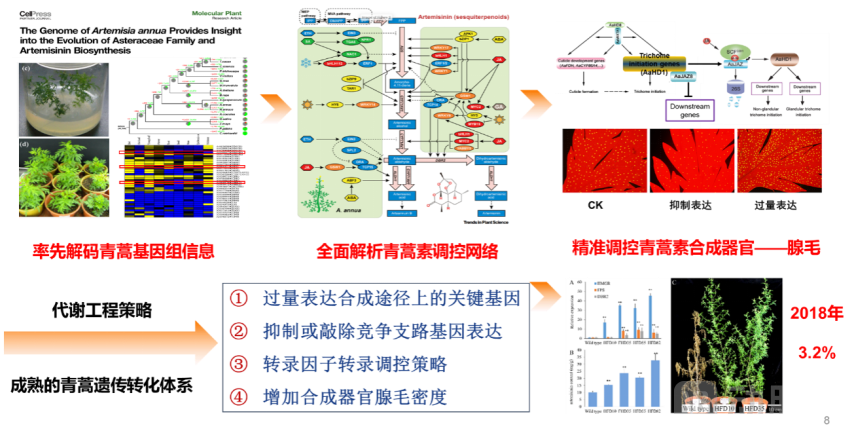
Schematic Diagram of the Application of Synthetic Biology in the Development of Medicinal Plants (Image Provided by Interviewee)
Beyond AI, synthetic biology will also become a key technology in the development of medicinal plants.Through synthetic biology, researchers are able to elucidate the biosynthetic pathways of active constituents in medicinal plants, thereby achieving efficient synthesis and standardized production of these compounds, and driving the modernization of the upstream medicinal plant raw material industry.
Wang Yuliang believes that, driven by the synergistic effects of various innovative technologies, medicinal plants will usher in new opportunities. This will promote the effective utilization of medicinal plant resources and the modernization of the traditional Chinese medicine (TCM) industry, thereby making greater contributions to human health.